Comparison

Shumard Oak vs Northern Red Oak

Shumard Oak (Quercus shumardii) and Northern Red Oak (Quercus rubra) both belong to the genus Quercus (acorn) and part ways below it. Both are recorded in 2 countries.
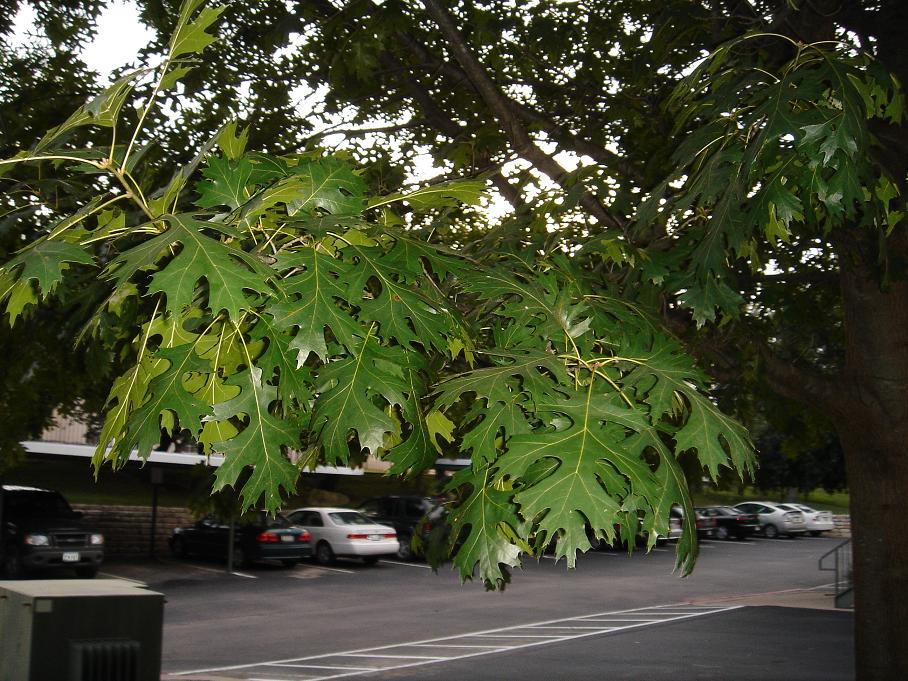
Shumard Oak

Shumard Oak

Quercus shumardii

en:User:Neonfreon, Public domain, via Wikimedia Commons

Northern Red Oak

Northern Red Oak

Quercus rubra

Nicholas A. Tonelli from Northeast Pennsylvania, USA, CC BY 2.0, via Wikimedia Commons

Side by side

Shumard OakNorthern Red Oak
Scientific nameQuercus shumardii BuckleyQuercus rubra L.
English nameShumard OakNorthern Red Oak
GroupFlowering plantsFlowering plants
ClassMagnoliopsidaMagnoliopsida
OrderFagalesFagales
FamilyFagaceae Beech FamilyFagaceae Beech Family
GenusQuercus AcornQuercus Acorn
Red List categoryLeast ConcernLeast Concern
Countries on record2 countries29 countries
GBIF occurrence records8,456 records210,424 records

Rows where the two agree are shown in grey.

Where each is found

Both recorded in 2 countries

Only Northern Red Oak (27)

From Catalogue of Life checklists and GBIF occurrence records. A country missing from a list means no record is held, which is not proof of absence.

Checked facts

Shumard OakNorthern Red Oak
Appearance
  • Mature Shumard oak leaves are broadly obovate and have 5–9 lobes with bristle-tipped teeth. English Wikipedia
  • Shumard oak leaves change from green to brown or red in autumn, sometimes with yellow hues. English Wikipedia
  • Young Shumard oak bark is light gray, smooth, and reflective. English Wikipedia
  • Mature Shumard oak bark develops darker coloration, ridges, and furrows. English Wikipedia
  • Shumard oak trunks are generally straight and vertical. English Wikipedia
  • Shumard oak branches terminate in clusters of buds. English Wikipedia
  • Shumard oak trees produce relatively large acorns. English Wikipedia
  • Shumard oak male flowers grow in dangling catkins, while female flowers are smaller and occur close to the stem. wp.towson.edu
  • Shumard oak leaves have pinnate venation and are 5–9 lobed. wp.towson.edu
  • Shumard oak leaves turn bright red or orange in autumn. wp.towson.edu
  • Northern red oak has a narrow, round-topped crown formed by stout branches growing at right angles to the stem. English Wikipedia
  • The bark is dark reddish-gray to brown and features broad, thin, rounded ridges. English Wikipedia
  • The upper leaf surface is dark green, while the underside is lighter green. extension.rutgers.edu
  • The leaves turn red or brown during autumn. extension.rutgers.edu
SizeNo checked fact yet
Habitat
  • Northern red oak occurs in mesic to dry-mesic forests, ravines, and north- and east-facing slopes. extension.rutgers.edu
  • The species naturally occurs in upland habitats and rarely grows in wetlands. extension.rutgers.edu
  • Northern red oak grows best in deep, well-drained loam to silt-loam soils. extension.rutgers.edu
  • The species prefers slightly acidic, well-drained soils. English Wikipedia
  • Northern red oak can establish in light to partial shade before adapting to full sunlight at canopy height. extension.rutgers.edu
Diet
  • Shumard oak acorns provide food for wild turkeys, quail, waterfowl, white-tailed deer, feral hogs, and squirrels. English Wikipedia
  • White-tailed deer browse on Shumard oak leaves and twigs. English Wikipedia
  • Shumard oak acorns are an important food source for deer, squirrels, birds, and other mammals. wp.towson.edu
  • Northern red oak acorns are consumed by deer, squirrels, and birds. English Wikipedia
  • White-tailed deer and cottontail rabbits browse northern red oak leaves and seedlings in New Jersey. extension.rutgers.edu
BehaviourNo checked fact yet
Reproduction
  • Shumard oak trees begin producing seeds at a minimum age of 25 years. English Wikipedia
  • The optimum age for seed development in Shumard oak is 50 years. English Wikipedia
  • Shumard oak acorns take approximately 1.5–3 years to mature. English Wikipedia
  • Shumard oak male and female flowers occur on the same tree. wp.towson.edu
  • Shumard oak acorns must overwinter on the ground before germinating. wp.towson.edu
  • Northern red oak is monoecious, dichogamous, wind-pollinated, and self-incompatible. English Wikipedia
  • Pollination occurs during the first growing season, while fertilization and acorn maturation take place during the second. English Wikipedia
  • Acorns mature approximately 18 months after pollination. English Wikipedia
  • Northern red oak acorns require at least three months of exposure to temperatures below 4 °C to germinate. English Wikipedia
  • Northern red oak acorns mature during the second growing season. extension.rutgers.edu
Distribution
  • Shumard oak is native to the Atlantic coastal plain from North Carolina to northern Florida and west to central Texas. English Wikipedia
  • Shumard oak occurs northward through the Mississippi River Valley to central Oklahoma, eastern Kansas, Missouri, southern Illinois, Indiana, Ohio, Kentucky, and Tennessee. English Wikipedia
  • Shumard oak occurs locally in southern Michigan, southern Pennsylvania, Maryland, western New York, and southern Ontario. English Wikipedia
  • Northern red oak is native to eastern and central North America, including the eastern and central United States and southeastern and south-central Canada. English Wikipedia
Conservation
  • Shumard oak is listed as state rare (S2) and threatened in Maryland. wp.towson.edu
  • Shumard oak is susceptible to oak wilt infection. wp.towson.edu
  • Shumard oak populations may be threatened by fencerow brushing and field clearing for logging. wp.towson.edu
No checked fact yet
Uses
  • Shumard oak is cultivated as a shade tree and for commercial purposes. English Wikipedia
  • Shumard oak lumber is used for flooring, furniture, interior trim, decorative molding, paneling, and cabinetry. English Wikipedia
  • Shumard oak wood is used in construction and household furniture. wp.towson.edu
No checked fact yet
Similar species
  • Quercus shumardii is closely related to Quercus buckleyi, Quercus texana, and Quercus gravesii. English Wikipedia
No checked fact yet
OtherNo checked fact yet

In brief

Shumard Oak

Shumard oak is native to the Atlantic coastal plain from North Carolina to northern Florida and west to central Texas, and occurs northward through the Mississippi River Valley and in parts of the northeastern United States and southern Ontario. Shumard oak is distinguished by its 5–9-lobed leaves, which turn bright red or orange in autumn, and its relatively large acorns. Full profile

Northern Red Oak

Northern red oak is native to eastern and central North America. Full profile

Compare something else

Page built on 29 November 2026 from the data on the two species pages, where every source is listed.

Cite this page

ScientificNames.org. (2026). Shumard Oak vs Northern Red Oak. Retrieved November 29, 2026, from https://scientificnames.org/compare/shumard-oak-vs-northern-red-oak