Comparison

Shumard Oak vs Cork Oak

Shumard Oak (Quercus shumardii) and Cork Oak (Quercus suber) both belong to the genus Quercus (acorn) and part ways below it. Both are recorded in 1 country.
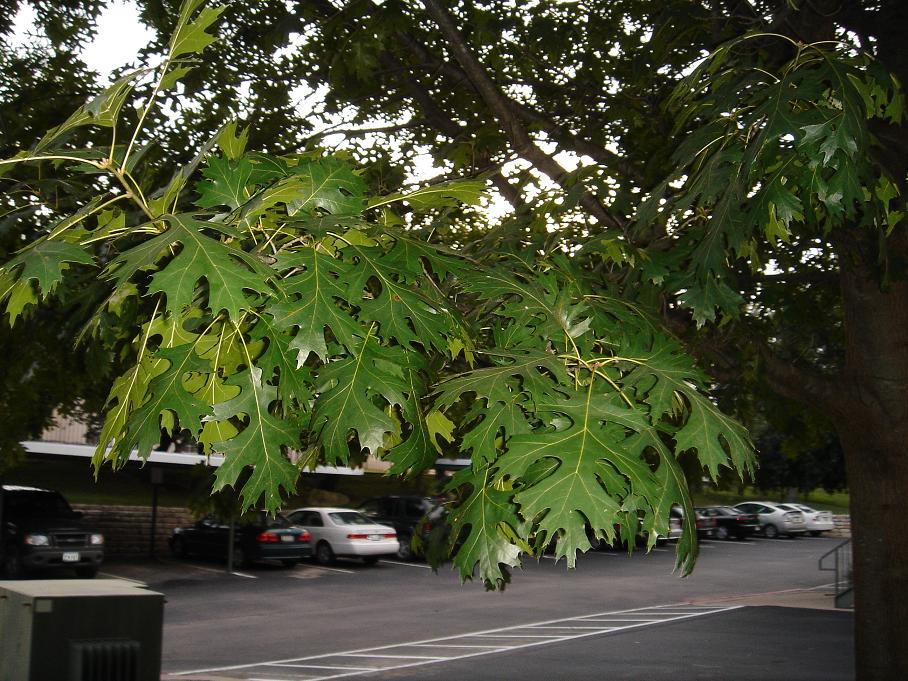
Shumard Oak

Shumard Oak

Quercus shumardii

en:User:Neonfreon, Public domain, via Wikimedia Commons

Cork Oak

Cork Oak

Quercus suber

Jean-Pol GRANDMONT, CC BY 3.0, via Wikimedia Commons

Side by side

Shumard OakCork Oak
Scientific nameQuercus shumardii BuckleyQuercus suber L.
English nameShumard OakCork Oak
GroupFlowering plantsFlowering plants
ClassMagnoliopsidaMagnoliopsida
OrderFagalesFagales
FamilyFagaceae Beech FamilyFagaceae Beech Family
GenusQuercus AcornQuercus Acorn
Red List categoryLeast ConcernLeast Concern
Countries on record2 countries24 countries
GBIF occurrence records8,456 records704,905 records

Rows where the two agree are shown in grey.

Where each is found

Both recorded in 1 country

Only Shumard Oak (1)

Only Cork Oak (23)

From Catalogue of Life checklists and GBIF occurrence records. A country missing from a list means no record is held, which is not proof of absence.

Checked facts

Shumard OakCork Oak
Appearance
  • Mature Shumard oak leaves are broadly obovate and have 5–9 lobes with bristle-tipped teeth. English Wikipedia
  • Shumard oak leaves change from green to brown or red in autumn, sometimes with yellow hues. English Wikipedia
  • Young Shumard oak bark is light gray, smooth, and reflective. English Wikipedia
  • Mature Shumard oak bark develops darker coloration, ridges, and furrows. English Wikipedia
  • Shumard oak trunks are generally straight and vertical. English Wikipedia
  • Shumard oak branches terminate in clusters of buds. English Wikipedia
  • Shumard oak trees produce relatively large acorns. English Wikipedia
  • Shumard oak male flowers grow in dangling catkins, while female flowers are smaller and occur close to the stem. wp.towson.edu
  • Shumard oak leaves have pinnate venation and are 5–9 lobed. wp.towson.edu
  • Shumard oak leaves turn bright red or orange in autumn. wp.towson.edu
  • Quercus suber is an evergreen, medium-sized oak tree. English Wikipedia
  • The tree develops a dense, asymmetrical crown that spreads widely in open-grown specimens. English Wikipedia
  • Its trunk has thick, longitudinally cracked, gray-brown cork bark. English Wikipedia
  • The leaves are leathery and arranged alternately along the branches. English Wikipedia
  • The leaves have five to seven sharp teeth along each edge. English Wikipedia
  • The upper leaf surface is light green, while the underside is whitish and densely hairy. English Wikipedia
  • The species produces both male and female flowers on the same individual tree. English Wikipedia
  • Young male catkins are bright red and become yellow and pendulous as they mature. English Wikipedia
  • Its acorns have a smooth, shiny, brownish-red fruit casing. English Wikipedia
  • The acorns are long and slender, with less than one-third enclosed in a shaggy cup. rhs.org.uk
Size
  • The tree typically reaches 10 to 15 metres in height, although exceptional individuals can reach 25 metres. English Wikipedia
  • Its trunk typically measures 50 to 100 centimetres in diameter at breast height. English Wikipedia
  • Individual acorns measure 2 to 4.5 cm in length and 1 to 1.8 cm in diameter. English Wikipedia
  • The taproot extends to a depth of 1 to 2 metres. English Wikipedia
Habitat
Diet
  • Shumard oak acorns provide food for wild turkeys, quail, waterfowl, white-tailed deer, feral hogs, and squirrels. English Wikipedia
  • White-tailed deer browse on Shumard oak leaves and twigs. English Wikipedia
  • Shumard oak acorns are an important food source for deer, squirrels, birds, and other mammals. wp.towson.edu
No checked fact yet
BehaviourNo checked fact yet
  • The species can withstand drought by reducing its metabolism during dry summer periods. English Wikipedia
  • The thick bark enables the tree to survive forest fires and subsequently regenerate its branches. English Wikipedia
  • The species forms mycorrhizal associations with several fungal species. English Wikipedia
Reproduction
  • Shumard oak trees begin producing seeds at a minimum age of 25 years. English Wikipedia
  • The optimum age for seed development in Shumard oak is 50 years. English Wikipedia
  • Shumard oak acorns take approximately 1.5–3 years to mature. English Wikipedia
  • Shumard oak male and female flowers occur on the same tree. wp.towson.edu
  • Shumard oak acorns must overwinter on the ground before germinating. wp.towson.edu
  • Female flowers occur in upright inflorescences in the leaf axils of young branches. English Wikipedia
  • Male flowers are borne in catkins arising from the leaf axils of young branches. English Wikipedia
  • Fruit clusters contain between two and eight acorns. English Wikipedia
  • The acorns can mature during either their first or second year. English Wikipedia
  • The tree can be propagated from seed shortly after the seed falls. rhs.org.uk
  • The tree can also be propagated using semi-ripe cuttings in late summer. rhs.org.uk
LifespanNo checked fact yet
Distribution
  • Shumard oak is native to the Atlantic coastal plain from North Carolina to northern Florida and west to central Texas. English Wikipedia
  • Shumard oak occurs northward through the Mississippi River Valley to central Oklahoma, eastern Kansas, Missouri, southern Illinois, Indiana, Ohio, Kentucky, and Tennessee. English Wikipedia
  • Shumard oak occurs locally in southern Michigan, southern Pennsylvania, Maryland, western New York, and southern Ontario. English Wikipedia
  • The species is native to southwestern Europe and northwestern Africa. English Wikipedia
  • The species occupies the western Mediterranean basin. English Wikipedia
  • Outside its native range, the species is cultivated in Crimea, the Caucasus, India, and the southwestern United States. English Wikipedia
Conservation
  • Shumard oak is listed as state rare (S2) and threatened in Maryland. wp.towson.edu
  • Shumard oak is susceptible to oak wilt infection. wp.towson.edu
  • Shumard oak populations may be threatened by fencerow brushing and field clearing for logging. wp.towson.edu
  • Cork oak forests are at risk as cork bottle stoppers are increasingly replaced by alternative materials. English Wikipedia
Uses
  • Shumard oak is cultivated as a shade tree and for commercial purposes. English Wikipedia
  • Shumard oak lumber is used for flooring, furniture, interior trim, decorative molding, paneling, and cabinetry. English Wikipedia
  • Shumard oak wood is used in construction and household furniture. wp.towson.edu
  • The species is cultivated for cork production in several Mediterranean countries. English Wikipedia
  • Cork oak bark provides material for wine bottle stoppers. English Wikipedia
  • The cork layer can be harvested repeatedly without substantially damaging the tree. English Wikipedia
  • The first cork harvest usually takes place when the tree is approximately 25 years old. English Wikipedia
  • Subsequent cork harvesting generally occurs at intervals of nine to twelve years. English Wikipedia
Similar species
  • Quercus shumardii is closely related to Quercus buckleyi, Quercus texana, and Quercus gravesii. English Wikipedia
No checked fact yet

In brief

Shumard Oak

Shumard oak is native to the Atlantic coastal plain from North Carolina to northern Florida and west to central Texas, and occurs northward through the Mississippi River Valley and in parts of the northeastern United States and southern Ontario. Shumard oak is distinguished by its 5–9-lobed leaves, which turn bright red or orange in autumn, and its relatively large acorns. Full profile

Cork Oak

Cork Oak (Quercus suber L.) is an evergreen, medium-sized flowering tree in the family Fagaceae, order Fagales, and class Magnoliopsida. It is native to southwestern Europe and northwestern Africa and occupies the western Mediterranean basin. It is distinguished by its thick, cork-producing bark, which can be harvested repeatedly without substantially damaging the tree. Full profile

Compare something else

Page built on 29 November 2026 from the data on the two species pages, where every source is listed.

Cite this page

ScientificNames.org. (2026). Shumard Oak vs Cork Oak. Retrieved November 29, 2026, from https://scientificnames.org/compare/shumard-oak-vs-cork-oak