Comparison

Blackcurrant vs Red-flowering Currant

Blackcurrant (Ribes nigrum) and Red-flowering Currant (Ribes sanguineum) both belong to the genus Ribes (currant) and part ways below it. Both are recorded in 17 countries.
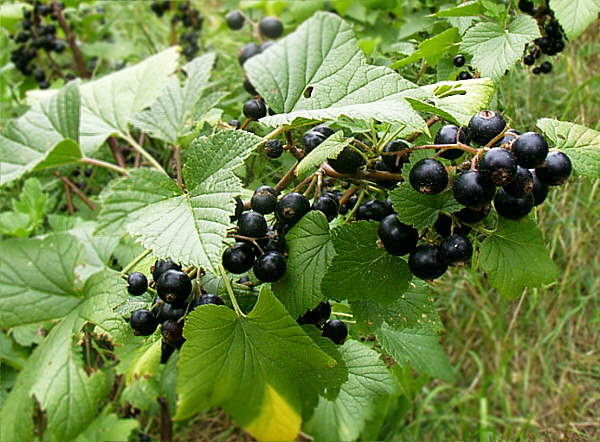
Blackcurrant

Blackcurrant

Ribes nigrum

Unknown author, Public domain, via Wikimedia Commons

Red-flowering Currant

Red-flowering Currant

Ribes sanguineum

Walter Siegmund (talk), CC BY-SA 3.0, via Wikimedia Commons

Side by side

BlackcurrantRed-flowering Currant
Scientific nameRibes nigrum L.Ribes sanguineum Pursh
English nameBlackcurrantRed-flowering Currant
GroupFlowering plantsFlowering plants
ClassMagnoliopsidaMagnoliopsida
OrderSaxifragalesSaxifragales
FamilyGrossulariaceae Currant FamilyGrossulariaceae Currant Family
GenusRibes CurrantRibes Currant
Countries on record55 countries18 countries
GBIF occurrence records123,977 records64,823 records

Rows where the two agree are shown in grey.

Where each is found

Both recorded in 17 countries

Only Blackcurrant (38)

Only Red-flowering Currant (1)

From Catalogue of Life checklists and GBIF occurrence records. A country missing from a list means no record is held, which is not proof of absence.

Checked facts

BlackcurrantRed-flowering Currant
Appearance
Size
  • The leaves measure approximately 3–5 centimetres in both length and width. English Wikipedia
  • The flower clusters can reach 8 centimetres in length. English Wikipedia
  • An established shrub can produce approximately 4.5 kilograms of fruit annually. English Wikipedia
Habitat
  • The species grows naturally in temperate regions with damp, fertile soils. English Wikipedia
  • The shrub can grow in sandy loams, heavy loams, and forest soils when its nutrient requirements are satisfied. English Wikipedia
  • The species prefers moist, fertile soil but does not tolerate waterlogged conditions. English Wikipedia
  • The species is intolerant of drought. English Wikipedia
  • Organically rich, well-drained soil is suitable for growing this shrub. trees.umn.edu
Diet
  • The berries are edible and are consumed raw or cooked in various dishes. English Wikipedia
Behaviour
  • Cold conditions during spring flowering can reduce fruit production. English Wikipedia
  • Cold winds can reduce the number of flying insects visiting and pollinating the flowers. English Wikipedia
  • The species provides early spring nectar used by hummingbirds and butterflies. English Wikipedia
Reproduction
  • The flowers open sequentially, beginning at the base of each flower cluster. English Wikipedia
  • The flowers are primarily pollinated by insects, although some pollen is distributed by wind. English Wikipedia
  • The species is partly self-pollinating, but cross-pollination between different varieties increases fruit production. English Wikipedia
  • Pollen germination and tube growth to the ovule take approximately 48 hours in warm weather. English Wikipedia
  • In cold weather, pollen tube growth can take up to a week. English Wikipedia
  • Fruit development may fail and the fruit may drop prematurely when fewer than approximately 35 ovules are fertilised. English Wikipedia
  • Frost can damage unopened and open flowers when temperatures fall below approximately −1.9 °C. English Wikipedia
  • The fruits ripen during midsummer. English Wikipedia
Distribution
  • The species is native to temperate regions of central and northern Europe and northern Asia. English Wikipedia
  • The species is widely cultivated commercially and domestically. English Wikipedia
  • Commercial cultivation is concentrated largely in eastern Europe for juice and juice concentrate production. English Wikipedia
  • New Zealand has become an important centre for blackcurrant research and development since 1991. English Wikipedia
  • The species is native to the western United States, Canada, and Mexico. English Wikipedia
  • The species occurs widely in moist regions west of the Cascades in British Columbia, Washington, and Oregon. English Wikipedia
  • In California, the species is restricted to coastal areas and extends south to Santa Barbara County. English Wikipedia
  • In Mexico, the species is recorded only from Guadalupe Island. English Wikipedia
  • The species is widely cultivated and naturalized in temperate Europe and Australasia. English Wikipedia
  • In Idaho, the species occurs rarely in Bonner, Kootenai, Benewah, and Adams counties. English Wikipedia
ConservationNo checked fact yet
Uses
  • The species is cultivated for its edible berries. English Wikipedia
  • The berries are used to produce jams, preserves, and syrups. English Wikipedia
  • The berries are commercially cultivated for juice production. English Wikipedia
  • The berries are also used to produce alcoholic beverages and dyes. English Wikipedia
  • The shrub can be planted as an ornamental plant. trees.umn.edu
  • Raw blackcurrant fruit contains approximately 218% of the daily value of vitamin C per 100 grams. English Wikipedia
  • Blackcurrant seed oil contains vitamin E and unsaturated fatty acids, including alpha-linolenic and gamma-linolenic acids. English Wikipedia
  • The leaves, bark, and roots have historically been used to prepare medicinal decoctions. English Wikipedia
  • The berries are edible despite having poor flavour. English Wikipedia
  • People eat the berries fresh or dried and use them to make jams, pies, juice, and syrup. English Wikipedia
  • The flowers can be used to infuse beverages, particularly spirits. English Wikipedia
  • The species is cultivated as a garden shrub for its brightly coloured, scented early spring flowers. English Wikipedia
  • The species supports birds and provides habitat. English Wikipedia
Other
  • The species has been investigated for the potential biological activities of polyphenols found in its fruit, seeds, and leaves. English Wikipedia
  • The species was introduced into cultivation in Britain in autumn 1826 by Scottish botanist David Douglas. English Wikipedia

In brief

Blackcurrant

Ribes nigrum grows naturally in temperate regions of central and northern Europe and northern Asia. It produces very dark purple, nearly black berries that are edible and used in food and beverage production. Full profile

Red-flowering Currant

Ribes sanguineum is native to the western United States, Canada, and Mexico, and is widely cultivated and naturalized in temperate Europe and Australasia. It is distinguished by dangling racemes of red, pink, or white flowers that emerge in early spring with the leaves. Full profile

Compare something else

Page built on 27 November 2026 from the data on the two species pages, where every source is listed.

Cite this page

ScientificNames.org. (2026). Blackcurrant vs Red-flowering Currant. Retrieved November 27, 2026, from https://scientificnames.org/compare/blackcurrant-vs-red-flowering-currant