Species · Flowering plants
Red-flowering Currant Ribes sanguineum
The scientific name of the Red-flowering Currant is Ribes sanguineum. It is a species of flowering plant in the family Grossulariaceae (currant family), order Saxifragales.
- Scientific name
- Ribes sanguineum Pursh
- Common name
- Red-flowering Currant
- Genus
- Ribes
- Family
- Grossulariaceae (Currant Family)
- Order
- Saxifragales
- Class
- Magnoliopsida
- Recorded in
- 18 countries
- Name status
- accepted in the Catalogue of Life

Overview
Ribes sanguineum is native to the western United States, Canada, and Mexico, and is widely cultivated and naturalized in temperate Europe and Australasia. It is distinguished by dangling racemes of red, pink, or white flowers that emerge in early spring with the leaves.
Written 26 November 2026 from the sources listed below. Each statement was checked against the passage it cites; statements that could not be supported were removed.
Appearance
Red-flowering currant is a deciduous shrub with multiple stems and an upright-arching to rounded growth habit. It can reach 3 metres in both height and breadth.[1][2]
Its bark is dark brownish-grey with prominent, paler brown lenticels. Its leaves are alternately arranged, simple, and palmately divided into five lobes, measuring 2–7 centimetres in length and breadth.[3][4][5]
Young leaves produce a strong resinous scent in spring. The flowers grow in dangling racemes measuring 3–7 centimetres long, and each flower measures approximately 5–10 millimetres in diameter.[6][7][8]
Each flower has five petals that may be red, pink, or white. The fruit is a dark purple, oval berry measuring approximately 1 centimetre in length and having an insipid taste.[9][10][11][12]
Habitat
Red-flowering currant is shade tolerant but prefers sunny growing sites. It tolerates drought but prefers cool and moist conditions.[13][14]
The species occurs widely in moist regions west of the Cascades in British Columbia, Washington, and Oregon. In California, it is restricted to coastal areas and extends south to Santa Barbara County.[15][16]
The species is recorded in Mexico only from Guadalupe Island. In Idaho, it occurs rarely in Bonner, Kootenai, Benewah, and Adams counties.[17][18]
Its branches provide nesting habitat for birds.[19]
Diet
Moth larvae feed on the leaves of red-flowering currant. Deer and elk occasionally browse its leaves.[20][21]
Birds and small mammals consume its berries.[22]
Behaviour
Red-flowering currant provides early spring nectar used by hummingbirds and butterflies.[23]
Reproduction and life cycle
The flowers emerge in early spring at the same time as the leaves.[24]
Conservation
Red-flowering currant may be extirpated from Guadalupe Island. It is critically imperiled in Idaho.[25][26]
The species serves as a host for white pine blister rust.[27]
Uses
The berries are edible despite having poor flavour. They are eaten fresh or dried and used to make jams, pies, juice, and syrup.[28][29]
The flowers can be used to infuse beverages, particularly spirits.[30]
Red-flowering currant is cultivated as a garden shrub for its brightly coloured, scented early spring flowers. It supports birds and provides habitat.[31][32]
The species was introduced into cultivation in Britain in autumn 1826 by Scottish botanist David Douglas.[33]
Classification of the Red-flowering Currant
| Kingdom | Plantae |
|---|---|
| Subkingdom | Pteridobiotina |
| Phylum | Tracheophyta |
| Class | Magnoliopsida |
| Order | Saxifragales |
| Family | Grossulariaceae (Currant Family) |
| Genus | Ribes (Currant) |
| Species | Ribes sanguineum Pursh |
Where the Red-flowering Currant is found
Checklists and occurrence records place Ribes sanguineum in 18 countries across Europe, North America and Oceania. GBIF holds 64,823 georeferenced records of it.
Countries where it is native or its origin is not stated
- Belgium 3,853
- Canada 5,014
- Czechia 400
- Denmark 843
- France 466
- Mexico 2
- Sweden 1,268
- The Netherlands 2,672
- United States 15,283
Countries where it has been introduced
- Croatia
- Germany 5,273
- Guernsey
- Hungary 2
- Ireland 581
- Jersey 1
- New Zealand 637
- Slovakia 16
- United Kingdom 28,512
Regions and cities with the most records
- England, United Kingdom 18,763
- Scotland, United Kingdom 7,032
- Washington, United States 4,773
- British Columbia, Canada 4,761
- Oregon, United States 4,147
- California, United States 4,040
- Langford, Canada 1,624
- Colwood, Canada 1,617
- Saanich, Canada 1,561
- Central Saanich, Canada 1,553
- Esquimalt, Canada 1,530
- Victoria, Canada 1,510
- Oak Bay, Canada 1,500
- Bellevue, United States 1,495
- Mercer Island, United States 1,463
- Columbia City, United States 1,433
- Kirkland, United States 1,412
- Seattle, United States 1,412
- Inglewood-Finn Hill, United States 1,336
- Kenmore, United States 1,287
- Bothell, United States 1,275
- Portland, United States 1,265
- Shoreline, United States 1,222
- Kirkby, United Kingdom 1,181
- Fazakerley, United Kingdom 1,172
- Mountlake Terrace, United States 1,169
- Milwaukie, United States 1,133
- Redmond, United States 1,131
- Skelmersdale, United Kingdom 1,119
- Maghull, United Kingdom 1,110
- Bainbridge Island, United States 1,102
- Beaverton, United States 1,102
- Lake Oswego, United States 1,085
- Litherland, United Kingdom 1,085
- Tigard, United States 1,082
- Old Swan, United Kingdom 1,081
12 more countries have a few records outside this range
These countries hold a few records of Ribes sanguineum but lie outside the range the checklists give for it. Such records are often zoo or garden specimens, museum material or vagrants, so the species is not counted as occurring there.
Range as the checklists state it
England [I] (England [I], Wales [I], Scotland [I], Outer Hebrides [I], Orkney Isl. [I], Shetland Isl. [I]); Ireland [I] (Ireland [I], Northern Ireland [I]); Germany [I]; Slovakia [I]; Hungary [I]; Channel Isl. [I] (Alderney [I], Jersey [I], Guernsey [I]); Croatia [I]; New Zealand [I]; Canada (British Columbia); USA (California, Idaho, Oregon, Washington State); Mexico (Baja California Norte); +Isla Guadalupe
A number beside a place is its count of GBIF occurrence records. A place without a number comes from a checklist alone. Records show where a species has been observed or collected, which can include escapes and vagrants.
Common names
English
- Red-flowering Currant
- Blood Currant
- Winter Currant
Names in 23 other languages
- Chinese
- 多花醋栗
- Czech
- meruzalka krvavá
- Danish
- Blod-ribs
- Dutch
- Rode ribes
- Estonian
- verev sõstar
- Finnish
- ruusuherukka
- French
- Cassis-fleur, Groseillier à fleurs, gadellier sanguin, groseillier sanguin
- German
- Blut-Johannisbeere
- Hungarian
- Vérvörös ribiszke, vérpiros ribiszke
- Irish
- Cuirín
- Japanese
- ハナスグリ
- Lithuanian
- Raudonžiedis serbentas
- Norwegian Bokmål
- blodrips
- Polish
- porzeczka krwista
- Russian
- Смородина кроваво-красная
- Scottish Gaelic
- dearc-Aimeirigeach
- Slovak
- ríbezľa krvavá
- Spanish
- Grosellero rojo
- Swedish
- rosenrips
- Ukrainian
- Порічки криваві, Смородина криваво-червона
- Welsh
- Llwyn Cwrens Blodeuog, Rhyfon Blodeuog
- nok
- sp’á7ats’ay7
- squ
- ḵwíl̓ayus
Synonyms
13 other scientific names have been used for this species and are now treated as synonyms of Ribes sanguineum.
- Calobotrya sanguinea (Pursh) Spach
- Coreosma sanguinea (Pursh) Spach
- Ribes alceifolium Kunze ex Walp.
- Ribes augustum Douglas ex W.H.Baxter
- Ribes davianum Dippel
- Ribes sanguineum f. albescens (Rehder) Rehder
- Ribes sanguineum f. atrosanguineum Braun-Blanq.
- Ribes sanguineum var. albescens Rehder
- Ribes sanguineum var. albidum Murr
- Ribes sanguineum var. album Gorman
- Ribes scuphamii Eastw.
- Ribes tubiflorum C.A.Mey.
- Ribes tubulosum Eschsch. ambiguous synonym
Subspecies and varieties
- Ribes sanguineum var. deductum variety
- Ribes sanguineum var. glutinosum (Blood Currant) variety
- Ribes sanguineum var. melanocarpum variety
- Ribes sanguineum var. sanguineum (Blood Currant) variety
Related species
-
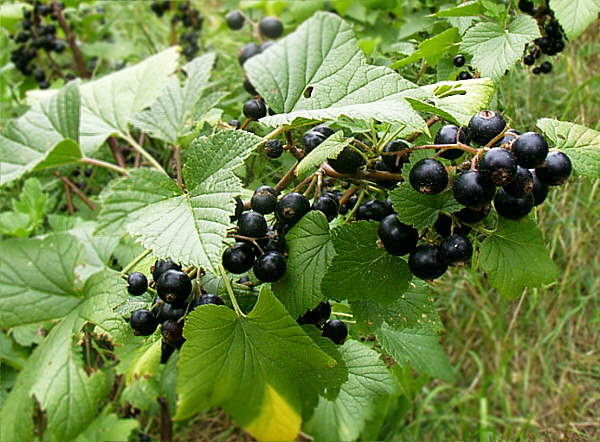 BlackcurrantRibes nigrum
-
 RedcurrantRibes rubrum
-
 GooseberryRibes uva-crispa
-
 Golden CurrantRibes aureum
-
 Mountain CurrantRibes alpinum
-
 Coast Black GooseberryRibes divaricatum
-
 American GooseberryRibes hirtellum
-
 Wild Black CurrantRibes americanum
Compare
Questions and answers
What is the scientific name of the Red-flowering Currant?
The scientific name of the Red-flowering Currant is Ribes sanguineum. Written with its author, the full name is Ribes sanguineum Pursh.
Which family does the Red-flowering Currant belong to?
Ribes sanguineum belongs to the family Grossulariaceae, in the order Saxifragales and the class Magnoliopsida.
Where is the Red-flowering Currant found?
Checklists and occurrence records place Ribes sanguineum in 18 countries, including United States, Canada, Belgium, The Netherlands, Sweden and Denmark.
What other names does the Red-flowering Currant have?
Ribes sanguineum is also known in English as Blood Currant and Winter Currant.
Are Ribes sanguineum berries edible?
Yes. The berries are edible despite having poor flavour. They can be eaten fresh or dried and used to make jams, pies, juice, and syrup.[28][29]
Can Ribes sanguineum grow in shade?
Yes. Red-flowering currant is shade tolerant but prefers sunny growing sites.[13]
Sources
Passages the profile rests on
- Ribes sanguineum is a deciduous shrub with multiple stems and an upright-arching to rounded growth habit. Source passage: “It is naturally multi-stemmed with an upright-arching to rounded habit” — English Wikipedia
- The shrub can reach 3 metres in both height and breadth. Source passage: “growing to 3 metres (10 feet) tall and broad.” — English Wikipedia
- Its bark is dark brownish-grey and bears prominent, paler brown lenticels. Source passage: “The bark is dark brownish-grey with prominent paler brown lenticels.” — English Wikipedia
- Its leaves are alternately arranged, simple, and palmately divided into five lobes. Source passage: “The leaves are alternately arranged, simple, 2–7 centimetres (1–3 inches) long and broad, palmately lobed with five lobes.” — English Wikipedia
- Its leaves measure 2–7 centimetres in length and breadth. Source passage: “2–7 centimetres (1–3 inches) long and broad” — English Wikipedia
- Young leaves produce a strong resinous scent in spring. Source passage: “When young in spring, they have a strong resinous scent.” — English Wikipedia
- The flowers grow in dangling racemes measuring 3–7 centimetres long. Source passage: “on dangling racemes 3–7 cm (1–3 in) long” — English Wikipedia
- Each flower measures approximately 5–10 millimetres in diameter. Source passage: “each flower is 5–10 millimetres (1⁄4–3⁄8 in) in diameter” — English Wikipedia
- Each flower has five petals that may be red, pink, or white. Source passage: “with five red, pink, or white petals.” — English Wikipedia
- Its fruit is a dark purple, oval berry. Source passage: “The fruit is a dark purple oval berry” — English Wikipedia
- Its berries measure approximately 1 centimetre in length. Source passage: “about 1 cm (3⁄8 in) long” — English Wikipedia
- The berries have an insipid taste. Source passage: “it has an insipid taste.” — English Wikipedia
- The species is shade tolerant but prefers sunny growing sites. Source passage: “Red-flowering currant is shade tolerant but prefers sunny sites.” — English Wikipedia
- The species tolerates drought but prefers cool and moist conditions. Source passage: “It tolerates drought well, but prefers cool and moist conditions.” — English Wikipedia
- The species occurs widely in moist regions west of the Cascades in British Columbia, Washington, and Oregon. Source passage: “In western British Columbia, Washington, and Oregon, it is distributed widely in the moist regions west of the Cascades.” — English Wikipedia
- In California, the species is restricted to coastal areas and extends south to Santa Barbara County. Source passage: “In California it is restricted to areas near the coast, and can be found as far south as Santa Barbara County.” — English Wikipedia
- In Mexico, the species is recorded only from Guadalupe Island. Source passage: “In Mexico, it is only found on the Pacific island of Guadalupe” — English Wikipedia
- In Idaho, the species occurs rarely in Bonner, Kootenai, Benewah, and Adams counties. Source passage: “is found only rarely in Bonner, Kootenai, Benewah, and Adams counties.” — English Wikipedia
- The branches provide nesting habitat for birds. Source passage: “Its branches provide nesting habitat for birds.” — English Wikipedia
- Moth larvae feed on the leaves of the species. Source passage: “which along with moths browse the leaves in their larval stage.” — English Wikipedia
- Deer and elk occasionally browse the leaves. Source passage: “Deer and elk occasionally browse the leaves” — English Wikipedia
- Birds and small mammals consume the berries. Source passage: “the berries are consumed by birds and small mammals.” — English Wikipedia
- The species provides early spring nectar used by hummingbirds and butterflies. Source passage: “The early spring nectar of red-flowering currant is used by hummingbirds as well as butterflies” — English Wikipedia
- The flowers emerge in early spring at the same time as the leaves. Source passage: “The flowers are produced in early spring at the same time as the leaves emerge” — English Wikipedia
- The species may be extirpated from Guadalupe Island. Source passage: “where it may be extirpated.” — English Wikipedia
- The species is critically imperiled in Idaho. Source passage: “in Idaho it is critically imperiled” — English Wikipedia
- The species serves as a host for white pine blister rust. Source passage: “The species is a host to white pine blister rust” — English Wikipedia
- The berries are edible despite having poor flavour. Source passage: “The berries are edible but of poor flavour.” — English Wikipedia
- People eat the berries fresh or dried and use them to make jams, pies, juice, and syrup. Source passage: “eating them fresh or dried or making them into jams, pies, juice, or syrup.” — English Wikipedia
- The flowers can be used to infuse beverages, particularly spirits. Source passage: “The flowers can be used to infuse beverages, especially spirits.” — English Wikipedia
- The species is cultivated as a garden shrub for its brightly coloured, scented early spring flowers. Source passage: “It remains a popular garden shrub, valued for its brightly colored and scented flowers in early spring” — English Wikipedia
- The species supports birds and provides habitat. Source passage: “and birds and habitat support.” — English Wikipedia
- The species was introduced into cultivation in Britain in autumn 1826 by Scottish botanist David Douglas. Source passage: “R. sanguineum was introduced into cultivation in Britain in the fall of 1826 by Scottish botanist David Douglas” — English Wikipedia
Data
- Catalogue of Life, 2026-10-16 XR cc by
- Global Biodiversity Information Facility CC BY 4.0
- Wikidata CC0
- GeoNames CC BY 4.0
- Wikimedia Commons per image; credit shown with each image
- Within the Catalogue of Life, this name comes from Synonymic Checklists of the Vascular Plants of the World cc by
References
- Pursh. (1814). Fl. Amer. Sept. [Pursh] 1: 164 (1814). where the name was published
This species in other databases
Page built on 27 November 2026. See how the catalog is made and all sources and licences.
Cite this page
ScientificNames.org. (2026). Ribes sanguineum (Red-flowering Currant). Retrieved November 27, 2026, from https://scientificnames.org/species/ribes-sanguineum
“Ribes sanguineum (Red-flowering Currant).” ScientificNames.org, 2026, scientificnames.org/species/ribes-sanguineum. Accessed 27 Nov. 2026.
ScientificNames.org. “Ribes sanguineum (Red-flowering Currant).” Accessed November 27, 2026. https://scientificnames.org/species/ribes-sanguineum.
@misc{scientificnames_ribes_sanguineum_red_flowering_currant,
  author = {{ScientificNames.org}},
  title = {Ribes sanguineum (Red-flowering Currant)},
  year = {2026},
  url = {https://scientificnames.org/species/ribes-sanguineum},
  note = {Accessed 2026-11-27}
}