Comparison
Sarcoptes bubalus vs Scabies Mite
Sarcoptes bubalus (Sarcoptes bubalus) and Scabies Mite (Sarcoptes scabiei) both belong to the genus Sarcoptes (scabies or itch mite) and part ways below it. Both are recorded in 1 country.
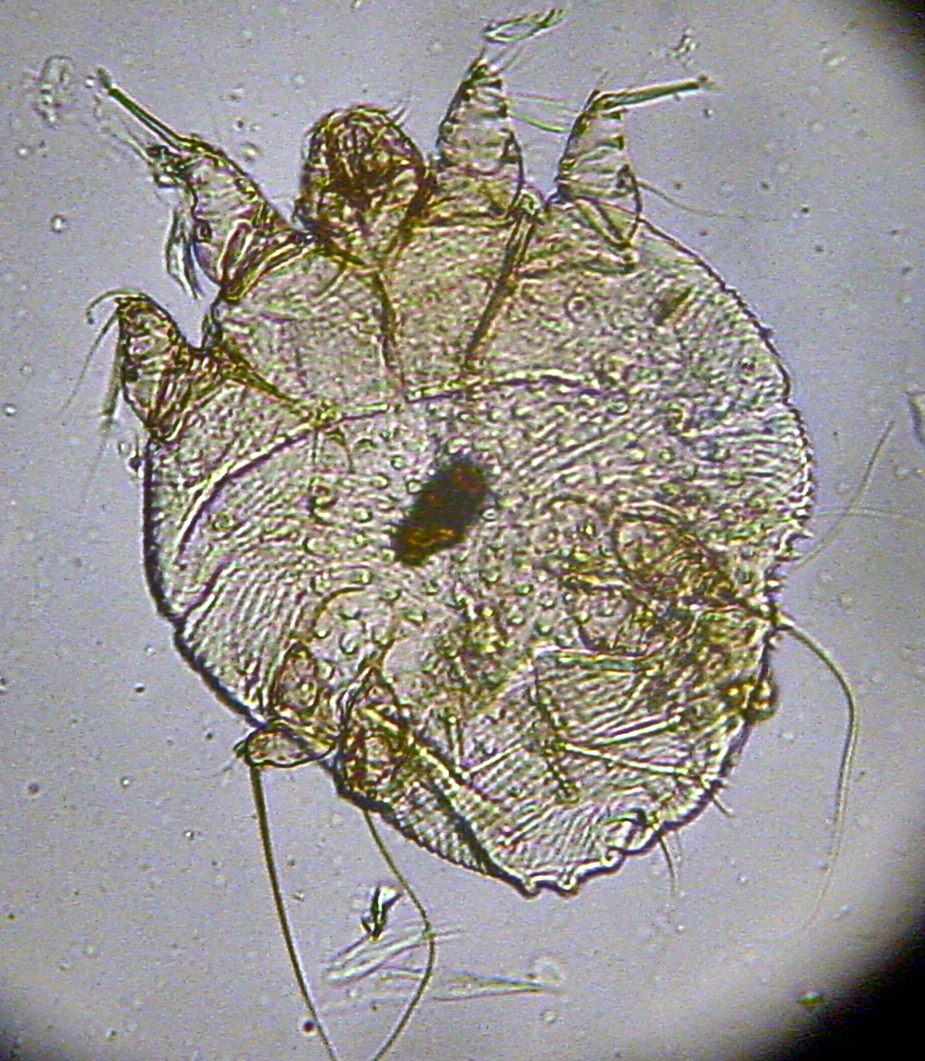

Side by side
| Sarcoptes bubalus | Scabies Mite | |
|---|---|---|
| Scientific name | Sarcoptes bubalus Sugimoto | Sarcoptes scabiei (DeGeer, 1778) |
| English name | Not recorded | Scabies Mite |
| Group | Spiders and other arachnids | Spiders and other arachnids |
| Class | Arachnida Arachnid | Arachnida Arachnid |
| Order | Sarcoptiformes | Sarcoptiformes |
| Family | Sarcoptidae Itch Mites | Sarcoptidae Itch Mites |
| Genus | Sarcoptes Scabies Or Itch Mite | Sarcoptes Scabies Or Itch Mite |
| Named in | Not recorded | 1778 |
| Environment | Not recorded | terrestrial |
| Countries on record | 1 country | 10 countries |
| GBIF occurrence records | Not recorded | 1,607 records |
Rows where the two agree are shown in grey.
Where each is found
Both recorded in 1 country
Only Scabies Mite (9)
From Catalogue of Life checklists and GBIF occurrence records. A country missing from a list means no record is held, which is not proof of absence.
Checked facts
| Sarcoptes bubalus | Scabies Mite | |
|---|---|---|
| Appearance | No checked fact yet |
|
| Size | No checked fact yet |
|
| Habitat | No checked fact yet | |
| Diet | No checked fact yet |
|
| Behaviour | No checked fact yet |
|
| Reproduction | No checked fact yet |
|
| Conservation | No checked fact yet |
|
| Other | No checked fact yet |
|
In brief
Scabies Mite
The Scabies Mite (Sarcoptes scabiei) is an arachnid in the family Sarcoptidae, order Sarcoptiformes and class Arachnida. It parasitizes humans and various other mammals and causes the skin disease known as scabies. It inhabits the upper layer of host skin and does not burrow below the stratum corneum. Adult mites are eyeless, have four pairs of legs and bear multiple cuticular spines on their dorsal surface. Full profile
Compare something else
Page built on 27 November 2026 from the data on the two species pages, where every source is listed.
Cite this page
ScientificNames.org. (2026). Sarcoptes bubalus vs Scabies Mite. Retrieved November 27, 2026, from https://scientificnames.org/compare/sarcoptes-bubalus-vs-scabies-mite
“Sarcoptes bubalus vs Scabies Mite.” ScientificNames.org, 2026, scientificnames.org/compare/sarcoptes-bubalus-vs-scabies-mite. Accessed 27 Nov. 2026.
ScientificNames.org. “Sarcoptes bubalus vs Scabies Mite.” Accessed November 27, 2026. https://scientificnames.org/compare/sarcoptes-bubalus-vs-scabies-mite.
@misc{scientificnames_sarcoptes_bubalus_vs_scabies_mite,
  author = {{ScientificNames.org}},
  title = {Sarcoptes bubalus vs Scabies Mite},
  year = {2026},
  url = {https://scientificnames.org/compare/sarcoptes-bubalus-vs-scabies-mite},
  note = {Accessed 2026-11-27}
}