Comparison

Selaginella simplex vs Rose-of-Jericho

Selaginella simplex (Selaginella simplex) and Rose-of-Jericho (Selaginella lepidophylla) both belong to the genus Selaginella (spikemoss) and part ways below it. Both are recorded in 2 countries.
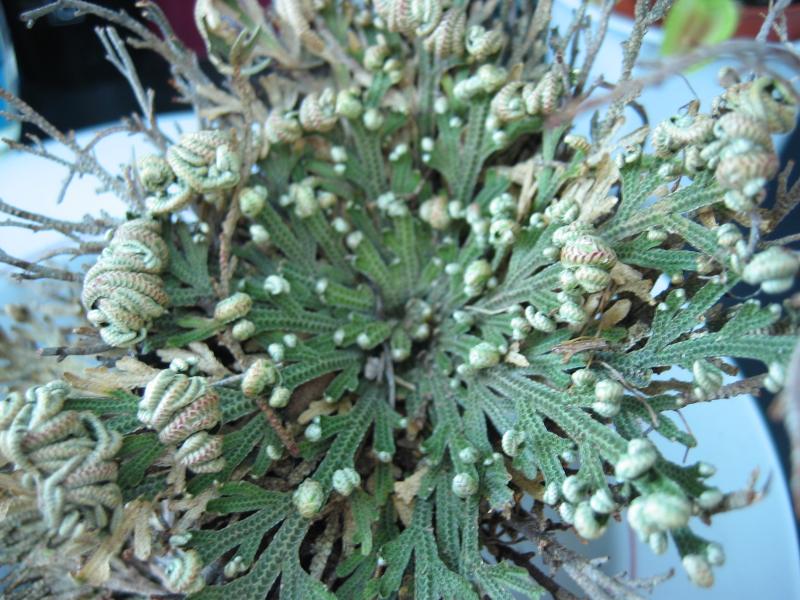
Rose-of-Jericho

Rose-of-Jericho

Selaginella lepidophylla

Unknown author, CC BY-SA 3.0, via Wikimedia Commons

Side by side

Selaginella simplexRose-of-Jericho
Scientific nameSelaginella simplex BakerSelaginella lepidophylla (Hook. & Grev.) Spring
English nameNot recordedRose-of-Jericho
GroupFerns and alliesFerns and allies
ClassLycopodiopsidaLycopodiopsida
OrderSelaginellalesSelaginellales
FamilySelaginellaceae Spikemoss FamilySelaginellaceae Spikemoss Family
GenusSelaginella SpikemossSelaginella Spikemoss
Countries on record9 countries5 countries
GBIF occurrence records96 records2,342 records

Rows where the two agree are shown in grey.

Where each is found

Both recorded in 2 countries

Only Selaginella simplex (7)

Only Rose-of-Jericho (3)

From Catalogue of Life checklists and GBIF occurrence records. A country missing from a list means no record is held, which is not proof of absence.

Checked facts

Selaginella simplexRose-of-Jericho
AppearanceNo checked fact yet
  • When dehydrated, the plant's leaves become brown and fold inward, forming a ball. English Wikipedia
  • The rooted leaves develop leathery bases that become dark brown or reddish brown during desiccation. English Wikipedia
  • The plant's outer stems bend into circular rings after a short period without water. English Wikipedia
  • The inner stems curl gradually into spirals as the plant loses water. English Wikipedia
HabitatNo checked fact yet
  • The species grows in dry, sandy soils exposed to full sunlight. English Wikipedia
  • Selaginella lepidophylla inhabits desert environments in the southwestern United States and northern Mexico. sbs.wsu.edu
BehaviourNo checked fact yet
  • During dry weather in its native habitat, the plant's stems curl into a tight ball and uncurl when exposed to moisture. English Wikipedia
  • The plant can survive losing up to 95% of its moisture without sustaining damage. English Wikipedia
  • During drought, Selaginella lepidophylla can remain alive for several years without water. English Wikipedia
  • During dormancy, the plant reduces its metabolic functions to a minimum. English Wikipedia
  • The plant can retain only 3% of its original mass after drying out. English Wikipedia
  • The plant can begin recovering its green coloration almost immediately after being soaked by rain. sbs.wsu.edu
  • After rehydration, the plant resumes respiration and uses stored food reserves to rebuild its chloroplasts and photosynthetic enzymes. sbs.wsu.edu
  • After rehydration, the plant can resume producing food through photosynthesis within a few hours. sbs.wsu.edu
  • The plant can lose 97% of its internal moisture while sustaining little permanent damage to its leaf cells. sbs.wsu.edu
  • Extreme heat can dry the rehydrated plant again, returning it to inactivity. sbs.wsu.edu
  • The plant can remain inactive for months or years while waiting for another rainfall event. sbs.wsu.edu
  • The plant produces trehalose during dehydration to protect its tissues from damage caused by concentrated salts. English Wikipedia
  • Selaginella lepidophylla also uses betaines to protect its tissues during dehydration. English Wikipedia
  • After prolonged drought, the plant's roots may detach, allowing wind to transport it. English Wikipedia
  • After wind transport, the plant may rehydrate and establish roots in a new location if it encounters moisture. English Wikipedia
  • Repeated cycles of dehydration and regrowth can eventually reduce the plant's ability to recover and lead to its death. English Wikipedia
ReproductionNo checked fact yet
  • Selaginella lepidophylla reproduces through spores rather than flowers or seeds. English Wikipedia
  • The species can be propagated from spores or cuttings. English Wikipedia
DistributionNo checked fact yet
  • The species is native to the Chihuahuan Desert of the United States and Mexico. English Wikipedia
  • The species occurs in deserts of the southwestern United States and northern Mexico. sbs.wsu.edu
ConservationNo checked fact yet
  • Selaginella lepidophylla is not listed as a threatened or endangered species. English Wikipedia
UsesNo checked fact yet
  • The plant is commercially sold as a novelty item in a dried, bare-root form that can be revived with a small amount of water. English Wikipedia
  • The plant has been used as an herbal remedy for colds and sore throats in the form of an infusion. English Wikipedia
  • In Mexico, the plant is sold as a diuretic. English Wikipedia
  • Women in Mexico drink water in which the plant has been soaked to facilitate childbirth. English Wikipedia
  • The plant is used in voodoo and Cuban santería rituals intended to invoke love and fortune. English Wikipedia
  • The plant has traditionally been regarded as a lucky charm and passed down through families. English Wikipedia
Similar speciesNo checked fact yet
  • Selaginella lepidophylla is distinct from Anastatica hierochuntica, the flowering plant known as the true Rose of Jericho. English Wikipedia

In brief

Rose-of-Jericho

Selaginella lepidophylla inhabits desert environments in the southwestern United States and northern Mexico. Its stems curl into a tight ball during dry weather and uncurl when exposed to moisture. Full profile

Compare something else

Page built on 27 November 2026 from the data on the two species pages, where every source is listed.

Cite this page

ScientificNames.org. (2026). Selaginella simplex vs Rose-of-Jericho. Retrieved November 27, 2026, from https://scientificnames.org/compare/selaginella-simplex-vs-rose-of-jericho