Comparison

Smallanthus maculatus vs Yacón

Smallanthus maculatus (Smallanthus maculatus) and Yacón (Smallanthus sonchifolius) both belong to the genus Smallanthus and part ways below it.
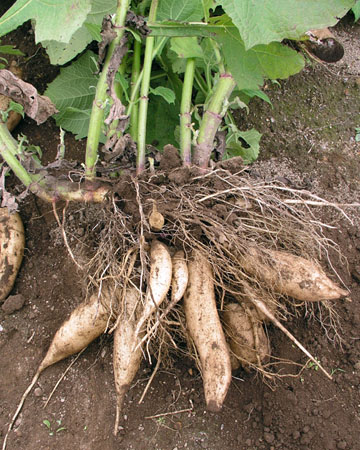
Yacón

Yacón

Smallanthus sonchifolius

Unknown author, CC BY-SA 3.0, via Wikimedia Commons

Side by side

Smallanthus maculatusYacón
Scientific nameSmallanthus maculatus (Cav.) H.Rob.Smallanthus sonchifolius (Poepp. & Endl.) H.Rob.
English nameNot recordedYacón
GroupFlowering plantsFlowering plants
ClassMagnoliopsidaMagnoliopsida
OrderAsteralesAsterales
FamilyAsteraceae CompositeAsteraceae Composite
GenusSmallanthusSmallanthus
Countries on record8 countries8 countries
GBIF occurrence records1,875 records310 records

Rows where the two agree are shown in grey.

Where each is found

Only Smallanthus maculatus (8)

Only Yacón (8)

From Catalogue of Life checklists and GBIF occurrence records. A country missing from a list means no record is held, which is not proof of absence.

Checked facts

Smallanthus maculatusYacón
AppearanceNo checked fact yet
  • Yacon is a perennial herb with cylindrical to angular stems that become hollow at maturity. English Wikipedia
  • Yacon has opposite, deltoid leaves with hairy upper surfaces. English Wikipedia
  • The underground root system includes branching rhizomes and as many as 20 tuberous storage roots. English Wikipedia
  • Yacon storage roots vary in skin colour from white through pink to brown. English Wikipedia
  • The female ray florets are yellow or orange and can reach 12 millimetres in length. English Wikipedia
  • The male disc florets are yellow-brown and approximately 7 millimetres long. English Wikipedia
  • Yacon produces starchy, fruit-like roots that vary in shape and size. pmc.ncbi.nlm.nih.gov
  • Yacon roots are crunchy and have a texture resembling that of an apple. pmc.ncbi.nlm.nih.gov
  • Yacon roots generally contain more than 70 percent water by fresh weight. pmc.ncbi.nlm.nih.gov
SizeNo checked fact yet
HabitatNo checked fact yet
  • Yacon grows traditionally at mid-elevations on the eastern slopes of the Andes toward the Amazon. English Wikipedia
  • Yacon grows well in mild climates with long growing seasons. English Wikipedia
  • Yacon grows optimally at temperatures between 18 and 25 degrees Celsius. English Wikipedia
DietNo checked fact yet
BehaviourNo checked fact yet
  • Yacon rhizomes continuously produce leafy shoots. English Wikipedia
  • Freezing temperatures kill the above-ground parts of yacon, but its rhizomes can produce new growth when temperature and moisture conditions become favourable. English Wikipedia
ReproductionNo checked fact yet
  • Flowering generally begins six to seven months after planting under favourable environmental conditions. English Wikipedia
  • Yacon seeds develop inside dark brown achenes measuring approximately 2.2–3.7 millimetres. English Wikipedia
  • Seed production is generally low, and some yacon ecotypes produce no seeds because of pollen sterility. English Wikipedia
  • Plants grown from seeds take longer to mature than plants propagated from tubers or rhizomes. English Wikipedia
DistributionNo checked fact yet
  • Yacon is traditionally cultivated across the northern and central Andes, from Colombia to northern Argentina. English Wikipedia
  • Yacon cultivation has expanded to Kathmandu, southern Australia, Tasmania, and New Zealand. English Wikipedia
  • Yacon was introduced to Japan during the 1980s, followed by cultivation in South Korea, China, and the Philippines. English Wikipedia
  • Yacon is cultivated in Argentina, Bolivia, Brazil, the Czech Republic, Ecuador, Italy, Japan, Korea, New Zealand, Peru, and the United States. pmc.ncbi.nlm.nih.gov
UsesNo checked fact yet
  • Yacon tubers can be consumed raw, boiled, dehydrated, roasted, or processed into beverages, jams, syrup, vinegar, flour, chips, and juice. English Wikipedia
  • Yacon roots are traditionally used in Andean folk medicine for liver and kidney diseases. English Wikipedia
  • Yacon is traditionally used in Bolivia to address diabetes and digestive problems. English Wikipedia
  • Yacon leaves have demonstrated radical-scavenging, cytoprotective, and antihyperglycemic activities. English Wikipedia
Similar speciesNo checked fact yet
  • Yacon is sometimes mistaken for the unrelated legume Pachyrhizus erosus because it is commonly called jicama in Ecuador. English Wikipedia
  • Yacon is closely related to sunflower and Jerusalem artichoke. English Wikipedia
OtherNo checked fact yet
  • The fructooligosaccharide content of yacon roots varies from 6.4 to 70 percent of dry matter depending on the crop and location. pmc.ncbi.nlm.nih.gov
  • Yacon fructooligosaccharides resist enzymatic digestion in the upper gastrointestinal tract and reach the colon intact. pmc.ncbi.nlm.nih.gov

In brief

Yacón

Yacón grows traditionally on the eastern slopes of the Andes toward the Amazon and is cultivated across the northern and central Andes, from Colombia to northern Argentina. Yacón is distinguished by its starchy, sweet, fruit-like storage roots, which are crunchy and contain fructooligosaccharides. Full profile

Compare something else

Page built on 28 November 2026 from the data on the two species pages, where every source is listed.

Cite this page

ScientificNames.org. (2026). Smallanthus maculatus vs Yacón. Retrieved November 28, 2026, from https://scientificnames.org/compare/smallanthus-maculatus-vs-yacon