Comparison

Black-chinned Sparrow vs Brewer's Sparrow

Black-chinned Sparrow (Spizella atrogularis) and Brewer's Sparrow (Spizella breweri) both belong to the genus Spizella (chipping sparrows) and part ways below it. Both are recorded in 2 countries.

Black-chinned Sparrow

Black-chinned Sparrow

Spizella atrogularis

Dominic Sherony, CC BY-SA 2.0, via Wikimedia Commons

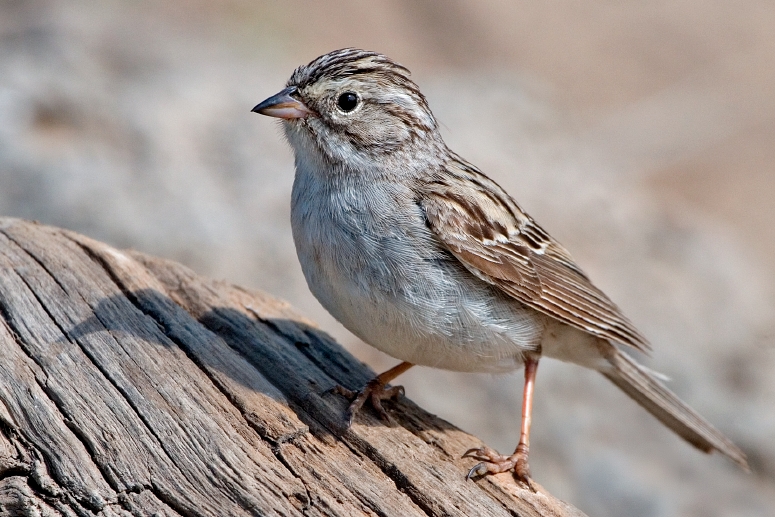
Brewer's Sparrow

Brewer's Sparrow

Spizella breweri

www.naturespicsonline.com, CC BY-SA 3.0, via Wikimedia Commons

Side by side

Black-chinned SparrowBrewer's Sparrow
Scientific nameSpizella atrogularis (Cabanis, 1851)Spizella breweri Cassin, 1856
English nameBlack-chinned SparrowBrewer's Sparrow
GroupBirdsBirds
ClassAves BirdAves Bird
OrderPasseriformes PasserinePasseriformes Passerine
FamilyPasserellidae New World SparrowPasserellidae New World Sparrow
GenusSpizella Chipping SparrowsSpizella Chipping Sparrows
Named in18511856
Red List categoryLeast ConcernLeast Concern
Environmentterrestrialterrestrial
Countries on record2 countries3 countries
GBIF occurrence records51,598 records336,802 records

Rows where the two agree are shown in grey.

Where each is found

Both recorded in 2 countries

Only Brewer's Sparrow (1)

From Catalogue of Life checklists and GBIF occurrence records. A country missing from a list means no record is held, which is not proof of absence.

Checked facts

Black-chinned SparrowBrewer's Sparrow
Appearance
  • Adult Black-chinned Sparrows have pink bills and dark brown or dusky legs and feet. English Wikipedia
  • Breeding males develop extensive black coloring on their chin, throat, and front of the face. English Wikipedia
  • Females have little or no black on their face, chin, or throat throughout the year. English Wikipedia
SizeNo checked fact yet
Habitat
  • The species inhabits arid and semi-arid environments. English Wikipedia
  • Its habitats include chaparral, sagebrush, pine-juniper woodlands, and other brushy shrublands. English Wikipedia
  • Much of its habitat consists of remote, rugged, rocky areas. English Wikipedia
  • In the United States, the species occurs from near sea level to elevations of approximately 2,400 m. English Wikipedia
  • In Mexico, the species occurs at elevations between 300 and 2,500 m. English Wikipedia
  • The species is significantly less common in habitat edges and rare near the coast. English Wikipedia
  • During migration, the species is sometimes recorded in montane oak forest. English Wikipedia
  • The nominate subspecies occupies brushy habitats, particularly those containing sagebrush. English Wikipedia
  • The timberline subspecies inhabits thicketed areas near the tree line in the Rocky Mountains. English Wikipedia
Diet
Behaviour
  • In Mexico, individuals are generally found alone or in pairs. English Wikipedia
  • In the United States, individuals sometimes form small, loose groups and occasionally associate with Brewer's or chipping sparrows. English Wikipedia
  • Breeding males sing from conspicuous exposed perches. English Wikipedia
  • Male Black-chinned Sparrows sometimes respond alternately to neighboring males in counter-singing exchanges. English Wikipedia
  • The species produces a high, soft call described as tsip or stip. English Wikipedia
  • Its song consists of clear, high-pitched whistles that accelerate into a rising-pitch trill. English Wikipedia
  • Males sing to defend their nesting territories. English Wikipedia
  • The male's song consists of a varied sequence of notes and trills. English Wikipedia
  • Males produce two distinct song types classified as short and long songs. English Wikipedia
  • Individuals forage mainly in shrubs or low vegetation and also feed on the ground. English Wikipedia
  • Individuals generally forage in flocks outside the breeding season. English Wikipedia
  • Brewer's Sparrows sometimes forage in mixed flocks with other sparrows. English Wikipedia
Reproduction
  • The species breeds primarily from late April through June. English Wikipedia
  • Some active nests have been recorded as late as mid-July. English Wikipedia
  • Breeding territories of males may cover up to 2 hectares. English Wikipedia
  • The nest is a shallow, open cup constructed from grasses, weed stems, rootlets, or yucca fibers. English Wikipedia
  • Nests are typically positioned at mid-level in dense shrubs within 1.2 m of the ground. English Wikipedia
  • Females perform most nest construction, although males may assist. English Wikipedia
  • Females lay between two and five pale blue or bluish-green eggs. English Wikipedia
  • Egg incubation lasts approximately 13 days and is performed primarily by the female. English Wikipedia
  • Both parents feed nestlings until they fledge after approximately 11–13 days. English Wikipedia
  • Most breeding pairs raise one brood annually. English Wikipedia
  • Females typically lay three to four eggs per clutch, although clutches can contain up to five eggs. English Wikipedia
  • The species builds cup-shaped nests in low shrubs. English Wikipedia
Distribution
  • The species breeds in the southwestern United States and throughout much of Mexico north of the Isthmus of Tehuantepec. English Wikipedia
  • The nominate subspecies occurs in southern parts of western Canada and the western United States. English Wikipedia
  • The timberline subspecies occurs in British Columbia, Alberta, northern Montana, the southern Yukon, and southeastern Alaska. English Wikipedia
Conservation
  • The International Union for Conservation of Nature classifies the Black-chinned Sparrow as Least Concern. English Wikipedia
  • Estimated global population size ranges from 450,000 to 1,100,000 individuals. English Wikipedia
  • Partners in Flight reported a 62 percent population decline between 1970 and 2014. English Wikipedia
  • The species is vulnerable to habitat fragmentation because it avoids habitat edges. English Wikipedia
  • The species' breeding range shifted perceptibly northward between 2000 and 2020. English Wikipedia
  • Brewer's Sparrow populations have declined in some parts of the species' range. English Wikipedia
  • Destruction of sagebrush habitat is suspected to contribute to population declines. English Wikipedia
  • The species is classified as least concern on the IUCN Red List following the merger of the timberline sparrow with Brewer's Sparrow. English Wikipedia
Similar species
  • The Black-chinned Sparrow has hybridized with Brewer's Sparrow. English Wikipedia
  • The field sparrow is identified as the Black-chinned Sparrow's closest relative in mitochondrial DNA studies. English Wikipedia
  • The Black-chinned Sparrow resembles the dark-eyed junco in plumage but is slimmer and has a streaked back. English Wikipedia
  • Brewer's Sparrow resembles the clay-colored sparrow but lacks its pale crown stripe and grey neck patch. English Wikipedia

In brief

Black-chinned Sparrow

Spizella atrogularis breeds in the southwestern United States and throughout much of Mexico north of the Isthmus of Tehuantepec. Breeding males develop extensive black coloring on the chin, throat, and front of the face. Full profile

Brewer's Sparrow

The nominate subspecies occurs in southern parts of western Canada and the western United States, while the timberline subspecies occurs in British Columbia, Alberta, northern Montana, the southern Yukon, and southeastern Alaska. Adults have grey-brown backs, speckled brown crowns with dark streaks, pale grey underparts, and long, notched tails. Full profile

Compare something else

Page built on 28 November 2026 from the data on the two species pages, where every source is listed.

Cite this page

ScientificNames.org. (2026). Black-chinned Sparrow vs Brewer's Sparrow. Retrieved November 28, 2026, from https://scientificnames.org/compare/black-chinned-sparrow-vs-brewers-sparrow