Species · Birds
Black-chinned Sparrow Spizella atrogularis
The scientific name of the Black-chinned Sparrow is Spizella atrogularis. It is a species of bird in the family Passerellidae (new world sparrow), order Passeriformes. The name dates from 1851.
- Scientific name
- Spizella atrogularis (Cabanis, 1851)
- Common name
- Black-chinned Sparrow
- Genus
- Spizella
- Family
- Passerellidae (New World Sparrow)
- Order
- Passeriformes
- Class
- Aves
- Red List category
- LC Least Concern
- Environment
- terrestrial
- Recorded in
- 2 countries
- Name status
- accepted in the Catalogue of Life

Overview
Spizella atrogularis breeds in the southwestern United States and throughout much of Mexico north of the Isthmus of Tehuantepec. Breeding males develop extensive black coloring on the chin, throat, and front of the face.
Written 26 November 2026 from the sources listed below. Each statement was checked against the passage it cites; statements that could not be supported were removed.
Appearance
Adults have pink bills and dark brown or dusky legs and feet. Breeding males develop extensive black coloring on the chin, throat, and front of the face, while females have little or no black on these areas throughout the year.[1][2][3]
Habitat
The Black-chinned Sparrow inhabits arid and semi-arid environments, including chaparral, sagebrush, pine-juniper woodlands, and other brushy shrublands. Much of its habitat consists of remote, rugged, rocky areas.[4][5][6]
In the United States, the species occurs from near sea level to elevations of approximately 2,400 m. In Mexico, it occurs at elevations between 300 and 2,500 m.[7][8]
The species is significantly less common in habitat edges and rare near the coast. During migration, it is sometimes recorded in montane oak forest.[9][10]
Diet
The Black-chinned Sparrow primarily consumes seeds during winter and insects during summer. Breeding birds mainly consume adult and larval insects.[11][12][13]
The species sometimes catches insects while flying and may consume seeds while perched in bushes.[14][15]
Behaviour
In Mexico, individuals are generally found alone or in pairs. In the United States, they sometimes form small, loose groups and occasionally associate with Brewer's or chipping sparrows.[16][17]
Breeding males sing from conspicuous exposed perches and sometimes respond alternately to neighboring males in counter-singing exchanges. The species produces a high, soft call described as tsip or stip.[18][19][20]
Its song consists of clear, high-pitched whistles that accelerate into a rising-pitch trill.[21]
Reproduction and life cycle
The Black-chinned Sparrow breeds primarily from late April through June, although some active nests have been recorded as late as mid-July. Breeding territories of males may cover up to 2 hectares.[22][23][24]
The nest is a shallow, open cup constructed from grasses, weed stems, rootlets, or yucca fibers. Nests are typically positioned at mid-level in dense shrubs within 1.2 m of the ground. Females perform most nest construction, although males may assist.[25][26][27]
Females lay between two and five pale blue or bluish-green eggs. Incubation lasts approximately 13 days and is performed primarily by the female.[28][29]
Both parents feed nestlings until they fledge after approximately 11–13 days. Most breeding pairs raise one brood annually.[30][31]
Conservation
The International Union for Conservation of Nature classifies the Black-chinned Sparrow as Least Concern. Its estimated global population ranges from 450,000 to 1,100,000 individuals.[32][33]
Partners in Flight reported a 62 percent population decline between 1970 and 2014. The species is vulnerable to habitat fragmentation because it avoids habitat edges.[34][35]
The species' breeding range shifted perceptibly northward between 2000 and 2020.[36]
Similar species
The Black-chinned Sparrow resembles the dark-eyed junco in plumage but is slimmer and has a streaked back. It has hybridized with Brewer's Sparrow.[37][38]
The field sparrow is identified as the Black-chinned Sparrow's closest relative in mitochondrial DNA studies.[39]
Classification of the Black-chinned Sparrow
| Kingdom | Animalia |
|---|---|
| Phylum | Chordata |
| Subphylum | Vertebrata |
| Infraphylum | Gnathostomata |
| Parvphylum | Osteichthyes |
| Megaclass | Tetrapoda |
| Class | Aves (Bird) |
| Order | Passeriformes (Passerine) |
| Family | Passerellidae (New World Sparrow) |
| Genus | Spizella (Chipping Sparrows) |
| Species | Spizella atrogularis (Cabanis, 1851) |
Where the Black-chinned Sparrow is found
Checklists and occurrence records place Spizella atrogularis in 2 countries across North America. GBIF holds 51,598 georeferenced records of it.
Countries
Regions and cities with the most records
- Arizona, United States 16,979
- California, United States 13,477
- Texas, United States 5,433
- New Mexico, United States 4,820
- México, Mexico 1,892
- Green Valley, United States 1,855
- Tanque Verde, United States 1,683
- Mexico City, Mexico 1,678
- Cuauhtémoc, Mexico 1,502
- Azcapotzalco, Mexico 1,422
- Utah, United States 1,381
- Nevada, United States 1,366
- Tepexpan, Mexico 1,219
- Catalina Foothills, United States 1,142
- San Salvador Atenco, Mexico 1,136
- Cuautitlán Izcalli, Mexico 1,117
- Cuautitlán, Mexico 1,108
- Tultitlán de Mariano Escobedo, Mexico 1,108
- Casas Adobes, United States 1,098
- Fuentes del Valle, Mexico 1,097
- Buenavista, Mexico 1,096
- Gustavo Adolfo Madero, Mexico 1,095
- Ampliación San Mateo, Mexico 1,092
- Santiago Teyahualco, Mexico 1,091
- Tezoyuca, Mexico 1,091
- Tultepec, Mexico 1,088
- Ciudad López Mateos, Mexico 1,086
- Ecatepec de Morelos, Mexico 1,080
- Tlalnepantla, Mexico 1,078
- San Pablo de las Salinas, Mexico 1,070
- San Francisco Coacalco, Mexico 1,064
- Alborada Jaltenco, Mexico 1,061
- Melchor Ocampo, Mexico 1,048
- Ojo de Agua, Mexico 1,010
- Chiconcuac, Mexico 1,000
- Albuquerque, United States 999
Range as the checklists state it
Middle America
North America
A number beside a place is its count of GBIF occurrence records. A place without a number comes from a checklist alone. Records show where a species has been observed or collected, which can include escapes and vagrants.
Common names
English
- Black-chinned Sparrow
Names in 25 other languages
- Catalan
- Sit de barbeta negra, sit de mentó negre
- Chinese
- 黑頦雀鵐, 黑颏雀鹀
- Croatian
- crnogrli strnadar
- Czech
- strnádka černobradá
- Danish
- Sortstrubet Træspurv
- Dutch
- Zwartkingors
- Esperanto
- nigramentona paserelo
- Finnish
- nokikurkkusirkkuli
- French
- Bruant à menton noir, Bruantin à menton noir
- German
- Schwarzkinammer, Schwarzkinnammer
- Italian
- Passero mentonero
- Japanese
- アゴグロヒメドリ
- Latvian
- melnzoda zvirbulis
- Lithuanian
- juodagurklė žvirblinė starta
- Norwegian
- svarthakespurv
- Polish
- spizela czarnobroda
- Portuguese
- Tico-tico-barbanegra, tico-tico-barba-negra, tico-tico-de-queixo-preto
- Russian
- Черногорлая воробьиная овсянка, Черногорлая малая овсянка
- Serbian
- Crnobradi strnad
- Slovak
- strnádlik čiernobradý
- Spanish
- Chingolo barbinegro, Gorrión barba negra
- Swedish
- chaparralsparv
- Turkish
- Siyah Gıdılı Serçe
- Ukrainian
- карнатка чорногорла
- Welsh
- bras genddu
Synonyms
One other scientific name has been used for this species and is now treated as a synonym of Spizella atrogularis.
- Struthus atrimentalis Couch, DN, 1854
Subspecies and varieties
- Spizella atrogularis atrogularis (Mexican Black-chinned Sparrow) subspecies
- Spizella atrogularis cana (California Black-chinned Sparrow) subspecies
- Spizella atrogularis caurina subspecies
- Spizella atrogularis evura (Arizona Black-chinned Sparrow) subspecies
Related species
-
 Chipping SparrowSpizella passerina
-
 Field SparrowSpizella pusilla
-
 Clay-colored SparrowSpizella pallida
-
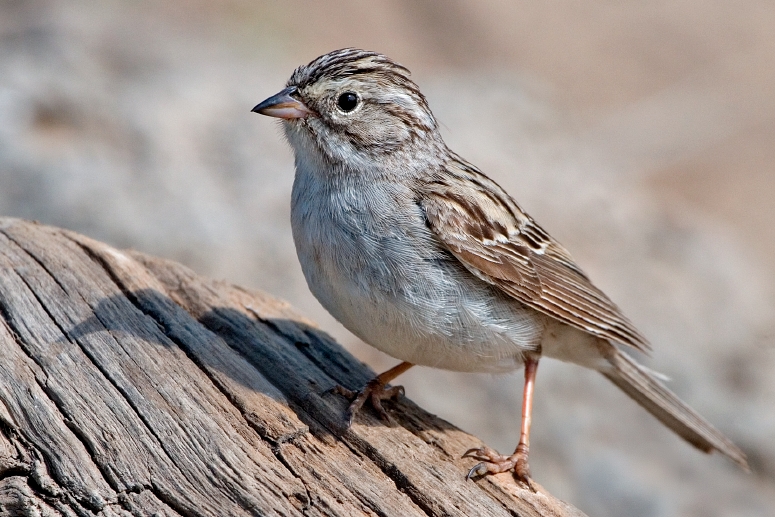 Brewer's SparrowSpizella breweri
-
 Worthen's SparrowSpizella wortheni
-
 Dark-eyed JuncoJunco hyemalis
-
 White-throated SparrowZonotrichia albicollis
-
 White-crowned SparrowZonotrichia leucophrys
Compare
Questions and answers
What is the scientific name of the Black-chinned Sparrow?
The scientific name of the Black-chinned Sparrow is Spizella atrogularis. Written with its author, the full name is Spizella atrogularis (Cabanis, 1851).
Which family does the Black-chinned Sparrow belong to?
Spizella atrogularis belongs to the family Passerellidae, in the order Passeriformes and the class Aves.
Where is the Black-chinned Sparrow found?
Checklists and occurrence records place Spizella atrogularis in 2 countries: United States and Mexico.
What is the conservation status of the Black-chinned Sparrow?
The IUCN Red List category recorded for Spizella atrogularis is Least Concern (LC).
Is black sparrow rare?
The Black-chinned Sparrow is classified as Least Concern by the International Union for Conservation of Nature. Its estimated global population ranges from 450,000 to 1,100,000 individuals, although Partners in Flight reported a 62 percent population decline between 1970 and 2014.[32][33][34]
What bird is mistaken for a sparrow?
The Black-chinned Sparrow resembles the dark-eyed junco in plumage, but it is slimmer and has a streaked back.[38]
What kind of food does a sparrow eat?
The Black-chinned Sparrow primarily consumes seeds during winter and insects during summer. Breeding birds mainly eat adult and larval insects.[11][12][13]
Where do black throated sparrows live?
The Black-chinned Sparrow inhabits arid and semi-arid environments, including chaparral, sagebrush, pine-juniper woodlands, and other brushy shrublands. It breeds in the southwestern United States and throughout much of Mexico north of the Isthmus of Tehuantepec.[4][5][40]
Sources
Passages the profile rests on
- Adult Black-chinned Sparrows have pink bills and dark brown or dusky legs and feet. Source passage: “The legs and feet are dark brown or dusky, and the bill is small, stout, and pink.” — English Wikipedia
- Breeding males develop extensive black coloring on their chin, throat, and front of the face. Source passage: “In alternate plumage (during the breeding season), the male has extensive black on its chin, throat and the front of its face.” — English Wikipedia
- Females have little or no black on their face, chin, or throat throughout the year. Source passage: “The female has little or no black on her face, chin, or throat at any point during the year.” — English Wikipedia
- The species inhabits arid and semi-arid environments. Source passage: “A species of arid and semi-arid places” — English Wikipedia
- Its habitats include chaparral, sagebrush, pine-juniper woodlands, and other brushy shrublands. Source passage: “it lives in chaparral, sagebrush, pine-juniper woodlands, and other brushy shrubland.” — English Wikipedia
- Much of its habitat consists of remote, rugged, rocky areas. Source passage: “Much of its habitat is in remote, rugged, and rocky areas.” — English Wikipedia
- In the United States, the species occurs from near sea level to elevations of approximately 2,400 m. Source passage: “It is found at elevations ranging from near sea level to 2,400 m (8,000 ft) in the United States” — English Wikipedia
- In Mexico, the species occurs at elevations between 300 and 2,500 m. Source passage: “and from 300 to 2,500 m (980 to 8,200 ft) in Mexico.” — English Wikipedia
- The species is significantly less common in habitat edges and rare near the coast. Source passage: “It is significantly less common in edge habitat, and rare near the coast.” — English Wikipedia
- During migration, the species is sometimes recorded in montane oak forest. Source passage: “During migration, it is sometimes recorded in montane oak forest” — English Wikipedia
- The Black-chinned Sparrow primarily consumes seeds during winter. Source passage: “it appears to feed primarily on seeds as a ground-gleaning granivore in the winter” — English Wikipedia
- During summer, the species primarily feeds on insects. Source passage: “and on insects as a ground-foraging omnivore in the summer.” — English Wikipedia
- During summer, breeding Black-chinned Sparrows mainly consume adult and larval insects. Source passage: “While breeding, Black-chinned Sparrows mainly eat adult and larval insects, but” — ecos.fws.gov
- The species sometimes catches insects while flying. Source passage: “It occasionally captures insects in flight” — English Wikipedia
- The species may consume seeds while perched in bushes. Source passage: “and may feed on seeds while perched in a bush.” — English Wikipedia
- In Mexico, individuals are generally found alone or in pairs. Source passage: “In Mexico, it is generally found singly or in pairs” — English Wikipedia
- In the United States, individuals sometimes form small, loose groups and occasionally associate with Brewer's or chipping sparrows. Source passage: “In the United States, it is sometimes found in small, loose groups, occasionally mingling with Brewer's or chipping sparrows.” — English Wikipedia
- Breeding males sing from conspicuous exposed perches. Source passage: “breeding males defy that more typical behavior and pick conspicuous, exposed perches from which to sing.” — English Wikipedia
- Male Black-chinned Sparrows sometimes respond alternately to neighboring males in counter-singing exchanges. Source passage: “Neighboring males often counter-sing, alternately responding to their singing rivals.” — English Wikipedia
- The species produces a high, soft call described as tsip or stip. Source passage: “Its call is a high, soft tsip or stip.” — English Wikipedia
- Its song consists of clear, high-pitched whistles that accelerate into a rising-pitch trill. Source passage: “The song is a series of clear, high-pitched whistles that accelerate into a rapid trill, which typically rises in pitch.” — English Wikipedia
- The species breeds primarily from late April through June. Source passage: “It breeds primarily from late April into June” — English Wikipedia
- Some active nests have been recorded as late as mid-July. Source passage: “though active nests have been found as late as the middle of July.” — English Wikipedia
- Breeding territories of males may cover up to 2 hectares. Source passage: “which may encompass as much as 2 hectares (4.9 acres).” — English Wikipedia
- The nest is a shallow, open cup constructed from grasses, weed stems, rootlets, or yucca fibers. Source passage: “The nest is a shallow, open cup built of plant material, including grasses, weed stems, rootlets, or yucca fibers.” — English Wikipedia
- Nests are typically positioned at mid-level in dense shrubs within 1.2 m of the ground. Source passage: “It is located within 4 ft (1.2 m) of the ground, typically at mid-level in a dense shrub.” — English Wikipedia
- Females perform most nest construction, although males may assist. Source passage: “The female does the bulk of the nest building, though the male may help.” — English Wikipedia
- Females lay between two and five pale blue or bluish-green eggs. Source passage: “The female lays 2–5 very pale blue or bluish-green eggs.” — English Wikipedia
- Egg incubation lasts approximately 13 days and is performed primarily by the female. Source passage: “Incubation takes roughly 13 days, and is done primarily (or possibly completely) by the female.” — English Wikipedia
- Both parents feed nestlings until they fledge after approximately 11–13 days. Source passage: “Both parents provide food for the nestlings and remove fecal sacs for the 11–13 days it takes for the young to fledge.” — English Wikipedia
- Most breeding pairs raise one brood annually. Source passage: “Most pairs raise a single brood per year” — English Wikipedia
- The International Union for Conservation of Nature classifies the Black-chinned Sparrow as Least Concern. Source passage: “the International Union for Conservation of Nature considers it to be a species of least concern” — English Wikipedia
- Estimated global population size ranges from 450,000 to 1,100,000 individuals. Source passage: “Estimates of its global population range from 450,000 to 1,100,000.” — English Wikipedia
- Partners in Flight reported a 62 percent population decline between 1970 and 2014. Source passage: “Partners in Flight reports that the sparrow's numbers dropped 62 percent between 1970 and 2014.” — English Wikipedia
- The species is vulnerable to habitat fragmentation because it avoids habitat edges. Source passage: “Due to its avoidance of edge habitat, the black-chinned sparrow is vulnerable to habitat fragmentation.” — English Wikipedia
- The species' breeding range shifted perceptibly northward between 2000 and 2020. Source passage: “between 2000 and 2020, its breeding range shifted perceptibly northwards.” — English Wikipedia
- The Black-chinned Sparrow has hybridized with Brewer's Sparrow. Source passage: “and is known to have hybridized with Brewer's sparrow, a congener.” — English Wikipedia
- The Black-chinned Sparrow resembles the dark-eyed junco in plumage but is slimmer and has a streaked back. Source passage: “Though similar in plumage to the dark-eyed junco, the black-chinned sparrow is slimmer, and has a streaked back” — English Wikipedia
- The field sparrow is identified as the Black-chinned Sparrow's closest relative in mitochondrial DNA studies. Source passage: “Mitochondrial DNA studies have shown that the field sparrow is its closest relative.” — English Wikipedia
- The species breeds in the southwestern United States and throughout much of Mexico north of the Isthmus of Tehuantepec. Source passage: “The black-chinned sparrow breeds in the southwestern United States and throughout much of Mexico north of the Isthmus of Tehuantepec.” — English Wikipedia
Data
- Catalogue of Life, 2026-10-16 XR cc by
- Global Biodiversity Information Facility CC BY 4.0
- Wikidata CC0
- GeoNames CC BY 4.0
- Wikimedia Commons per image; credit shown with each image
- Within the Catalogue of Life, this name comes from The Integrated Taxonomic Information System cc0
References
- Mus. Heineanum, 1: 133. 1851 where the name was published
- Banks, R. C., R. W. McDiarmid, and A. L. Gardner. (1987). Checklist of Vertebrates of the United States, the U.S. Territories, and Canada. Resource Publication, No. 166.
- Gill, Frank, & and Minturn Wright. (2006). Birds of the World: Recommended English Names.
- Dickinson, E. C., and L. Christidis, eds. (2014). The Howard and Moore Complete Checklist of the Birds of the World, 4th Edition, Vol. 2 Passerines.
This species in other databases
Page built on 27 November 2026. See how the catalog is made and all sources and licences.
Cite this page
ScientificNames.org. (2026). Spizella atrogularis (Black-chinned Sparrow). Retrieved November 27, 2026, from https://scientificnames.org/species/spizella-atrogularis
“Spizella atrogularis (Black-chinned Sparrow).” ScientificNames.org, 2026, scientificnames.org/species/spizella-atrogularis. Accessed 27 Nov. 2026.
ScientificNames.org. “Spizella atrogularis (Black-chinned Sparrow).” Accessed November 27, 2026. https://scientificnames.org/species/spizella-atrogularis.
@misc{scientificnames_spizella_atrogularis_black_chinned_sparrow,
  author = {{ScientificNames.org}},
  title = {Spizella atrogularis (Black-chinned Sparrow)},
  year = {2026},
  url = {https://scientificnames.org/species/spizella-atrogularis},
  note = {Accessed 2026-11-27}
}