Comparison
Sweet Pea vs Indian Pea
Sweet Pea (Lathyrus odoratus) and Indian Pea (Lathyrus sativus) both belong to the genus Lathyrus (pea) and part ways below it. Both are recorded in 42 countries.


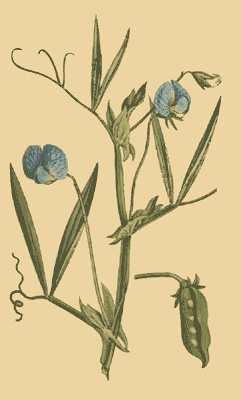
Indian Pea
Lathyrus sativus
Curtis, William The Botanical Magazine, Vol. 4, Public domain, via Wikimedia Commons

Side by side
| Sweet Pea | Indian Pea | |
|---|---|---|
| Scientific name | Lathyrus odoratus L. | Lathyrus sativus L. |
| English name | Sweet Pea | Indian Pea |
| Group | Flowering plants | Flowering plants |
| Class | Magnoliopsida | Magnoliopsida |
| Order | Fabales | Fabales |
| Family | Fabaceae Bean | Fabaceae Bean |
| Genus | Lathyrus Pea | Lathyrus Pea |
| Red List category | Critically Endangered | Not recorded |
| Countries on record | 53 countries | 64 countries |
| GBIF occurrence records | 3,789 records | 11,526 records |
Rows where the two agree are shown in grey.
Where each is found
Both recorded in 42 countries
- Algeria
- Australia
- Austria
- Bangladesh
- Belgium
- Cyprus
- Czechia
- Denmark
- Ecuador
- Estonia
- Finland
- France
- Germany
- Greece
- India
- Indonesia
- Iraq
- Italy
- Kazakhstan
- Kyrgyzstan
- Libya
- Luxembourg
- Morocco
- Nepal
- Norway
- Pakistan
- Poland
- Portugal
- Russia
- Slovakia
- Spain
- Sri Lanka
- Sweden
- Switzerland
- Tajikistan
- The Netherlands
- Tunisia
- Turkmenistan
- Ukraine
- United Kingdom
- United States
- Uzbekistan
Only Sweet Pea (11)
- Canada
- Dominican Republic
- El Salvador
- Guatemala
- Ireland
- Mexico
- New Zealand
- Peru
- Puerto Rico
- Rwanda
- Trinidad and Tobago
Only Indian Pea (22)
- Afghanistan
- Albania
- Angola
- Bulgaria
- China
- Croatia
- Egypt
- Ethiopia
- Haiti
- Hungary
- Iran
- Isle of Man
- Kenya
- Latvia
- Moldova
- Mongolia
- Myanmar
- Romania
- Sudan
- Tanzania
- Turkey
- Yemen
From Catalogue of Life checklists and GBIF occurrence records. A country missing from a list means no record is held, which is not proof of absence.
Checked facts
| Sweet Pea | Indian Pea | |
|---|---|---|
| Appearance |
|
|
| Size |
| No checked fact yet |
| Habitat |
|
|
| Diet | No checked fact yet |
|
| Reproduction |
| No checked fact yet |
| Lifespan |
| No checked fact yet |
| Distribution |
|
|
| Uses |
|
|
| Other |
|
|
In brief
Sweet Pea
The species is native to Sicily, southern Italy and the Aegean Islands. It is distinguished by strongly scented flowers that vary in colour among cultivated varieties. Full profile
Indian Pea
Indian pea is a much-branched annual herb with a well-developed taproot. It occurs in arid and semi-arid regions and is cultivated in Asia and East Africa. Its seeds contain high levels of protein and the neurotoxic amino acid β-N-oxalyl-L-α,β-diaminopropionic acid (ODAP). Full profile
Compare something else
Page built on 29 November 2026 from the data on the two species pages, where every source is listed.
Cite this page
ScientificNames.org. (2026). Sweet Pea vs Indian Pea. Retrieved November 29, 2026, from https://scientificnames.org/compare/sweet-pea-vs-indian-pea
“Sweet Pea vs Indian Pea.” ScientificNames.org, 2026, scientificnames.org/compare/sweet-pea-vs-indian-pea. Accessed 29 Nov. 2026.
ScientificNames.org. “Sweet Pea vs Indian Pea.” Accessed November 29, 2026. https://scientificnames.org/compare/sweet-pea-vs-indian-pea.
@misc{scientificnames_sweet_pea_vs_indian_pea,
  author = {{ScientificNames.org}},
  title = {Sweet Pea vs Indian Pea},
  year = {2026},
  url = {https://scientificnames.org/compare/sweet-pea-vs-indian-pea},
  note = {Accessed 2026-11-29}
}