Species · Flowering plants
Indian Pea Lathyrus sativus
The scientific name of the Indian Pea is Lathyrus sativus. It is a species of flowering plant in the family Fabaceae (bean), order Fabales.
- Scientific name
- Lathyrus sativus L.
- Common name
- Indian Pea
- Genus
- Lathyrus
- Family
- Fabaceae (Bean)
- Order
- Fabales
- Class
- Magnoliopsida
- Recorded in
- 64 countries
- Name status
- accepted in the Catalogue of Life
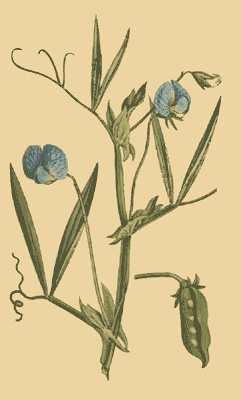
Overview
Indian pea is a much-branched annual herb with a well-developed taproot. It occurs in arid and semi-arid regions and is cultivated in Asia and East Africa. Its seeds contain high levels of protein and the neurotoxic amino acid β-N-oxalyl-L-α,β-diaminopropionic acid (ODAP).
Written 26 November 2026 from the sources listed below. Each statement was checked against the passage it cites; statements that could not be supported were removed.
Appearance
Indian pea is a much-branched annual herb with a well-developed taproot.[1]
Habitat
Indian pea grows naturally as either a cultivated crop or a weed. It occurs in arid and semi-arid regions.[2][3]
It grows best in areas with average temperatures of 10–25 °C and annual rainfall of 400–650 mm. It grows best in moist soils but can survive drought and flooding.[4][5]
It tolerates sandy, loamy and clay soils, as well as acidic, neutral and alkaline soils. It does not tolerate shade.[6][7][8]
Indian pea is cultivated in Asia and East Africa. It occurs in South Asia, Southeast Asia, the Middle East and Eastern Europe.[9][10]
Indian pea was most likely domesticated in the Balkan region around 6000 BCE.[11]
Uses
Indian pea is cultivated for human consumption and livestock feed. Its seeds can be eaten immature as green peas, while its mature seeds require soaking and thorough cooking to reduce their toxins.[12][13][14]
The leaves and stems are cooked and eaten as chana saga in parts of Odisha, India. Flour made from Indian pea is used as the main ingredient in gachas manchegas and gachas de almorta.[15][16]
Indian pea is used as a food and feed crop in sustainable agricultural systems. It can be incorporated into conservation agriculture and breeding programmes with minimal cultivation inputs and costs.[17][18]
Indian pea improves the nitrogen content of soil.[19]
Diet
Indian pea contains the neurotoxic amino acid β-N-oxalyl-L-α,β-diaminopropionic acid (ODAP). Prolonged consumption as a major dietary protein source can cause lathyrism.[20][21]
Consumption over extended periods as the exclusive or main nutrient source is associated with neurolathyrism. The risk of lathyrism increases when Indian pea provides more than 30% to 40% of daily calories over two to four months.[22][23]
Soaking, boiling, fermentation, dehulling and germination can reduce ODAP concentrations in the seeds. Drought, salinity, nutrient deficiency and sulfur limitation can increase ODAP accumulation.[24][25]
Low-ODAP cultivars are being developed to reduce neurotoxic risk. Wild relatives were evaluated between 2016 and 2018 for genes associated with low or absent ODAP and stress resistance.[26][27]
Systematic efforts to distribute low-ODAP varieties in South Asia have reduced the incidence of neurolathyrism.[28]
Classification of the Indian Pea
| Kingdom | Plantae |
|---|---|
| Subkingdom | Pteridobiotina |
| Phylum | Tracheophyta |
| Class | Magnoliopsida |
| Order | Fabales |
| Family | Fabaceae (Bean) |
| Genus | Lathyrus (Pea) |
| Species | Lathyrus sativus L. |
Where the Indian Pea is found
Checklists and occurrence records place Lathyrus sativus in 64 countries across Africa, Asia, Europe, North America, Oceania and South America. GBIF holds 11,526 georeferenced records of it.
Countries where it is native or its origin is not stated
- Bulgaria 138
- Croatia 16
- Czechia 94
- Denmark 26
- Estonia 8
- Finland 54
- Isle of Man 3
- Latvia 5
- Luxembourg 6
- Moldova 12
- Norway 6
- Poland 81
- Slovakia 181
- Sweden 32
- The Netherlands 72
Countries where it has been introduced
- Afghanistan 790
- Albania 66
- Algeria 50
- Angola 2
- Australia 133
- Austria 57
- Bangladesh 2,298
- Belgium 35
- China 46
- Cyprus 310
- Ecuador 10
- Egypt 43
- Ethiopia 670
- France 687
- Germany 293
- Greece 205
- Haiti 1
- Hungary 359
- India 451
- Indonesia
- Iran 117
- Iraq 29
- Italy 504
- Kazakhstan 25
- Kenya 1
- Kyrgyzstan 6
- Libya 7
- Mongolia 1
- Morocco 66
- Myanmar 4
- Nepal 206
- Pakistan 481
- Portugal 255
- Romania 13
- Russia 612
- Spain 860
- Sri Lanka
- Sudan 4
- Switzerland 82
- Tajikistan 237
- Tanzania
- Tunisia 47
- Turkey 236
- Turkmenistan 12
- Ukraine 290
- United Kingdom 66
- United States 113
- Uzbekistan 12
- Yemen
Regions and cities with the most records
- Amhara, Ethiopia 142
- Sindh, Pakistan 99
- Auvergne-Rhône-Alpes, France 96
- Dhaka Division, Bangladesh 94
- Oromiya, Ethiopia 84
- Canary Islands, Spain 80
- Barisal Division, Bangladesh 76
- Bekes County, Hungary 68
- Centre-Val de Loire, France 65
- Coimbra, Portugal 65
- Occitanie, France 65
- Ribeira de Frades, Portugal 65
- São Martinho do Bispo, Portugal 65
- Coimbra, Portugal 64
- Santo António dos Olivais, Portugal 64
- Condeixa-a-Nova, Portugal 63
- Eiras, Portugal 63
- São Paulo de Frades, Portugal 63
- Bavaria, Germany 54
- Szarvas, Hungary 46
- Île-de-France, France 46
- Tuscany, Italy 45
- Bourgogne-Franche-Comté, France 43
- Grand Est, France 43
- Jász-Nagykun-Szolnok, Hungary 42
- Mezőtúr, Hungary 42
- England, United Kingdom 40
- Gorno-Badakhshan, Tajikistan 38
- Farīdpur, Bangladesh 36
- Catalonia, Spain 35
- Aubervilliers, France 34
- Bagnolet, France 34
- Bobigny, France 34
- Clichy, France 34
- Drancy, France 34
- La Courneuve, France 34
17 more countries have a few records outside this range
These countries hold a few records of Lathyrus sativus but lie outside the range the checklists give for it. Such records are often zoo or garden specimens, museum material or vagrants, so the species is not counted as occurring there.
A number beside a place is its count of GBIF occurrence records. A place without a number comes from a checklist alone. Records show where a species has been observed or collected, which can include escapes and vagrants.
Common names
English
- Indian Pea
- Ethiopian Lentil
- Indian-pea
- Riga-pea
- Chicken Vetch
- Chickling Pea
- Chickling Vetch
- Chickling-pea
- Chickling-vetch
- Cultivated Vetchling
- Dogtooth-pea
- Grass Peavine
- Grass-pea
- Grasspea
- Khesari
- Wedge Peavine
- White Pea
- White Vetchling
Names in 25 other languages
- Arabic
- gelban, جلبان مزروع
- Asturian
- pedruelu
- Bengali
- খেসারি ডাল
- Chinese
- jia shan li dou, 家山黧豆
- Czech
- hrachor setý
- Dutch
- Pronkerwt, Zaailathyrus
- Estonian
- põld-lillhernes, põld-seahernes
- Finnish
- peltonätkelmä
- French
- Gesse, gesse blanche, gesse commune, gesse cultivée, lentille d'Espagne, pois carré
- German
- Saat-Platterbse, Saatplatterbse
- Hungarian
- szögletes lednek
- Italian
- Cicerchia
- Nepali
- खेसरी
- Norwegian Bokmål
- fôrflatbelg
- Norwegian Nynorsk
- fôrskolm
- Polish
- groszek siewny
- Portuguese
- chícharo
- Russian
- Чина посевная
- Slovak
- hrachor siaty
- Slovenian
- navadni grahor
- Spanish
- almorta
- Swedish
- plattvial
- Turkish
- Adi mürdümük, Mürdümük
- Ukrainian
- Чина посівна
- Welsh
- Ytbys India, Ytbysen India
Synonyms
38 other scientific names have been used for this species and are now treated as synonyms of Lathyrus sativus.
- Cicercula alata Moench
- Cicercula alba Medik.
- Cicercula caerulea Medik.
- Cicercula sativa (L.) Medik.
- Cicercula sativa var. alba Alef.
- Cicercula sativa var. angustata (Ser.) Alef.
- Cicercula sativa var. blepharocarpa Alef.
- Cicercula sativa var. coerulea Alef.
- Cicercula sativa var. colorata (Ser.) Alef.
- Cicercula sativa var. obtusata Alef.
- Lathyrus abyssinicus A.Br. ex Chiov.
- Lathyrus asiaticus (Zalkind) Kudr.
- Lathyrus azureus Booth ex Bosse
- Lathyrus azureus (hort. ex W. Thomps.) Dean
- Lathyrus cicera subsp. sativus (L.) Bonnier & Layens
- Lathyrus sativus f. albus Smekalova
- Lathyrus sativus f. azureus Smekalova
- Lathyrus sativus f. biflorus Smekalova
- Lathyrus sativus f. chlorospermus Smekalova
- Lathyrus sativus subsp. albus Smekalova
- Lathyrus sativus subsp. asiaticus Zalkind
- Lathyrus sativus var. angustatus Ser.
- Lathyrus sativus var. azureus hort. ex W. Thomps.
- Lathyrus sativus var. coloratus Ser.
- Lathyrus sativus var. comitans Smekalova
- Lathyrus sativus var. depressus Smekalova
- Lathyrus sativus var. orbiculatus Smekalova
- Lathyrus sativus var. parviflorus Smekalova
- Lathyrus sativus var. pisiformis Smekalova
- Lathyrus sativus var. platyspermus Smekalova
- Lathyrus sativus var. pulchrus Smekalova
- Lathyrus sativus var. sativus
- Lathyrus sativus var. stenophyllus Boiss.
- Lathyrus sativus var. variegatus Smekalova
- Lathyrus sativus var. violascens Smekalova
- Orobus bimarginatus Stokes
- Pisum lathyrus E.H.L.Krause
- Lathyrus stenophyllus Gand. ambiguous synonym
Subspecies and varieties
- Lathyrus sativus subsp. suspension subspecies
Related species
-
 Sweet PeaLathyrus odoratus
-
 Perennial PeaLathyrus latifolius
-
 Tuberous PeaLathyrus tuberosus
-
 Beach PeaLathyrus japonicus
-
 Yellow VetchlingLathyrus aphaca
-
 Bitter VetchLathyrus linifolius
-
 Spanish VetchlingLathyrus clymenum
-
 Meadow VetchlingLathyrus pratensis
Compare
Questions and answers
What is the scientific name of the Indian Pea?
The scientific name of the Indian Pea is Lathyrus sativus. Written with its author, the full name is Lathyrus sativus L..
Which family does the Indian Pea belong to?
Lathyrus sativus belongs to the family Fabaceae, in the order Fabales and the class Magnoliopsida.
Where is the Indian Pea found?
Checklists and occurrence records place Lathyrus sativus in 64 countries, including Slovakia, Bulgaria, Czechia, Poland, The Netherlands and Finland.
What other names does the Indian Pea have?
Lathyrus sativus is also known in English as Ethiopian Lentil, Indian-pea, Riga-pea, Chicken Vetch, Chickling Pea and Chickling Vetch.
Is Lathyrus sativus edible?
Yes. Its immature seeds can be eaten as green peas, and its leaves and stems are cooked and eaten as chana saga in parts of Odisha, India. Mature seeds require soaking and thorough cooking to reduce their toxins.[13][14][15]
What is Lathyrus sativus used for?
Indian pea is cultivated for human consumption and livestock feed. Its seeds are eaten as green peas, its leaves and stems are cooked as chana saga, and its flour is used in gachas manchegas and gachas de almorta. It is also used in sustainable agricultural systems and conservation agriculture, and improves the nitrogen content of soil.[12][13][15][16][17][18][19]
Is grass pea safe to eat?
Indian pea contains the neurotoxic amino acid ODAP. Prolonged consumption as a major dietary protein source can cause lathyrism, and consumption as the exclusive or main nutrient source over extended periods is associated with neurolathyrism. The risk increases when it provides more than 30% to 40% of daily calories over two to four months. Soaking, boiling, fermentation, dehulling and germination can reduce ODAP concentrations in the seeds.[20][21][22][23][24]
Sources
Passages the profile rests on
- Lathyrus sativus is a much-branched annual herb with a well-developed taproot. Source passage: “Lathyrus sativus is a much-branched annual herb up to 170 cm tall with a well developed taproot.” — powo.science.kew.org
- Lathyrus sativus grows naturally as either a cultivated crop or a weed. Source passage: “It grows either as cultivated crop or weed under natural conditions” — pmc.ncbi.nlm.nih.gov
- Lathyrus sativus occurs in arid and semi-arid regions. Source passage: “suitable for multifaceted sustainable food and feed production system in the arid and semi-arid regions of the world.” — pmc.ncbi.nlm.nih.gov
- Lathyrus sativus grows best in areas with average temperatures of 10–25 °C and annual rainfall of 400–650 mm. Source passage: “Lathyrus sativus grows best where the average temperature is 10–25 °C and average rainfall is 400–650 mm” — English Wikipedia
- Lathyrus sativus grows best in moist soils but can survive drought and flooding. Source passage: “The crop can survive drought or flooding, but grows best in moist soils.” — English Wikipedia
- Lathyrus sativus tolerates sandy, loamy and clay soils. Source passage: “It tolerates a range of soil types from light sandy through loamy to heavy clay” — English Wikipedia
- Lathyrus sativus tolerates acidic, neutral and alkaline soils. Source passage: “and acid, neutral, or alkaline soils.” — English Wikipedia
- Lathyrus sativus does not tolerate shade. Source passage: “It does not tolerate shade.” — English Wikipedia
- Lathyrus sativus is cultivated in Asia and East Africa. Source passage: “commonly grown for human consumption and livestock feed in Asia and East Africa.” — English Wikipedia
- Lathyrus sativus occurs in South Asia, Southeast Asia, the Middle East and Eastern Europe. Source passage: “South, Southeast Asia, Middle East, Eastern Europe” — pmc.ncbi.nlm.nih.gov
- Lathyrus sativus was most likely domesticated in the Balkan region around 6000 BCE. Source passage: “it was most likely domesticated in the Balkan region in about 6000 BCE.” — English Wikipedia
- Lathyrus sativus is cultivated for human consumption and livestock feed. Source passage: “commonly grown for human consumption and livestock feed in Asia and East Africa.” — English Wikipedia
- The seeds of Lathyrus sativus can be eaten immature as green peas. Source passage: “Immature seeds can be eaten like green peas.” — English Wikipedia
- Mature seeds of Lathyrus sativus require soaking and thorough cooking to reduce their toxins. Source passage: “Mature seeds need soaking and thorough cooking to reduce toxins.” — English Wikipedia
- The leaves and stems of Lathyrus sativus are cooked and eaten as chana saga in parts of Odisha, India. Source passage: “The leaves and stem are cooked and eaten as chana saga (Odia: ଚଣା ଶାଗ) in parts of Odisha, India.” — English Wikipedia
- Flour made from Lathyrus sativus is used as the main ingredient in gachas manchegas and gachas de almorta. Source passage: “Flour made from grass peas (Spanish: almorta) is the main ingredient for the gachas manchegas or gachas de almorta.” — English Wikipedia
- Lathyrus sativus is used as a food and feed crop in sustainable agricultural systems. Source passage: “an underutilized and neglected food, feed and pharmaceutically important crop” — pmc.ncbi.nlm.nih.gov
- Lathyrus sativus can be incorporated into conservation agriculture and breeding programmes with minimal cultivation inputs and costs. Source passage: “The cultivation of grasspea requires minimal inputs and cost; thereby, it can be successfully incorporated in the conservation agriculture and breeding programmes” — pmc.ncbi.nlm.nih.gov
- Lathyrus sativus improves the nitrogen content of soil. Source passage: “Like other legumes, it improves the nitrogen content of soil.” — English Wikipedia
- Lathyrus sativus contains the neurotoxic amino acid β-N-oxalyl-L-α,β-diaminopropionic acid (ODAP). Source passage: “The grains of L. sativus contain variable amounts of the neurotoxic amino acid β-N-oxalyl-L-α,β-diaminopropionic acid (ODAP).” — English Wikipedia
- Prolonged consumption of Lathyrus sativus as a major dietary protein source can cause lathyrism. Source passage: “The seeds contain a neurotoxin that causes lathyrism, a neurodegenerative disease, if eaten as a primary protein source for a prolonged period.” — English Wikipedia
- Consumption of Lathyrus sativus for extended periods as the exclusive or main nutrient source is associated with neurolathyrism. Source passage: “when Lathyrus seed is the exclusive or main source of nutrients for extended periods.” — English Wikipedia
- The risk of lathyrism increases when Lathyrus sativus provides more than 30% to 40% of daily calories over two to four months. Source passage: “particularly when L. sativus constitutes more than 30% to 40% of daily caloric intake for a period of 2 to 4 months.” — English Wikipedia
- Soaking, boiling, fermentation, dehulling and germination can reduce ODAP concentrations in Lathyrus sativus seeds. Source passage: “Soaking, boiling, fermentation, dehulling, and germination have been shown to lower ODAP concentrations in seeds” — English Wikipedia
- Drought, salinity, nutrient deficiency and sulfur limitation can increase ODAP accumulation in Lathyrus sativus. Source passage: “including drought, salinity, nutrient deficiency, and sulfur limitation” — English Wikipedia
- Low-ODAP cultivars are being developed to reduce the neurotoxic risk of Lathyrus sativus. Source passage: “Breeding programs are underway to produce lines of Lathyrus sativus that contain ODAP levels too low to be dangerous” — English Wikipedia
- Wild relatives of Lathyrus sativus were evaluated between 2016 and 2018 for genes associated with low or absent ODAP and stress resistance. Source passage: “From 2016 to 2018, the International Center for Agricultural Research in the Dry Areas (ICARDA) evaluated wild relatives to explore genes for low or no ODAP and resistance/tolerance to biotic/abiotic stresses” — English Wikipedia
- Systematic efforts to distribute low-ODAP varieties in South Asia have reduced the incidence of neurolathyrism. Source passage: “disseminating low β-ODAP varieties has resulted in a considerable improvement in reducing the incidence of neurolathyrism.” — pmc.ncbi.nlm.nih.gov
Data
- Catalogue of Life, 2026-10-16 XR cc by
- Global Biodiversity Information Facility CC BY 4.0
- Wikidata CC0
- GeoNames CC BY 4.0
- Wikimedia Commons per image; credit shown with each image
- iNaturalist per image; credit shown with each image
- Within the Catalogue of Life, this name comes from The World Checklist of Vascular Plants (WCVP): Fabaceae cc by
References
- Sp. Pl.: 730 (1753) where the name was published
This species in other databases
- Catalogue of Life 3SL24
- Wikidata Q162093
- iNaturalist 164443
- World Flora Online wfo-0000186326-2026-06
- GRIN 21613
Page built on 27 November 2026. See how the catalog is made and all sources and licences.
Cite this page
ScientificNames.org. (2026). Lathyrus sativus (Indian Pea). Retrieved November 27, 2026, from https://scientificnames.org/species/lathyrus-sativus
“Lathyrus sativus (Indian Pea).” ScientificNames.org, 2026, scientificnames.org/species/lathyrus-sativus. Accessed 27 Nov. 2026.
ScientificNames.org. “Lathyrus sativus (Indian Pea).” Accessed November 27, 2026. https://scientificnames.org/species/lathyrus-sativus.
@misc{scientificnames_lathyrus_sativus_indian_pea,
  author = {{ScientificNames.org}},
  title = {Lathyrus sativus (Indian Pea)},
  year = {2026},
  url = {https://scientificnames.org/species/lathyrus-sativus},
  note = {Accessed 2026-11-27}
}