Comparison
African Giant Free-tailed Bat vs European Free-tailed Bat
African Giant Free-tailed Bat (Tadarida ventralis) and European Free-tailed Bat (Tadarida teniotis) both belong to the genus Tadarida (guano bats) and part ways below it.
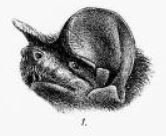
African Giant Free-tailed Bat
Tadarida ventralis
George Edward Dobson, Public domain, via Wikimedia Commons

European Free-tailed Bat
Tadarida teniotis
Side by side
| African Giant Free-tailed Bat | European Free-tailed Bat | |
|---|---|---|
| Scientific name | Tadarida ventralis (Heuglin, 1861) | Tadarida teniotis (Rafinesque, 1814) |
| English name | African Giant Free-tailed Bat | European Free-tailed Bat |
| Group | Mammals | Mammals |
| Class | Mammalia Mammal | Mammalia Mammal |
| Order | Chiroptera Bat | Chiroptera Bat |
| Family | Molossidae Free-tailed Bat | Molossidae Free-tailed Bat |
| Genus | Tadarida Guano Bats | Tadarida Guano Bats |
| Named in | 1861 | 1814 |
| Red List category | Data Deficient | Least Concern |
| Countries on record | 2 countries | 29 countries |
| GBIF occurrence records | 50 records | 23,193 records |
Rows where the two agree are shown in grey.
Where each is found
Only African Giant Free-tailed Bat (2)
Only European Free-tailed Bat (29)
- Algeria
- Andorra
- Bosnia and Herzegovina
- Bulgaria
- China
- Croatia
- Egypt
- France
- Georgia
- Greece
- India
- Iran
- Israel
- Italy
- Jordan
- Kyrgyzstan
- Laos
- Lebanon
- Libya
- Montenegro
- Morocco
- North Macedonia
- Palestinian Territory
- Portugal
- Spain
- Switzerland
- Syria
- Tunisia
- Turkey
From Catalogue of Life checklists and GBIF occurrence records. A country missing from a list means no record is held, which is not proof of absence.
Checked facts
| African Giant Free-tailed Bat | European Free-tailed Bat | |
|---|---|---|
| Appearance |
|
|
| Size |
| No checked fact yet |
| Habitat |
|
|
| Diet | No checked fact yet |
|
| Behaviour | No checked fact yet |
|
| Reproduction | No checked fact yet |
|
| Distribution |
| No checked fact yet |
| Conservation |
|
|
| Similar species | No checked fact yet |
|
| Other |
|
|
In brief
African Giant Free-tailed Bat
The African Giant Free-tailed Bat is a mammal in the family Molossidae, identified by the scientific name Tadarida ventralis. It inhabits dry savanna and subtropical or tropical dry shrubland. It has fur ranging from umber to fulvous-brown and a distinct white stripe across the middle of its underside. Full profile
European Free-tailed Bat
Tadarida teniotis roosts in rocky crevices and buildings and forages above lakes, scrublands, woodlands and urban areas. It is distinguished by its dog-like facial appearance, long narrow wings and fleshy tail with an unconnected rear third. Full profile
Compare something else
Page built on 30 November 2026 from the data on the two species pages, where every source is listed.
Cite this page
ScientificNames.org. (2026). African Giant Free-tailed Bat vs European Free-tailed Bat. Retrieved November 30, 2026, from https://scientificnames.org/compare/african-giant-free-tailed-bat-vs-european-free-tailed-bat
“African Giant Free-tailed Bat vs European Free-tailed Bat.” ScientificNames.org, 2026, scientificnames.org/compare/african-giant-free-tailed-bat-vs-european-free-tailed-bat. Accessed 30 Nov. 2026.
ScientificNames.org. “African Giant Free-tailed Bat vs European Free-tailed Bat.” Accessed November 30, 2026. https://scientificnames.org/compare/african-giant-free-tailed-bat-vs-european-free-tailed-bat.
@misc{scientificnames_african_giant_free_tailed_bat_vs_european_free_tailed_bat,
  author = {{ScientificNames.org}},
  title = {African Giant Free-tailed Bat vs European Free-tailed Bat},
  year = {2026},
  url = {https://scientificnames.org/compare/african-giant-free-tailed-bat-vs-european-free-tailed-bat},
  note = {Accessed 2026-11-30}
}