Comparison

Two-striped Garter Snake vs Plains Garter Snake

Two-striped Garter Snake (Thamnophis hammondii) and Plains Garter Snake (Thamnophis radix) both belong to the genus Thamnophis (garter snake) and part ways below it. Both are recorded in 1 country.

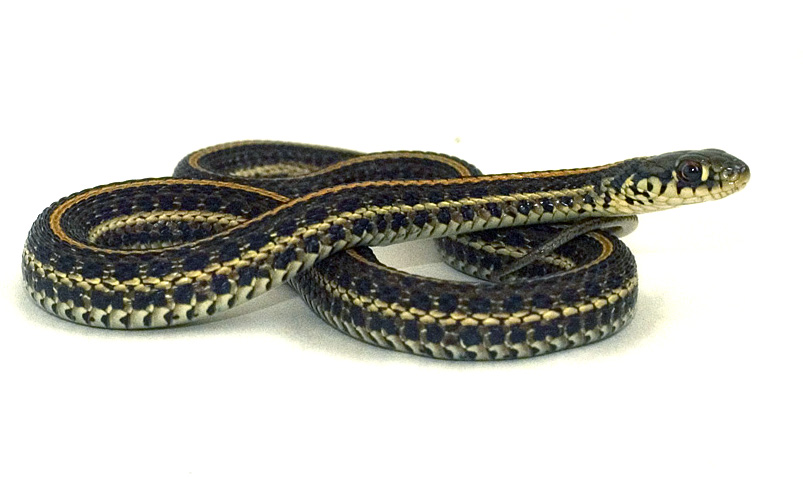
Two-striped Garter Snake

Two-striped Garter Snake

Thamnophis hammondii

Pierre Fidenci, CC BY-SA 2.5, via Wikimedia Commons

Plains Garter Snake

Plains Garter Snake

Thamnophis radix

Thamnophis, CC BY-SA 3.0, via Wikimedia Commons

Side by side

Two-striped Garter SnakePlains Garter Snake
Scientific nameThamnophis hammondii (Kennicott, 1860)Thamnophis radix (Baird & Girard, 1853)
English nameTwo-striped Garter SnakePlains Garter Snake
GroupReptilesReptiles
ClassReptilia ReptileReptilia Reptile
OrderSquamata SnakesSquamata Snakes
FamilyColubridae ColubridColubridae Colubrid
GenusThamnophis Garter SnakeThamnophis Garter Snake
Named in18601853
Red List categoryLeast ConcernLeast Concern
Countries on record2 countries2 countries
GBIF occurrence records4,968 records14,658 records

Rows where the two agree are shown in grey.

Where each is found

Both recorded in 1 country

Only Two-striped Garter Snake (1)

Only Plains Garter Snake (1)

From Catalogue of Life checklists and GBIF occurrence records. A country missing from a list means no record is held, which is not proof of absence.

Checked facts

Two-striped Garter SnakePlains Garter Snake
Appearance
  • The species has a head that is only slightly wider than its neck. English Wikipedia
  • The species occurs in two common color variations: striped and checkered. English Wikipedia
  • The striped variation has a yellowish lateral stripe on each side and relatively uniform dorsal coloration. English Wikipedia
  • The checkered variation lacks lateral stripes and has two rows of small dark spots on each side. English Wikipedia
  • The species lacks a middorsal stripe, distinguishing it from other garter snakes occurring in the same areas. fieldguide.mt.gov
Size
  • Adults measure 18–30 inches (46–76 cm) in total length, including the tail. English Wikipedia
No checked fact yet
Habitat
  • The species is highly aquatic and prefers habitats adjacent to permanent or semi-permanent bodies of water. English Wikipedia
  • The species inhabits meadows and prairies near marshes, streams, and ponds. English Wikipedia
  • It occurs in grasslands near ponds, streams, marshes, and sloughs. animaldiversity.org
  • The species can inhabit swampy areas and riverbanks. animaldiversity.org
  • It can occur in vacant lots in suburban and urban areas. animaldiversity.org
  • In the Chicago area, individuals have been observed in abandoned buildings, trash heaps, and vacant lots. English Wikipedia
  • Individuals may use drier habitats when they occur alongside common garter snakes. animaldiversity.org
  • The species hibernates in burrows and rock crevices. animaldiversity.org
  • Hibernation sites can include rodent burrows, ant mounds, crayfish burrows, and artificial crevices. animaldiversity.org
Diet
  • Its diet includes earthworms, slugs, and small amphibians. English Wikipedia
  • The species has been recorded eating frogs, toads, salamanders, fish, birds, small rodents, leeches, earthworms, and grasshoppers. animaldiversity.org
  • Its recorded fish prey include mosquitofish, southern redbelly dace, and bluntnose minnows. animaldiversity.org
  • Recorded bird prey include bank swallows and eastern meadowlarks. animaldiversity.org
BehaviourNo checked fact yet
  • The species is active during the day when temperatures are warm. animaldiversity.org
  • Its daytime activity generally occurs at air temperatures between 21 and 29 degrees Celsius. animaldiversity.org
  • It switches to nighttime activity when air temperatures exceed 31 degrees Celsius. animaldiversity.org
  • Individuals may emerge from hibernation to bask during warm winter days. English Wikipedia
  • The species is active from March to November, depending on its geographic region. animaldiversity.org
  • Individuals are generally solitary except during mating interactions and communal hibernation. animaldiversity.org
  • Individuals may move no more than 76 meters over periods exceeding one year. animaldiversity.org
  • The species uses chemical trails to locate prey, mates, and hibernation sites. animaldiversity.org
  • When threatened, individuals may bite, release foul-smelling musk, or defecate. animaldiversity.org
  • The species is described as mildly venomous, with venom that is not toxic to humans. English Wikipedia
Reproduction
Distribution
  • Its geographic range extends from central California to Baja California, Mexico. English Wikipedia
  • The species occurs across the central United States, extending north into Canada and south to Texas. English Wikipedia
  • Its documented Canadian range includes southern Alberta, Saskatchewan, and Manitoba. animaldiversity.org
  • Its documented United States range includes the Oklahoma panhandle, northern Texas, northeastern New Mexico, Minnesota, Wisconsin, and Indiana. animaldiversity.org
  • The species occurs at elevations from 400 to 7,500 feet. English Wikipedia
  • The species generally prefers elevations below 6,000 feet. English Wikipedia
ConservationNo checked fact yet
Similar speciesNo checked fact yet
  • The species shares portions of its habitat with the common garter snake. English Wikipedia
  • The plains garter snake and common garter snake may hybridize where their ranges overlap. English Wikipedia

In brief

Two-striped Garter Snake

The geographic range extends from central California to Baja California, Mexico. It occurs in striped and checkered color variations and lacks a middorsal stripe. Full profile

Plains Garter Snake

Thamnophis radix occurs across the central United States, extending north into Canada and south to Texas. It is distinguished by a yellow or orange stripe running along the middle of its back and distinctive black bars on its lips. Full profile

Compare something else

Page built on 28 November 2026 from the data on the two species pages, where every source is listed.

Cite this page

ScientificNames.org. (2026). Two-striped Garter Snake vs Plains Garter Snake. Retrieved November 28, 2026, from https://scientificnames.org/compare/two-striped-garter-snake-vs-plains-garter-snake