Comparison
Thinleaf Pea vs Indian Pea
Thinleaf Pea (Lathyrus holochlorus) and Indian Pea (Lathyrus sativus) both belong to the genus Lathyrus (pea) and part ways below it. Both are recorded in 1 country.

Thinleaf Pea
Lathyrus holochlorus
Bureau of Land Management – Photo credits: Christine Williams, Mackenzie Cowan, Sandra Miles, Sally Villegas, and West Eugene Wetlands staff., Public domain, via Wikimedia Commons

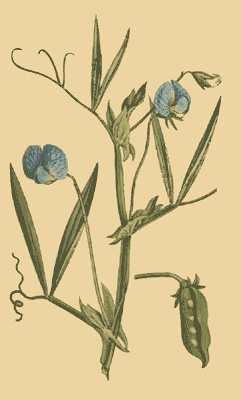
Indian Pea
Lathyrus sativus
Curtis, William The Botanical Magazine, Vol. 4, Public domain, via Wikimedia Commons

Side by side
| Thinleaf Pea | Indian Pea | |
|---|---|---|
| Scientific name | Lathyrus holochlorus (Piper) C.L.Hitchc. | Lathyrus sativus L. |
| English name | Thinleaf Pea | Indian Pea |
| Group | Flowering plants | Flowering plants |
| Class | Magnoliopsida | Magnoliopsida |
| Order | Fabales | Fabales |
| Family | Fabaceae Bean | Fabaceae Bean |
| Genus | Lathyrus Pea | Lathyrus Pea |
| Countries on record | 1 country | 64 countries |
| GBIF occurrence records | 540 records | 11,526 records |
Rows where the two agree are shown in grey.
Where each is found
Both recorded in 1 country
Only Indian Pea (63)
- Afghanistan
- Albania
- Algeria
- Angola
- Australia
- Austria
- Bangladesh
- Belgium
- Bulgaria
- China
- Croatia
- Cyprus
- Czechia
- Denmark
- Ecuador
- Egypt
- Estonia
- Ethiopia
- Finland
- France
- Germany
- Greece
- Haiti
- Hungary
- India
- Indonesia
- Iran
- Iraq
- Isle of Man
- Italy
- Kazakhstan
- Kenya
- Kyrgyzstan
- Latvia
- Libya
- Luxembourg
- Moldova
- Mongolia
- Morocco
- Myanmar
- Nepal
- Norway
- Pakistan
- Poland
- Portugal
- Romania
- Russia
- Slovakia
- Spain
- Sri Lanka
- Sudan
- Sweden
- Switzerland
- Tajikistan
- Tanzania
- The Netherlands
- Tunisia
- Turkey
- Turkmenistan
- Ukraine
- United Kingdom
- Uzbekistan
- Yemen
From Catalogue of Life checklists and GBIF occurrence records. A country missing from a list means no record is held, which is not proof of absence.
Checked facts
| Thinleaf Pea | Indian Pea | |
|---|---|---|
| Appearance |
|
|
| Size |
| No checked fact yet |
| Habitat |
|
|
| Diet | No checked fact yet |
|
| Behaviour |
| No checked fact yet |
| Reproduction |
| No checked fact yet |
| Distribution | No checked fact yet |
|
| Conservation |
| No checked fact yet |
| Uses | No checked fact yet |
|
| Other | No checked fact yet |
|
In brief
Thinleaf Pea
Lathyrus holochlorus occurs in upland prairie habitats, shrublands and grasslands. It has climbing stems, compound leaves with 8–12 leaflets and white to cream flowers that change colour as they age. Full profile
Indian Pea
Indian pea is a much-branched annual herb with a well-developed taproot. It occurs in arid and semi-arid regions and is cultivated in Asia and East Africa. Its seeds contain high levels of protein and the neurotoxic amino acid β-N-oxalyl-L-α,β-diaminopropionic acid (ODAP). Full profile
Compare something else
Page built on 28 November 2026 from the data on the two species pages, where every source is listed.
Cite this page
ScientificNames.org. (2026). Thinleaf Pea vs Indian Pea. Retrieved November 28, 2026, from https://scientificnames.org/compare/thinleaf-pea-vs-indian-pea
“Thinleaf Pea vs Indian Pea.” ScientificNames.org, 2026, scientificnames.org/compare/thinleaf-pea-vs-indian-pea. Accessed 28 Nov. 2026.
ScientificNames.org. “Thinleaf Pea vs Indian Pea.” Accessed November 28, 2026. https://scientificnames.org/compare/thinleaf-pea-vs-indian-pea.
@misc{scientificnames_thinleaf_pea_vs_indian_pea,
  author = {{ScientificNames.org}},
  title = {Thinleaf Pea vs Indian Pea},
  year = {2026},
  url = {https://scientificnames.org/compare/thinleaf-pea-vs-indian-pea},
  note = {Accessed 2026-11-28}
}