Comparison
Tiger Snake vs Red-bellied Black Snake
Tiger Snake (Notechis scutatus) and Red-bellied Black Snake (Pseudechis porphyriacus) both belong to the subfamily Hydrophiinae and part ways below it. Both are recorded in 1 country.



How they differ
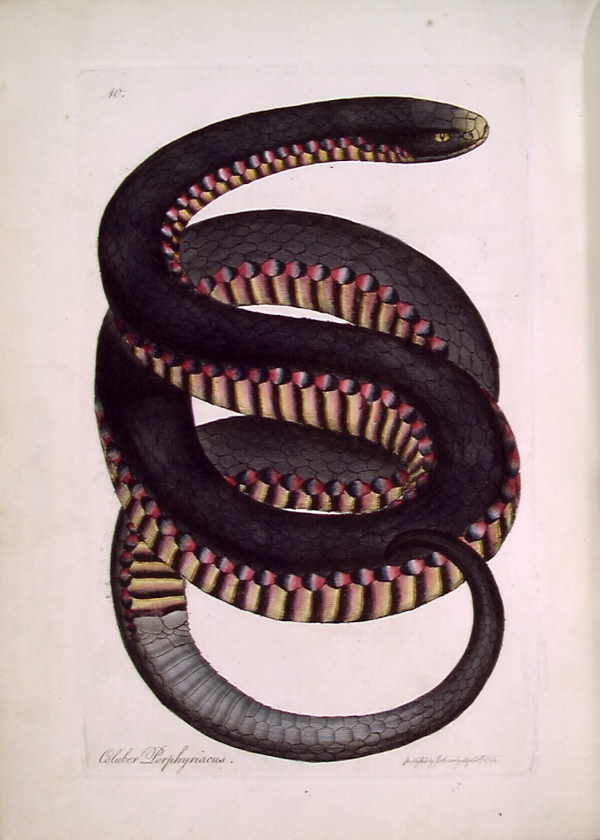
The tiger snake has highly variable body colours, sometimes with pale-to-dark bands, while the red-bellied black snake has glossy black upperparts, bright red or orange flanks, and a pink or dull red belly. The tiger snake has a flat, blunt head slightly distinct from its robust body, while the red-bellied black snake has a head that merges into its body without a clearly defined neck. The tiger snake occurs in southeastern and southwestern Australia, including Tasmania and islands in Bass Strait, while the red-bellied black snake occurs along the eastern coast of Australia, with a separate population in the southern Mount Lofty Ranges of South Australia.
| Tiger Snake | Red-bellied Black Snake | |
|---|---|---|
| Scale rows | The tiger snake has 17–21 rows of midbody scales. | The red-bellied black snake has 17 rows of scales around the middle of its body. |
| Activity | Tiger snakes are predominantly active during daylight hours but also forage on warm evenings. | The red-bellied black snake is primarily active during daylight hours. |
| Underwater endurance | Tiger snakes can remain underwater for at least nine minutes. | The red-bellied black snake can remain submerged underwater for as long as 23 minutes. |
| Threat display | When threatened, tiger snakes flatten their bodies and raise their heads above the ground. | When threatened, the red-bellied black snake raises its head and forebody horizontally and flattens its neck. |
| Climbing | Tiger snakes can climb vegetation and human-made structures to heights of 10 metres. | The red-bellied black snake can climb several metres while searching for prey. |
| Diet | Wild tiger snakes consume fish, frogs, tadpoles, lizards, birds, mammals and carrion. | The red-bellied black snake primarily preys on frogs and also consumes fish, tadpoles, lizards, other snakes and mammals. |
| Habitat | Tiger snakes inhabit marshes, riparian environments, temperate habitats, open forests, open heaths, tussock grasslands and woodlands. | The red-bellied black snake commonly inhabits woodlands, forests, swamplands and riverbanks. |
| Shelter | Tiger snakes shelter in fallen timber, dense matted vegetation and abandoned animal burrows. | The red-bellied black snake shelters in thick grass clumps, logs, mammal burrows and large rocks. |
Written from the checked facts listed further down. Statements that the sources did not support were removed.
Side by side
| Tiger Snake | Red-bellied Black Snake | |
|---|---|---|
| Scientific name | Notechis scutatus (Peters, 1861) | Pseudechis porphyriacus (Shaw, 1794) |
| English name | Tiger Snake | Red-bellied Black Snake |
| Group | Reptiles | Reptiles |
| Class | Reptilia Reptile | Reptilia Reptile |
| Order | Squamata Snakes | Squamata Snakes |
| Family | Elapidae Cobras | Elapidae Cobras |
| Genus | Notechis Tiger Snakes | Pseudechis Black Snakes |
| Named in | 1861 | 1794 |
| Red List category | Least Concern | Least Concern |
| Countries on record | 1 country | 1 country |
| GBIF occurrence records | 13,914 records | 37,871 records |
Rows where the two agree are shown in grey.
Where each is found
Both recorded in 1 country
From Catalogue of Life checklists and GBIF occurrence records. A country missing from a list means no record is held, which is not proof of absence.
Checked facts
| Tiger Snake | Red-bellied Black Snake | |
|---|---|---|
| Appearance |
|
|
| Size | No checked fact yet |
|
| Habitat |
|
|
| Diet |
|
|
| Behaviour |
|
|
| Reproduction |
|
|
| Distribution |
|
|
| Conservation |
|
|
| Similar species |
|
|
| Other |
| No checked fact yet |
In brief
Tiger Snake
Tiger Snake (Notechis scutatus (Peters, 1861)) is a reptile belonging to the family Elapidae, order Squamata and class Reptilia. The species occurs in Western Australia, South Australia, Victoria, New South Wales and Tasmania, including islands in Bass Strait. Tiger Snakes have highly variable body colours, and some populations have contrasting or indistinct bands while others consist almost entirely of individuals without bands. Full profile
Red-bellied Black Snake
Pseudechis porphyriacus is native to the eastern coast of Australia, occurring from southeastern Queensland through eastern New South Wales and Victoria, with separate populations in Queensland and South Australia. It is distinguished by glossy black upperparts, bright red or orange flanks and a pink or dull red belly. Full profile
Compare something else
Page built on 24 November 2026 from the data on the two species pages, where every source is listed.
Cite this page
ScientificNames.org. (2026). Tiger Snake vs Red-bellied Black Snake. Retrieved November 24, 2026, from https://scientificnames.org/compare/tiger-snake-vs-red-bellied-black-snake
“Tiger Snake vs Red-bellied Black Snake.” ScientificNames.org, 2026, scientificnames.org/compare/tiger-snake-vs-red-bellied-black-snake. Accessed 24 Nov. 2026.
ScientificNames.org. “Tiger Snake vs Red-bellied Black Snake.” Accessed November 24, 2026. https://scientificnames.org/compare/tiger-snake-vs-red-bellied-black-snake.
@misc{scientificnames_tiger_snake_vs_red_bellied_black_snake,
  author = {{ScientificNames.org}},
  title = {Tiger Snake vs Red-bellied Black Snake},
  year = {2026},
  url = {https://scientificnames.org/compare/tiger-snake-vs-red-bellied-black-snake},
  note = {Accessed 2026-11-24}
}