Comparison
Cooper-clover vs Fenugreek
Cooper-clover (Trigonella suavissima) and Fenugreek (Trigonella foenum-graecum) both belong to the genus Trigonella (fenugreek) and part ways below it.
Cooper-clover
Trigonella suavissima
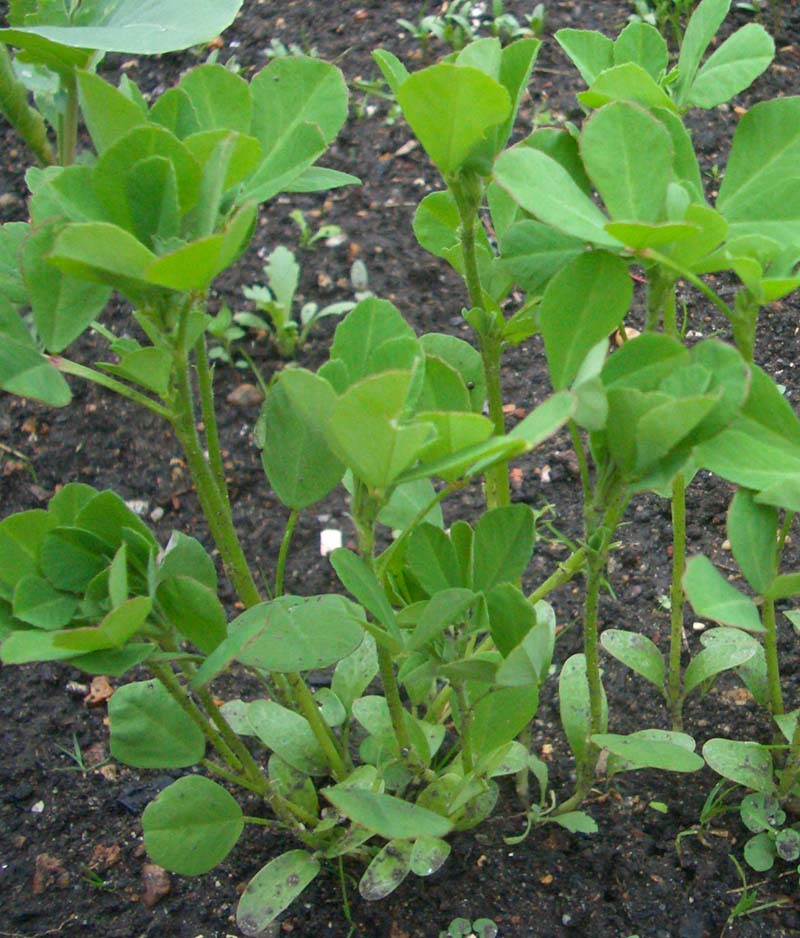

Side by side
| Cooper-clover | Fenugreek | |
|---|---|---|
| Scientific name | Trigonella suavissima Lindl. | Trigonella foenum-graecum L. |
| English name | Cooper-clover | Fenugreek |
| Group | Flowering plants | Flowering plants |
| Class | Magnoliopsida | Magnoliopsida |
| Order | Fabales | Fabales |
| Family | Fabaceae Bean | Fabaceae Bean |
| Genus | Trigonella Fenugreek | Trigonella Fenugreek |
| Countries on record | 1 country | 58 countries |
| GBIF occurrence records | 1,300 records | 3,750 records |
Rows where the two agree are shown in grey.
Where each is found
Only Cooper-clover (1)
Only Fenugreek (58)
- Afghanistan
- Albania
- Algeria
- Armenia
- Austria
- Azerbaijan
- Bangladesh
- Belgium
- Bulgaria
- China
- Cyprus
- Egypt
- Ethiopia
- Fiji
- France
- Germany
- Greece
- Hungary
- India
- Iran
- Iraq
- Israel
- Italy
- Jordan
- Kazakhstan
- Kenya
- Kuwait
- Kyrgyzstan
- Lebanon
- Libya
- Mali
- Morocco
- Mozambique
- Myanmar
- Nepal
- Oman
- Pakistan
- Palestinian Territory
- Portugal
- Romania
- Russia
- Saudi Arabia
- South Africa
- Spain
- Sudan
- Switzerland
- Syria
- Tajikistan
- Tanzania
- Tunisia
- Turkey
- Turkmenistan
- Ukraine
- United Kingdom
- United States
- Uzbekistan
- Yemen
- Zimbabwe
From Catalogue of Life checklists and GBIF occurrence records. A country missing from a list means no record is held, which is not proof of absence.
Checked facts
| Cooper-clover | Fenugreek | |
|---|---|---|
| Appearance |
|
|
| Size |
|
|
| Habitat |
|
|
| Diet |
| No checked fact yet |
| Behaviour |
| No checked fact yet |
| Reproduction |
|
|
| Distribution |
|
|
| Uses |
|
|
| Similar species |
| No checked fact yet |
In brief
Cooper-clover
Cooper-clover is an annual or ephemeral flowering legume in the family Fabaceae. It grows mainly in arid inland regions of Australia, particularly in central Australia. It has a yellow corolla, nearly hairless upper leaflet surfaces and usually hairy lower leaflet surfaces. Full profile
Fenugreek
Fenugreek is an insect-pollinated flowering plant. It grows on dry grasslands, cultivated and uncultivated land, hillsides, plains and field edges. It has aromatic growth, trifoliate leaves and white to yellowish-white flowers. Full profile
Compare something else
Page built on 29 November 2026 from the data on the two species pages, where every source is listed.
Cite this page
ScientificNames.org. (2026). Cooper-clover vs Fenugreek. Retrieved November 29, 2026, from https://scientificnames.org/compare/cooper-clover-vs-fenugreek
“Cooper-clover vs Fenugreek.” ScientificNames.org, 2026, scientificnames.org/compare/cooper-clover-vs-fenugreek. Accessed 29 Nov. 2026.
ScientificNames.org. “Cooper-clover vs Fenugreek.” Accessed November 29, 2026. https://scientificnames.org/compare/cooper-clover-vs-fenugreek.
@misc{scientificnames_cooper_clover_vs_fenugreek,
  author = {{ScientificNames.org}},
  title = {Cooper-clover vs Fenugreek},
  year = {2026},
  url = {https://scientificnames.org/compare/cooper-clover-vs-fenugreek},
  note = {Accessed 2026-11-29}
}