Species · Flowering plants
Cooper-clover Trigonella suavissima
The scientific name of the Cooper-clover is Trigonella suavissima. It is a species of flowering plant in the family Fabaceae (bean), order Fabales.
- Scientific name
- Trigonella suavissima Lindl.
- Common name
- Cooper-clover
- Genus
- Trigonella
- Family
- Fabaceae (Bean)
- Order
- Fabales
- Class
- Magnoliopsida
- Recorded in
- 1 country
- Name status
- accepted in the Catalogue of Life
Overview
Cooper-clover is an annual or ephemeral flowering legume in the family Fabaceae. It grows mainly in arid inland regions of Australia, particularly in central Australia. It has a yellow corolla, nearly hairless upper leaflet surfaces and usually hairy lower leaflet surfaces.
Written 27 November 2026 from the sources listed below. Each statement was checked against the passage it cites; statements that could not be supported were removed.
Appearance
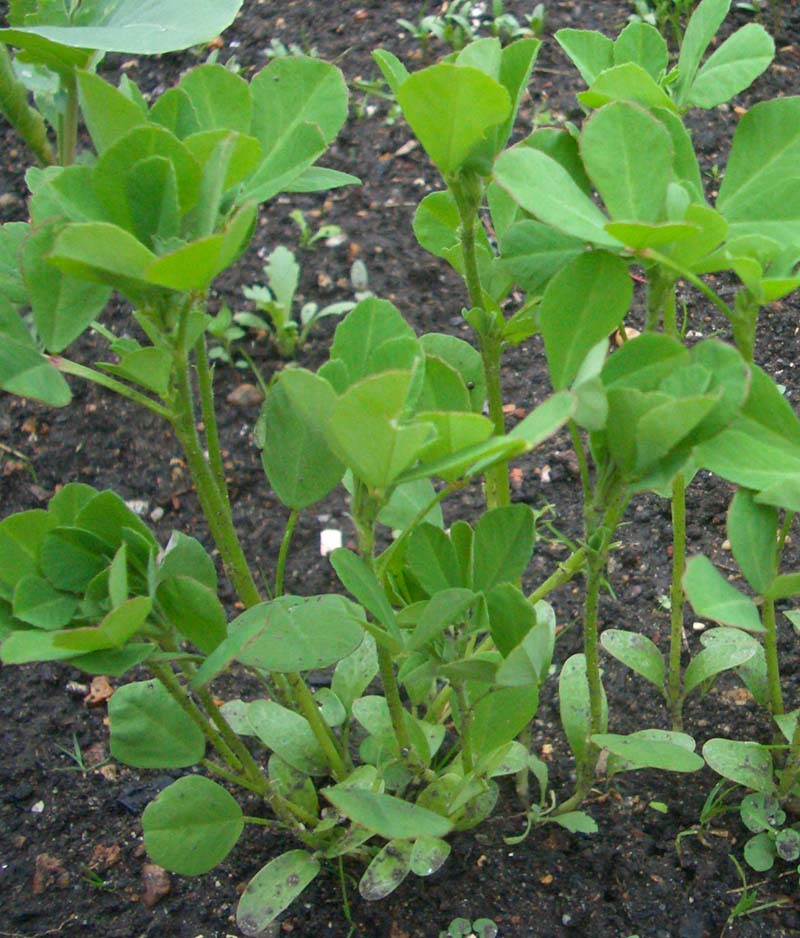
Cooper-clover has a herbaceous growth form that is either decumbent or ascending. Its stems measure between 5 and 50 cm in length.[1][2]
The upper surfaces of its leaflets are nearly hairless, while the lower surfaces are usually hairy. Its yellow corolla measures between 4.5 and 6.5 mm.[3][4]
Its seeds weigh approximately 1.00 mg each. They are hard and absorb water slowly.[5][6]
Habitat
Cooper-clover mainly grows in arid inland regions of Australia and is frequently found in inland arid environments in central Australia. Within Australian states, it grows in drier north-western regions.[7][8][9]
It commonly grows along river banks, in low-lying depressions and in flooded areas. It is adapted to fine-textured clay soils with self-mulching surfaces and is rarely found growing in sandy soils.[10][11][12]
Its recorded growing areas include the Channel Country near Lake Eyre in Queensland, the Darling Basins in eastern South Australia and the Brancannia Basin in New South Wales.[13][14][15]
The species is endemic to Australia. It occurs in all Australian states except Tasmania.[16][17]
Behaviour
Cooper-clover is an annual or ephemeral legume. Its peak growth season extends from autumn through spring, and its annual occurrence reaches its highest level between August and September.[18][19][20]
Reproduction and life cycle
Cooper-clover is pollinated by insects. Its first flowering occurs approximately 74 days after growth begins, and individual flowering periods generally last between 111 and 118 days.[21][22][23]
Its mature fruits can fall from the plant, although the species is usually indehiscent or only tardily dehiscent.[24]
Its seeds usually begin germinating after 12 hours of soaking in warm water. Under natural conditions, flooding is required to induce germination.[25][26]
Dense stands can develop on floodplains following winter-spring rainfall and cool-season flooding.[27]
Diet
Aboriginal communities in Diamantina, Queensland, have eaten Cooper-clover raw. Aboriginal Australians have traditionally consumed the species as food.[28][29]
Uses
Cooper-clover has been used as forage for cattle in Australia for more than 150 years. It provides livestock forage as both green feed and standing dry hay.[30][31]
Its foliage contains more than 20% protein. The species has been identified as a potential substitute for grain legumes when harvests of conventional crops are unsustainable in arid conditions and infertile soils.[32][33]
Similar species
Cooper-clover shares morphological similarities with Trigonella anguina, including oblong cotyledons with rounded bases.[34]
Classification of the Cooper-clover
| Kingdom | Plantae |
|---|---|
| Subkingdom | Pteridobiotina |
| Phylum | Tracheophyta |
| Class | Magnoliopsida |
| Order | Fabales |
| Family | Fabaceae (Bean) |
| Genus | Trigonella (Fenugreek) |
| Species | Trigonella suavissima Lindl. |
Where the Cooper-clover is found
Checklists and occurrence records place Trigonella suavissima in 1 country across Oceania. GBIF holds 1,300 georeferenced records of it.
Countries
Regions and cities with the most records
- New South Wales, Australia 427
- South Australia, Australia 401
- Northern Territory, Australia 131
- Victoria, Australia 97
- Queensland, Australia 86
- Western Australia, Australia 66
- Alice Springs, Australia 4
1 more country has a few records outside this range
These countries hold a few records of Trigonella suavissima but lie outside the range the checklists give for it. Such records are often zoo or garden specimens, museum material or vagrants, so the species is not counted as occurring there.
A number beside a place is its count of GBIF occurrence records. A place without a number comes from a checklist alone. Records show where a species has been observed or collected, which can include escapes and vagrants.
Common names
English
- Cooper-clover
- Darling Trigonella
- Menindie-clover
- Calomba
- Channel-clover
- Sweet Fenugreek
Synonyms
2 other scientific names have been used for this species and are now treated as synonyms of Trigonella suavissima.
- Telis suavissima (Lindl.) Kuntze
- Trigonella tenuissima Brongn. & Guillaumin
Related species
-
 FenugreekTrigonella foenum-graecum
-
 Blue FenugreekTrigonella caerulea
- Trigonella berythea
- Trigonella maritima
- Trigonella falcata
-
 Trigonella gladiata
-
 Trailing FenugreekTrigonella procumbens
-
 FenugreekTrigonella spicata
Compare
Questions and answers
What is the scientific name of the Cooper-clover?
The scientific name of the Cooper-clover is Trigonella suavissima. Written with its author, the full name is Trigonella suavissima Lindl..
Which family does the Cooper-clover belong to?
Trigonella suavissima belongs to the family Fabaceae, in the order Fabales and the class Magnoliopsida.
Where is the Cooper-clover found?
Checklists and occurrence records place Trigonella suavissima in 1 country: Australia.
What other names does the Cooper-clover have?
Trigonella suavissima is also known in English as Darling Trigonella, Menindie-clover, Calomba, Channel-clover and Sweet Fenugreek.
Sources
Passages the profile rests on
- Trigonella suavissima has a herbaceous growth form that is either decumbent or ascending. Source passage: “The herb grows either decumbently or ascendingly” — English Wikipedia
- Its stems measure between 5 and 50 cm in length. Source passage: “with 5–50 cm long stems” — English Wikipedia
- The upper surfaces of its leaflets are nearly hairless, whereas their lower surfaces are usually hairy. Source passage: “The upper surfaces of leaflets are nearly hairless yet the lower surfaces are usually hairy” — English Wikipedia
- Its corolla is yellow and measures between 4.5 and 6.5 mm. Source passage: “with 4.5–6.5 mm yellow corolla on top.” — English Wikipedia
- Its seeds weigh approximately 1.00 mg each. Source passage: “seeds of around 1.00 mg” — English Wikipedia
- Its seeds are hard and absorb water slowly. Source passage: “The seeds of Trigonella suavissima are hard and they imbibe slowly.” — English Wikipedia
- The species mainly grows in arid inland regions of Australia. Source passage: “mainly grows along the arid interior regions in Australia.” — English Wikipedia
- It is frequently found in inland arid environments in central Australia. Source passage: “frequently found in inland arid environments in central Australia” — English Wikipedia
- Within Australian states, it grows in drier north-western regions. Source passage: “The species grows in drier regions in the north-west parts of each state.” — English Wikipedia
- It commonly grows along river banks, in low-lying depressions and in flooded areas. Source passage: “predominantly in river banks, low-lying depressions and flooded areas.” — English Wikipedia
- It is adapted to fine-textured clay soils with self-mulching surfaces. Source passage: “best adapted to clay soils of a fine texture and with self-mulching surfaces.” — English Wikipedia
- It is rarely found growing in sandy soils. Source passage: “are rarely found in sand soils.” — English Wikipedia
- Its distribution includes the Channel Country near Lake Eyre in Queensland. Source passage: “the Channel Country near Lake Eyre in Queensland” — English Wikipedia
- The Darling Basins in eastern South Australia are among its recorded growing areas. Source passage: “the Darling Basins in east south Australia” — English Wikipedia
- The Brancannia Basin in New South Wales is a recorded habitat for the species. Source passage: “Brancannia Basin in New South Wales” — English Wikipedia
- The species is endemic to Australia. Source passage: “Trigonella suavissima is endemic to Australia” — English Wikipedia
- It occurs in all Australian states except Tasmania. Source passage: “can be found in all the Australian states except Tasmania” — English Wikipedia
- The species is an annual or ephemeral legume. Source passage: “a kind of native annual or ephemeral legume found in Australia.” — English Wikipedia
- Its peak growth season extends from autumn through spring. Source passage: “Autumn to Spring are the peak seasons of the growth of Trigonella suavissima.” — English Wikipedia
- Its annual occurrence reaches its highest level between August and September. Source passage: “Its highest number of occurrences throughout a year takes place in August to September.” — English Wikipedia
- The species is pollinated by insects. Source passage: “Trigonella suavissima is pollinated by insects” — English Wikipedia
- Its first flowering occurs approximately 74 days after growth begins. Source passage: “It took 74 days before the first flowering” — English Wikipedia
- Individual flowering periods generally last between 111 and 118 days. Source passage: “each flowering usually lasts between 111 and 118 days” — English Wikipedia
- Its mature fruits can fall from the plant, although the species is usually indehiscent or only tardily dehiscent. Source passage: “the fruits are able to fall off plants when it is mature even though the species is usually indehiscent or merely tardily dehiscent.” — English Wikipedia
- Its seeds usually begin germinating after 12 hours of soaking in warm water. Source passage: “usually start germinating after soaking in warm water for 12 hours.” — English Wikipedia
- Flooding is required to induce germination under natural conditions. Source passage: “requires general flooding for the inducement of germination in the wild” — English Wikipedia
- Dense stands can develop on floodplains following winter-spring rainfall and cool-season flooding. Source passage: “after winter-spring rains and cool-seasons floods, where dense swards are formed on the flood plains.” — English Wikipedia
- Aboriginal communities in Diamantina, Queensland, have eaten the species raw. Source passage: “Trigonella suavissima was eaten raw by the people in Diamantina in Queensland, Australia.” — English Wikipedia
- Aboriginal Australians have traditionally consumed the species as food. Source passage: “The major consumers of Trigonella suavissima are the Aboriginals” — English Wikipedia
- The species has been used as forage for cattle in Australia for more than 150 years. Source passage: “used as a forage plant for feeding cattles, especially cows in Australia, for more than 150 years.” — English Wikipedia
- It provides livestock forage as both green feed and standing dry hay. Source passage: “as green feed and standing dry hay” — English Wikipedia
- Its foliage contains more than 20% protein. Source passage: “foliages that contain more than 20% of protein” — English Wikipedia
- The species has been identified as a potential substitute for grain legumes when harvests of conventional crops are unsustainable in arid conditions and infertile soils. Source passage: “Trigonella suavissima is still a viable option as a substitute when the harvest of the grain crops are unsustainable under arid climate and infertile soil.” — English Wikipedia
- Trigonella suavissima shares morphological similarities with Trigonella anguina, including oblong cotyledons with rounded bases. Source passage: “both of them possess oblong cotyledons with rounded bases.” — English Wikipedia
Data
- Catalogue of Life, 2026-10-16 XR cc by
- Global Biodiversity Information Facility CC BY 4.0
- Wikidata CC0
- GeoNames CC BY 4.0
- Within the Catalogue of Life, this name comes from The World Checklist of Vascular Plants (WCVP): Fabaceae cc by
References
- T.L.Mitchell, Three Exped. Australia 1: 253 (1838) where the name was published
This species in other databases
- Catalogue of Life 7CS9Y
- Wikidata Q13959343
- iNaturalist 1483080
- World Flora Online wfo-0000185564
- GRIN 40444
Page built on 28 November 2026. See how the catalog is made and all sources and licences.
Cite this page
ScientificNames.org. (2026). Trigonella suavissima (Cooper-clover). Retrieved November 28, 2026, from https://scientificnames.org/species/trigonella-suavissima
“Trigonella suavissima (Cooper-clover).” ScientificNames.org, 2026, scientificnames.org/species/trigonella-suavissima. Accessed 28 Nov. 2026.
ScientificNames.org. “Trigonella suavissima (Cooper-clover).” Accessed November 28, 2026. https://scientificnames.org/species/trigonella-suavissima.
@misc{scientificnames_trigonella_suavissima_cooper_clover,
  author = {{ScientificNames.org}},
  title = {Trigonella suavissima (Cooper-clover)},
  year = {2026},
  url = {https://scientificnames.org/species/trigonella-suavissima},
  note = {Accessed 2026-11-28}
}