Comparison
Timopheev's Wheat vs Einkorn
Timopheev's Wheat (Triticum timopheevii) and Einkorn (Triticum monococcum) both belong to the genus Triticum (wheat) and part ways below it. Both are recorded in 13 countries.

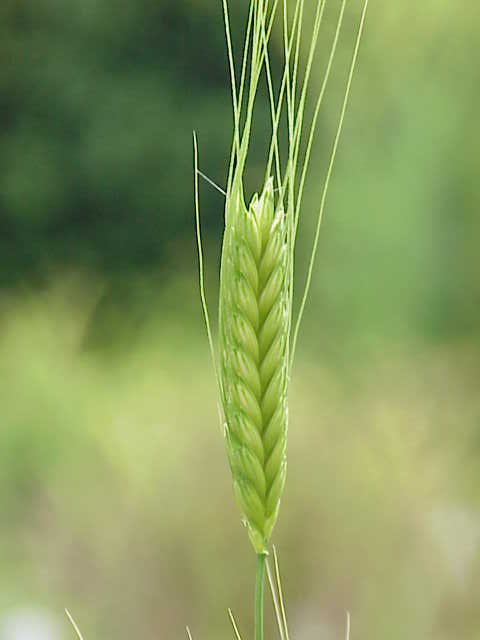


Side by side
| Timopheev's Wheat | Einkorn | |
|---|---|---|
| Scientific name | Triticum timopheevii (Zhuk.) Zhuk. | Triticum monococcum L. |
| English name | Timopheev's Wheat | Einkorn |
| Group | Flowering plants | Flowering plants |
| Class | Liliopsida | Liliopsida |
| Order | Poales | Poales |
| Family | Poaceae Turf | Poaceae Turf |
| Genus | Triticum Wheat | Triticum Wheat |
| Red List category | Least Concern | Least Concern |
| Countries on record | 13 countries | 49 countries |
| GBIF occurrence records | 1,796 records | 12,545 records |
Rows where the two agree are shown in grey.
Where each is found
Both recorded in 13 countries
Only Einkorn (36)
- Albania
- Algeria
- Austria
- Belarus
- Belgium
- Bosnia and Herzegovina
- Bulgaria
- China
- Czechia
- Denmark
- Ethiopia
- France
- Germany
- Greece
- Hungary
- India
- Italy
- Jordan
- Kosovo
- Kuwait
- Luxembourg
- Montenegro
- Morocco
- North Macedonia
- Poland
- Portugal
- Romania
- Serbia
- Spain
- Sweden
- Switzerland
- Tajikistan
- The Netherlands
- Ukraine
- United States
- Zimbabwe
From Catalogue of Life checklists and GBIF occurrence records. A country missing from a list means no record is held, which is not proof of absence.
Checked facts
| Timopheev's Wheat | Einkorn | |
|---|---|---|
| Appearance | No checked fact yet |
|
| Size |
|
|
| Habitat | No checked fact yet |
|
| Behaviour | No checked fact yet |
|
| Reproduction |
|
|
| Distribution |
| No checked fact yet |
| Uses | No checked fact yet |
|
| Other |
|
|
In brief
Timopheev's Wheat
Timopheev's Wheat is a tetraploid wheat with both cultivated and wild forms. Its wild form occurs in south-eastern Turkey, north Iraq, west Iran and Transcaucasia, while its domesticated form is restricted to western Georgia. It has 28 chromosomes in its tetraploid complement and contains the At and G genomes. Full profile
Einkorn
Einkorn (Triticum monococcum L.) is a diploid, non-hybrid wheat with 14 chromosomes and was among the earliest forms of wheat cultivated by humans. Wild Einkorn commonly grows in hill country in the northern Fertile Crescent and Anatolia. Domesticated Einkorn is a hulled wheat with tough glumes that tightly enclose its grains, and its ripe seed head remains intact. Full profile
Compare something else
Page built on 29 November 2026 from the data on the two species pages, where every source is listed.
Cite this page
ScientificNames.org. (2026). Timopheev's Wheat vs Einkorn. Retrieved November 29, 2026, from https://scientificnames.org/compare/timopheevs-wheat-vs-einkorn
“Timopheev's Wheat vs Einkorn.” ScientificNames.org, 2026, scientificnames.org/compare/timopheevs-wheat-vs-einkorn. Accessed 29 Nov. 2026.
ScientificNames.org. “Timopheev's Wheat vs Einkorn.” Accessed November 29, 2026. https://scientificnames.org/compare/timopheevs-wheat-vs-einkorn.
@misc{scientificnames_timopheevs_wheat_vs_einkorn,
  author = {{ScientificNames.org}},
  title = {Timopheev's Wheat vs Einkorn},
  year = {2026},
  url = {https://scientificnames.org/compare/timopheevs-wheat-vs-einkorn},
  note = {Accessed 2026-11-29}
}