Comparison

White Baneberry vs Red Baneberry

White Baneberry (Actaea pachypoda) and Red Baneberry (Actaea rubra) both belong to the genus Actaea (cohosh) and part ways below it. Both are recorded in 2 countries.

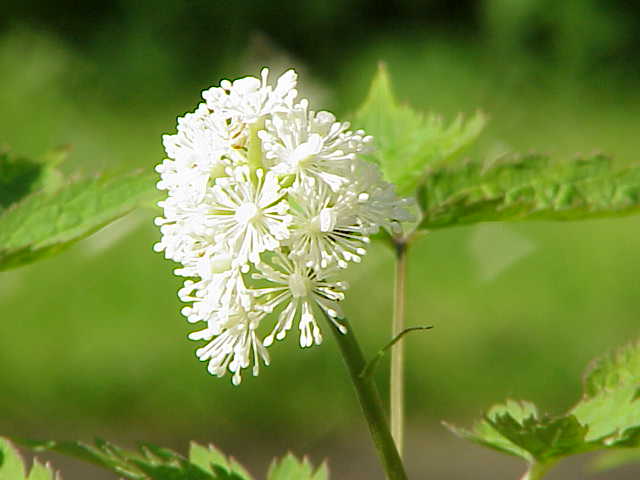
White Baneberry

White Baneberry

Actaea pachypoda

D. Gordon E. Robertson, CC BY-SA 3.0, via Wikimedia Commons

Red Baneberry

Red Baneberry

Actaea rubra

Kurt Stüber [1], CC BY-SA 3.0, via Wikimedia Commons

Side by side

White BaneberryRed Baneberry
Scientific nameActaea pachypoda ElliottActaea rubra (Aiton) Willd.
English nameWhite BaneberryRed Baneberry
GroupFlowering plantsFlowering plants
ClassMagnoliopsidaMagnoliopsida
OrderRanunculalesRanunculales
FamilyRanunculaceae Crowfoot FamilyRanunculaceae Crowfoot Family
GenusActaea CohoshActaea Cohosh
Countries on record2 countries18 countries
GBIF occurrence records32,136 records51,649 records

Rows where the two agree are shown in grey.

Where each is found

Both recorded in 2 countries

Only Red Baneberry (16)

From Catalogue of Life checklists and GBIF occurrence records. A country missing from a list means no record is held, which is not proof of absence.

Checked facts

White BaneberryRed Baneberry
Appearance
  • Actaea pachypoda is a herbaceous perennial flowering plant. English Wikipedia
  • The plant has toothed, bipinnate compound leaves. English Wikipedia
  • Its white flowers grow in dense racemes approximately 10 cm long. English Wikipedia
  • Its white berries have a black stigma scar and measure approximately 1 cm in diameter. English Wikipedia
  • The berry-supporting stalks become thicker and bright red as the fruits develop. English Wikipedia
  • An uncommon red-fruited form of the species has been described as forma rubrocarpa. English Wikipedia
  • The plant produces shiny, waxy, ellipsoid berries after successful pollination. hort.extension.wisc.edu
  • Actaea rubra is an erect, herbaceous perennial flowering plant. ohiodnr.gov
  • The leaves have coarsely toothed edges and deeply lobed margins. English Wikipedia
  • The undersides of the leaves commonly have hairy veins. English Wikipedia
  • Each stem bears either three leaves branching near its top or three compound leaves and an upright flowering stalk. English Wikipedia
  • The flowers are white and have numerous stamens. English Wikipedia
  • The flowers have three to five petal-like, obovate sepals that remain after flowering. English Wikipedia
  • The petals are spatulate to obovate, clawed at the base, and fall away after flowering. English Wikipedia
  • The fruits are ellipsoid berries containing several seeds. English Wikipedia
  • The berries become bright red or, in forma neglecta, white during mid to late summer. English Wikipedia
  • The berries have a black dot on their surface. English Wikipedia
Size
Habitat
  • The species occurs in hardwood and mixed forest stands. English Wikipedia
  • The species grows in deciduous woods. cs.rochester.edu
  • White baneberry occurs in moist, nutrient-rich sites across several forest ecosystems and other moist habitats. hort.extension.wisc.edu
  • The species grows best in partial to full shade and moist, fertile soil containing abundant organic matter. hort.extension.wisc.edu
  • The species requires organically rich, humusy soil with excellent drainage. English Wikipedia
  • The species grows in shady areas with moist to wet soils. English Wikipedia
  • It occurs in open forests and on dry slopes. English Wikipedia
  • Red baneberry grows best in cool, moist, nutrient-rich locations. research.fs.usda.gov
  • In southeastern Alaska, the species grows along open streambanks and in meadows within dense forest regions. research.fs.usda.gov
  • In British Columbia, it grows beneath spruce forests and mixed forests containing spruce, subalpine fir, and aspen. research.fs.usda.gov
  • In the northern Rocky Mountains, red baneberry occurs as an understory species in moist and very moist subalpine forests and riparian areas. research.fs.usda.gov
  • In Alberta, the species grows beneath white spruce in valleys and on lower slopes. research.fs.usda.gov
  • In northeastern Saskatchewan, red baneberry occurs near lake and stream margins with willows, sedges, and reedgrass. research.fs.usda.gov
  • In Oregon, the species occurs in seepage areas, marshes, and other moist habitats. research.fs.usda.gov
  • The species grows best on organic and acidic soils at least 51 centimeters deep. research.fs.usda.gov
DietNo checked fact yet
Behaviour
  • Red baneberry plants grow slowly and require several years to become large enough to flower. English Wikipedia
  • Grazing animals rarely consume the foliage. English Wikipedia
Reproduction
Distribution
  • The species is native to eastern North America, including eastern Canada and the Midwestern and Eastern United States. English Wikipedia
  • White baneberry occurs primarily in eastern and Midwestern North America. hort.extension.wisc.edu
  • Red baneberry occurs in moist woods across the Northern Temperate Zone of North America and Eurasia. research.fs.usda.gov
  • Its western North American range extends from Alaska through California and the Rocky Mountains to Arizona and New Mexico. research.fs.usda.gov
  • Across northern North America, the species occurs from the West Coast to New England and Labrador. research.fs.usda.gov
Conservation
  • NatureServe classified red baneberry as globally secure (G5) in its 2016 assessment. English Wikipedia
  • NatureServe classified the species as locally vulnerable (S3) in Arizona, Illinois, and the Yukon Territory. English Wikipedia
  • NatureServe classified the species as imperiled (S2) in Ohio and Pennsylvania. English Wikipedia
  • NatureServe classified the species as critically imperiled (S1) in Indiana and Rhode Island. English Wikipedia
Uses
  • Red baneberry is cultivated in shade gardens for its attractive berries and upright clump-forming growth habit. English Wikipedia
Similar speciesNo checked fact yet
  • Red baneberry can be confused with mountain sweetroot (Osmorhiza chilensis). English Wikipedia
  • Mountain sweetroot can be distinguished from red baneberry by its strong anise-like odor. English Wikipedia
OtherNo checked fact yet

In brief

White Baneberry

White baneberry (Actaea pachypoda Elliott) is a herbaceous perennial flowering plant in the family Ranunculaceae, order Ranunculales and class Magnoliopsida. It is native to eastern North America, including eastern Canada and the Midwestern and Eastern United States. It produces white flowers and shiny, waxy white berries with black stigma scars, supported by stalks that become bright red as the fruits develop. Full profile

Red Baneberry

Red baneberry (Actaea rubra) is an erect, herbaceous perennial flowering plant in the family Ranunculaceae. It grows in moist woods across the Northern Temperate Zone of North America and Eurasia. It produces bright red or white berries with a black dot on their surface. Full profile

Compare something else

Page built on 27 November 2026 from the data on the two species pages, where every source is listed.

Cite this page

ScientificNames.org. (2026). White Baneberry vs Red Baneberry. Retrieved November 27, 2026, from https://scientificnames.org/compare/white-baneberry-vs-red-baneberry