Comparison

Winkelmann's Mouse vs White-footed Mouse

Winkelmann's Mouse (Peromyscus winkelmanni) and White-footed Mouse (Peromyscus leucopus) both belong to the genus Peromyscus (deer mice) and part ways below it. Both are recorded in 1 country.

Winkelmann's Mouse

Peromyscus winkelmanni
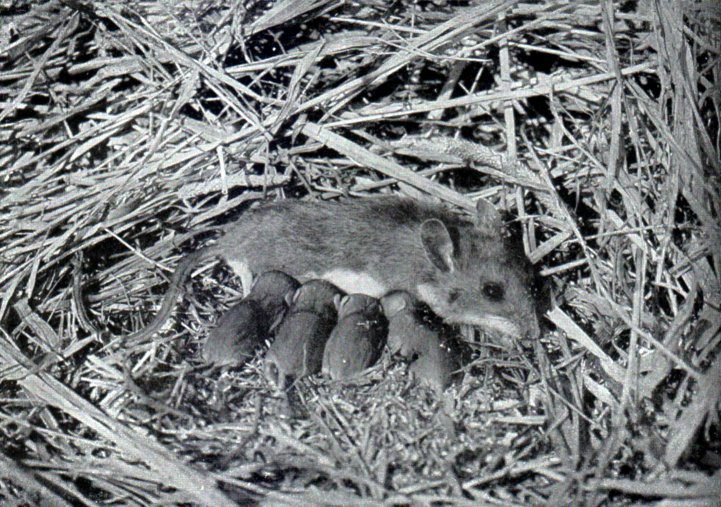
White-footed Mouse

White-footed Mouse

Peromyscus leucopus

Edited by Chandler B. Beach, A.M., Public domain, via Wikimedia Commons

Side by side

Winkelmann's MouseWhite-footed Mouse
Scientific namePeromyscus winkelmanni Carleton, 1977Peromyscus leucopus (Rafinesque, 1818)
English nameWinkelmann's MouseWhite-footed Mouse
GroupMammalsMammals
ClassMammalia MammalMammalia Mammal
OrderRodentia RodentRodentia Rodent
FamilyCricetidae New World Mice and RatsCricetidae New World Mice and Rats
GenusPeromyscus Deer MicePeromyscus Deer Mice
Named in19771818
Red List categoryEndangeredLeast Concern
EnvironmentNot recordedterrestrial
Countries on record1 country3 countries
GBIF occurrence records112 records137,357 records

Rows where the two agree are shown in grey.

Where each is found

Both recorded in 1 country

Only White-footed Mouse (2)

From Catalogue of Life checklists and GBIF occurrence records. A country missing from a list means no record is held, which is not proof of absence.

Checked facts

Winkelmann's MouseWhite-footed Mouse
Appearance
  • The species has tawny fur mixed with black across most of its body, with darker coloration along the back. English Wikipedia
  • Some individuals have a distinct black band running down the center of the back. English Wikipedia
  • The flanks and cheeks are bright tan or cinnamon in color. English Wikipedia
  • The underparts are pale grey. English Wikipedia
  • The tail has sparse hair and is generally darker on its upper surface than on its lower surface. English Wikipedia
  • The ears are relatively small and dark compared with those of related species. English Wikipedia
  • The skull is slightly larger than those of related species. English Wikipedia
  • The glans of the penis is partially corrugated, providing a distinguishing characteristic from close relatives. English Wikipedia
  • The upperparts of this species range from pale to rich reddish brown, while its underside and feet are white. animaldiversity.org
  • Its tail is darker on the upper surface and lighter underneath. biokids.umich.edu
Size
Habitat
  • The species inhabits woodland patches containing tall oak trees mixed with pines. English Wikipedia
  • Its woodland habitat has dense understories and abundant epiphytes. English Wikipedia
  • The epiphytes in its habitat include mosses, orchids, and bromeliads. English Wikipedia
  • This species is most frequently encountered in warm, dry forests and brushlands at low and intermediate elevations. animaldiversity.org
  • It can inhabit environments ranging from high-elevation forests to semi-desert landscapes. animaldiversity.org
  • It also occupies suburban and agricultural environments. biokids.umich.edu
  • In the southern and western portions of its range, this species mainly inhabits wooded areas and semi-desert scrub near waterways. animaldiversity.org
  • In southern Mexico, this species is primarily associated with agricultural environments. biokids.umich.edu
  • It constructs nests in warm, dry locations such as hollow trees and abandoned bird nests. animaldiversity.org
DietNo checked fact yet
  • This species is omnivorous and consumes seeds, berries, nuts, insects, grains, fruits, and fungi. biokids.umich.edu
  • Its diet includes seeds, nuts, fruits, berries, and insects. tn.gov
  • It consumes the pupal stage of invasive gypsy moths. English Wikipedia
  • It gathers and stores seeds and nuts during autumn for consumption during winter. biokids.umich.edu
BehaviourNo checked fact yet
  • This species is primarily active during nighttime. animaldiversity.org
  • Individuals are generally solitary and territorial, although neighboring home ranges can overlap. animaldiversity.org
  • Its home ranges generally cover between 0.5 and 1.5 acres. biokids.umich.edu
  • Its population density can range from 4 to 12 individuals per acre. animaldiversity.org
  • Individuals are capable of climbing and swimming effectively. animaldiversity.org
  • Captured individuals have demonstrated the ability to return to their original capture location after being released two miles away. animaldiversity.org
  • Individuals produce a prolonged buzzing sound by striking hollow reeds or dry leaves with their forepaws. biokids.umich.edu
  • Females transport threatened offspring individually by holding them around the neck with their teeth. biokids.umich.edu
Reproduction
DistributionNo checked fact yet
  • This species occurs across much of eastern North America, extending from Nova Scotia westward to Saskatchewan and Montana. animaldiversity.org
  • Its geographical range extends southward into eastern and southern Mexico and the Yucatan Peninsula. biokids.umich.edu
Conservation
  • The species is formally classified as endangered by the IUCN. English Wikipedia
  • Logging affects much of the woodland habitat on which the species depends. English Wikipedia
UsesNo checked fact yet
  • This species contributes to controlling populations of insect pests such as gypsy moths. animaldiversity.org
  • It serves as an important prey species for numerous small predators. maine.gov
  • It is commonly used as a laboratory animal, ranking among the most frequently used mouse species after the house mouse. English Wikipedia
  • Domesticated individuals are also maintained as pets and have been selectively bred for different coat colors. English Wikipedia
Similar speciesNo checked fact yet
  • The eastern deer mouse (Peromyscus maniculatus) is a similar species. English Wikipedia
  • Other closely related species that can be difficult to distinguish from it include Peromyscus maniculatus, P. eremicus, P. polionotus, and P. gossypinus. animaldiversity.org
OtherNo checked fact yet

In brief

Winkelmann's Mouse

Winkelmann's Mouse is a mammal belonging to the genus Peromyscus and the group of New World mice commonly called deermice. It is distinguished from close relatives by its partially corrugated glans of the penis. Full profile

White-footed Mouse

Peromyscus leucopus occurs across much of eastern North America, extending from Nova Scotia westward to Saskatchewan and Montana, and southward into eastern and southern Mexico and the Yucatan Peninsula. Its upperparts range from pale to rich reddish brown, while its underside and feet are white. Full profile

Compare something else

Page built on 29 November 2026 from the data on the two species pages, where every source is listed.

Cite this page

ScientificNames.org. (2026). Winkelmann's Mouse vs White-footed Mouse. Retrieved November 29, 2026, from https://scientificnames.org/compare/winkelmanns-mouse-vs-white-footed-mouse