Species · Mammals
Winkelmann's Mouse Peromyscus winkelmanni
The scientific name of the Winkelmann's Mouse is Peromyscus winkelmanni. It is a species of mammal in the family Cricetidae (new world mice and rats), order Rodentia. The name dates from 1977.
- Scientific name
- Peromyscus winkelmanni Carleton, 1977
- Common name
- Winkelmann's Mouse
- Genus
- Peromyscus
- Family
- Cricetidae (New World Mice and Rats)
- Order
- Rodentia
- Class
- Mammalia
- Red List category
- EN Endangered
- Recorded in
- 1 country
- Name status
- accepted in the Catalogue of Life
Overview
Winkelmann's Mouse is a mammal belonging to the genus Peromyscus and the group of New World mice commonly called deermice. It is distinguished from close relatives by its partially corrugated glans of the penis.
Written 27 November 2026 from the sources listed below. Each statement was checked against the passage it cites; statements that could not be supported were removed.
Appearance
Winkelmann's Mouse has tawny fur mixed with black across most of its body, with darker coloration along the back. Some individuals have a distinct black band running down the center of the back.[1][2]
The flanks and cheeks are bright tan or cinnamon, while the underparts are pale grey. The tail has sparse hair and is generally darker on its upper surface than on its lower surface.[3][4][5]
The ears are relatively small and dark compared with those of related species, and the skull is slightly larger than those of related species. The glans of the penis is partially corrugated, distinguishing the species from close relatives.[6][7][8]
Adults measure 24–27 cm in total length, with approximately half of that length consisting of the tail. Adults weigh approximately 54 g.[9][10][11]
Habitat
Winkelmann's Mouse inhabits woodland patches containing tall oak trees mixed with pines. These woodlands have dense understories and abundant epiphytes.[12][13]
The epiphytes in its habitat include mosses, orchids, and bromeliads.[14]
Conservation
Winkelmann's Mouse is formally classified as endangered by the IUCN.[15]
Logging affects much of the woodland habitat on which the species depends.[16]
Reproduction and life cycle
Females have six teats.[17]
Classification of the Winkelmann's Mouse
| Kingdom | Animalia |
|---|---|
| Phylum | Chordata |
| Subphylum | Vertebrata |
| Infraphylum | Gnathostomata |
| Parvphylum | Osteichthyes |
| Megaclass | Tetrapoda |
| Class | Mammalia (Mammal) |
| Subclass | Theria |
| Infraclass | Eutheria |
| Order | Rodentia (Rodent) |
| Suborder | Myomorpha (Mice) |
| Superfamily | Muroidea |
| Family | Cricetidae (New World Mice and Rats) |
| Subfamily | Neotominae |
| Genus | Peromyscus (Deer Mice) |
| Species | Peromyscus winkelmanni Carleton, 1977 |
Where the Winkelmann's Mouse is found
Checklists and occurrence records place Peromyscus winkelmanni in 1 country across North America. GBIF holds 112 georeferenced records of it.
Countries
Regions and cities with the most records
Range as the checklists state it
Middle America
A number beside a place is its count of GBIF occurrence records. A place without a number comes from a checklist alone. Records show where a species has been observed or collected, which can include escapes and vagrants.
Common names
English
- Winkelmann's Mouse
- Coalcolman Deer Mouse
- Coalcoman Deer Mouse
- Coalcomán Deermouse
- Forest Mouse
- Winkelmann's Deer Mouse
Names in 6 other languages
- Czech
- křeček Winkelmann
- Finnish
- coalcomaninpeurahiiru
- Japanese
- ウィンケルマンシロアシマウス
- Polish
- myszak epifityczny
- Russian
- Хомячок Винкельмана
- Spanish
- Ratón michoacano de dos aguas
Related species
-
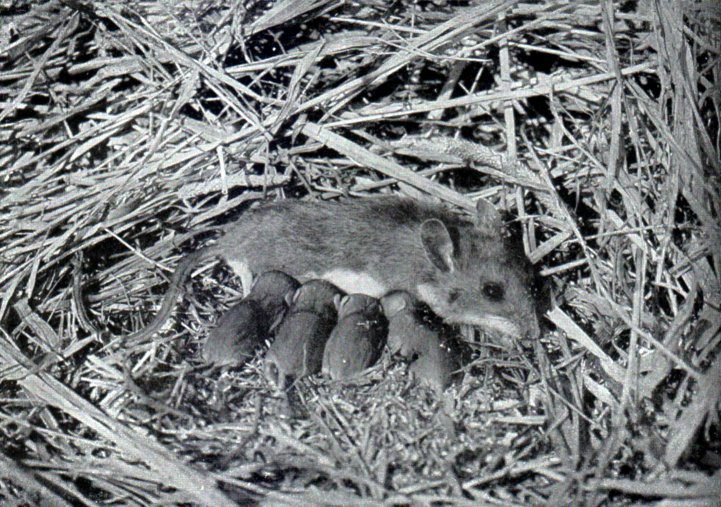 White-footed MousePeromyscus leucopus
-
 Eastern Deer MousePeromyscus maniculatus
-
 Oldfield MousePeromyscus polionotus
-
 Cactus MousePeromyscus eremicus
-
 California DeermousePeromyscus californicus
-
 Brush MousePeromyscus boylii
- Angel Island MousePeromyscus guardia
-
 Cotton MousePeromyscus gossypinus
Compare
Questions and answers
What is the scientific name of the Winkelmann's Mouse?
The scientific name of the Winkelmann's Mouse is Peromyscus winkelmanni. Written with its author, the full name is Peromyscus winkelmanni Carleton, 1977.
Which family does the Winkelmann's Mouse belong to?
Peromyscus winkelmanni belongs to the family Cricetidae, in the order Rodentia and the class Mammalia.
Where is the Winkelmann's Mouse found?
Checklists and occurrence records place Peromyscus winkelmanni in 1 country: Mexico.
What is the conservation status of the Winkelmann's Mouse?
The IUCN Red List category recorded for Peromyscus winkelmanni is Endangered (EN).
What other names does the Winkelmann's Mouse have?
Peromyscus winkelmanni is also known in English as Coalcolman Deer Mouse, Coalcoman Deer Mouse, Coalcomán Deermouse, Forest Mouse and Winkelmann's Deer Mouse.
Sources
Passages the profile rests on
- The species has tawny fur mixed with black across most of its body, with darker coloration along the back. Source passage: “The fur is tawny mixed with black over most of the body, becoming darker on the back” — English Wikipedia
- Some individuals have a distinct black band running down the center of the back. Source passage: “sometimes forming a distinct black band in the center of the back” — English Wikipedia
- The flanks and cheeks are bright tan or cinnamon in color. Source passage: “fading to bright tan or cinnamon on the flanks and cheeks.” — English Wikipedia
- The underparts are pale grey. Source passage: “The under parts are pale grey.” — English Wikipedia
- The tail has sparse hair and is generally darker on its upper surface than on its lower surface. Source passage: “The tail has only a thin covering of hair, typically darker on the upper than on the lower surface.” — English Wikipedia
- The ears are relatively small and dark compared with those of related species. Source passage: “the ears are relatively small and dark in color” — English Wikipedia
- The skull is slightly larger than those of related species. Source passage: “the skull is slightly larger.” — English Wikipedia
- The glans of the penis is partially corrugated, providing a distinguishing characteristic from close relatives. Source passage: “the shape of its penis, which has a partially corrugated glans.” — English Wikipedia
- Adults measure 24–27 cm in total length. Source passage: “an adult Winkelmann's mouse measures 24 to 27 cm (9.4 to 10.6 in) in total length” — English Wikipedia
- Approximately half of the adult's total length consists of its tail. Source passage: “about half of which is the tail” — English Wikipedia
- Adults weigh approximately 54 g. Source passage: “weighs around 54 g (1.9 oz).” — English Wikipedia
- The species inhabits woodland patches containing tall oak trees mixed with pines. Source passage: “It lives in woodland patches of tall oak trees, mixed with pines.” — English Wikipedia
- Its woodland habitat has dense understories and abundant epiphytes. Source passage: “These areas have dense understories, and thick epiphytes” — English Wikipedia
- The epiphytes in its habitat include mosses, orchids, and bromeliads. Source passage: “including patches of mosses, orchids, and bromeliads.” — English Wikipedia
- The species is formally classified as endangered by the IUCN. Source passage: “it is formally considered an endangered species by the IUCN.” — English Wikipedia
- Logging affects much of the woodland habitat on which the species depends. Source passage: “much of the woodland on which it depends is currently subject to logging” — English Wikipedia
- Females have six teats. Source passage: “Females have six teats.” — English Wikipedia
Data
- Catalogue of Life, 2026-10-16 XR cc by
- Global Biodiversity Information Facility CC BY 4.0
- Wikidata CC0
- GeoNames CC BY 4.0
- Within the Catalogue of Life, this name comes from The Integrated Taxonomic Information System cc0
References
- Occas. Pap. Mus. Zool., Univ. Michigan vol.675 p.2 where the name was published
- Hall, & Raymond, E. (1981). The Mammals of North America, 2nd Ed., Vol. 2.
- Wilson, Don E., and DeeAnn M. Reeder, eds. (1993). Mammal Species of the World: A Taxonomic and Geographic Reference, 2nd Ed., 3rd Printing.
- Wilson, Don E., and F. Russell Cole. (2000). Common Names of Mammals of the World.
- Musser, Guy G., and Michael D. Carleton / Wilson, Don E., and DeeAnn M. Reeder, eds. (2005). Superfamily Muroidea. Mammal Species of the World: A Taxonomic and Geographic Reference, 3rd Ed., Vol. 2.
This species in other databases
Page built on 29 November 2026. See how the catalog is made and all sources and licences.
Cite this page
ScientificNames.org. (2026). Peromyscus winkelmanni (Winkelmann's Mouse). Retrieved November 29, 2026, from https://scientificnames.org/species/peromyscus-winkelmanni
“Peromyscus winkelmanni (Winkelmann's Mouse).” ScientificNames.org, 2026, scientificnames.org/species/peromyscus-winkelmanni. Accessed 29 Nov. 2026.
ScientificNames.org. “Peromyscus winkelmanni (Winkelmann's Mouse).” Accessed November 29, 2026. https://scientificnames.org/species/peromyscus-winkelmanni.
@misc{scientificnames_peromyscus_winkelmanni_winkelmanns_mouse,
  author = {{ScientificNames.org}},
  title = {Peromyscus winkelmanni (Winkelmann's Mouse)},
  year = {2026},
  url = {https://scientificnames.org/species/peromyscus-winkelmanni},
  note = {Accessed 2026-11-29}
}