Species · Amphibians
Splash-backed Poison Frog Adelphobates galactonotus
The scientific name of the Splash-backed Poison Frog is Adelphobates galactonotus. It is a species of amphibian in the family Dendrobatidae (poison dart frog), order Anura. The name dates from 1864.
- Scientific name
- Adelphobates galactonotus (Steindachner, 1864)
- Common name
- Splash-backed Poison Frog
- Genus
- Adelphobates
- Family
- Dendrobatidae (Poison Dart Frog)
- Order
- Anura
- Class
- Amphibia
- Red List category
- LC Least Concern
- Recorded in
- 1 country
- Name status
- accepted in the Catalogue of Life

Overview
Adelphobates galactonotus is endemic to the rainforest of the southern Amazon Basin in Brazil. It exhibits considerable color variation, with upperparts ranging from yellow, orange, and red to whitish-mint and light blue.
Written 26 November 2026 from the sources listed below. Each statement was checked against the passage it cites; statements that could not be supported were removed.
Appearance
Common color variants have black undersides and yellow, orange, or red upperparts. The species also exhibits whitish-mint and light blue upperparts.[1][2]
Some individuals have mottled or spotted upperparts, while others are almost entirely whitish, yellow-orange, or black. A distinctive color variant from Cristalino State Park has a yellow-and-black netted pattern.[3][4][5]
Genetic testing has revealed virtually no genetic difference among the species' color morphs. Their geographic distributions do not follow a clear geographic pattern, and two visually distinct morphs have largely identical poison profiles.[6][7][8]
Habitat
The Splash-backed Poison Frog inhabits tropical moist lowland forests in the rainforest of the southern Amazon Basin in Brazil. It has been observed at elevations of up to 600 meters above sea level.[9][10][11]
The species appears to prefer forest habitats containing numerous Brazil nut trees.[12]
Behaviour
Adult frogs carry newly hatched tadpoles to water. Water collected in Brazil nut husks may serve as a destination for transported tadpoles.[13][14]
Species coloration may contribute to recognition of other members of the same species and to sexual selection.[15]
Reproduction and life cycle
The species lays its eggs on the ground.[16]
Conservation
The IUCN classifies the Splash-backed Poison Frog as Least Concern. The species has demonstrated some tolerance to habitat disturbance and occurs in many protected areas.[17][18][19]
Habitat loss threatens the species. It has disappeared from some localities because of deforestation and flooding associated with hydroelectric dams.[20][21]
Illegal collection poses a risk to wild populations.[22]
Classification of the Splash-backed Poison Frog
| Kingdom | Animalia |
|---|---|
| Phylum | Chordata |
| Subphylum | Vertebrata |
| Infraphylum | Gnathostomata |
| Parvphylum | Osteichthyes |
| Megaclass | Tetrapoda |
| Class | Amphibia (Amphibians) |
| Order | Anura (Frogs) |
| Superfamily | Dendrobatoidea |
| Family | Dendrobatidae (Poison Dart Frog) |
| Subfamily | Dendrobatinae |
| Genus | Adelphobates (Poison Frogs) |
| Species | Adelphobates galactonotus (Steindachner, 1864) |
Where the Splash-backed Poison Frog is found
Checklists and occurrence records place Adelphobates galactonotus in 1 country. GBIF holds 834 georeferenced records of it.
Countries
Regions and cities with the most records
- Pará, Brazil 302
- Mato Grosso, Brazil 18
- Tocantins, Brazil 17
- Maranhão, Brazil 12
- Araguaína, Brazil 11
- Açailândia, Brazil 6
- Xinguara, Brazil 6
- Parauapebas, Brazil 5
- Palmas, Brazil 4
- Brasil Novo, Brazil 3
- Canaã dos Carajás, Brazil 3
A number beside a place is its count of GBIF occurrence records. A place without a number comes from a checklist alone. Records show where a species has been observed or collected, which can include escapes and vagrants.
Common names
English
- Splash-backed Poison Frog
- Splash-backed Poison-arrow Frog
- Splashback Poison Frog
Names in 5 other languages
- Czech
- pralesnička brazilská
- German
- Gelbrücken-Baumsteiger, Klecksbaumsteiger
- Japanese
- セマダラヤドクガエル
- Portuguese
- Sapo-ponta-de-flecha-da-amazônia
- Russian
- Обрызганный древолаз
Synonyms
2 other scientific names have been used for this species and are now treated as synonyms of Adelphobates galactonotus.
- Dendrobates galactonotus Steindachner, 1864
- Dendrobates paraensis Boulenger, 1913
Related species
-
 Brazil-nut Poison FrogAdelphobates castaneoticus
-
 Rio Madeira Poison FrogAdelphobates quinquevittatus
-
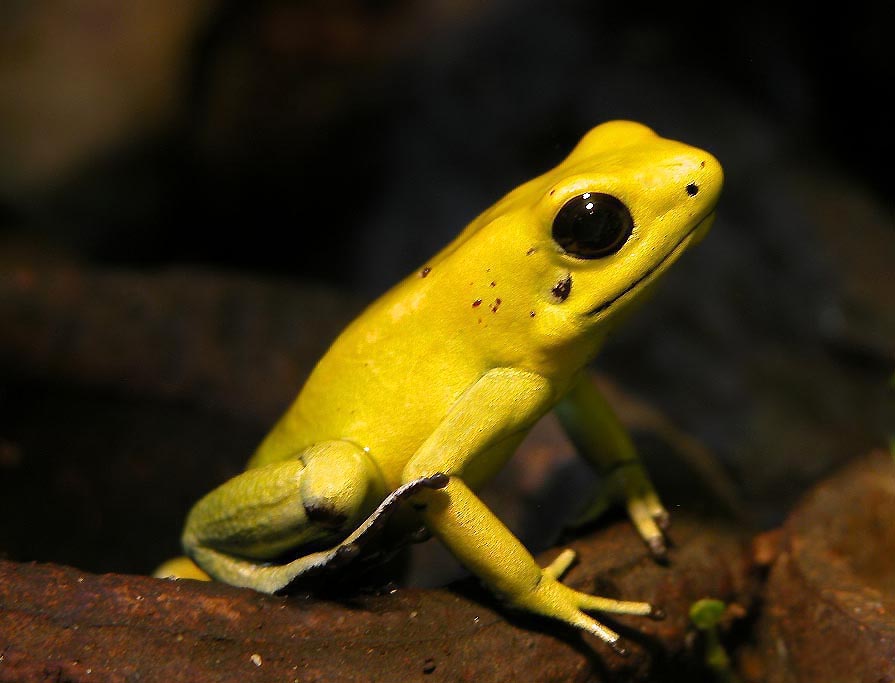 Golden Poison FrogPhyllobates terribilis
-
 Strawberry Poison Dart FrogOophaga pumilio
-
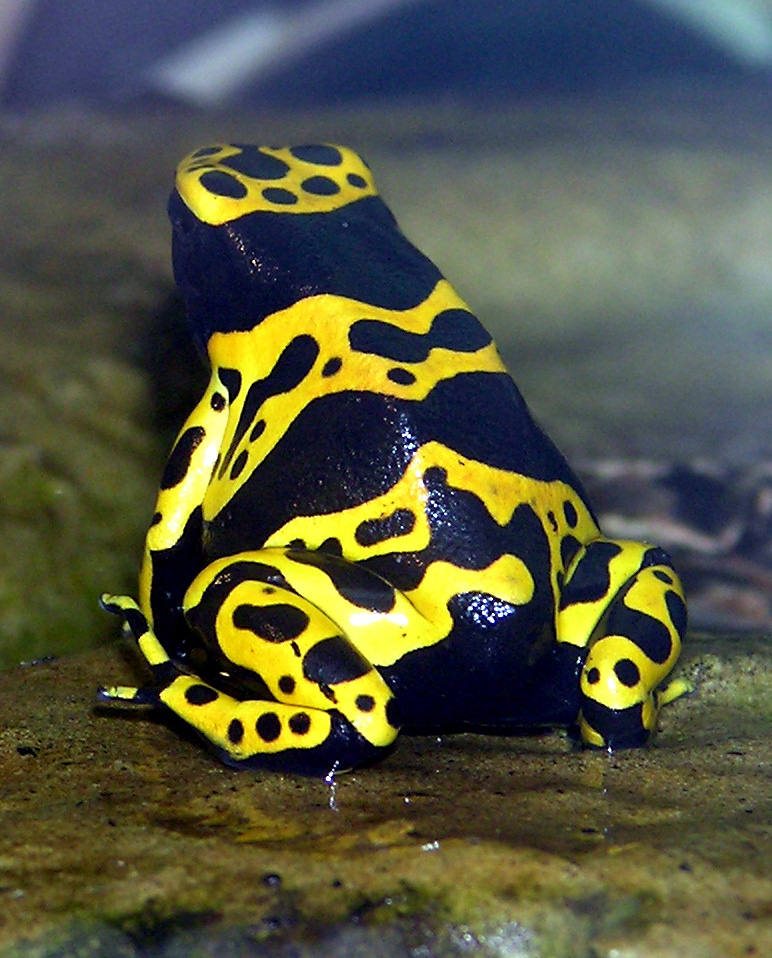 Yellow-banded Poison Dart FrogDendrobates leucomelas
-
 Green and Black Poison Dart FrogDendrobates auratus
-
 Dyeing Poison Dart FrogDendrobates tinctorius
-
 Granular Poison FrogOophaga granulifera
Compare
Questions and answers
What is the scientific name of the Splash-backed Poison Frog?
The scientific name of the Splash-backed Poison Frog is Adelphobates galactonotus. Written with its author, the full name is Adelphobates galactonotus (Steindachner, 1864).
Which family does the Splash-backed Poison Frog belong to?
Adelphobates galactonotus belongs to the family Dendrobatidae, in the order Anura and the class Amphibia.
Where is the Splash-backed Poison Frog found?
Checklists and occurrence records place Adelphobates galactonotus in 1 country: Brazil.
What is the conservation status of the Splash-backed Poison Frog?
The IUCN Red List category recorded for Adelphobates galactonotus is Least Concern (LC).
What other names does the Splash-backed Poison Frog have?
Adelphobates galactonotus is also known in English as Splash-backed Poison-arrow Frog and Splashback Poison Frog.
Sources
Passages the profile rests on
- Common color variants have black undersides and yellow, orange, or red upperparts. Source passage: “The best known variants of this species are black below and yellow, orange or red above” — English Wikipedia
- The species exhibits considerable color variation, including whitish-mint and light blue upperparts. Source passage: “its color is extremely variable with some having whitish-mint or light blue upperparts” — English Wikipedia
- Some individuals have mottled or spotted upperparts. Source passage: “some having a mottled or spotted pattern above” — English Wikipedia
- Some individuals are almost entirely whitish, yellow-orange, or black. Source passage: “some being almost all whitish (popularly known as "moonshine" among captive frog keepers), yellow-orange or black.” — English Wikipedia
- A distinctive color variant from Cristalino State Park has a yellow-and-black netted pattern. Source passage: “including a distinctive variant from Cristalino State Park with a yellow-and-black netted pattern” — English Wikipedia
- Genetic testing has revealed virtually no genetic difference among the species' color morphs. Source passage: “genetic testing have revealed virtually no difference between them” — English Wikipedia
- The geographic distributions of the different color morphs do not follow a clear geographic pattern. Source passage: “the distributions of the morphs do not follow a clear geographic pattern” — English Wikipedia
- Two visually distinct color morphs have largely identical poison profiles. Source passage: “the two color morphs, though visually very different, have largely the same poison profile.” — English Wikipedia
- The species is endemic to the rainforest of the southern Amazon Basin in Brazil. Source passage: “It is endemic to the rainforest of the southern Amazon Basin in Brazil.” — English Wikipedia
- The species inhabits tropical moist lowland forests. Source passage: “The frog's natural habitats are tropical moist lowland forests” — English Wikipedia
- The species has been observed at elevations of up to 600 meters above sea level. Source passage: “where it has been observed as high as 600 meters above sea level.” — English Wikipedia
- The species appears to prefer forest habitats containing numerous Brazil nut trees. Source passage: “It seems to prefer forest habitats with large numbers of Brazil nut trees.” — English Wikipedia
- Adult frogs carry newly hatched tadpoles to water. Source passage: “After the eggs hatch, the adult frogs carry the tadpoles to water.” — English Wikipedia
- Water collected in Brazil nut husks may serve as a destination for transported tadpoles. Source passage: “Scientists believe this may include water collected in Brazil nut husks.” — English Wikipedia
- Species coloration may contribute to recognition of other members of the same species and to sexual selection. Source passage: “These scientists believe that the coloration may have more to do with conspecific recognition and sexual selection than with deterring predators.” — English Wikipedia
- The species lays its eggs on the ground. Source passage: “The eggs are laid on the ground.” — English Wikipedia
- The IUCN classifies the species as Least Concern. Source passage: “The IUCN classifies this frog as least concern of extinction” — English Wikipedia
- The species has demonstrated some tolerance to habitat disturbance. Source passage: “and notes that it has shown some tolerance to habitat disturbance.” — English Wikipedia
- The species occurs in many protected areas. Source passage: “The frog's known range includes many protected areas.” — English Wikipedia
- Habitat loss threatens the species. Source passage: “it is threatened by habitat loss” — English Wikipedia
- The species has disappeared from some localities because of deforestation and flooding associated with hydroelectric dams. Source passage: “has already disappeared from some localities due to deforestation and flooding caused by hydroelectric dams.” — English Wikipedia
- Illegal collection poses a risk to wild populations. Source passage: “the wild populations are still at risk from illegal collection.” — English Wikipedia
Data
- Catalogue of Life, 2026-10-16 XR cc by
- Global Biodiversity Information Facility CC BY 4.0
- Wikidata CC0
- GeoNames CC BY 4.0
- Wikimedia Commons per image; credit shown with each image
- Within the Catalogue of Life, this name comes from The Integrated Taxonomic Information System cc0
This species in other databases
Page built on 27 November 2026. See how the catalog is made and all sources and licences.
Cite this page
ScientificNames.org. (2026). Adelphobates galactonotus (Splash-backed Poison Frog). Retrieved November 27, 2026, from https://scientificnames.org/species/adelphobates-galactonotus
“Adelphobates galactonotus (Splash-backed Poison Frog).” ScientificNames.org, 2026, scientificnames.org/species/adelphobates-galactonotus. Accessed 27 Nov. 2026.
ScientificNames.org. “Adelphobates galactonotus (Splash-backed Poison Frog).” Accessed November 27, 2026. https://scientificnames.org/species/adelphobates-galactonotus.
@misc{scientificnames_adelphobates_galactonotus_splash_backed_poison_frog,
  author = {{ScientificNames.org}},
  title = {Adelphobates galactonotus (Splash-backed Poison Frog)},
  year = {2026},
  url = {https://scientificnames.org/species/adelphobates-galactonotus},
  note = {Accessed 2026-11-27}
}