Species · Spiders and other arachnids
Afrobeata firma
Afrobeata firma has no English name on record in the checklists used here. It is a species of arachnid in the family Salticidae (jumping spider), order Araneae. The name dates from 1994.
- Scientific name
- Afrobeata firma Wesołowska & van Harten, 1994
- Genus
- Afrobeata
- Family
- Salticidae (Jumping Spider)
- Order
- Araneae
- Class
- Arachnida
- Recorded in
- 1 country
- Name status
- accepted in the Catalogue of Life
Overview
Afrobeata firma is a jumping spider belonging to the genus Afrobeata. The species is endemic to Socotra, Yemen. It was the first species in its genus to be identified outside Africa.
Written 27 November 2026 from the sources listed below. Each statement was checked against the passage it cites; statements that could not be supported were removed.
Appearance
The male carapace is generally dark brown and covered with short grey hairs. Its eye field is darker than the surrounding carapace and bears long brown bristles around the eyes, while the clypeus is covered with white hairs.[1][2][3]
The male chelicerae are large and dark brown, with white hairs near their bases. They have one tooth at the front of the fang base and two distinctively shaped teeth at the rear.[4][5]
The male abdomen is elongated and tapers towards its posterior end. It is dark brown, with a pattern of four short stripes, chevrons and spots, and has an orange underside with a broad dark stripe.[6][7][8]
The male's front legs are longer and darker than its other legs and have longer hairs. Its palpal bulb is round and bears a long, thin embolus that circles around it, while the palpal tibia has a very small tooth-shaped tibial apophysis.[9][10][11]
The female has a dark brown carapace with an almost black eye field. Very long bristles near her eyes resemble horns.[12][13]
The female chelicerae have two teeth at the front and one bicuspid tooth at the rear. Her abdomen is dark brown and covered with shiny scales.[14][15]
Reproduction and life cycle
The female copulatory organs include an epigyne with a large shallow central depression and two small posterior pockets. The seminal ducts are complex, initially partly helical, and form a series of coils before reaching relatively straight terminal sections.[16][17][18]
The female spermathecae are bean-shaped and heavily sclerotized.[19]
Similar species
The female copulatory organs of Afrobeata firma resemble those of Afrobeata latithorax. Their seminal ducts differ.[20]
Classification of Afrobeata firma
| Kingdom | Animalia |
|---|---|
| Phylum | Arthropoda |
| Subphylum | Chelicerata |
| Class | Arachnida (Arachnid) |
| Order | Araneae (Spider) |
| Family | Salticidae (Jumping Spider) |
| Genus | Afrobeata |
| Species | Afrobeata firma Wesołowska & van Harten, 1994 |
Where Afrobeata firma is found
Checklists and occurrence records place Afrobeata firma in 1 country across Asia. GBIF holds 7 georeferenced records of it.
Countries
Range as the checklists state it
Yemen (Socotra)
A number beside a place is its count of GBIF occurrence records. A place without a number comes from a checklist alone. Records show where a species has been observed or collected, which can include escapes and vagrants.
Related species
- Afrobeata magnifica
- Afrobeata latithorax
-
 Bold JumperPhidippus audax
-
 Regal Jumping SpiderPhidippus regius
-
 Johnson JumperPhidippus johnsoni
-
 Zebra SpiderSalticus scenicus
-
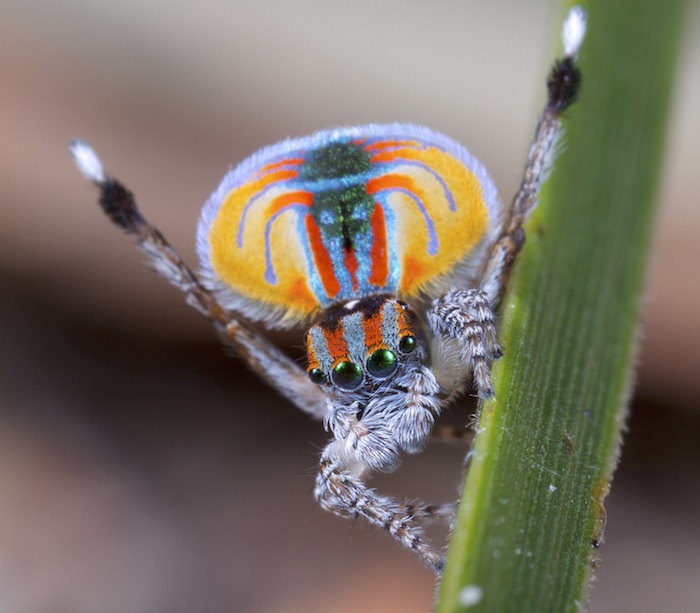 Flying Peacock SpiderMaratus volans
-
 Bagheera kiplingi
Compare
Questions and answers
When was Afrobeata firma first described?
The species was first described in 1994 by Wanda Wesołowska and Antonius van Harten.[21]
Where have specimens of Afrobeata firma been recorded?
The species is endemic to Socotra, Yemen. Its holotype was collected near Hadibo in 1993, and additional specimens have been recorded near Deksam, Homhil and Mogasu, and between Mahfirhin and Steroh.[22][23][24][25]
Sources
Passages the profile rests on
- The male carapace is generally dark brown and covered with short grey hairs. Source passage: “generally dark brown with short grey hairs.” — English Wikipedia
- The male eye field is darker than the surrounding carapace and has long brown bristles around the eyes. Source passage: “The eye field is a darker trapezoid with long brown bristles around the eyes themselves.” — English Wikipedia
- The male spider has a white-haired clypeus. Source passage: “The spider's face, or clypeus, is covered in white hairs.” — English Wikipedia
- The male chelicerae are large, dark brown and covered with white hairs near their bases. Source passage: “The chelicerae are large and dark brown and also has white hairs to its base.” — English Wikipedia
- The male chelicerae have one tooth at the front of the fang base and two distinctively shaped teeth at the rear. Source passage: “It has a single tooth on the base of the fang to the front and two distinctively-shaped teeth to the rear.” — English Wikipedia
- The male abdomen is elongated, tapering towards its posterior end. Source passage: “The male spider has an elongated abdomen that narrows to the end.” — English Wikipedia
- The male abdomen is dark brown and bears a pattern of four short stripes, chevrons and spots. Source passage: “It has a slightly lighter indistinct pattern that consists of a series of four short stripes that are chevrons near the rear, broken chevrons in the middle and separate spots to the front.” — English Wikipedia
- The male abdomen has an orange underside with a broad dark stripe. Source passage: “The underside is orange with a wide dark stripe across it.” — English Wikipedia
- The male's front legs are longer and darker than its other legs and have longer hairs. Source passage: “The front legs are longer and darker than the others with longer hairs.” — English Wikipedia
- The male palpal bulb is round and bears a long, thin embolus that circles around it. Source passage: “The palpal bulb is round. A long thin embolus projects from the side of the bulb and circles round it until it emanates from near the front.” — English Wikipedia
- The male palpal tibia bears a very small tooth-shaped tibial apophysis. Source passage: “The tibia has a very small appendage on it, called a tibial apophysis that is shaped like a tooth” — English Wikipedia
- The female has a dark brown carapace with an almost black eye field. Source passage: “It is dark brown with a very dark, nearly black, eye field.” — English Wikipedia
- The female has very long bristles near her eyes that resemble horns. Source passage: “It has what looks like horns near its eyes made of very long bristles.” — English Wikipedia
- The female chelicerae have two teeth at the front and one bicuspid tooth at the rear. Source passage: “The chelicerae are also dark brown and have two teeth at the front and a single bicuspid tooth to the rear.” — English Wikipedia
- The female abdomen is dark brown and covered with shiny scales. Source passage: “It is dark brown with a covering of shiny scales.” — English Wikipedia
- The female copulatory organs have an epigyne with a large shallow central depression and two small posterior pockets. Source passage: “The epigyne has a large shallow depression in the middle and two small pockets to the very rear” — English Wikipedia
- The female seminal ducts are complex and initially partly helical. Source passage: “The copulatory openings lead to complex, initially part helical, seminal ducts that have slight sclerotization.” — English Wikipedia
- The female seminal ducts form a complex series of coils before reaching relatively straight terminal sections. Source passage: “The ducts lead through a complex set of coils to rather straight terminals.” — English Wikipedia
- The female spermathecae are bean-shaped and heavily sclerotized. Source passage: “The spermathecae nestle in amongst the ducts, are bean-shaped and have very heavy sclerotization.” — English Wikipedia
- The female copulatory organs of Afrobeata firma resemble those of Afrobeata latithorax, although their seminal ducts differ. Source passage: “The epigyne is similar to Afrobeata latithorax but has unusual seminal ducts.” — English Wikipedia
- The species was first described in 1994 by Wanda Wesołowska and Antonius van Harten. Source passage: “The species was first described in 1994 by Wanda Wesołowska and Antonius van Harten.” — English Wikipedia
- Afrobeata firma is endemic to Socotra, Yemen. Source passage: “It is endemic to Socotra, Yemen.” — English Wikipedia
- The species' holotype was collected near Hadibo in 1993. Source passage: “The holotype was collected near Hadibo in 1993.” — English Wikipedia
- Additional specimens have been recorded near Deksam, Homhil and Mogasu. Source passage: “Other examples have been found near Deksam, Homhil and Mogasu” — English Wikipedia
- Additional specimens have been recorded between Mahfirhin and Steroh. Source passage: “and between Mahfirhin and Steroh” — English Wikipedia
- The male carapace typically measures 3.6 mm in length and 3.3 mm in width. Source passage: “The male has a rather high carapace, the hard upper part of the cephalothorax, that is typically 3.6 mm (0.14 in) long and 3.3 mm (0.13 in) wide.” — English Wikipedia
- The female carapace measures between 2.9 and 3.2 mm in length and between 2.7 and 3 mm in width. Source passage: “measures between 2.9 and 3.2 mm (0.11 and 0.13 in) in length and 2.7 and 3 mm (0.11 and 0.12 in) in width.” — English Wikipedia
- The male abdomen typically measures 3.4 mm long and 2.2 mm wide. Source passage: “It is typically 3.4 mm (0.13 in) long and 2.2 mm (0.09 in) wide.” — English Wikipedia
- The female abdomen measures between 2.9 and 4.2 mm in length and between 1.7 and 2.7 mm in width. Source passage: “between 2.9 and 4.2 mm (0.11 and 0.17 in) long and 1.7 and 2.7 mm (0.07 and 0.11 in) wide.” — English Wikipedia
Data
- Catalogue of Life, 2026-10-16 XR cc by
- Global Biodiversity Information Facility CC BY 4.0
- Wikidata CC0
- GeoNames CC BY 4.0
- Within the Catalogue of Life, this name comes from The World Spider Catalog cc by
References
- Wesołowska, W. & Harten, A. van (1994). The jumping spiders (Salticidae, Araneae) of Yemen. Yemeni-German Plant Protection Project, Sana'a, 86 pp. where the name was published
This species in other databases
Page built on 29 November 2026. See how the catalog is made and all sources and licences.
Cite this page
ScientificNames.org. (2026). Afrobeata firma. Retrieved November 29, 2026, from https://scientificnames.org/species/afrobeata-firma
“Afrobeata firma.” ScientificNames.org, 2026, scientificnames.org/species/afrobeata-firma. Accessed 29 Nov. 2026.
ScientificNames.org. “Afrobeata firma.” Accessed November 29, 2026. https://scientificnames.org/species/afrobeata-firma.
@misc{scientificnames_afrobeata_firma,
  author = {{ScientificNames.org}},
  title = {Afrobeata firma},
  year = {2026},
  url = {https://scientificnames.org/species/afrobeata-firma},
  note = {Accessed 2026-11-29}
}