Species · Flowering plants
Camelthorn Alhagi maurorum
The scientific name of the Camelthorn is Alhagi maurorum. It is a species of flowering plant in the family Fabaceae (bean), order Fabales.
- Scientific name
- Alhagi maurorum Medik.
- Common name
- Camelthorn
- Genus
- Alhagi
- Family
- Fabaceae (Bean)
- Order
- Fabales
- Class
- Magnoliopsida
- Recorded in
- 29 countries
- Name status
- accepted in the Catalogue of Life

Overview
Alhagi maurorum is indigenous to temperate and tropical Eurasia and the Middle East and has become naturalized in Australia, the southwestern United States and southern Africa.
Written 26 November 2026 from the sources listed below. Each statement was checked against the passage it cites; statements that could not be supported were removed.
Appearance
Camelthorn is a heavily branched, gray-green shrub with greenish stems bearing numerous spreading spines with green and yellow tips. It grows up to 0.9 metres above ground.[1][2][3]
Its leaves are alternate, simple, entire and oval to egg-shaped, with short petioles, and can reach 1 centimetre in length. The upper leaf surface is yellow-green, while the lower surface is bluish-green and somewhat hairy.[4][5][6][7]
Its pink to maroon flowers are small, pea-shaped and grow on short, slender stalks from the axillary spines. They can reach 1 centimetre in length.[8][9][10]
Habitat
Camelthorn thrives in saline, sandy, rocky and dry soils. It grows particularly well near water sources such as irrigation ditches.[11][12]
In North America, it occurs in arid agricultural areas and along riverbanks in the western United States.[13]
Behaviour
Outside its native range, camelthorn is a noxious weed. It readily establishes in cultivated fields when accidentally introduced and is unpalatable to animals, irritating forage and grazing land.[14][15][16]
The species rapidly colonizes invaded areas through creeping roots. Its extensive root system makes it difficult to eradicate and manage.[17][18]
Reproduction and life cycle
Its rhizome system may extend more than 1.8 metres underground, while roots can reach depths of 5–7 metres and up to 15 metres near the Dead Sea. New shoots can emerge more than 6 metres from the parent plant.[19][20][21][22]
Uses
Camelthorn has been used in folk medicine to treat glandular tumors, nasal polyps, bile duct ailments, rheumatism and hemorrhoids. Oil extracted from its leaves has been reported as beneficial in treating rheumatism.[23][24][25]
The species has been used medicinally for gastroprotective, diaphoretic, diuretic, expectorant, laxative, antidiarrhoeal and antiseptic properties. It has also been used as a diaphoretic, diuretic, expectorant and anti-ulcerogenic remedy.[26][27]
Camelthorn has been used as a laxative in treatments for urinary and hepatic diseases. In Iranian folk medicine, a decoction of the species has been used to treat jaundice.[28][29]
Its flowers have been used in traditional treatments for piles, migraine and warts. The plant has also been used as a sweetener and is mentioned in the Quran as a source of sweet manna.[30][31]
Classification of the Camelthorn
| Kingdom | Plantae |
|---|---|
| Subkingdom | Pteridobiotina |
| Phylum | Tracheophyta |
| Class | Magnoliopsida |
| Order | Fabales |
| Family | Fabaceae (Bean) |
| Genus | Alhagi |
| Species | Alhagi maurorum Medik. |
Where the Camelthorn is found
Checklists and occurrence records place Alhagi maurorum in 29 countries across Asia, Europe, North America and Oceania. GBIF holds 1,650 georeferenced records of it.
Countries where it is native or its origin is not stated
- Afghanistan 51
- Armenia 19
- Azerbaijan 18
- Bahrain 5
- China 71
- Cyprus 18
- Georgia 14
- Greece 13
- India 51
- Iran 73
- Iraq 22
- Israel 26
- Jordan 17
- Kazakhstan 17
- Kuwait 3
- Kyrgyzstan 2
- Lebanon 11
- Pakistan 98
- Palestinian Territory 5
- Russia 46
- Saudi Arabia 12
- Syria 27
- Tajikistan 5
- Turkey 107
- Turkmenistan 17
- United Arab Emirates 7
- Uzbekistan 22
Countries where it has been introduced
Regions and cities with the most records
- Victoria, Australia 342
- Mildura, Australia 251
- Arizona, United States 190
- California, United States 45
- South Australia, Australia 22
- New South Wales, Australia 21
- Nevada, United States 19
- Washington, United States 19
- Punjab, Pakistan 15
- Texas, United States 15
- Ankara, Turkey 14
- Sunland Park, United States 11
- New Mexico, United States 9
- Abovyan, Armenia 8
- Barstow, United States 8
- Barstow Heights, United States 8
- Gujarat, India 8
- Kerman, Iran 8
- Masis, Armenia 8
- Utah, United States 8
- Volgograd Oblast, Russia 8
- Yerevan, Armenia 8
- Yerevan, Armenia 8
- Aydın, Turkey 7
- Coachella, United States 7
- Isfahan, Iran 7
- Kalgoorlie, Australia 7
- Western Australia, Australia 7
- Ashtarak, Armenia 6
- Brawley, United States 6
- Colorado, United States 6
- Indio, United States 6
- Kennewick, United States 6
- Konya, Turkey 6
- Pasco, United States 6
- Ararat, Armenia 5
7 more countries have a few records outside this range
These countries hold a few records of Alhagi maurorum but lie outside the range the checklists give for it. Such records are often zoo or garden specimens, museum material or vagrants, so the species is not counted as occurring there.
A number beside a place is its count of GBIF occurrence records. A place without a number comes from a checklist alone. Records show where a species has been observed or collected, which can include escapes and vagrants.
Common names
English
- Camelthorn
- Camel Thorn Bush
- Caspian Manna
- Persian Mannaplant
- Camelthorn-bush
Names in 11 other languages
- Afrikaans
- kameeldoringbos
- Arabic
- 'aaqool, شوكة الجمل, عاقول مغربي
- Czech
- manovec mouřenínský
- Finnish
- kamelinkuropalko
- Hindi
- jawansa
- Japanese
- マンナ
- Russian
- Верблюжья колючка мавританская
- Slovak
- mannovec maurský
- Swedish
- mannaklöver
- Turkish
- Aguldikeni, Ağuldikeni, Sıtırizek
- nav
- Ch’ilhoshí
Synonyms
5 other scientific names have been used for this species and are now treated as synonyms of Alhagi maurorum.
- Alhagi alhagi (L.) Huth
- Alhagi camelorum DC.
- Alhagi camelorum var. spinis-elongatis Boiss.
- Alhagi maurorum subsp. maurorum
- Hedysarum alhagi L.
Subspecies and varieties
- Alhagi maurorum var. maurorum variety
- Alhagi maurorum var. turcorum variety
Related species
- MannatreeAlhagi graecorum
-
 CamelthornAlhagi pseudalhagi
- Alhagi brevispina
-
 PeanutArachis hypogaea
-
 LiquoriceGlycyrrhiza glabra
-
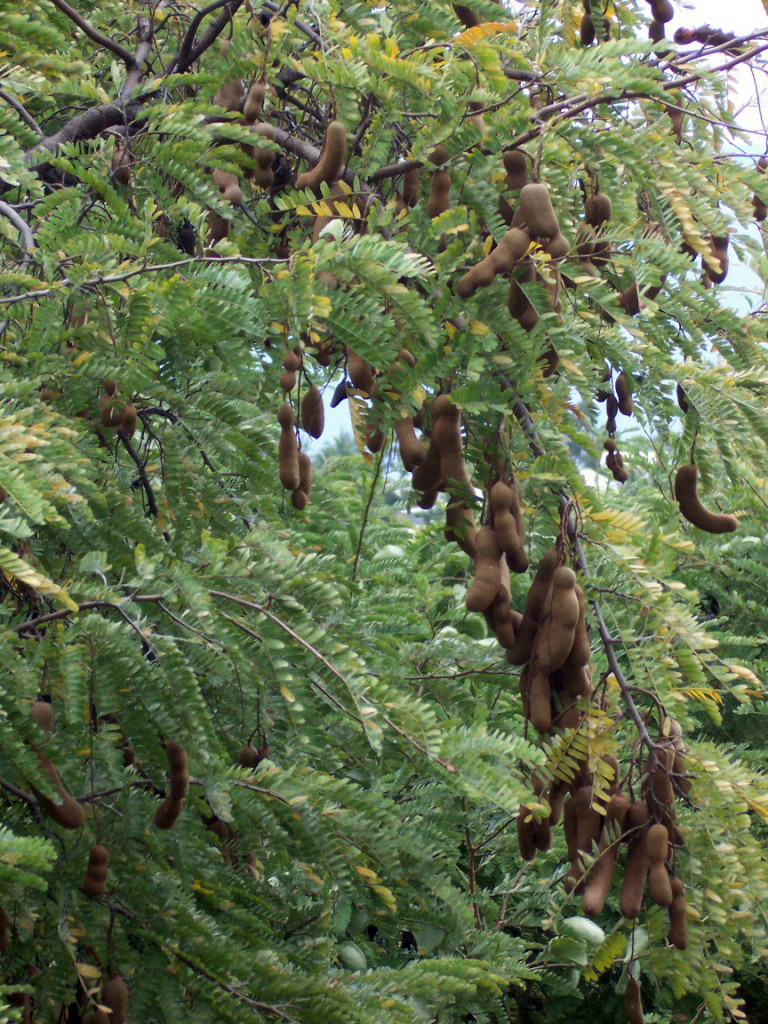 TamarindTamarindus indica
-
 ChickpeaCicer arietinum
-
 SoybeanGlycine max
Compare
Questions and answers
What is the scientific name of the Camelthorn?
The scientific name of the Camelthorn is Alhagi maurorum. Written with its author, the full name is Alhagi maurorum Medik..
Which family does the Camelthorn belong to?
Alhagi maurorum belongs to the family Fabaceae, in the order Fabales and the class Magnoliopsida.
Where is the Camelthorn found?
Checklists and occurrence records place Alhagi maurorum in 29 countries, including Turkey, Pakistan, Iran, China, Afghanistan and India.
What other names does the Camelthorn have?
Alhagi maurorum is also known in English as Camel Thorn Bush, Caspian Manna, Persian Mannaplant and Camelthorn-bush.
Why are they called camel thorn trees?
The species is a shrub with numerous spreading spines along its branches.[1][3]
What is camel thorn used for?
Camelthorn has been used as a sweetener and as a source of sweet manna. In folk medicine, it has been used to treat glandular tumors, nasal polyps, bile duct ailments, rheumatism, hemorrhoids, jaundice and other conditions.[23][24][30][28]
Sources
Passages the profile rests on
- Alhagi maurorum is a heavily branched, gray-green shrub with long spines along its branches. Source passage: “It is a heavily branched, gray-green thicket with long spines along the branches.” — English Wikipedia
- The shrub grows up to 0.9 metres tall above ground. Source passage: “Above the ground, the plant grows up to 0.9 metres (3 ft) tall.” — English Wikipedia
- Its stems are greenish and bear numerous spreading spines with green and yellow tips. Source passage: “Stems are greenish with many spreading spines that are green and yellow tipped.” — nps.gov
- Its leaves are oval to egg-shaped and deciduous. Source passage: “The deciduous leaves are oval to egg-shaped, up to 1 centimetre (1⁄2 in) long.” — English Wikipedia
- Its leaves can reach 1 centimetre in length. Source passage: “The deciduous leaves are oval to egg-shaped, up to 1 centimetre (1⁄2 in) long.” — English Wikipedia
- Its leaves are alternate, simple and entire, with short petioles. Source passage: “Leaves are alternate, simple and entire with short (1-2 mm) petioles.” — nps.gov
- The upper leaf surface is yellow-green, while the lower surface is bluish-green and somewhat hairy. Source passage: “The upper surface of the leaves is yellow-green; the lower surface is bluish-green and somewhat hairy.” — nps.gov
- Its flowers are small, bright pink to maroon and pea-shaped. Source passage: “It bears small, bright pink to maroon pea flowers up to 1 cm (3⁄8 in) long” — English Wikipedia
- Its flowers can reach 1 centimetre in length. Source passage: “It bears small, bright pink to maroon pea flowers up to 1 cm (3⁄8 in) long” — English Wikipedia
- Its flowers are pink to maroon and grow on short, slender stalks from the axillary spines. Source passage: “Flowers are pink to maroon on a short slender pedicel and arising from the axillary spines.” — nps.gov
- The species thrives in saline, sandy, rocky and dry soils. Source passage: “It has a wide soil tolerance, thriving on saline, sandy, rocky, and dry soils.” — English Wikipedia
- It grows particularly well near water sources such as irrigation ditches. Source passage: “It does best when growing next to a source of water, such as an irrigation ditch.” — English Wikipedia
- In North America, the species occurs in arid agricultural areas and along riverbanks in the western United States. Source passage: “In North America, camelthorn is found in arid, agricultural areas and riverbanks of the western United States.” — nps.gov
- The species is a noxious weed outside its native range. Source passage: “Alhagi maurorum is a noxious weed outside its native range.” — English Wikipedia
- It readily establishes in cultivated fields when accidentally introduced. Source passage: “It is a contaminant of alfalfa seed, and grows readily when accidentally introduced to a cultivated field.” — English Wikipedia
- The species is unpalatable to animals and can irritate forage and grazing land. Source passage: “It is unpalatable to animals and irritating when it invades forage and grazing land.” — English Wikipedia
- The species rapidly colonizes invaded areas through creeping roots. Source passage: “Camelthorn is hardy and aggressive, rapidly colonizing areas it invades via creeping roots.” — nps.gov
- Its extensive root system makes the species difficult to eradicate and manage. Source passage: “It is difficult to eradicate and manage due to the extensive root system.” — nps.gov
- Its rhizome system may extend more than 1.8 metres underground. Source passage: “The perennial plant grows from a massive rhizome system which may extend over 1.8 metres (6 ft) into the ground.” — English Wikipedia
- New shoots can emerge more than 6 metres from the parent plant. Source passage: “New shoots can appear over 6 m (20 ft) from the parent plant.” — English Wikipedia
- Its roots can reach depths of 5–7 metres and up to 15 metres near the Dead Sea. Source passage: “It is very deep rooted (5-7 m and up to 15 m near the Dead Sea).” — nps.gov
- The species can produce new shoots more than 6 metres from the parent plant. Source passage: “New shoots can appear over 6 m (20 ft) from the parent plant.” — English Wikipedia
- The plant has been used in folk medicine to treat glandular tumors, nasal polyps and bile duct ailments. Source passage: “Alhagi maurorum has been used locally in folk medicine as a treatment for glandular tumors, nasal polyps, and ailments related to the bile ducts.” — English Wikipedia
- The plant has been used in the treatment of rheumatism and hemorrhoids. Source passage: “and in the treatment of rheumatism and hemorrhoids.” — English Wikipedia
- Oil extracted from its leaves has been reported as beneficial in treating rheumatism. Source passage: “Moreover, the oil extracted from the A. maurorum leaves has been demonstrated to exert beneficial effects in the treatment of rheumatism” — pmc.ncbi.nlm.nih.gov
- The species has been used medicinally for gastroprotective, diaphoretic, diuretic, expectorant, laxative, antidiarrhoeal and antiseptic properties. Source passage: “It is used as a medicinal herb for its gastroprotective, diaphoretic, diuretic, expectorant, laxative, antidiarrhoeal and antiseptic properties” — English Wikipedia
- The plant has been used as a diaphoretic, diuretic, expectorant and anti-ulcerogenic remedy in folk medicine. Source passage: “Several studies have shown the medicinal properties of A. maurorum in folk medicines to be used as diaphoretic, diuretic, expectorant and anti-ulcerogenic drug” — pmc.ncbi.nlm.nih.gov
- In Iranian folk medicine, a decoction of the species has been used to treat jaundice. Source passage: “In the folk medicine of Iran, A. maurorum decoction has been used for jaundice therapy.” — English Wikipedia
- The species has been used as a laxative in treatments for urinary and hepatic diseases. Source passage: “In addition, the plant can be used as a laxative in the treatment of urinary and hepatic diseases” — pmc.ncbi.nlm.nih.gov
- The plant has been used as a sweetener and is mentioned in the Quran as a source of sweet manna. Source passage: “The plant is mentioned in the Quran as a source of sweet manna. It has also been used as a sweetener.” — English Wikipedia
- The flowers have been used in traditional treatments for piles, migraine and warts. Source passage: “and its flowers for the treatment of piles migraine and warts” — pmc.ncbi.nlm.nih.gov
- The species is indigenous to temperate and tropical Eurasia and the Middle East. Source passage: “Alhagi maurorum is indigenous to temperate and tropical Eurasia and the Middle East” — English Wikipedia
- The species has become naturalized in Australia, the southwestern United States and southern Africa. Source passage: “The species has become naturalized in Australia, the southwest United States, and southern Africa.” — English Wikipedia
Data
- Catalogue of Life, 2026-10-16 XR cc by
- Global Biodiversity Information Facility CC BY 4.0
- Wikidata CC0
- GeoNames CC BY 4.0
- Wikimedia Commons per image; credit shown with each image
- Within the Catalogue of Life, this name comes from The World Checklist of Vascular Plants (WCVP): Fabaceae cc by
References
- Vorles. Churpfälz. Phys.-Ökon. Ges. 2: 398 (1787) where the name was published
This species in other databases
Page built on 27 November 2026. See how the catalog is made and all sources and licences.
Cite this page
ScientificNames.org. (2026). Alhagi maurorum (Camelthorn). Retrieved November 27, 2026, from https://scientificnames.org/species/alhagi-maurorum
“Alhagi maurorum (Camelthorn).” ScientificNames.org, 2026, scientificnames.org/species/alhagi-maurorum. Accessed 27 Nov. 2026.
ScientificNames.org. “Alhagi maurorum (Camelthorn).” Accessed November 27, 2026. https://scientificnames.org/species/alhagi-maurorum.
@misc{scientificnames_alhagi_maurorum_camelthorn,
  author = {{ScientificNames.org}},
  title = {Alhagi maurorum (Camelthorn)},
  year = {2026},
  url = {https://scientificnames.org/species/alhagi-maurorum},
  note = {Accessed 2026-11-27}
}