Species · Flowering plants
Eared Redstem Ammannia auriculata
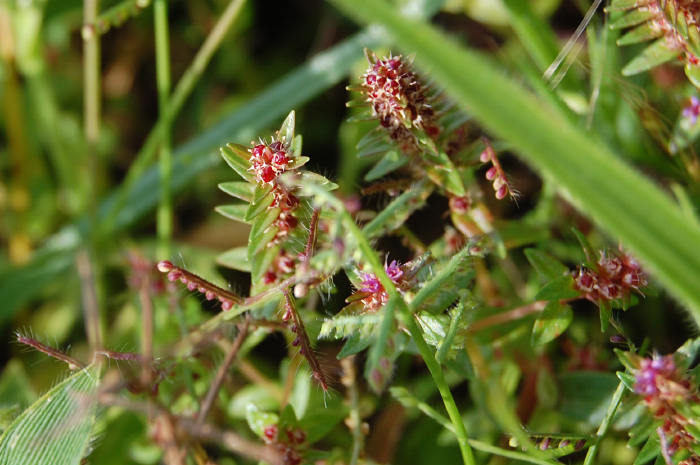
The scientific name of the Eared Redstem is Ammannia auriculata. It is a species of flowering plant in the family Lythraceae (loosestrife family), order Myrtales.
- Scientific name
- Ammannia auriculata Willd.
- Common name
- Eared Redstem
- Genus
- Ammannia
- Family
- Lythraceae (Loosestrife Family)
- Order
- Myrtales
- Class
- Magnoliopsida
- Red List category
- LC Least Concern
- Recorded in
- 99 countries
- Name status
- accepted in the Catalogue of Life
Overview
Ammannia auriculata occurs in tropical and subtropical regions across much of the world, including Australia, Central America, southern China and parts of Asia. It is a slender, erect herb that produces orange-purple flowers.
Written 27 November 2026 from the sources listed below. Each statement was checked against the passage it cites; statements that could not be supported were removed.
Appearance
Eared redstem is a slender, erect herb. It typically reaches a height of 5 to 40 centimetres.[1][2]
The species produces orange-purple flowers.[3]
Habitat
In Australia, Eared redstem grows along swampy stream margins and in black loamy soils. It also occurs on damp, disturbed soil.[4][5][6]
The species commonly occurs as a weed in rice paddies.[7]
Reproduction and life cycle
Eared redstem blooms in March.[8]
Conservation
Eared redstem has been recorded as introduced in 14 countries or islands.[9]
Classification of the Eared Redstem
| Kingdom | Plantae |
|---|---|
| Subkingdom | Pteridobiotina |
| Phylum | Tracheophyta |
| Class | Magnoliopsida |
| Order | Myrtales |
| Family | Lythraceae (Loosestrife Family) |
| Subfamily | Lythroideae |
| Genus | Ammannia (Redstem) |
| Species | Ammannia auriculata Willd. |
Where the Eared Redstem is found
Checklists and occurrence records place Ammannia auriculata in 99 countries across Africa, Asia, Europe, North America, Oceania and South America. GBIF holds 6,377 georeferenced records of it.
Countries where it is native or its origin is not stated
- Afghanistan 38
- Angola 14
- Argentina 31
- Armenia 2
- Aruba 1
- Australia 2,850
- Azerbaijan 3
- Bangladesh 1
- Benin 60
- Bolivia 38
- Bonaire, Saint Eustatius and Saba 13
- Botswana 9
- Brazil 153
- Burkina Faso 64
- Burundi 23
- Cabo Verde
- Cambodia
- Cameroon 42
- Central African Republic 4
- Chad 19
- China 237
- Colombia 14
- Costa Rica 9
- Cuba 19
- Democratic Republic of the Congo 17
- Ecuador 27
- Egypt 31
- El Salvador 8
- Eritrea 9
- Ethiopia 32
- Gambia 7
- Georgia
- Ghana 22
- Guatemala 2
- Guinea 6
- Guinea-Bissau 5
- Honduras 1
- India 122
- Indonesia 29
- Iran 7
- Iraq 13
- Israel 2
- Ivory Coast 14
- Jamaica 9
- Japan 755
- Kazakhstan 3
- Kenya 24
- Kyrgyzstan 1
- Madagascar 49
- Malawi 6
- Malaysia 6
- Mali 12
- Mauritania
- Mayotte 6
- Mexico 194
- Mozambique 5
- Namibia 15
- Nepal 10
- Nicaragua 19
- Niger 58
- Nigeria 66
- Oman 5
- Pakistan 15
- Panama 4
- Paraguay 18
- Peru 8
- Philippines 6
- Puerto Rico 1
- Republic of the Congo 3
- Rwanda 8
- Saudi Arabia 5
- Senegal 63
- Seychelles
- Sierra Leone 4
- Somalia 3
- South Africa 17
- South Korea 61
- South Sudan 1
- Sudan 44
- Taiwan 304
- Tajikistan 6
- Tanzania 109
- Thailand
- Togo 14
- Turkey 1
- Turkmenistan
- Uganda 14
- United States 332
- Uruguay 1
- Uzbekistan
- Venezuela 24
- Vietnam 12
- Yemen 5
- Zambia 22
- Zimbabwe 14
Countries where it has been introduced
Regions and cities with the most records
- Queensland, Australia 648
- South Australia, Australia 614
- Northern Territory, Australia 564
- New South Wales, Australia 334
- Victoria, Australia 327
- Western Australia, Australia 247
- Taiwan, Taiwan 118
- Kanagawa, Japan 87
- Hadano, Japan 53
- Atsugi, Japan 52
- Isehara, Japan 52
- Kochi, Japan 51
- Jiangsu, China 50
- Tahoua Region, Niger 50
- Minamirinkan, Japan 49
- Zama, Japan 48
- Machida, Japan 47
- Minawa, Japan 47
- Texas, United States 47
- Ayase, Japan 46
- Yamato, Japan 45
- Ebina, Japan 44
- Nihammatsu, Japan 43
- Gujarat, India 42
- Chiba, Japan 41
- Hiratsuka, Japan 41
- Ninomiya, Japan 41
- Chigasaki, Japan 40
- Campeche, Mexico 39
- Ōiso, Japan 39
- Kanaishima, Japan 38
- Minamiashigara, Japan 37
- Odawara, Japan 36
- Azamino, Japan 35
- Aihara, Japan 31
- Oyama, Japan 30
2 more countries have a few records outside this range
These countries hold a few records of Ammannia auriculata but lie outside the range the checklists give for it. Such records are often zoo or garden specimens, museum material or vagrants, so the species is not counted as occurring there.
Range as the checklists state it
Italy [I]; Bulgaria [I]; European Turkey [I]; Greece [I]; Egypt (Desert Oases, Nile Delta, Nile Valley, NW-coastal Egypt); Cape Verde Isl. (Ilha de Sao Tiago); Mauritania; Senegal; Guinea-Bissau; Guinea; Sierra Leone; S-Mali; Burkina Faso; Ivory Coast; Togo; Benin; Niger; Nigeria; Congo [Brazzaville]; Central African Republic; D. R. Congo [Zaire]; Rwanda; Burundi; SW-Chad; Sudan; South Sudan; Eritrea; Soqotra; Uganda; Kenya; Tanzania; Angola; Zambia; Malawi; Zimbabwe; Mozambique; Namibia; Botswana; South Africa (Mpulamanga); Madagascar; Comores; Seychelles; Turkmenistan; Uzbekistan; Kyrgyzstan; Tajikistan; Georgia [Caucasus]; Armenia; Azerbaijan; Turkey (N-Anatolia, E-Anatolia); Iraq (SE-Iraq: Mesopotamia); Iran (EC-Iran); Afghanistan (Baghlan, Balkh, Bamyan, Kabul, Kunar / Nuristan, Laghman, Logar, Samangan); Israel (coastal W-Israel, Rift Valley); Sinai peninsula (N-Sinai); Saudi Arabia (Hejaz); Yemen (W-Yemen); China (Anhui, Fujian, Gansu, Guangdong, Hebei, Henan, Hubei, Jiangsu, Shanxi, Yunnan, Zhejiang); South Korea; Japan (Kyushu, Honshu, Shikoku); Ryukyu Isl.; Pakistan (Kurram, N. W. Frontier Prov., Dir, Swat, Hazara, Pakistani Punjab, Sind); Nepal; India (Assam, Bihar, Jammu & Kashmir, Jharkhand, Madhya Pradesh, Manipur, Meghalaya, Tripura, Uttarakhand, Uttar Pradesh, West Bengal); Bangladesh; SW-Thailand; Cambodia; Vietnam; peninsular Malaysia; Philippines (Luzon); Jawa; Lesser Sunda Isl.; Australia (Western Australia, Northern Territory, South Australia, Queensland, New South Wales, Victoria); Palau [I] (Ngarakabesang [I]); USA (Arizona, Kansas, Louisiana, Mississippi, Nebraska, New Mexico, Oklahoma, South Dakota, Texas); Mexico (Aguascalientes, Campeche, Chiapas, Colima, Guerrero, Jalisco, México State, Michoacán, Morelos, Nayarit, Oaxaca, Quintana Roo, Sinaloa, Sonora, Tamaulipas, Veracruz, Yucatán); Guatemala; El Salvador; Honduras; Nicaragua; Costa Rica; Panama; Cuba; Jamaica; Hispaniola; Puerto Rico; Antigua; Aruba; Bonaire; Colombia (Bolívar, Caldas, Cundinamarca, La Guajira, Magdalena, Tolima); Venezuela (Apure, Aragua, Carabobo, Falcón, Guárico); Ecuador; Peru; Bolivia (Beni, La Paz, Santa Cruz); NE-Brazil (Bahia); WC-Brazil (Mato Grosso do Sul)
A number beside a place is its count of GBIF occurrence records. A place without a number comes from a checklist alone. Records show where a species has been observed or collected, which can include escapes and vagrants.
Common names
English
- Eared Redstem
Names in 7 other languages
- Arabic
- أحمر الساق ذو الاذن
- Chinese
- 独叶一枝枪, 耳基水苋, 耳基水苋菜, 耳水苋, 耳葉水莧菜
- Italian
- Ammania a Fiori Peduncolati
- Japanese
- ナンゴクヒメミソハギ
- Russian
- Аммания ушастая
- Thai
- หญ้ารักนาติ่ง
- Turkish
- Kulaklı Amanotu
Synonyms
22 other scientific names have been used for this species and are now treated as synonyms of Ammannia auriculata.
- Ammannia auriculata f. hyrcanica Koehne
- Ammannia auriculata f. indica (Blatt. & Hallb.) H.B.Naithani
- Ammannia auriculata f. persica Koehne
- Ammannia auriculata f. senegambica Koehne
- Ammannia auriculata var. elata (A.Fern.) A.Fern.
- Ammannia australasica F.Muell.
- Ammannia hyrcanica Fisch. ex Steud.
- Ammannia japonica Miq.
- Ammannia longipes C.Wright ex Sauvalle
- Ammannia madagascariensis Boivin ex Tul.
- Ammannia microcarpa DC.
- Ammannia multiflora Roxb.
- Ammannia multiflora f. decipiens Koehne
- Ammannia multiflora f. ramosissima Koehne
- Ammannia multiflora var. parviflora (DC.) Koehne
- Ammannia parviflora DC.
- Ammannia senegalensis f. indica Blatt. & Hallb.
- Ammannia senegalensis var. auriculata (Willd.) Hiern
- Ammannia senegalensis var. multiflora Hiern
- Ammannia senegalensis var. riparia Hiern
- Ditheca debilis Miq.
- Suffrenia dichotema Miq.
Subspecies and varieties
Related species
-
 Scarlet ToothcupAmmannia coccinea
-
 Monarch RedstemAmmannia baccifera
-
 Red AmmanniaAmmannia senegalensis
-
 Red AmmaniaAmmannia gracilis
-
 Grand RedstemAmmannia robusta
- Ammannia crinipes
- Ammannia muelleri
- Ammannia arnhemica
Compare
Questions and answers
What is the scientific name of the Eared Redstem?
The scientific name of the Eared Redstem is Ammannia auriculata. Written with its author, the full name is Ammannia auriculata Willd..
Which family does the Eared Redstem belong to?
Ammannia auriculata belongs to the family Lythraceae, in the order Myrtales and the class Magnoliopsida.
Where is the Eared Redstem found?
Checklists and occurrence records place Ammannia auriculata in 99 countries, including Australia, Japan, United States, Taiwan, China and Mexico.
What is the conservation status of the Eared Redstem?
The IUCN Red List category recorded for Ammannia auriculata is Least Concern (LC).
Where does Eared redstem occur in Australia?
It occurs in scattered locations in the Kimberley and Pilbara regions of Western Australia, with its Australian distribution extending into the Northern Territory and Queensland.[10][11]
Where is Eared redstem recorded in the United States?
It is recorded in Alabama, Arizona, Louisiana, Texas, South Dakota, Nebraska, New Mexico and Mississippi.[12]
Where else does Eared redstem occur?
It occurs throughout much of Central America and is recorded in southern China and parts of Asia.[13][14]
When does Eared redstem bloom?
It blooms in March.[8]
How tall does Eared redstem grow?
It typically reaches a height of 5 to 40 centimetres.[2]
Sources
Passages the profile rests on
- Ammannia auriculata is a slender, erect herb. Source passage: “The slender and erect herb typically grows to a height of 5 to 40 centimetres (2 to 16 in).” — English Wikipedia
- The plant typically reaches a height of 5 to 40 centimetres. Source passage: “The slender and erect herb typically grows to a height of 5 to 40 centimetres (2 to 16 in).” — English Wikipedia
- The species produces orange-purple flowers. Source passage: “It blooms in March producing orange-purple flowers.” — English Wikipedia
- In Australia, the species grows along swampy stream margins. Source passage: “In Australia the species is found along the swampy margins of streams” — English Wikipedia
- In Australia, the species grows in black loamy soils. Source passage: “where it grows in black loamy soils.” — English Wikipedia
- The species occurs on damp, disturbed soil. Source passage: “and on damp disturbed areas of soil.” — English Wikipedia
- The species commonly occurs as a weed in rice paddies. Source passage: “It is commonly found as a weed in rice paddies” — English Wikipedia
- The species blooms in March. Source passage: “It blooms in March producing orange-purple flowers.” — English Wikipedia
- The species has been recorded as introduced in 14 countries or islands. Source passage: “Recorded as introduced in 14 countries or islands.” — gbif.org
- In Australia, the species occurs in scattered locations in the Kimberley and Pilbara regions of Western Australia. Source passage: “In Australia the species is found along the swampy margins of streams in a few scattered areas of the Kimberley and Pilbara regions of Western Australia” — English Wikipedia
- The Australian distribution extends into the Northern Territory and Queensland. Source passage: “extending into the Northern Territory and Queensland” — English Wikipedia
- In the United States, the species is recorded in Alabama, Arizona, Louisiana, Texas, South Dakota, Nebraska, New Mexico and Mississippi. Source passage: “In the United States it is found in Alabama, Arizona, Louisiana, Texas, South Dakota, Nebraska, New Mexico and Mississippi.” — English Wikipedia
- The species occurs throughout much of Central America. Source passage: “It is found through much of Central America,” — English Wikipedia
- The species is recorded in southern China and parts of Asia. Source passage: “Southern Chine and parts of Asia.” — English Wikipedia
Data
- Catalogue of Life, 2026-10-16 XR cc by
- Global Biodiversity Information Facility CC BY 4.0
- Wikidata CC0
- GeoNames CC BY 4.0
- Within the Catalogue of Life, this name comes from Synonymic Checklists of the Vascular Plants of the World cc by
References
- Willd. (1803). Hort. Berol. [Willdenow]: t. 7 (1803). where the name was published
This species in other databases
- Catalogue of Life CSZC
- Wikidata Q15244984
- iNaturalist 158279
- World Flora Online wfo-0000530923
- GRIN 446698
Page built on 27 November 2026. See how the catalog is made and all sources and licences.
Cite this page
ScientificNames.org. (2026). Ammannia auriculata (Eared Redstem). Retrieved November 27, 2026, from https://scientificnames.org/species/ammannia-auriculata
“Ammannia auriculata (Eared Redstem).” ScientificNames.org, 2026, scientificnames.org/species/ammannia-auriculata. Accessed 27 Nov. 2026.
ScientificNames.org. “Ammannia auriculata (Eared Redstem).” Accessed November 27, 2026. https://scientificnames.org/species/ammannia-auriculata.
@misc{scientificnames_ammannia_auriculata_eared_redstem,
  author = {{ScientificNames.org}},
  title = {Ammannia auriculata (Eared Redstem)},
  year = {2026},
  url = {https://scientificnames.org/species/ammannia-auriculata},
  note = {Accessed 2026-11-27}
}