Species · Mammals
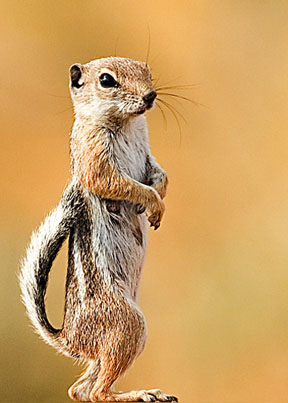
White-tailed Antelope Squirrel Ammospermophilus leucurus
The scientific name of the White-tailed Antelope Squirrel is Ammospermophilus leucurus. It is a species of mammal in the family Sciuridae (squirrel), order Rodentia. The name dates from 1889.
- Scientific name
- Ammospermophilus leucurus (Merriam, 1889)
- Common name
- White-tailed Antelope Squirrel
- Genus
- Ammospermophilus
- Family
- Sciuridae (Squirrel)
- Order
- Rodentia
- Class
- Mammalia
- Red List category
- LC Least Concern
- Recorded in
- 2 countries
- Name status
- accepted in the Catalogue of Life
Overview
The White-tailed Antelope Squirrel (Ammospermophilus leucurus) is a ground squirrel. It occurs in the southwestern United States and the Baja California Peninsula of northwestern Mexico. It has an omnivorous diet that includes foliage, arthropods, lizards, and rodents.
Written 26 November 2026 from the sources listed below. Each statement was checked against the passage it cites; statements that could not be supported were removed.
Appearance
The White-tailed Antelope Squirrel is a ground squirrel.[1]
Habitat
The species commonly inhabits arid regions of the southwestern United States. It occurs in desert succulent shrub habitats, riparian habitats, and wash areas.[2][3][4][5]
Diet
The species has an omnivorous diet. Foliage accounts for approximately 10%–60% of its diet.[8][9]
It consumes arthropods and vertebrates, particularly lizards and rodents.[10][11]
Behaviour
The species is diurnal and is most active during cooler daylight hours. It avoids midday activity as much as possible.[12][13]
Its diurnal activity patterns are maintained by natural circadian rhythms.[14]
Population density fluctuates substantially across much of its range, particularly in Utah. Density is generally higher in autumn than in late spring.[15][16]
The species has an average home range of 14.9 acres (60,000 m²) and uses approximately 4 acres (16,000 m²) for daily activities.[17][18]
Reproduction and life cycle
Female reproductive receptiveness and male reproductive capability peak in early spring. Individuals become sexually mature and begin reproducing at one year of age.[19][20]
The species typically produces one large litter annually. The average litter size is 9.3 offspring in Oregon and 5.9 offspring in Baja California.[21][22][23]
Reproductive cycles in Baja California last approximately half the year.[24]
Classification of the White-tailed Antelope Squirrel
| Kingdom | Animalia |
|---|---|
| Phylum | Chordata |
| Subphylum | Vertebrata |
| Infraphylum | Gnathostomata |
| Parvphylum | Osteichthyes |
| Megaclass | Tetrapoda |
| Class | Mammalia (Mammal) |
| Subclass | Theria |
| Infraclass | Eutheria |
| Order | Rodentia (Rodent) |
| Suborder | Sciuromorpha (Squirrels) |
| Family | Sciuridae (Squirrel) |
| Subfamily | Xerinae |
| Tribe | Marmotini (Holarctic Ground Squirrels) |
| Genus | Ammospermophilus (Antelope Squirrel) |
| Species | Ammospermophilus leucurus (Merriam, 1889) |
Where the White-tailed Antelope Squirrel is found
Checklists and occurrence records place Ammospermophilus leucurus in 2 countries across North America. GBIF holds 14,397 georeferenced records of it.
Countries
Regions and cities with the most records
- California, United States 5,491
- Nevada, United States 2,015
- Utah, United States 1,451
- Rancho Mirage, United States 1,111
- Palm Desert, United States 1,103
- Cathedral City, United States 1,034
- La Quinta, United States 1,016
- Baja California Sur, Mexico 1,012
- Baja California, Mexico 877
- Twentynine Palms, United States 638
- Arizona, United States 577
- Summerlin South, United States 495
- Spring Valley, United States 464
- New Mexico, United States 312
- Indio, United States 290
- Palm Springs, United States 262
- Desert Hot Springs, United States 241
- Yucca Valley, United States 232
- Washington, United States 208
- La Paz, Mexico 203
- North Las Vegas, United States 203
- Las Vegas, United States 195
- Saint George, United States 192
- Coachella, United States 179
- Sunrise Manor, United States 177
- Winchester, United States 177
- Whitney, United States 173
- Paradise, United States 171
- Henderson, United States 169
- Enterprise, United States 156
- Colorado, United States 137
- Boulder City, United States 127
- Victorville, United States 127
- Apple Valley, United States 126
- Hesperia, United States 114
- Lázaro Cárdenas, Mexico 98
1 more country has a few records outside this range
These countries hold a few records of Ammospermophilus leucurus but lie outside the range the checklists give for it. Such records are often zoo or garden specimens, museum material or vagrants, so the species is not counted as occurring there.
Range as the checklists state it
Middle America
North America
A number beside a place is its count of GBIF occurrence records. A place without a number comes from a checklist alone. Records show where a species has been observed or collected, which can include escapes and vagrants.
Common names
English
- White-tailed Antelope Squirrel
Names in 14 other languages
- Czech
- sysel běloocasý, sysel ostrovní
- Dutch
- Antilopegrondeekhoorn
- Finnish
- santossaarenorava, valkohäntäorava
- French
- Écureuil-antilope à queue blanche
- German
- Weißschwanz-Antilopenziesel
- Greek
- Λευκόουρος Λαγόγυρος
- Hungarian
- fehérfarkú földimókus
- Italian
- Citello antilope dalla coda bianca
- Japanese
- オジロレイヨウジリス
- Norwegian Bokmål
- Hvithalet Antilopeekorn
- Polish
- piaszczyk białoogonowy
- Portuguese
- Esquilo-antílope-de-cauda-branca
- Russian
- Белохвостый суслик
- Spanish
- Ardilla-antílope cola blanca, Juancito
Synonyms
One other scientific name has been used for this species and is now treated as a synonym of Ammospermophilus leucurus.
- Tamias leucurus Merriam, 1889
Subspecies and varieties
- Ammospermophilus leucurus canfieldiae subspecies
- Ammospermophilus leucurus cinamomeus (Rusty Antelope Squirrel) subspecies
- Ammospermophilus leucurus escalante subspecies
- Ammospermophilus leucurus extimus subspecies
- Ammospermophilus leucurus leucurus subspecies
- Ammospermophilus leucurus notom subspecies
- Ammospermophilus leucurus peninsulae subspecies
- Ammospermophilus leucurus pennipes subspecies
- Ammospermophilus leucurus tersus subspecies
Related species
-
 Harris's Antelope SquirrelAmmospermophilus harrisii
-
 San Joaquin Antelope SquirrelAmmospermophilus nelsoni
-
 Texas Antelope SquirrelAmmospermophilus interpres
- Espíritu Santo Antelope SquirrelAmmospermophilus insularis
-
 American Red SquirrelTamiasciurus hudsonicus
-
 Indian Giant SquirrelRatufa indica
-
 Southern Flying SquirrelGlaucomys volans
-
 Northern Flying SquirrelGlaucomys sabrinus
Compare
- White-tailed Antelope Squirrel vs Harris's Antelope Squirrel
- White-tailed Antelope Squirrel vs San Joaquin Antelope Squirrel
- White-tailed Antelope Squirrel vs Texas Antelope Squirrel
- White-tailed Antelope Squirrel vs Espíritu Santo Antelope Squirrel
- White-tailed Antelope Squirrel vs American Red Squirrel
Questions and answers
What is the scientific name of the White-tailed Antelope Squirrel?
The scientific name of the White-tailed Antelope Squirrel is Ammospermophilus leucurus. Written with its author, the full name is Ammospermophilus leucurus (Merriam, 1889).
Which family does the White-tailed Antelope Squirrel belong to?
Ammospermophilus leucurus belongs to the family Sciuridae, in the order Rodentia and the class Mammalia.
Where is the White-tailed Antelope Squirrel found?
Checklists and occurrence records place Ammospermophilus leucurus in 2 countries: United States and Mexico.
What is the conservation status of the White-tailed Antelope Squirrel?
The IUCN Red List category recorded for Ammospermophilus leucurus is Least Concern (LC).
What do you call a squirrel with a white tail?
The White-tailed Antelope Squirrel is a ground squirrel.[1]
What do white-tailed antelope ground squirrels eat?
They have an omnivorous diet that includes foliage, arthropods, and vertebrates, particularly lizards and rodents.[8][9][10][11]
Where do antelope squirrels live?
The White-tailed Antelope Squirrel occurs in the southwestern United States and the Baja California Peninsula of northwestern Mexico. Its range reaches southwestern Oregon in the north, New Mexico to the east, extends westward from western Colorado, and reaches Baja California, Mexico, in the south.[25][26][27][28][29]
Sources
Passages the profile rests on
- The white-tailed antelope squirrel is a ground squirrel. Source passage: “The white-tailed antelope squirrel (Ammospermophilus leucurus) is a diurnal species of ground squirrel” — English Wikipedia
- The species commonly inhabits arid regions of the southwestern United States. Source passage: “commonly spotted in arid habitats throughout the southwestern United States.” — English Wikipedia
- The species occurs in desert succulent shrub habitats. Source passage: “Common habitats include desert succulent shrub, riparian, and wash areas.” — animaldiversity.org
- The species occurs in riparian habitats. Source passage: “Common habitats include desert succulent shrub, riparian, and wash areas.” — animaldiversity.org
- The species occurs in wash areas. Source passage: “Common habitats include desert succulent shrub, riparian, and wash areas.” — animaldiversity.org
- The species also inhabits chaparral. Source passage: “Ammospermophilus leucurus also occurs in chaparral and grassland.” — animaldiversity.org
- The species also inhabits grassland. Source passage: “Ammospermophilus leucurus also occurs in chaparral and grassland.” — animaldiversity.org
- The white-tailed antelope squirrel has an omnivorous diet. Source passage: “Throughout this range, A. leucurus is omnivorous” — English Wikipedia
- Foliage accounts for approximately 10%–60% of the species' diet. Source passage: “feeding primarily on foliage (10%-60% of its diet)” — English Wikipedia
- Arthropods are among the foods consumed by this species. Source passage: “seeds (20%-50%), arthropods” — English Wikipedia
- The species also consumes vertebrates, particularly lizards and rodents. Source passage: “to a lesser extent, vertebrates (mainly lizards and rodents” — English Wikipedia
- The species is diurnal. Source passage: “is a diurnal species of ground squirrel” — English Wikipedia
- The species is most active during cooler daylight hours and avoids midday activity as much as possible. Source passage: “Antelope squirrels are active most during the cooler parts of the daylight hours, avoiding midday as much as possible.” — English Wikipedia
- The species' diurnal activity patterns are maintained by natural circadian rhythms. Source passage: “This behavior is controlled by the squirrels' natural circadian rhythms” — English Wikipedia
- Population density fluctuates substantially across much of the species' range, particularly in Utah. Source passage: “Throughout much of the squirrel's range, especially in Utah, the population density fluctuates greatly” — English Wikipedia
- Population density is generally higher in autumn than in late spring. Source passage: “Average population density also varies by season, with higher density in autumn relative to late spring.” — English Wikipedia
- The species has an average home range of 14.9 acres (60,000 m²). Source passage: “This species of squirrel has an average home range of 14.9 acres (60,000 m2)” — English Wikipedia
- The species uses approximately 4 acres (16,000 m²) for its daily activities. Source passage: “utilizes approximately 4 acres (16,000 m2) in its daily activities.” — English Wikipedia
- Female reproductive receptiveness and male reproductive capability peak in early spring. Source passage: “reproductive receptiveness in females and reproductive capability in males peaks in early spring.” — English Wikipedia
- Individuals become sexually mature and begin reproducing at one year of age. Source passage: “It only takes the squirrels one year to become sexually mature and begin reproducing” — English Wikipedia
- The species typically produces one large litter annually. Source passage: “typically, antelope ground squirrels will produce one large litter per year.” — English Wikipedia
- The average litter size in Oregon is 9.3 offspring. Source passage: “In Oregon, which is the northernmost extent of the squirrels' range, reproductive cycles are relatively short, and the average litter size is 9.3.” — English Wikipedia
- The average litter size in Baja California is 5.9 offspring. Source passage: “in Baja California, the southernmost extent of the squirrels' range, reproductive cycles last half of the year, and the average litter size is 5.9.” — English Wikipedia
- Reproductive cycles in Baja California last approximately half the year. Source passage: “reproductive cycles last half of the year” — English Wikipedia
- The species occurs in the southwestern United States and the Baja California Peninsula of northwestern Mexico. Source passage: “found in arid regions of the southwestern United States and the Baja California Peninsula of northwestern Mexico.” — English Wikipedia
- The northernmost extent of the species' range reaches southwestern Oregon. Source passage: “extends north to south from southwestern Oregon to New Mexico” — English Wikipedia
- The species' range extends eastward to New Mexico. Source passage: “from southwestern Oregon to New Mexico” — English Wikipedia
- The species' range extends westward from western Colorado. Source passage: “from western Colorado to Baja California, Mexico.” — English Wikipedia
- The southern extent of the species' range reaches Baja California, Mexico. Source passage: “from western Colorado to Baja California, Mexico.” — English Wikipedia
Data
- Catalogue of Life, 2026-10-16 XR cc by
- Global Biodiversity Information Facility CC BY 4.0
- Wikidata CC0
- GeoNames CC BY 4.0
- Wikimedia Commons per image; credit shown with each image
- Within the Catalogue of Life, this name comes from The Integrated Taxonomic Information System cc0
References
- N. Am. Fauna vol.2 p.19 where the name was published
- Banks, R. C., R. W. McDiarmid, and A. L. Gardner. (1987). Checklist of Vertebrates of the United States, the U.S. Territories, and Canada. Resource Publication, No. 166.
- Wilson, Don E., and DeeAnn M. Reeder, eds. (1993). Mammal Species of the World: A Taxonomic and Geographic Reference, 2nd Ed., 3rd Printing.
- Wilson, Don E., and F. Russell Cole. (2000). Common Names of Mammals of the World.
- Thorington, Richard W., Jr., and Robert S. Hoffman / Wilson, Don E., and DeeAnn M. Reeder, eds. (2005). Family Sciuridae. Mammal Species of the World: A Taxonomic and Geographic Reference, 3rd Ed., Vol. 2.
- Thorington, Richard W., Jr., John L. Koprowski, Michael A. Steele, and James F. Whatton. (2012). Squirrels of the World.
This species in other databases
Page built on 27 November 2026. See how the catalog is made and all sources and licences.
Cite this page
ScientificNames.org. (2026). Ammospermophilus leucurus (White-tailed Antelope Squirrel). Retrieved November 27, 2026, from https://scientificnames.org/species/ammospermophilus-leucurus
“Ammospermophilus leucurus (White-tailed Antelope Squirrel).” ScientificNames.org, 2026, scientificnames.org/species/ammospermophilus-leucurus. Accessed 27 Nov. 2026.
ScientificNames.org. “Ammospermophilus leucurus (White-tailed Antelope Squirrel).” Accessed November 27, 2026. https://scientificnames.org/species/ammospermophilus-leucurus.
@misc{scientificnames_ammospermophilus_leucurus_white_tailed_antelope_squirrel,
  author = {{ScientificNames.org}},
  title = {Ammospermophilus leucurus (White-tailed Antelope Squirrel)},
  year = {2026},
  url = {https://scientificnames.org/species/ammospermophilus-leucurus},
  note = {Accessed 2026-11-27}
}