Species · Amphibians
Great Plains Toad Anaxyrus cognatus
The scientific name of the Great Plains Toad is Anaxyrus cognatus. It is a species of amphibian in the family Bufonidae (true toad), order Anura. The name dates from 1823.
- Scientific name
- Anaxyrus cognatus (Say in James, 1823)
- Common name
- Great Plains Toad
- Genus
- Anaxyrus
- Family
- Bufonidae (True Toad)
- Order
- Anura
- Class
- Amphibia
- Red List category
- LC Least Concern
- Recorded in
- 3 countries
- Name status
- accepted in the Catalogue of Life

Overview
The Great Plains Toad (Anaxyrus cognatus) is an amphibian in the family Bufonidae, order Anura and class Amphibia. It primarily inhabits grasslands, including short-grass areas, deserts, open floodplains and agricultural land with irrigation ditches. Adults have olive coloration with pale gray-brown tones, large dark green dorsal blotches and raised cranial ridges that converge at the snout.
Written 26 November 2026 from the sources listed below. Each statement was checked against the passage it cites; statements that could not be supported were removed.
Appearance
The adult's overall coloration is olive with pale gray-brown tones. Its dorsal surface has large dark green blotches covered in granular glands, and a faint white stripe extends along the posterior part of the body from the mid-dorsal area.[1][2][3]
The belly is predominantly white and rarely has spots. Raised cranial ridges converge at the snout to form a knob.[4][5]
The hind heels bear small and large spurs that assist with digging burrows. Tadpoles are black or dark brown with metallic spots and have clear tail fins with rounded tips.[6][7][8]
Adult snout-to-vent length ranges from 47 to 115 mm, and adult body mass averages approximately 40 grams. Females measure approximately 49–115 mm, while males measure approximately 47–103 mm.[9][10][11][12]
Tadpoles can reach 25.4 mm in length.[13]
Habitat
The Great Plains Toad primarily inhabits grasslands. Its habitats include short-grass areas, deserts, open floodplains and agricultural land with irrigation ditches.[14][15]
The species uses temporary freshwater ponds, including rain pools, and bottomland hardwood forests for breeding. Its highest recorded elevation is 2,440 metres.[16][17]
During hot, dry weather, individuals burrow approximately 15–55 cm underground. During late summer and fall, they burrow below the frostline for hibernation.[18][19]
Diet
Cutworms constitute a primary food source for the Great Plains Toad. It also feeds on insects from the orders Lepidoptera, Diptera, Hymenoptera and Coleoptera, including ants and termites.[20][21][22]
Behaviour
The Great Plains Toad is solitary and fossorial, spending much of its time dormant underground. Individuals can remain motionless for five to six days and spend approximately 63–77% of the year dormant through aestivation and torpor.[23][24][25]
Most adult activity during the dry season occurs at night, while juveniles are active during daylight hours as well as other times. Individuals emerge from their burrows following heavy rainfall or at the beginning of the breeding season.[26][27][28]
The species uses mud or vegetation as cover to avoid detection by predators. It uses chemoreceptors to detect chemical cues left by predators such as the plains garter snake.[29][30]
Reproduction and life cycle
Breeding generally occurs during spring and summer, often immediately after heavy rainfall. The species employs a polygynandrous mating system in which multiple females mate with multiple males.[31][32]
Breeding aggregations can contain as many as 500 individuals competing for mates. Males vocalize in choruses, and females select males with the loudest and longest calls.[33][34]
Fertilization is external, and females lay between 1,300 and 45,000 eggs per clutch. The average clutch contains approximately 11,074 eggs.[35][36][37]
Eggs hatch approximately two to seven days after being laid. Metamorphosis begins approximately 17–45 days after hatching.[38][39]
Both sexes reach sexual maturity between two and five years of age. The species does not provide parental care beyond the production of eggs and sperm.[40][41]
Conservation
The Great Plains Toad is not considered threatened because of its wide distribution. Potential threats include road mortality, farming, suburban expansion, increased drought and urbanization.[42][43]
Classification of the Great Plains Toad
| Kingdom | Animalia |
|---|---|
| Phylum | Chordata |
| Subphylum | Vertebrata |
| Infraphylum | Gnathostomata |
| Parvphylum | Osteichthyes |
| Megaclass | Tetrapoda |
| Class | Amphibia (Amphibians) |
| Order | Anura (Frogs) |
| Family | Bufonidae (True Toad) |
| Genus | Anaxyrus (North American Toads) |
| Species | Anaxyrus cognatus (Say in James, 1823) |
Where the Great Plains Toad is found
Checklists and occurrence records place Anaxyrus cognatus in 3 countries across North America. GBIF holds 18,180 georeferenced records of it.
Countries
Regions and cities with the most records
- Arizona, United States 2,222
- Texas, United States 1,638
- New Mexico, United States 1,624
- Chihuahua, Mexico 1,366
- Oklahoma, United States 1,194
- Kansas, United States 1,026
- South Dakota, United States 897
- Coahuila, Mexico 747
- Sonora, Mexico 579
- Moore, United States 484
- Norman, United States 483
- California, United States 412
- Lubbock, United States 336
- Nebraska, United States 270
- Colorado, United States 240
- Durango, Mexico 219
- Coachella, United States 217
- South Valley, United States 203
- Nevada, United States 191
- Flowing Wells, United States 186
- Indio, United States 183
- Casas Adobes, United States 182
- Marana, United States 175
- Albuquerque, United States 171
- San Luis, United States 171
- San Luis Río Colorado, Mexico 171
- Los Lunas, United States 154
- Montana, United States 149
- North Dakota, United States 145
- Catalina Foothills, United States 134
- Drexel Heights, United States 133
- La Quinta, United States 133
- Mesa, United States 131
- Francisco I. Madero, Mexico 128
- Oro Valley, United States 126
- Gilbert, United States 124
Range as the checklists state it
Middle America
North America
A number beside a place is its count of GBIF occurrence records. A place without a number comes from a checklist alone. Records show where a species has been observed or collected, which can include escapes and vagrants.
Common names
English
- Great Plains Toad
- Plains Toad
- Say's Toad
- Texas Toad
- Western Plains Toad
Names in 9 other languages
- Czech
- ropucha prérijní
- Dutch
- Great Plains pad, Prairiepad
- French
- Crapaud des Grandes Plaines, crapaud des steppes
- German
- Präriekröte
- Japanese
- プレーンズヒキガエル
- Korean
- 대평원두꺼비
- Portuguese
- Sapo-das-grandes-planícies
- Russian
- Степная жаба
- Spanish
- Sapo de espuelas, Sapo de la gran planicie, sapo de las grandes planicies
Synonyms
6 other scientific names have been used for this species and are now treated as synonyms of Anaxyrus cognatus.
- Bufo cognatus Say in James, 1823
- Bufo cognatus cognatus Say in James, 1823
- Bufo dipternus Cope, 1879
- Bufo lentiginosus cognatus Say in James, 1823
- Chilophryne cognata (Say in James, 1823)
- Incilius cognatus (Say in James, 1823)
Related species
-
 American ToadAnaxyrus americanus
-
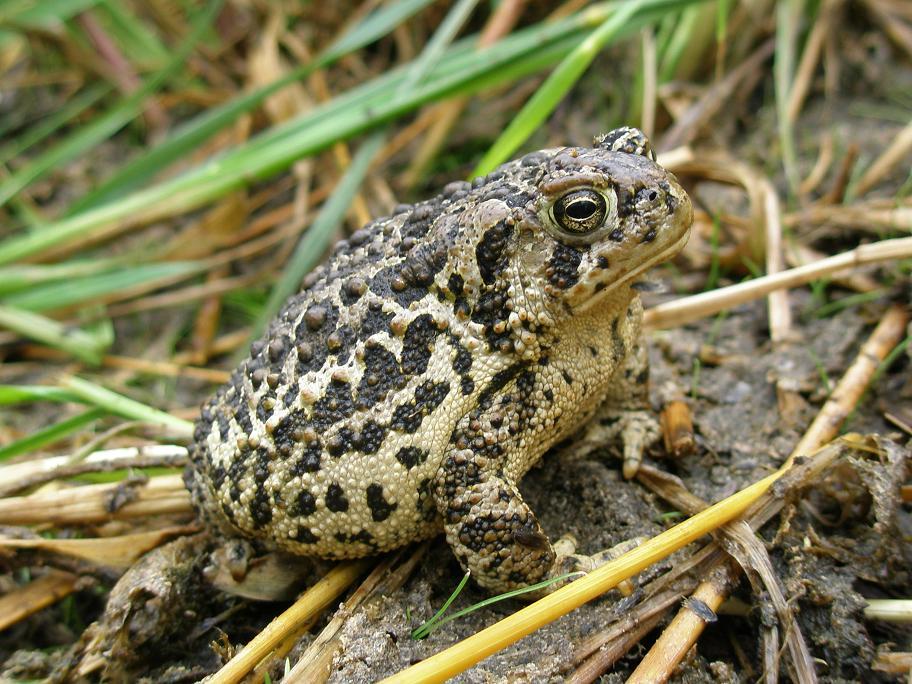 Wyoming ToadAnaxyrus baxteri
-
 Fowler's ToadAnaxyrus fowleri
-
 Western ToadAnaxyrus boreas
-
 Southern ToadAnaxyrus terrestris
-
 Woodhouse's ToadAnaxyrus woodhousii
-
 Red-spotted ToadAnaxyrus punctatus
-
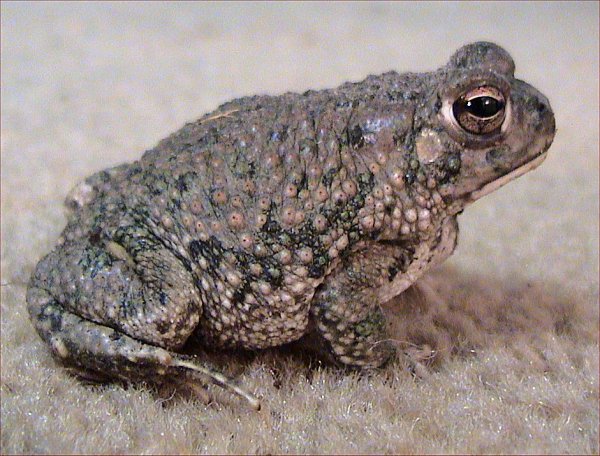 Texas ToadAnaxyrus speciosus
Compare
Questions and answers
What is the scientific name of the Great Plains Toad?
The scientific name of the Great Plains Toad is Anaxyrus cognatus. Written with its author, the full name is Anaxyrus cognatus (Say in James, 1823).
Which family does the Great Plains Toad belong to?
Anaxyrus cognatus belongs to the family Bufonidae, in the order Anura and the class Amphibia.
Where is the Great Plains Toad found?
Checklists and occurrence records place Anaxyrus cognatus in 3 countries: United States, Mexico and Canada.
What is the conservation status of the Great Plains Toad?
The IUCN Red List category recorded for Anaxyrus cognatus is Least Concern (LC).
What other names does the Great Plains Toad have?
Anaxyrus cognatus is also known in English as Plains Toad, Say's Toad, Texas Toad and Western Plains Toad.
What do Great Plains toads eat?
Great Plains Toads primarily eat cutworms. Their diet also includes insects from the orders Lepidoptera, Diptera, Hymenoptera and Coleoptera, including ants and termites.[20][21][22]
What is the diet of a toad?
The Great Plains Toad feeds on cutworms and other insects, including ants and termites.[20][21][22]
What kind of habitat do toads need?
The Great Plains Toad primarily inhabits grasslands, including short-grass areas, deserts, open floodplains and agricultural land with irrigation ditches. It uses temporary freshwater ponds, including rain pools, and bottomland hardwood forests for breeding.[14][15][16]
Sources
Passages the profile rests on
- The adult's overall coloration is olive with pale gray-brown tones. Source passage: “The toads' overall color is olive with pale gray brown.” — animaldiversity.org
- The dorsal surface has large dark green blotches covered in granular glands. Source passage: “They have large dark green blotches over the dorsal area, which are covered in granular glands.” — animaldiversity.org
- A faint white stripe extends along the posterior part of the body from the mid-dorsal area. Source passage: “There is also a faint white stripe down the posterior portion of the body starting at mid-dorsal area.” — animaldiversity.org
- The belly is predominantly white and rarely has spots. Source passage: “The bellies are primarily white and rarely have spots.” — animaldiversity.org
- Raised cranial ridges converge at the snout to form a knob. Source passage: “At the toads' eyes, the cranial ridges come together at the snout and make a raised knob.” — animaldiversity.org
- The hind heels bear small and large spurs that assist with digging burrows. Source passage: “To help with digging burrows, they have small and large spurs on the heels of their hind feet.” — animaldiversity.org
- The tadpoles are black or dark brown with metallic spots. Source passage: “The tadpoles are either black or dark brown in color, with metallic spots.” — animaldiversity.org
- The tadpole's tail fins are clear and have rounded tips. Source passage: “The tail fins are clear with a rounded tip.” — animaldiversity.org
- Adult snout-to-vent length ranges from 47 to 115 mm. Source passage: “Great Plains toads have a snout-vent length from 47 mm to 115 mm.” — animaldiversity.org
- Females measure approximately 49–115 mm in length. Source passage: “The females are about 49 to 115 mm in length” — animaldiversity.org
- Males measure approximately 47–103 mm in length. Source passage: “while the slightly smaller males range from 47 to 103 mm.” — animaldiversity.org
- Adult body mass averages approximately 40 grams. Source passage: “The toad's mass is approximately 40 grams on average” — animaldiversity.org
- Tadpoles can reach 25.4 mm in length. Source passage: “The Great Plains toad tadpoles are up to 25.4 mm in length.” — animaldiversity.org
- The species primarily inhabits grasslands. Source passage: “Great Plains toads are primarily found in grasslands.” — animaldiversity.org
- Its habitats include short-grass areas, deserts, open floodplains and agricultural land with irrigation ditches. Source passage: “Their habitats include short grasses, deserts, open floodplains, and agricultural areas where irrigation ditches can be found.” — animaldiversity.org
- The species uses temporary freshwater ponds, including rain pools, and bottomland hardwood forests for breeding. Source passage: “They also make use of temporary freshwater ponds (e.g., rain pools) and bottomland hardwood forests for breeding.” — animaldiversity.org
- The highest recorded elevation for the species is 2,440 metres. Source passage: “The highest elevation that the Great Plains toad has been found is 2,440 meters.” — animaldiversity.org
- Individuals burrow approximately 15–55 cm underground during hot, dry weather. Source passage: “The toads burrow underground about 15-55 cm during hot and dry weather” — animaldiversity.org
- Individuals burrow below the frostline during late summer and fall for hibernation. Source passage: “and burrow below the frostline during late summer and fall for hibernation.” — animaldiversity.org
- Cutworms constitute a primary food source for the species. Source passage: “Its primary diet is various species of cutworms.” — English Wikipedia
- The species feeds on insects from the orders Lepidoptera, Diptera, Hymenoptera and Coleoptera. Source passage: “The great plains toad feeds a range of insects such as lepidopterans, dipterans, hymenopterans, coleopterans, ants, and termites.” — English Wikipedia
- Ants and termites are among the insects consumed by the species. Source passage: “lepidopterans, dipterans, hymenopterans, coleopterans, ants, and termites.” — English Wikipedia
- The species is solitary and fossorial, spending much of its time dormant underground. Source passage: “The Great Plains toad is a solitary, fossorial species that remains mostly dormant in burrows during the day” — animaldiversity.org
- Individuals can remain motionless for five to six days. Source passage: “and can spend five to six days without moving.” — animaldiversity.org
- The species spends approximately 63–77% of the year dormant through aestivation and torpor. Source passage: “The toad will spend 63 to 77 percent of the year in this dormant state through aestivation and torpor.” — animaldiversity.org
- Most adult activity during the dry season occurs at night. Source passage: “The majority of adult activity is at night during the dry season.” — animaldiversity.org
- Juveniles are active during daylight hours as well as other times. Source passage: “However, the juvenile toad is also active during the day.” — animaldiversity.org
- Individuals emerge from their burrows following heavy rainfall or at the beginning of the breeding season. Source passage: “They stay in that burrow until they emerge after heavy rainfall or the start of breeding season.” — animaldiversity.org
- The species uses mud or vegetation as cover to avoid detection by predators. Source passage: “The adult Great Plains toad is terricolous, utilizing a dense cover of mud or vegetation to avoid detection by predators.” — animaldiversity.org
- The species uses chemoreceptors to detect chemical cues left by predators such as the plains garter snake. Source passage: “It uses chemoreceptors to sense chemical cues left by the snake.” — English Wikipedia
- Breeding generally occurs during spring and summer, often immediately after heavy rainfall. Source passage: “Breeding occurs throughout the spring and summer months, most often immediately after heavy rainfall.” — English Wikipedia
- The species employs a polygynandrous mating system in which multiple females mate with multiple males. Source passage: “The Great Plains toad uses a polygynandrous mating system by having multiple females mate with multiple males.” — animaldiversity.org
- Breeding aggregations can contain as many as 500 individuals competing for mates. Source passage: “It also uses explosive breeding, with up to 500 toads gathering and competing for mates.” — animaldiversity.org
- Males vocalize in choruses, and females select males with the loudest and longest calls. Source passage: “The male will vocalize in a chorus, and the female chooses the male with the loudest and longest call.” — animaldiversity.org
- Fertilization is external. Source passage: “With the use of external fertilization, the male toad will position himself onto the female's posterior by clasping in the basket posture.” — animaldiversity.org
- Females lay between 1,300 and 45,000 eggs per clutch. Source passage: “The eggs come in clutches of 1,300 to 45,000 eggs per clutch” — animaldiversity.org
- The average clutch contains approximately 11,074 eggs. Source passage: “with an average of about 11,074 eggs.” — animaldiversity.org
- Eggs hatch approximately two to seven days after being laid. Source passage: “The eggs of the Great Plains toad will hatch in two to seven days after being laid.” — animaldiversity.org
- Metamorphosis begins approximately 17–45 days after hatching. Source passage: “Metamorphosis starts from 17 to 45 days after hatching when the snout-vent length is at 10 mm.” — animaldiversity.org
- Both sexes reach sexual maturity between two and five years of age. Source passage: “Females and males both reach sexual maturity at two to five years old.” — animaldiversity.org
- The species does not provide parental care beyond the production of eggs and sperm. Source passage: “There is no parental care for the Great Plains toad beyond the investment of eggs and sperm.” — animaldiversity.org
- The species is not considered threatened because of its wide distribution. Source passage: “The Great Plains toad has wide distribution and is not considered threatened” — English Wikipedia
- Potential threats include road mortality, farming, suburban expansion, increased drought and urbanization. Source passage: “although it may suffer from road kills, farming, and suburban sprawl, increased droughts, and urbanization.” — English Wikipedia
Data
- Catalogue of Life, 2026-10-16 XR cc by
- Global Biodiversity Information Facility CC BY 4.0
- Wikidata CC0
- GeoNames CC BY 4.0
- Wikimedia Commons per image; credit shown with each image
- Within the Catalogue of Life, this name comes from The Integrated Taxonomic Information System cc0
References
- James, 1823 where the name was published
This species in other databases
Page built on 29 November 2026. See how the catalog is made and all sources and licences.
Cite this page
ScientificNames.org. (2026). Anaxyrus cognatus (Great Plains Toad). Retrieved November 29, 2026, from https://scientificnames.org/species/anaxyrus-cognatus
“Anaxyrus cognatus (Great Plains Toad).” ScientificNames.org, 2026, scientificnames.org/species/anaxyrus-cognatus. Accessed 29 Nov. 2026.
ScientificNames.org. “Anaxyrus cognatus (Great Plains Toad).” Accessed November 29, 2026. https://scientificnames.org/species/anaxyrus-cognatus.
@misc{scientificnames_anaxyrus_cognatus_great_plains_toad,
  author = {{ScientificNames.org}},
  title = {Anaxyrus cognatus (Great Plains Toad)},
  year = {2026},
  url = {https://scientificnames.org/species/anaxyrus-cognatus},
  note = {Accessed 2026-11-29}
}