Species · Amphibians
Green Toad Anaxyrus debilis
The scientific name of the Green Toad is Anaxyrus debilis. It is a species of amphibian in the family Bufonidae (true toad), order Anura. The name dates from 1854.
- Scientific name
- Anaxyrus debilis (Girard, 1854)
- Common name
- Green Toad
- Genus
- Anaxyrus
- Family
- Bufonidae (True Toad)
- Order
- Anura
- Class
- Amphibia
- Red List category
- LC Least Concern
- Recorded in
- 2 countries
- Name status
- accepted in the Catalogue of Life

Overview
Adults are green with yellow coloration, black spots, and flat, wedge-shaped heads.
Written 26 November 2026 from the sources listed below. Each statement was checked against the passage it cites; statements that could not be supported were removed.
Appearance
Males have black throats, whereas females have white or yellow throats. Both sexes have flat, wedge-shaped heads.[1][2]
Female body mass averages 10.0 g, with a range of 9.2–10.7 g. Male body mass averages 6.0 g, with a range of 3.0–9.5 g.[3][4]
Adult females have been recorded reaching 54 mm in snout-to-vent length. Adult males have been recorded as small as 26 mm after metamorphosis.[5][6]
The species can release cardiotoxic steroid toxins through its parotoid glands.[7]
Newly hatched tadpoles measure approximately 3.1–3.4 mm in length.[8]
Habitat
The Green toad inhabits the northern Chihuahuan Desert, including shrubland, semi-desert, and shrub-steppe environments.[9][10]
Individuals shelter and regulate their body temperature by burrowing in mesquite shrubs. During dry periods, they can shelter beneath rocks.[11][12]
The species breeds in temporary water bodies, including roadside ditches and vernal pools, following rainfall.[13]
Juveniles may bask on mud banks to raise their internal body temperature to approximately 30 °C. Toadlets use fissures in mud as refuges.[14][15]
Populations at higher and cooler elevations remain in burrows longer than populations at lower elevations.[16]
Behaviour
The species does not migrate seasonally. Individuals are generally inactive unless humidity increases or heavy rainfall occurs.[17][18]
Individuals generally remain underground and inactive between September and May. They sometimes travel several kilometers to reach breeding sites containing water.[19][20]
Males form choruses to attract females during the breeding season. The species moves by hopping on terrestrial surfaces.[21][22]
Reproduction and life cycle
The Green toad breeds seasonally from late March through July, immediately following heavy rainfall. Breeding takes place in vernal pools.[23][24]
Mating occurs through amplexus, and fertilization is external. Females lay an average of 1,287 eggs during amplexus.[25][26]
Eggs are deposited in small strings attached to herbaceous stems, including grass. They measure between 0.98 and 1.15 mm.[27][28]
Embryos hatch within 24 hours at a water temperature of 33.2 °C. At a water temperature of 18.2 °C, hatching takes approximately 140 hours.[29][30]
Metamorphosis typically takes less than three weeks. The tadpole stage can exceed 25 days in Kansas populations.[31][32]
Tadpoles are independent immediately after hatching. The species provides no parental care after eggs have been deposited.[33][34]
Conservation
The species is localized but common in the remaining areas of suitable habitat.[35]
Classification of the Green Toad
| Kingdom | Animalia |
|---|---|
| Phylum | Chordata |
| Subphylum | Vertebrata |
| Infraphylum | Gnathostomata |
| Parvphylum | Osteichthyes |
| Megaclass | Tetrapoda |
| Class | Amphibia (Amphibians) |
| Order | Anura (Frogs) |
| Family | Bufonidae (True Toad) |
| Genus | Anaxyrus (North American Toads) |
| Species | Anaxyrus debilis (Girard, 1854) |
Where the Green Toad is found
Checklists and occurrence records place Anaxyrus debilis in 2 countries across North America. GBIF holds 9,274 georeferenced records of it.
Countries
Regions and cities with the most records
- Texas, United States 1,769
- Chihuahua, Mexico 1,248
- New Mexico, United States 1,103
- Coahuila, Mexico 1,102
- Durango, Mexico 528
- Parras de la Fuente, Mexico 507
- Arizona, United States 391
- Wichita Falls, United States 218
- Oklahoma, United States 211
- Colorado, United States 122
- Sonora, Mexico 121
- Kansas, United States 113
- Victoria de Durango, Mexico 99
- Tamaulipas, Mexico 68
- Zacatecas, Mexico 58
- San Luis Potosí, Mexico 41
- Nuevo León, Mexico 32
- Waco, United States 31
- Horizon City, United States 22
- Gómez Palacio, Mexico 20
- Ciudad Victoria, Mexico 19
- Abilene, United States 18
- Carlsbad, United States 18
- Lerdo, Mexico 18
- Fresnillo, Mexico 17
- Juan Aldama, Mexico 16
- Alice, United States 14
- Ciudad Miguel Alemán, Mexico 14
- Douglas, United States 14
- Las Cruces, United States 14
- Matamoros, Mexico 14
- Clovis, United States 13
- Roswell, United States 13
- Agua Prieta, Mexico 12
- Hobbs, United States 11
- Torreón, Mexico 11
Range as the checklists state it
Middle America
North America
A number beside a place is its count of GBIF occurrence records. A place without a number comes from a checklist alone. Records show where a species has been observed or collected, which can include escapes and vagrants.
Common names
English
- Green Toad
- Chihuahuan Green Toad
- Eastern Green Toad
- North American Green Toad
Names in 8 other languages
- Czech
- ropucha zelenavá
- Dutch
- Chihuahua groene pad
- French
- Crapaud vert d'Amérique
- German
- Grüne Kröte, Grüne Zwergkröte
- Japanese
- アメリカミドリヒキガエル, チワワミドリヒキガエル
- Korean
- 동부초록두꺼비
- Russian
- Сверчковая жаба
- Spanish
- Sapo Verde
Synonyms
6 other scientific names have been used for this species and are now treated as synonyms of Anaxyrus debilis.
- Anaxyrus debilis debilis (Girard, 1854)
- Anaxyrus debilis insidior (Girard, 1854)
- Bufo debilis Girard, 1854
- Bufo debilis debilis Girard, 1854
- Bufo debilis insidior Girard, 1854
- Bufo insidior Girard, 1854
Related species
-
 American ToadAnaxyrus americanus
-
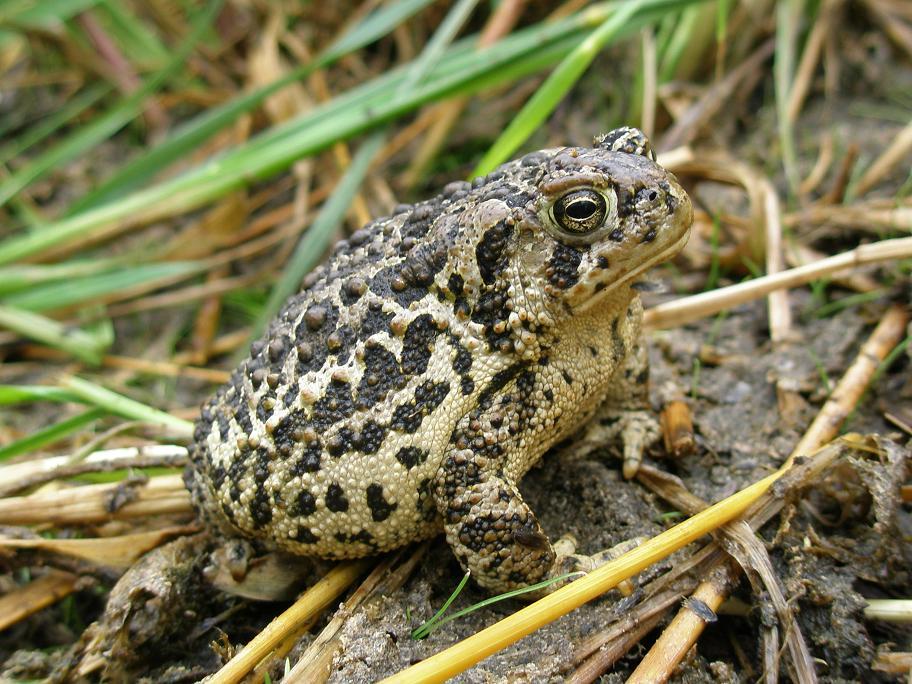 Wyoming ToadAnaxyrus baxteri
-
 Fowler's ToadAnaxyrus fowleri
-
 Western ToadAnaxyrus boreas
-
 Southern ToadAnaxyrus terrestris
-
 Woodhouse's ToadAnaxyrus woodhousii
-
 Red-spotted ToadAnaxyrus punctatus
-
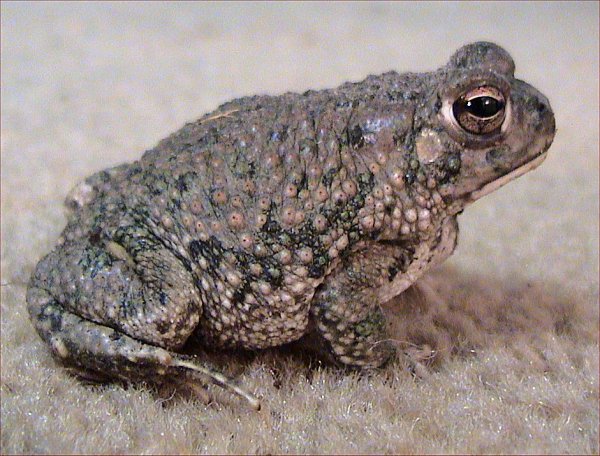 Texas ToadAnaxyrus speciosus
Compare
Questions and answers
What is the scientific name of the Green Toad?
The scientific name of the Green Toad is Anaxyrus debilis. Written with its author, the full name is Anaxyrus debilis (Girard, 1854).
Which family does the Green Toad belong to?
Anaxyrus debilis belongs to the family Bufonidae, in the order Anura and the class Amphibia.
Where is the Green Toad found?
Checklists and occurrence records place Anaxyrus debilis in 2 countries: United States and Mexico.
What is the conservation status of the Green Toad?
The IUCN Red List category recorded for Anaxyrus debilis is Least Concern (LC).
What other names does the Green Toad have?
Anaxyrus debilis is also known in English as Chihuahuan Green Toad, Eastern Green Toad and North American Green Toad.
Sources
Passages the profile rests on
- Males have black throats, whereas females have white or yellow throats. Source passage: “Male green toads have black throats, while females’ throats are white or yellow.” — animaldiversity.org
- Both sexes have flat, wedge-shaped heads. Source passage: “Both sexes have flat, wedge shaped heads.” — animaldiversity.org
- Female body mass averages 10.0 g, with a reported range of 9.2–10.7 g. Source passage: “Female green toads' body mass averaged 10.0 g (range 9.2 - 10.7 g).” — animaldiversity.org
- Male body mass averages 6.0 g, with a reported range of 3.0–9.5 g. Source passage: “Male mass averaged 6.0 (range 3.0 – 9.5 g).” — animaldiversity.org
- Adult females have been recorded reaching 54 mm in snout-to-vent length. Source passage: “adult females reached 54 mm SVL” — animaldiversity.org
- Adult males have been recorded as small as 26 mm after metamorphosis. Source passage: “adult males were as small as 26 mm post-metamorphosis.” — animaldiversity.org
- The species can release cardiotoxic steroid toxins through its parotoid glands. Source passage: “Green toads can release toxins through their parotoid glands in their skin. The toxin is cardiotoxic steroids” — animaldiversity.org
- Newly hatched tadpoles measure approximately 3.1–3.4 mm in length. Source passage: “They hatch at lengths between 3.1 to 3.4 mm.” — animaldiversity.org
- The species inhabits the northern Chihuahuan Desert. Source passage: “Green toads are desert-dwelling toads whose habitats include the northern Chihuahuan desert.” — animaldiversity.org
- Its desert habitat includes shrubland, semi-desert, and shrub-steppe environments. Source passage: “This desert includes shrubs, semi-desert, and shrub steppe habitats.” — animaldiversity.org
- The species shelters and regulates its body temperature by burrowing in mesquite shrubs. Source passage: “Green toads burrow in mesquite ( Prosopis ) shrubs, which provide shelter and a means to regulate the toads body temperature.” — animaldiversity.org
- During dry periods, individuals can shelter beneath rocks. Source passage: “During the dry season, green toads can be found under rocks.” — animaldiversity.org
- The species breeds in temporary water bodies such as roadside ditches and vernal pools following rainfall. Source passage: “After rainfall, green toads will breed in temporary water sources such as roadside ditches and vernal pools.” — animaldiversity.org
- Juveniles may bask on mud banks to raise their internal body temperature to approximately 30 °C. Source passage: “juvenile toads will bask on mud banks in an attempt to increase their internal body temperature to as high as 30 °C.” — animaldiversity.org
- Toadlets use fissures in mud as refuges. Source passage: “Toadlets will also seek refuge in fissures in the mud.” — animaldiversity.org
- Populations at higher and cooler elevations remain in burrows longer than populations at lower elevations. Source passage: “those populations at higher, cooler elevations use burrows for a longer amount of time than those at lower elevations.” — animaldiversity.org
- The species does not migrate seasonally. Source passage: “Green toads do not migrate.” — animaldiversity.org
- Individuals are generally inactive unless humidity increases or heavy rainfall occurs. Source passage: “Green toads are inactive unless it is humid or after heavy rainfalls.” — animaldiversity.org
- Individuals generally remain underground and inactive between September and May. Source passage: “From September to May, green toads typically remain inactive (hibernating) and below ground.” — animaldiversity.org
- Individuals sometimes travel several kilometers to reach breeding sites containing water. Source passage: “Some green toads will travel several kilometers to different breeding sites with water.” — animaldiversity.org
- Males form choruses to attract females during the breeding season. Source passage: “Male green toads join in chorus to attract females.” — animaldiversity.org
- The species moves by hopping on terrestrial surfaces. Source passage: “They do hop on terrestrial ground.” — animaldiversity.org
- The species breeds seasonally from late March through July, immediately following heavy rainfall. Source passage: “Green toads mate seasonally from late March to July, immediately after heavy rainfall.” — animaldiversity.org
- Breeding takes place in vernal pools. Source passage: “They mate in vernal pools.” — animaldiversity.org
- Mating occurs through amplexus and fertilization is external. Source passage: “Mating occurs via amplexus and reproduction occurs externally when eggs are released in tandem.” — animaldiversity.org
- Females lay an average of 1,287 eggs during amplexus. Source passage: “During amplexus, female green toads lay, on average, 1,287 eggs.” — animaldiversity.org
- Eggs are deposited in small strings attached to herbaceous stems, including grass. Source passage: “Green toad eggs are laid in small strings. The eggs attach to herbaceous stems, including grass.” — animaldiversity.org
- The eggs measure between 0.98 and 1.15 mm. Source passage: “Egg size ranges from 0.98 mm to 1.15 mm.” — animaldiversity.org
- Embryos hatch within 24 hours at a water temperature of 33.2 °C. Source passage: “Embryos found in southwest Arizona hatched within 24 hours with water temperatures at 33.2 °C.” — animaldiversity.org
- At a water temperature of 18.2 °C, hatching takes approximately 140 hours. Source passage: “When water temperature was at 18.2 °C, the time required for hatching was 140 hours.” — animaldiversity.org
- Metamorphosis typically takes less than three weeks. Source passage: “Metamorphosis typically takes less than 3 weeks.” — animaldiversity.org
- The tadpole stage can exceed 25 days in Kansas populations. Source passage: “in Kansas, the tadpole stage exceeded 25 days.” — animaldiversity.org
- Tadpoles are independent immediately after hatching. Source passage: “Tadpoles are immediately independent at hatching.” — animaldiversity.org
- The species provides no parental care after eggs have been deposited. Source passage: “They leave egg masses attached to herbaceous stems in water, and then provide no further care.” — animaldiversity.org
- The species is localized but common in the remaining areas of suitable habitat. Source passage: “Green toads are localized but common in remaining areas of suitable habitat.” — amphibiaweb.org
Data
- Catalogue of Life, 2026-10-16 XR cc by
- Global Biodiversity Information Facility CC BY 4.0
- Wikidata CC0
- GeoNames CC BY 4.0
- Wikimedia Commons per image; credit shown with each image
- Within the Catalogue of Life, this name comes from The Integrated Taxonomic Information System cc0
References
- Crother, Brian I., Jeff Boundy, Frank T. Burbrink, et al. / Moriarty, John J., ed. (2008). Scientific and Standard English Names of Amphibians and Reptiles of North America North of Mexico, With Comments Regarding Confidence in Our Understanding, Sixth Ed. Herpetological Circular No. 37.
This species in other databases
Page built on 26 November 2026. See how the catalog is made and all sources and licences.
Cite this page
ScientificNames.org. (2026). Anaxyrus debilis (Green Toad). Retrieved November 26, 2026, from https://scientificnames.org/species/anaxyrus-debilis
“Anaxyrus debilis (Green Toad).” ScientificNames.org, 2026, scientificnames.org/species/anaxyrus-debilis. Accessed 26 Nov. 2026.
ScientificNames.org. “Anaxyrus debilis (Green Toad).” Accessed November 26, 2026. https://scientificnames.org/species/anaxyrus-debilis.
@misc{scientificnames_anaxyrus_debilis_green_toad,
  author = {{ScientificNames.org}},
  title = {Anaxyrus debilis (Green Toad)},
  year = {2026},
  url = {https://scientificnames.org/species/anaxyrus-debilis},
  note = {Accessed 2026-11-26}
}