Species · Amphibians
Sonoran Green Toad Anaxyrus retiformis
The scientific name of the Sonoran Green Toad is Anaxyrus retiformis. It is a species of amphibian in the family Bufonidae (true toad), order Anura. The name dates from 1951.
- Scientific name
- Anaxyrus retiformis (Sanders & Smith, 1951)
- Common name
- Sonoran Green Toad
- Genus
- Anaxyrus
- Family
- Bufonidae (True Toad)
- Order
- Anura
- Class
- Amphibia
- Red List category
- LC Least Concern
- Recorded in
- 2 countries
- Name status
- accepted in the Catalogue of Life
Overview
Anaxyrus retiformis occurs in Pima and Pinal counties in Arizona and in northern Mexico. It is nocturnal and may spend most of the year underground, emerging when conditions are wet.
Written 27 November 2026 from the sources listed below. Each statement was checked against the passage it cites; statements that could not be supported were removed.
Habitat
The Sonoran Green Toad typically inhabits arid and semi-arid plains containing grasses, creosote bushes, mesquite and saguaro. Its recorded elevational range is 150–900 metres above sea level.[1][2]
In Arizona, its range extends from near Mobile southward to San Cristobal Wash and Organ Pipe Cactus National Monument, and eastward to Mission San Xavier del Bac and Altar Valley. In Mexico, it occurs from west-central Sonora northward.[3][4]
Behaviour
The Sonoran Green Toad is nocturnal and may spend most of the year underground, emerging when conditions are wet. It is inactive for approximately ten months of the year.[5][6][7]
It is uncertain whether the species undergoes estivation. Its behavior outside the breeding season is poorly documented.[8][9]
Reproduction and life cycle
Breeding occurs during July and August. Males arrive at breeding sites one to two days after heavy rainfall.[10][11]
Breeding sites include ditches, temporary pools, creek beds and cattle tanks. Males call from low vegetation located within a few metres of the water.[12][13]
The male's call has been compared to the sound of an electric alarm clock buzzer. After a female responds, the pair enters the water, undergoes amplexus and lays a batch of eggs.[14][15]
The eggs are thought to hatch within three days. Tadpoles develop to metamorphosis in two to three weeks.[16][17]
Temporary breeding water bodies tend to dry rapidly.[18]
Conservation
The Sonoran Green Toad's population is believed to be stable. It has been rediscovered at most of its historical locations and recorded at several new locations.[19][20]
Females are sometimes collected for the pet trade or for research. Increased irrigation may create additional habitat for the species.[21][22]
The species is classified as being of least concern by the International Union for Conservation of Nature.[23]
Classification of the Sonoran Green Toad
| Kingdom | Animalia |
|---|---|
| Phylum | Chordata |
| Subphylum | Vertebrata |
| Infraphylum | Gnathostomata |
| Parvphylum | Osteichthyes |
| Megaclass | Tetrapoda |
| Class | Amphibia (Amphibians) |
| Order | Anura (Frogs) |
| Family | Bufonidae (True Toad) |
| Genus | Anaxyrus (North American Toads) |
| Species | Anaxyrus retiformis (Sanders & Smith, 1951) |
Where the Sonoran Green Toad is found
Checklists and occurrence records place Anaxyrus retiformis in 2 countries across North America. GBIF holds 1,396 georeferenced records of it.
Countries
Regions and cities with the most records
- Arizona, United States 624
- Sonora, Mexico 245
- Hermosillo, Mexico 48
- Nayarit, Mexico 25
- Santiago Ixcuintla, Mexico 10
- Magdalena de Kino, Mexico 3
Range as the checklists state it
Middle America
North America
A number beside a place is its count of GBIF occurrence records. A place without a number comes from a checklist alone. Records show where a species has been observed or collected, which can include escapes and vagrants.
Common names
English
- Sonoran Green Toad
Names in 6 other languages
- Czech
- ropucha arizonská
- Dutch
- Sonora groene pad
- French
- Crapaud vert de Sonora
- Japanese
- ソノラミドリヒキガエル
- Russian
- Сонорская зелёная жаба
- Spanish
- Sapo Verde-sonorense, Sapo verde sonorense
Synonyms
2 other scientific names have been used for this species and are now treated as synonyms of Anaxyrus retiformis.
- Bufo debilis retiformis Sanders & Smith, 1951
- Bufo retiformis Sanders & Smith, 1951
Related species
-
 American ToadAnaxyrus americanus
-
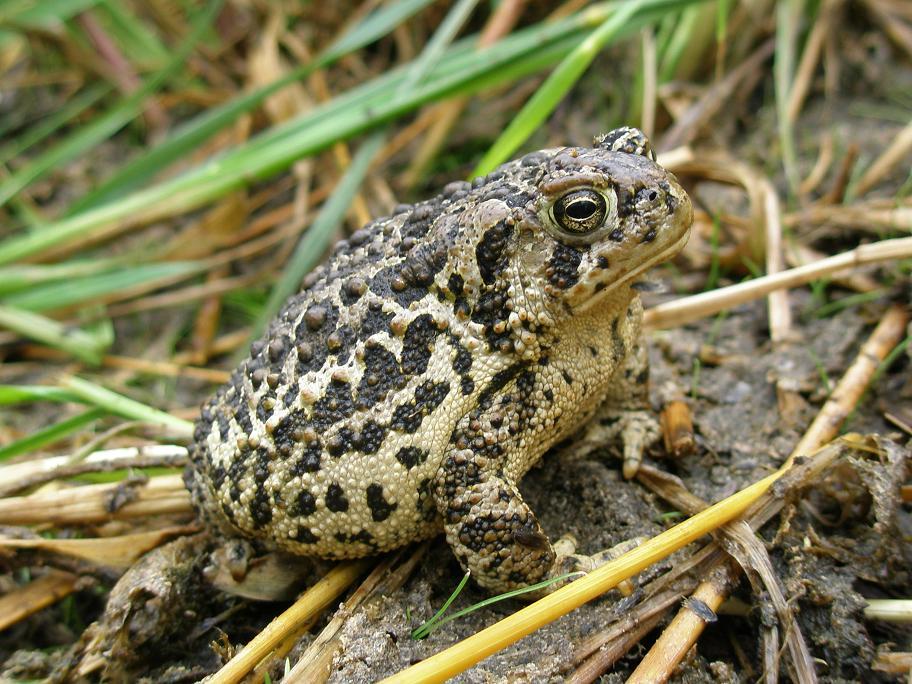 Wyoming ToadAnaxyrus baxteri
-
 Fowler's ToadAnaxyrus fowleri
-
 Western ToadAnaxyrus boreas
-
 Southern ToadAnaxyrus terrestris
-
 Woodhouse's ToadAnaxyrus woodhousii
-
 Red-spotted ToadAnaxyrus punctatus
-
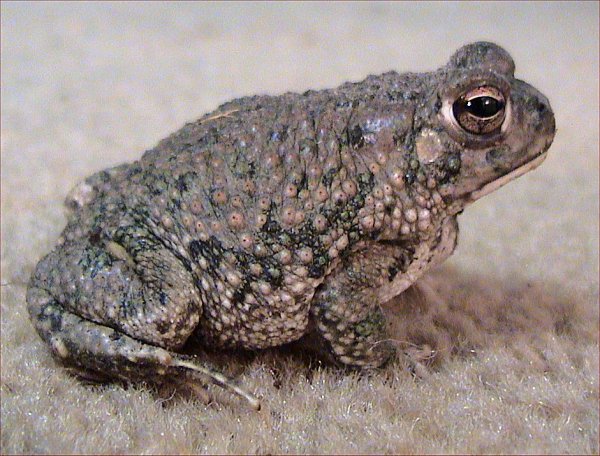 Texas ToadAnaxyrus speciosus
Compare
Questions and answers
What is the scientific name of the Sonoran Green Toad?
The scientific name of the Sonoran Green Toad is Anaxyrus retiformis. Written with its author, the full name is Anaxyrus retiformis (Sanders & Smith, 1951).
Which family does the Sonoran Green Toad belong to?
Anaxyrus retiformis belongs to the family Bufonidae, in the order Anura and the class Amphibia.
Where is the Sonoran Green Toad found?
Checklists and occurrence records place Anaxyrus retiformis in 2 countries: United States and Mexico.
What is the conservation status of the Sonoran Green Toad?
The IUCN Red List category recorded for Anaxyrus retiformis is Least Concern (LC).
What is the green toad called?
The species is called the Sonoran Green Toad. It is also known by the Spanish names sapo verde de Sonora and sapo verde sonorense.[24]
What habitat does a toad live in?
The Sonoran Green Toad typically inhabits arid and semi-arid plains containing grasses, creosote bushes, mesquite and saguaro.[1]
Sources
Passages the profile rests on
- The species typically inhabits arid and semi-arid plains containing grasses, creosote bushes, mesquite and saguaro. Source passage: “Its typical habitat is arid and semi-arid plains with grass, creosote bush, mesquite and saguaro.” — English Wikipedia
- Its recorded elevational range is 150–900 metres above sea level. Source passage: “Its altitudinal range is from 150 to 900 metres (490 to 2,950 ft).” — English Wikipedia
- In Arizona, its range extends from near Mobile southward to San Cristobal Wash and Organ Pipe Cactus National Monument, and eastward to Mission San Xavier del Bac and Altar Valley. Source passage: “In the United States its range extends from near Mobile southwards to the San Cristobal Wash and the Organ Pipe Cactus National Monument and eastwards to the Mission San Xavier del Bac and the Altar Valley.” — English Wikipedia
- In Mexico, the species occurs from west-central Sonora northward. Source passage: “In Mexico its range is from the west-central part of Sonora State northwards.” — English Wikipedia
- The species is nocturnal. Source passage: “The Sonoran green toad is nocturnal and little is known of its behavior outside the breeding season.” — English Wikipedia
- The species may spend most of the year underground and emerge when conditions are wet. Source passage: “It is thought that it may be fossorial, living underground for most of the year and emerging only in wet conditions” — English Wikipedia
- The species is inactive for approximately ten months of the year. Source passage: “The Sonoran green toad is inactive for about ten months of the year” — English Wikipedia
- It is uncertain whether the species undergoes estivation. Source passage: “it is not clear whether or not it estivates.” — English Wikipedia
- Its behavior outside the breeding season is poorly documented. Source passage: “little is known of its behavior outside the breeding season.” — English Wikipedia
- Breeding occurs during July and August. Source passage: “Breeding takes place in July and August” — English Wikipedia
- Males arrive at breeding sites one to two days after heavy rainfall. Source passage: “the males appearing at breeding sites one to two days after heavy rain has fallen.” — English Wikipedia
- Breeding sites include ditches, temporary pools, creek beds and cattle tanks. Source passage: “The sites chosen are ditches, temporary pools, creek beds and cattle tanks.” — English Wikipedia
- Males call from low vegetation located within a few metres of the water. Source passage: “The males call from low vegetation within a few metres of the water.” — English Wikipedia
- The male's call has been compared to the sound of an electric alarm clock buzzer. Source passage: “The call has been described as resembling "the buzzer on an electric alarm clock".” — English Wikipedia
- After a female responds to a male, the pair enters the water, undergoes amplexus and lays a batch of eggs. Source passage: “When a female arrives in response to the male, they move together into the water, amplexus occurs and a batch of eggs is laid.” — English Wikipedia
- The eggs are thought to hatch within three days. Source passage: “it is thought that the eggs hatch within three days” — English Wikipedia
- Tadpoles develop to metamorphosis in two to three weeks. Source passage: “the tadpoles develop to metamorphosis in two to three weeks.” — English Wikipedia
- Temporary breeding water bodies tend to dry rapidly. Source passage: “The temporary waterbodies tend to dry up rapidly” — English Wikipedia
- The species' population is believed to be stable. Source passage: “The population is believed to be stable” — English Wikipedia
- The species has been rediscovered at most of its historical locations and recorded at several new locations. Source passage: “as it has been redetected in most of its historic locations and has been discovered in a number of new ones.” — English Wikipedia
- Females are sometimes collected for the pet trade or for research. Source passage: “Females are sometimes collected for the pet trade or research” — English Wikipedia
- Increased irrigation may create additional habitat for the species. Source passage: “increased irrigation may create new habitats.” — English Wikipedia
- The species is classified as being of least concern by the International Union for Conservation of Nature. Source passage: “The International Union for Conservation of Nature has assessed its conservation status as being of "least concern".” — English Wikipedia
- The species is also known by the Spanish names sapo verde de Sonora and sapo verde sonorense. Source passage: “in Spanish "sapo verde de Sonora" or "sapo verde sonorense"” — English Wikipedia
Data
- Catalogue of Life, 2026-10-16 XR cc by
- Global Biodiversity Information Facility CC BY 4.0
- Wikidata CC0
- GeoNames CC BY 4.0
- Within the Catalogue of Life, this name comes from The Integrated Taxonomic Information System cc0
References
- Crother, Brian I., Jeff Boundy, Frank T. Burbrink, et al. / Moriarty, John J., ed. (2008). Scientific and Standard English Names of Amphibians and Reptiles of North America North of Mexico, With Comments Regarding Confidence in Our Understanding, Sixth Ed. Herpetological Circular No. 37.
This species in other databases
Page built on 28 November 2026. See how the catalog is made and all sources and licences.
Cite this page
ScientificNames.org. (2026). Anaxyrus retiformis (Sonoran Green Toad). Retrieved November 28, 2026, from https://scientificnames.org/species/anaxyrus-retiformis
“Anaxyrus retiformis (Sonoran Green Toad).” ScientificNames.org, 2026, scientificnames.org/species/anaxyrus-retiformis. Accessed 28 Nov. 2026.
ScientificNames.org. “Anaxyrus retiformis (Sonoran Green Toad).” Accessed November 28, 2026. https://scientificnames.org/species/anaxyrus-retiformis.
@misc{scientificnames_anaxyrus_retiformis_sonoran_green_toad,
  author = {{ScientificNames.org}},
  title = {Anaxyrus retiformis (Sonoran Green Toad)},
  year = {2026},
  url = {https://scientificnames.org/species/anaxyrus-retiformis},
  note = {Accessed 2026-11-28}
}