Species · Flowering plants
Hairy Dozedaisy Aphanostephus pilosus
The scientific name of the Hairy Dozedaisy is Aphanostephus pilosus. It is a species of flowering plant in the family Asteraceae (composite), order Asterales.
- Scientific name
- Aphanostephus pilosus Buckley
- Common name
- Hairy Dozedaisy
- Genus
- Aphanostephus
- Family
- Asteraceae (Composite)
- Order
- Asterales
- Class
- Magnoliopsida
- Recorded in
- 1 country
- Name status
- accepted in the Catalogue of Life
Overview
Hairy dozedaisy is an annual herbaceous flowering plant. It occurs in the United States, including Oklahoma and northern Texas, and has been recorded in Chaves County, New Mexico. It has sparsely hairy stems, flowers with 13–21 ray florets, and seeds with broadly tubular, coroniform pappi with ciliate margins.
Written 28 November 2026 from the sources listed below. Each statement was checked against the passage it cites; statements that could not be supported were removed.
Appearance
Hairy dozedaisy is an annual herbaceous flowering plant that grows to a maximum height of 30 cm. Its stems are sparsely covered with hairs measuring 0.6–2.4 mm in length.[1][2][3][4]
The tips of the phyllaries gradually narrow toward their ends. The flowers contain disc florets and 13–21 ray florets.[5][6]
The species produces cypselae with straight hairs at their apices. Its seeds have broadly tubular, coroniform pappi with ciliate margins.[7][8]
Habitat
Hairy dozedaisy grows in sand and sandy clay. It occurs in open scrub oak woodlands, disturbed sites, fields and mesquite savannas.[9][10][11][12]
The species occurs at elevations between 30 and 200 m above sea level.[13]
Conservation
NatureServe classified hairy dozedaisy as Apparently Secure (G4) worldwide as of December 2024. Its worldwide conservation status was last reviewed on 16 May 1989.[14][15]
NatureServe has not assessed the species at the state level.[16]
Classification of the Hairy Dozedaisy
| Kingdom | Plantae |
|---|---|
| Subkingdom | Pteridobiotina |
| Phylum | Tracheophyta |
| Class | Magnoliopsida |
| Order | Asterales |
| Family | Asteraceae (Composite) |
| Subfamily | Asteroideae |
| Tribe | Astereae |
| Subtribe | Conyzinae |
| Genus | Aphanostephus (Dozedaisy) |
| Species | Aphanostephus pilosus Buckley |
Where the Hairy Dozedaisy is found
Checklists and occurrence records place Aphanostephus pilosus in 1 country across North America. GBIF holds 94 georeferenced records of it.
Countries
Regions and cities with the most records
Range as the checklists state it
USA (Oklahoma, Texas)
A number beside a place is its count of GBIF occurrence records. A place without a number comes from a checklist alone. Records show where a species has been observed or collected, which can include escapes and vagrants.
Common names
English
- Hairy Dozedaisy
Synonyms
One other scientific name has been used for this species and is now treated as a synonym of Aphanostephus pilosus.
- Aphanostephus pulchellus Stevens
Related species
-
 Plains DozedaisyAphanostephus ramosissimus
- Arkansas DozedaisyAphanostephus skirrhobasis
- Riddell's DozedaisyAphanostephus riddellii
- Aphanostephus jaliscensis
-
 Jerusalem ArtichokeHelianthus tuberosus
-
 ChicoryCichorium intybus
-
 Absinthe WormwoodArtemisia absinthium
-
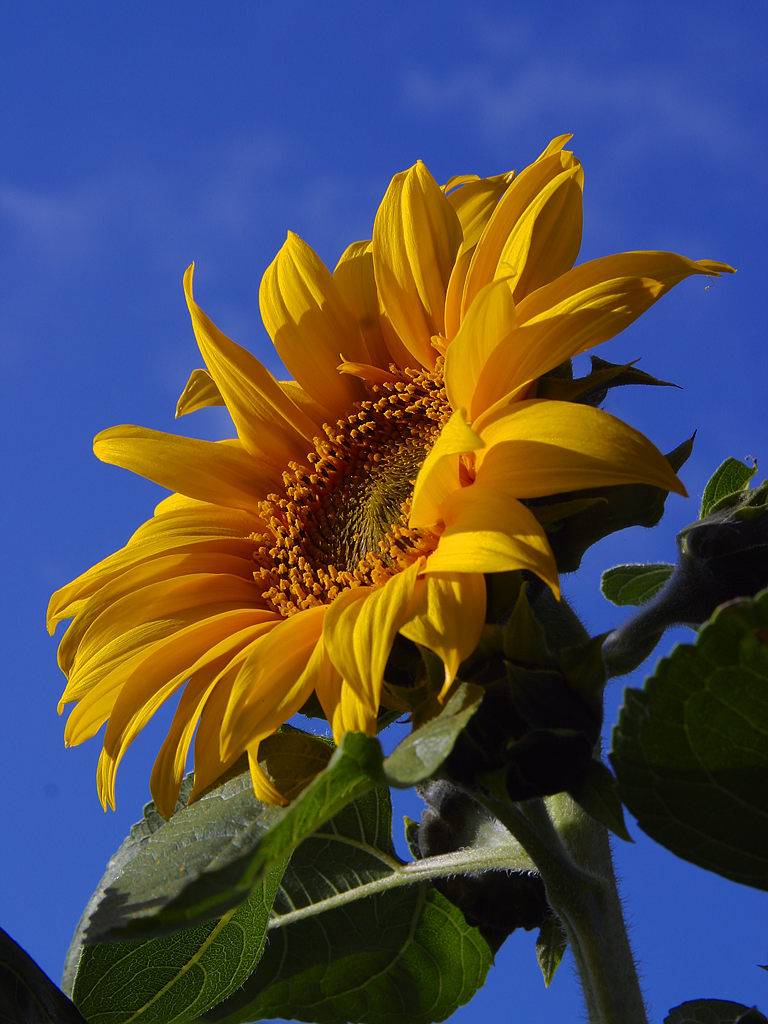 Common SunflowerHelianthus annuus
Compare
Questions and answers
What is the scientific name of the Hairy Dozedaisy?
The scientific name of the Hairy Dozedaisy is Aphanostephus pilosus. Written with its author, the full name is Aphanostephus pilosus Buckley.
Which family does the Hairy Dozedaisy belong to?
Aphanostephus pilosus belongs to the family Asteraceae, in the order Asterales and the class Magnoliopsida.
Where is the Hairy Dozedaisy found?
Checklists and occurrence records place Aphanostephus pilosus in 1 country: United States.
What is the scientific name of hairy dozedaisy?
Its scientific name is Aphanostephus pilosus Buckley.[17]
Who first described hairy dozedaisy, and when?
Samuel Botsford Buckley first named and described the species in 1862 in the Proceedings of the Academy of Natural Sciences of Philadelphia journal.[18][19]
What conservation status does hairy dozedaisy have?
NatureServe classified it as Apparently Secure (G4) worldwide as of December 2024.[14]
What English names are recorded for the species?
GBIF lists hairy lazydaisy and hairy dozedaisy as English names.[20]
Sources
Passages the profile rests on
- The species is an annual herbaceous flowering plant. Source passage: “is an annual herbaceous flowering plant in the family Asteraceae.” — English Wikipedia
- The species has stems that are sparsely covered with hairs. Source passage: “The stem is sparsely hairy” — English Wikipedia
- The hairs on the stem measure 0.6–2.4 mm in length. Source passage: “hairs being 0.6–2.4 mm long.” — English Wikipedia
- The plant grows to a maximum height of 30 cm. Source passage: “grows up to 30 cm (12 in) tall.” — English Wikipedia
- The tips of the phyllaries gradually narrow toward their ends. Source passage: “The phyllary apices gradually diminish in width to a tip.” — English Wikipedia
- The flowers contain disc florets and 13–21 ray florets. Source passage: “Flowers contain disc florets and 13–21 ray florets.” — English Wikipedia
- The species produces cypselae with straight hairs at their apices. Source passage: “The seeds are cypselae, with apically straight hairs.” — English Wikipedia
- The seeds have broadly tubular, coroniform pappi with ciliate margins. Source passage: “The seeds contain pappi that are coroniform (broadly tubular) and ciliate.” — English Wikipedia
- The species grows in sand and sandy clay. Source passage: “It grows in sand, sandy clay,” — English Wikipedia
- The species occurs in open scrub oak woodlands. Source passage: “open scrub oak woodlands,” — English Wikipedia
- The species grows in disturbed sites and fields. Source passage: “disturbed sites, fields,” — English Wikipedia
- The species occurs in mesquite savannas. Source passage: “and mesquite savannas” — English Wikipedia
- The species occurs at elevations between 30 and 200 m above sea level. Source passage: “at elevations of 30–200 m (98–656 ft) above sea level.” — English Wikipedia
- NatureServe classified the species as Apparently Secure (G4) worldwide as of December 2024. Source passage: “As of December 2024, the conservation group NatureServe listed Aphanostephus pilosus as Apparently Secure (G4) worldwide.” — English Wikipedia
- The worldwide conservation status was last reviewed on 16 May 1989. Source passage: “This status was last reviewed on 16 May 1989.” — English Wikipedia
- NatureServe has not assessed the species at the state level. Source passage: “The group has not assessed this species at the state level.” — English Wikipedia
- The USDA classification record identifies the species by the scientific name Aphanostephus pilosus Buckley and the common name hairy dozedaisy. Source passage: “Aphanostephus pilosus Buckley - hairy dozedaisy” — plants.sc.egov.usda.gov
- Samuel Botsford Buckley first named and described the species in 1862. Source passage: “Aphanostephus pilosus was first named and described by Samuel Botsford Buckley in 1862” — English Wikipedia
- The species was described in the Proceedings of the Academy of Natural Sciences of Philadelphia journal. Source passage: “in the Proceedings of the Academy of Natural Sciences of Philadelphia journal.” — English Wikipedia
- GBIF lists hairy lazydaisy and hairy dozedaisy as English names for the species. Source passage: “Hairy lazydaisy hairy dozedaisy English” — gbif.org
Data
- Catalogue of Life, 2026-10-16 XR cc by
- Global Biodiversity Information Facility CC BY 4.0
- Wikidata CC0
- GeoNames CC BY 4.0
- Within the Catalogue of Life, this name comes from Synonymic Checklists of the Vascular Plants of the World cc by
References
- Buckley. (1861). Proc. Acad. Nat. Sci. Philadelphia 13: 457 (1861 publ. 1862). where the name was published
This species in other databases
Page built on 28 November 2026. See how the catalog is made and all sources and licences.
Cite this page
ScientificNames.org. (2026). Aphanostephus pilosus (Hairy Dozedaisy). Retrieved November 28, 2026, from https://scientificnames.org/species/aphanostephus-pilosus
“Aphanostephus pilosus (Hairy Dozedaisy).” ScientificNames.org, 2026, scientificnames.org/species/aphanostephus-pilosus. Accessed 28 Nov. 2026.
ScientificNames.org. “Aphanostephus pilosus (Hairy Dozedaisy).” Accessed November 28, 2026. https://scientificnames.org/species/aphanostephus-pilosus.
@misc{scientificnames_aphanostephus_pilosus_hairy_dozedaisy,
  author = {{ScientificNames.org}},
  title = {Aphanostephus pilosus (Hairy Dozedaisy)},
  year = {2026},
  url = {https://scientificnames.org/species/aphanostephus-pilosus},
  note = {Accessed 2026-11-28}
}