Species · Birds
Squacco Heron Ardeola ralloides
The scientific name of the Squacco Heron is Ardeola ralloides. It is a species of bird in the family Ardeidae (heron), order Pelecaniformes. The name dates from 1769.
- Scientific name
- Ardeola ralloides (Scopoli, 1769)
- Common name
- Squacco Heron
- Genus
- Ardeola
- Family
- Ardeidae (Heron)
- Order
- Pelecaniformes
- Class
- Aves
- Red List category
- LC Least Concern
- Environment
- terrestrial
- Recorded in
- 116 countries
- Name status
- accepted in the Catalogue of Life

Overview
The Squacco Heron is a migratory species. It breeds in freshwater localities throughout Europe and the Middle East. It appears predominantly white when flying because of its wing coloration.
Written 26 November 2026 from the sources listed below. Each statement was checked against the passage it cites; statements that could not be supported were removed.
Appearance
The Squacco Heron has a stocky body, short neck, short thick bill and buff-brown back. It measures 44–47 cm in total length, with a body length of 20–23 cm and a wingspan of 80–92 cm.[1][2]
Adult Squacco Herons develop long neck feathers during summer. Their wing coloration makes them appear predominantly white when flying.[3][4]
Habitat
The Squacco Heron's breeding habitat consists of marshy wetlands in warm countries. It uses freshwater localities throughout Europe and the Middle East as breeding grounds.[5][6]
It favors freshwater marshes, lakes and ponds with reeds and surrounding vegetation.[7]
Diet
The Squacco Heron feeds on fish, frogs and insects.[8]
Behaviour
The Squacco Heron is migratory and winters in Africa. It migrates from European and Middle Eastern breeding grounds to the Sub-Saharan African region.[9][10]
It is rare outside its breeding range to the north. It has been recorded as a vagrant in the Fernando de Noronha islands and, less frequently, on mainland South America.[11][12]
The Squacco Heron tends to hunt slowly and quietly while maintaining a hunched posture.[13]
Reproduction and life cycle
Squacco Herons nest in small colonies, frequently alongside other wading birds. They generally build their nests on stick platforms in trees or shrubs.[14][15]
The Squacco Heron lays clutches of three to four eggs.[16]
Classification of the Squacco Heron
| Kingdom | Animalia |
|---|---|
| Phylum | Chordata |
| Subphylum | Vertebrata |
| Infraphylum | Gnathostomata |
| Parvphylum | Osteichthyes |
| Megaclass | Tetrapoda |
| Class | Aves (Bird) |
| Order | Pelecaniformes (Herons) |
| Family | Ardeidae (Heron) |
| Genus | Ardeola (Pond Heron) |
| Species | Ardeola ralloides (Scopoli, 1769) |
Where the Squacco Heron is found
Checklists and occurrence records place Ardeola ralloides in 116 countries across Africa. GBIF holds 277,116 georeferenced records of it.
Countries
- Afghanistan 5
- Albania 514
- Algeria 246
- Angola 278
- Armenia 1,028
- Austria 241
- Azerbaijan 234
- Bahrain 320
- Belarus 4
- Belgium 1,031
- Benin 359
- Bosnia and Herzegovina 285
- Botswana 8,180
- Brazil 301
- Bulgaria 3,422
- Burkina Faso 628
- Burundi 22
- Cabo Verde 134
- Cameroon 256
- Central African Republic 13
- Chad 228
- Croatia 1,653
- Cyprus 3,475
- Czechia 94
- Democratic Republic of the Congo 229
- Denmark 548
- Djibouti 16
- Egypt 5,998
- Equatorial Guinea 6
- Eritrea 14
- Eswatini 237
- Ethiopia 1,997
- Finland 18
- France 19,400
- Gabon 120
- Gambia 6,218
- Georgia 1,503
- Germany 257
- Ghana 1,833
- Greece 10,679
- Guinea 85
- Guinea-Bissau 287
- Hungary 2,723
- Iceland 5
- India 4
- Iran 1,181
- Iraq 195
- Ireland 22
- Israel 27,990
- Italy 6,847
- Ivory Coast 482
- Jordan 517
- Kazakhstan 28
- Kenya 7,997
- Kosovo 240
- Kuwait 2,521
- Lebanon 209
- Lesotho 10
- Liberia 77
- Libya 22
- Luxembourg 3
- Madagascar 3,983
- Malawi 650
- Mali 93
- Malta 87
- Mauritania 193
- Mayotte 15
- Moldova 83
- Montenegro 1,047
- Morocco 1,554
- Mozambique 1,257
- Namibia 3,943
- Niger 82
- Nigeria 1,379
- North Macedonia 84
- Norway 208
- Oman 3,371
- Palestinian Territory 102
- Poland 206
- Portugal 2,891
- Qatar 419
- Republic of the Congo 121
- Romania 4,352
- Russia 973
- Rwanda 728
- Saint Helena 24
- Sao Tome and Principe 51
- Saudi Arabia 2,243
- Senegal 3,274
- Serbia 3,279
- Seychelles 19
- Sierra Leone 53
- Slovakia 77
- Slovenia 468
- Somalia 4
- South Africa 35,723
- South Sudan 94
- Spain 39,198
- Sudan 121
- Sweden 1,691
- Switzerland 312
- Syria 50
- Tanzania 2,865
- The Netherlands 6,882
- Togo 123
- Tunisia 140
- Turkey 9,018
- Uganda 5,355
- Ukraine 952
- United Arab Emirates 7,000
- United Kingdom 693
- Uzbekistan 4
- Western Sahara 25
- Yemen 32
- Zambia 3,327
- Zimbabwe 2,729
Regions and cities with the most records
- Catalonia, Spain 10,940
- Southern District, Israel 10,463
- Gauteng, South Africa 10,013
- Valencia, Spain 9,287
- Provence-Alpes-Côte d'Azur, France 8,461
- Occitanie, France 7,233
- Northern District, Israel 6,857
- Eilat, Israel 6,517
- Aqaba, Jordan 6,509
- Amposta, Spain 6,266
- Kafr Qari‘, Israel 6,139
- ‘Ara-‘Ar‘ara, Israel 5,774
- Mpumalanga, South Africa 5,724
- KwaZulu-Natal, South Africa 5,590
- Limpopo, South Africa 5,517
- Binyamina-Giv‘at ‘Ada, Israel 5,385
- Binyamina-Giv'at Ada, Israel 5,370
- Pardés H̱anna Karkur, Israel 5,369
- Or Akiva, Israel 5,367
- Jisr ez Zarqā, Israel 5,356
- Sant Carles de la Ràpita, Spain 5,333
- Hadera, Israel 5,318
- North-West, Botswana 4,963
- Arles, France 4,815
- North West, South Africa 4,405
- Abu Dhabi, United Arab Emirates 4,298
- Lunel, France 4,137
- Even Yehuda, Israel 4,115
- Bāqa el Gharbīya, Israel 4,089
- Kadima Zoran, Israel 4,040
- Central District, Israel 4,038
- Zikhron Ya‘aqov, Israel 3,910
- Qalansuwa, Israel 3,878
- Eṭ Ṭaiyiba, Israel 3,871
- Al Ain City, United Arab Emirates 3,852
- Qalqīlyah, Palestinian Territory 3,786
3 more countries have a few records outside this range
These countries hold a few records of Ardeola ralloides but lie outside the range the checklists give for it. Such records are often zoo or garden specimens, museum material or vagrants, so the species is not counted as occurring there.
Range as the checklists state it
Europe & Northern Asia (excluding China)
Africa
A number beside a place is its count of GBIF occurrence records. A place without a number comes from a checklist alone. Records show where a species has been observed or collected, which can include escapes and vagrants.
Common names
English
- Squacco Heron
- Common Squacco Heron
- SQHE
Names in 64 other languages
- Afrikaans
- Ralreier
- Albanian
- çafka e verdhë, çapka e verdhë
- Arabic
- البلشون الذهبي, بلشون تفلقاني, بلشون ذهبي, واق أبيض
- Armenian
- Դեղին տառեղ
- Asturian
- Garcina de Cámbaros, garcina cambariega
- Azerbaijani
- Sarı pırtlaşıqlələk
- Basque
- Lertxuntxo karramarrozalea
- Belarusian
- Жоўтая чапля
- Breton
- Kerc'heiz-kranked
- Bulgarian
- Гривеста чапла
- Catalan
- Martinet ros, Toret, martinet ros comú
- Chinese
- 白翅黃池鷺, 白翅黄池鹭, 黃池鷺
- Czech
- volavka vlasatá
- Danish
- Tophejre
- Dutch
- ralreiger
- Esperanto
- Ralardeo, ordinara ralardeo
- Estonian
- koldhaigur, koldhaigur e. tiigihaigur, tiigihaigur
- Faroese
- Topphegri
- Finnish
- rääkkähaikara
- French
- Crabier chevelu, Héron crabier
- Galician
- Garza amarela
- Georgian
- ყვითელი ყანჩა
- German
- Rallenreiher
- Greek
- (Ξανθός) Κρυπτοτσικνιάς, Κρυπτοτσικνιάς, Ξανθός Κρυπτοτσικνιάς
- Hebrew
- אנפית סוף
- Hungarian
- üstökösgém
- Icelandic
- Relluhegri
- Irish
- Corr scréachach
- Italian
- sgarza ciuffetto
- Japanese
- カンムリサギ
- Kazakh
- Сарықұтан
- Latvian
- dzeltenais gārnis
- Lithuanian
- geltonasis garnys, geltonasis kūdrinis garnys
- Luxembourgish
- Rallereeër
- Macedonian
- жолта чапја
- Malagasy
- Andevondangoro, Mpiandrivoditatatra
- Maltese
- Agrett Isfar
- Northern Sami
- Ruškesháigir
- Norwegian
- topphegre
- Persian
- حواصیل اسکوآکو, حواصیل زرد
- Polish
- czapla modronosa
- Portuguese
- Garça-caranguejeira, Papa-ratos, papa-ratos-comum, papa-ratos-ocidental
- Romanian
- stârc galben
- Russian
- Жёлтая цапля, желтая цапля
- Serbian
- Žuta čaplja, Жута чапља
- Slovak
- čaplička vlasatá
- Slovenian
- čopasta čaplja
- Sotho
- Kokolofitoe
- Spanish
- Garcilla cangrejera
- Swahili
- Kingoyo Njano
- Swedish
- rallhäger
- Turkish
- alaca balikcil, alaca balıkçıl
- Ukrainian
- Жовта чапля, Чапля жовта
- Welsh
- Crehyrod Melyn, crëyr melyn
- arg
- Pescairet de lusco
- fry
- Sompereager
- glv
- Coar screeaghagh
- hau
- Makwabo
- kbd
- Псыхэуэгъуэжь
- kwn
- Hakaruu
- olo
- Riäčkyhaigari
- pnb
- سکواکو بگلا
- roh
- Irun brin
- rue
- Чапля шовкова
Synonyms
5 other scientific names have been used for this species and are now treated as synonyms of Ardeola ralloides.
- Ardea comata Pallas, 1773
- Ardea ralloides Scopoli, 1769
- Ardeola ralloides paludivaga Clancey, 1968
- Ardeola ralloides ralloides (Scopoli, 1769)
- Buphus illyricus Brehm, CL, 1831
Related species
-
 Indian Pond HeronArdeola grayii
-
 Chinese Pond HeronArdeola bacchus
-
 Javan Pond HeronArdeola speciosa
-
 Malagasy Pond HeronArdeola idae
-
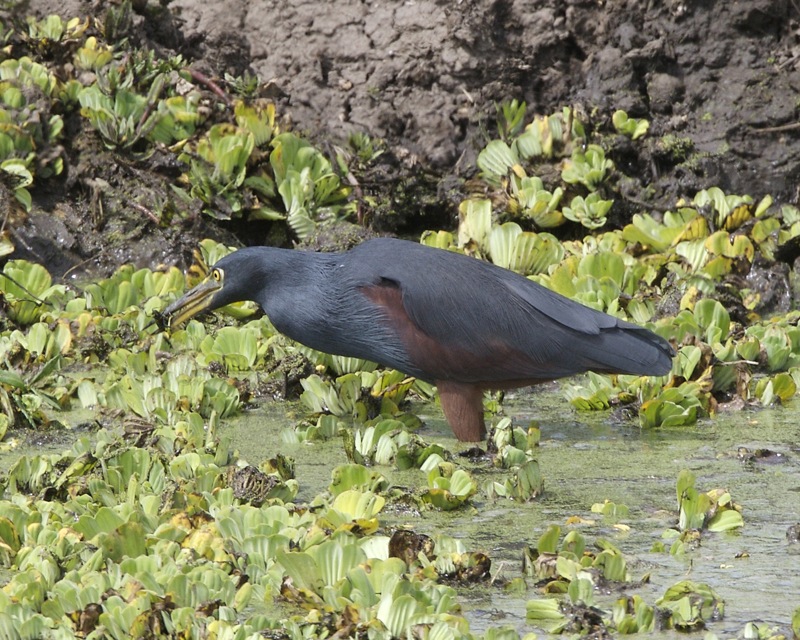 Rufous-bellied HeronArdeola rufiventris
-
 Great Blue HeronArdea herodias
-
 Great EgretArdea alba
-
 Grey HeronArdea cinerea
Compare
Questions and answers
What is the scientific name of the Squacco Heron?
The scientific name of the Squacco Heron is Ardeola ralloides. Written with its author, the full name is Ardeola ralloides (Scopoli, 1769).
Which family does the Squacco Heron belong to?
Ardeola ralloides belongs to the family Ardeidae, in the order Pelecaniformes and the class Aves.
Where is the Squacco Heron found?
Checklists and occurrence records place Ardeola ralloides in 116 countries, including Spain, South Africa, Israel, France, Greece and Turkey.
What is the conservation status of the Squacco Heron?
The IUCN Red List category recorded for Ardeola ralloides is Least Concern (LC).
What other names does the Squacco Heron have?
Ardeola ralloides is also known in English as Common Squacco Heron and SQHE.
Sources
Passages the profile rests on
- The Squacco Heron measures 44–47 cm in total length, with a body length of 20–23 cm and a wingspan of 80–92 cm. Source passage: “44–47 cm (17+1⁄2–18+1⁄2 in) long, of which the body is 20–23 cm (8–9 in), with 80–92 cm (31+1⁄2–36 in) wingspan.” — English Wikipedia
- The Squacco Heron has a stocky body, short neck, short thick bill and buff-brown back. Source passage: “This is a stocky species with a short neck, short thick bill and buff-brown back.” — English Wikipedia
- Adult Squacco Herons develop long neck feathers during summer. Source passage: “In summer, adults have long neck feathers.” — English Wikipedia
- The Squacco Heron appears predominantly white when flying because of its wing coloration. Source passage: “Its appearance is transformed in flight, when it looks very white due to the colour of the wings.” — English Wikipedia
- The Squacco Heron's breeding habitat consists of marshy wetlands in warm countries. Source passage: “The squacco heron's breeding habitat is marshy wetlands in warm countries.” — English Wikipedia
- The Squacco Heron uses freshwater localities throughout Europe and the Middle East as breeding grounds. Source passage: “The squacco heron uses freshwater localities throughout Europe and the Middle East as breeding grounds” — English Wikipedia
- The Squacco Heron favors freshwater marshes, lakes and ponds with reeds and surrounding vegetation. Source passage: “favors freshwater marshes, lakes, and ponds with reeds and other surrounding vegetation.” — ebird.org
- The Squacco Heron feeds on fish, frogs and insects. Source passage: “They feed on fish, frogs and insects.” — English Wikipedia
- The Squacco Heron is a migratory species that winters in Africa. Source passage: “The squacco heron is a migrant, wintering in Africa.” — English Wikipedia
- The Squacco Heron migrates from European and Middle Eastern breeding grounds to the Sub-Saharan African region. Source passage: “uses freshwater localities throughout Europe and the Middle East as breeding grounds to later migrate south to the Sub-Saharan African region.” — English Wikipedia
- The Squacco Heron is rare outside its breeding range to the north. Source passage: “It is rare north of its breeding range.” — English Wikipedia
- The Squacco Heron has been recorded as a vagrant in the Fernando de Noronha islands and, less frequently, on mainland South America. Source passage: “The species has been recorded in Fernando de Noronha islands, and more rarely in mainland South America, as a vagrant.” — English Wikipedia
- The Squacco Heron tends to hunt slowly and quietly while maintaining a hunched posture. Source passage: “Tends to hunt rather sluggishly, hunched quietly” — ebird.org
- Squacco Herons nest in small colonies, frequently alongside other wading birds. Source passage: “The birds nest in small colonies, often with other wading birds” — English Wikipedia
- Squacco Herons generally build their nests on stick platforms in trees or shrubs. Source passage: “usually on platforms of sticks in trees or shrubs.” — English Wikipedia
- The Squacco Heron lays clutches of three to four eggs. Source passage: “Three to four eggs are laid.” — English Wikipedia
Data
- Catalogue of Life, 2026-10-16 XR cc by
- Global Biodiversity Information Facility CC BY 4.0
- Wikidata CC0
- GeoNames CC BY 4.0
- Wikimedia Commons per image; credit shown with each image
- Within the Catalogue of Life, this name comes from The Integrated Taxonomic Information System cc0
References
- Annus I Hist.-Nat. p. 88 where the name was published
- Gill, Frank, & and Minturn Wright. (2006). Birds of the World: Recommended English Names.
This species in other databases
- Catalogue of Life GCML
- Wikidata Q191394
- iNaturalist 4994
- WoRMS urn:lsid:marinespecies.org:taxname:212671
- Avibase squher1
Page built on 27 November 2026. See how the catalog is made and all sources and licences.
Cite this page
ScientificNames.org. (2026). Ardeola ralloides (Squacco Heron). Retrieved November 27, 2026, from https://scientificnames.org/species/ardeola-ralloides
“Ardeola ralloides (Squacco Heron).” ScientificNames.org, 2026, scientificnames.org/species/ardeola-ralloides. Accessed 27 Nov. 2026.
ScientificNames.org. “Ardeola ralloides (Squacco Heron).” Accessed November 27, 2026. https://scientificnames.org/species/ardeola-ralloides.
@misc{scientificnames_ardeola_ralloides_squacco_heron,
  author = {{ScientificNames.org}},
  title = {Ardeola ralloides (Squacco Heron)},
  year = {2026},
  url = {https://scientificnames.org/species/ardeola-ralloides},
  note = {Accessed 2026-11-27}
}