Species · Flowering plants
Black Chokeberry Aronia melanocarpa
The scientific name of the Black Chokeberry is Aronia melanocarpa. It is a species of flowering plant in the family Rosaceae (rose family), order Rosales.
- Scientific name
- Aronia melanocarpa (Michx.) Elliott
- Common name
- Black Chokeberry
- Genus
- Aronia
- Family
- Rosaceae (Rose Family)
- Order
- Rosales
- Class
- Magnoliopsida
- Recorded in
- 5 countries
- Name status
- accepted in the Catalogue of Life

Overview
Aronia melanocarpa is native to eastern North America, with a range extending from Newfoundland westward to Ontario and Minnesota, and southward to Arkansas, Alabama, and Georgia. It has glossy dark green leaves that turn red in autumn and produces black fruits.
Written 26 November 2026 from the sources listed below. Each statement was checked against the passage it cites; statements that could not be supported were removed.
Similar species
The flowers of black chokeberry resemble those of the related red chokeberry.[1]
Appearance
Its flowers are white or pink. Its fruits change from red to blackish-purple as they develop and are black when mature.[2][3][4]
Habitat
The species naturally occurs in habitats ranging from bogs and swamps to dunes and rocky outcroppings. It grows in both full sun and partial shade and tolerates soil conditions ranging from wet to periodically dry.[5][6][7]
Diet
Behaviour
The shrub forms clumps through stems emerging from its roots. It produces numerous new shoots from its base over time.[10][11]
When growing without competition from other plants, the shrub can develop into a dense thicket.[12]
Reproduction and life cycle
The shrub flowers between April and May, toward the end of spring. It produces fruits in September.[13][14][15]
Conservation
The species is listed as hardy in USDA hardiness zones 3 through 8.[16]
Uses
The fruits are edible despite their tart taste. Their flavor improves when they are prepared in recipes containing added sugar.[17][18]
The fruits contain anthocyanins, proanthocyanidins, and phenolic acids. They are being researched as a potential alternative fruit crop.[19][20]
The shrub can be planted as a hedge, mass planting, rain garden, or pond-edge planting. It is also suitable for woodland and pollinator gardens.[21][22]
The flowers provide nectar and pollen for native bees, particularly mining bees and mason bees. The species serves as a host plant for Coral Hairstreak butterflies and Large Lace-border Moths.[23][24]
Classification of the Black Chokeberry
| Kingdom | Plantae |
|---|---|
| Subkingdom | Pteridobiotina |
| Phylum | Tracheophyta |
| Class | Magnoliopsida |
| Order | Rosales |
| Family | Rosaceae (Rose Family) |
| Subfamily | Amygdaloideae |
| Tribe | Maleae |
| Subtribe | Malinae |
| Genus | Aronia (Chokeberry) |
| Species | Aronia melanocarpa (Michx.) Elliott |
Where the Black Chokeberry is found
Checklists and occurrence records place Aronia melanocarpa in 5 countries across Europe and North America. GBIF holds 11,915 georeferenced records of it.
Countries where it is native or its origin is not stated
Countries where it has been introduced
Regions and cities with the most records
- Quebec, Canada 1,383
- Ontario, Canada 1,099
- Pennsylvania, United States 600
- New York, United States 595
- Wisconsin, United States 461
- Maine, United States 410
- Minnesota, United States 387
- Massachusetts, United States 366
- New Hampshire, United States 339
- Nova Scotia, Canada 284
- Illinois, United States 274
- Hoboken, United States 222
- New York City, United States 218
- Michigan, United States 211
- Manhattan, United States 208
- Connecticut, United States 207
- Union City, United States 206
- North Carolina, United States 205
- Queens, United States 204
- West New York, United States 204
- Brooklyn, United States 203
- North Bergen, United States 199
- Secaucus, United States 199
- Cliffside Park, United States 196
- Jersey City, United States 194
- Laval, Canada 191
- New Jersey, United States 188
- Vermont, United States 188
- Laval-des-Rapides, Canada 187
- Montréal-Nord, Canada 187
- Saint-Michel, Canada 185
- Val-des-Arbres, Canada 181
- Bayonne, United States 178
- Palisades Park, United States 177
- Fort Lee, United States 173
- Québec, Canada 173
17 more countries have a few records outside this range
These countries hold a few records of Aronia melanocarpa but lie outside the range the checklists give for it. Such records are often zoo or garden specimens, museum material or vagrants, so the species is not counted as occurring there.
Range as the checklists state it
Germany [I]; Slovakia [I]; Canada (Labrador, New Brunswick, Newfoundland, Nova Scotia, Ontario, Prince Edward Isl., Québec); USA (Alabama, Arkansas, Connecticut, District of Columbia, Delaware, Georgia, Iowa, Illinois, Indiana, Kentucky, Massachusetts, Maryland, Maine, Michigan, Minnesota, Missouri, Mississippi, North Carolina, New Hampshire, New Jersey, New York, Ohio, Pennsylvania, Rhode Island, South Carolina, Tennessee, Virginia, Vermont, Wisconsin, West Virginia)
A number beside a place is its count of GBIF occurrence records. A place without a number comes from a checklist alone. Records show where a species has been observed or collected, which can include escapes and vagrants.
Common names
English
- Black Chokeberry
- Black Chokecherry
Names in 7 other languages
- Danish
- Sortfrugtet surbær
- Finnish
- musta-aronia
- French
- aronia gueules-noires, aronia noir, aronie à fruit noir, aronie à fruits noirs, gueules noires
- German
- Apfelbeere, kahle Apfelbeere
- Norwegian Bokmål
- svartsurbær
- Swedish
- svartaronia
- Welsh
- Llwyn Aeron Tagu Du, Llwyn Aeron Tagu Duon
Synonyms
36 other scientific names have been used for this species and are now treated as synonyms of Aronia melanocarpa.
- Adenorachis melanocarpa (Michx.) Nieuwl.
- Adenorachis nigra (Willd.) Nieuwl.
- Aronia arbutifolia var. melanocarpa (Michx.) Torr.
- Aronia arbutifolia var. nigra (Willd.) F.Seym.
- Aronia grandifolia (Lindl.) Sweet
- Aronia melanocarpa Spach
- Aronia melanocarpa var. elata Rehder
- Aronia melanocarpa var. grandifolia (Lindl.) C.K.Schneid.
- Aronia melanocarpa var. subpubescens (Lindl.) C.K.Schneid.
- Aronia melanocarpa var. typica C.K.Schneid.
- Aronia nigra (Willd.) Koehne
- Aronia nigra Britton
- Aronia nigra var. decumbens Zabel
- Aronia nigra var. grandifolia (Lindl.) Dippel
- Aronia nigra var. pubescens Dippel
- Hahnia arbutifolia var. nigra Medik.
- Mespilus arbutifolia var. melanocarpa Michx.
- Mespilus arbutifolia var. nigra (Willd.) Britton
- Mespilus arbutifolia var. nigra Willd.
- Photinia melanocarpa (Michx.) K.R.Robertson & J.B.Phipps
- Pyrus angustifolia var. melanocarpa (Michx.) M.J.Young
- Pyrus arbutifolia subsp. nigra (Willd.) Ehrh.
- Pyrus arbutifolia var. melanocarpa E.L.Rand & Redfield
- Pyrus arbutifolia var. melanocarpa (Michx.) Hook.
- Pyrus arbutifolia var. nigra Willd.
- Pyrus grandifolia Lindl.
- Pyrus melanocarpa (Michx.) Willd.
- Pyrus melanocarpa var. subpubescens Lindl.
- Pyrus nigra (Willd.) Sarg.
- Sorbus arbutifolia var. melanocarpa (Michx.) S.Schauer
- Sorbus grandifolia (Lindl.) Heynh.
- Sorbus melanocarpa (Michx.) Heynh.
- Sorbus melanocarpa var. grandifolia (Lindl.) Rehder
- Sorbus melanocarpa var. subpubescens (Lindl.) Heynh.
- Sorbus melanocarpa var. typica C.K.Schneid.
- Sorbus pubescens (Dippel) Hedl.
Related species
-
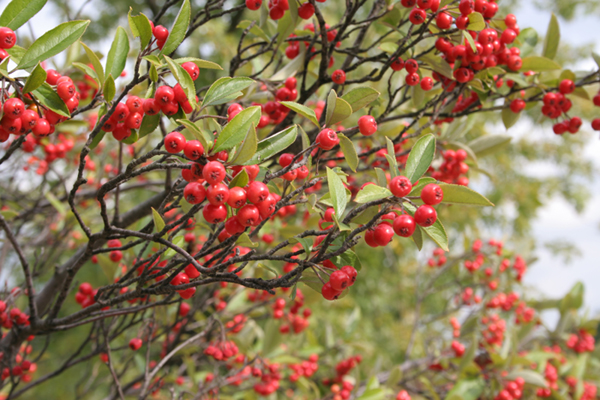 Red ChokeberryAronia arbutifolia
- Purple ChokeberryAronia × prunifolia
-
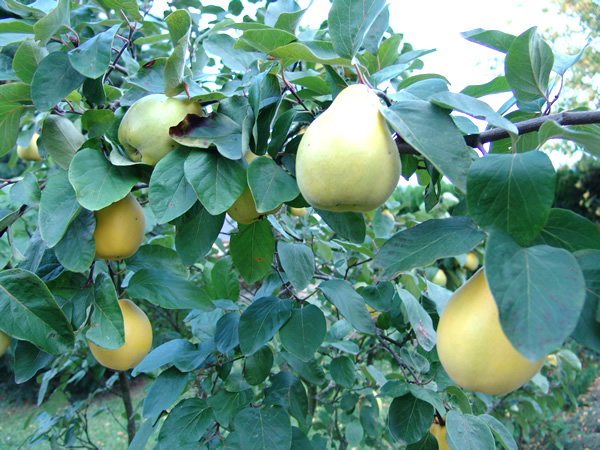 QuinceCydonia oblonga
-
 LoquatEriobotrya japonica
-
 AlmondPrunus amygdalus
-
 BlackthornPrunus spinosa
-
 Bradford PearPyrus calleryana
-
 CloudberryRubus chamaemorus
Compare
Questions and answers
What is the scientific name of the Black Chokeberry?
The scientific name of the Black Chokeberry is Aronia melanocarpa. Written with its author, the full name is Aronia melanocarpa (Michx.) Elliott.
Which family does the Black Chokeberry belong to?
Aronia melanocarpa belongs to the family Rosaceae, in the order Rosales and the class Magnoliopsida.
Where is the Black Chokeberry found?
Checklists and occurrence records place Aronia melanocarpa in 5 countries, including United States, Canada and Norway.
What other names does the Black Chokeberry have?
Aronia melanocarpa is also known in English as Black Chokecherry.
Can humans eat black chokeberries?
Yes. The fruits are edible despite their tart taste, and their flavor improves in recipes containing added sugar.[17][18]
Sources
Passages the profile rests on
- The flowers resemble those of the related red chokeberry. Source passage: “Clusters of white to pink-tinged flowers are similar in appearance to those of the related red chokeberry” — extension.umd.edu
- Its flowers are white or pink. Source passage: “Its flowers are white or pink” — English Wikipedia
- Its fruits are black. Source passage: “producing black fruits in September.” — English Wikipedia
- Its fruits change from red to blackish-purple as they develop. Source passage: “fruits that turn from red to blackish-purple.” — extension.umd.edu
- The species naturally occurs in habitats ranging from bogs and swamps to dunes and rocky outcroppings. Source passage: “Its natural habitat ranges from bogs and swamps to dunes to rocky outcroppings.” — extension.umd.edu
- The shrub grows in both full sun and partial shade. Source passage: “Sun: full sun to partial shade” — extension.umd.edu
- The species tolerates soil conditions ranging from wet to periodically dry. Source passage: “ranging from wet to periodically dry soils in full sun to partial shade.” — extension.umd.edu
- Some birds consume the species' berries. Source passage: “Some birds eat the berries.” — English Wikipedia
- Some songbirds and small mammals feed on the berries. Source passage: “Some songbirds and small mammals feed on the berries.” — extension.umd.edu
- The shrub forms clumps through stems that emerge from its roots. Source passage: “forming clumps by means of stems rising from the roots.” — English Wikipedia
- The multi-stemmed shrub produces numerous new shoots from its base over time. Source passage: “Over time, this multi-stemmed deciduous shrub tends to sucker profusely (forms new shoots from the base)” — extension.umd.edu
- The shrub can develop into a dense thicket when it grows without competition from other plants. Source passage: “may produce a thicket of growth when free from competition of other plants.” — extension.umd.edu
- The species produces flowers toward the end of spring. Source passage: “Its flowers are white or pink, appearing at the end of spring” — English Wikipedia
- The shrub flowers between April and May. Source passage: “Flowers: white or pink-tinged; blooms April-May” — extension.umd.edu
- The species produces fruits in September. Source passage: “producing black fruits in September.” — English Wikipedia
- The species is listed as hardy in USDA hardiness zones 3 through 8. Source passage: “Hardiness Zone: 3 to 8.” — trees.umn.edu
- The fruits are edible despite their tart taste. Source passage: “These tart fruits are edible” — extension.umd.edu
- The fruits have an improved flavor when prepared in recipes containing added sugar. Source passage: “the flavor improves when used in recipes with added sugar.” — English Wikipedia
- The fruits are being researched as a potential alternative fruit crop. Source passage: “are the subject of University of Maryland research for their potential use as an alternative fruit crop.” — extension.umd.edu
- The fruits contain anthocyanins, proanthocyanidins, and phenolic acids. Source passage: “The fruit contains significant concentrations of anthocyanins, proanthocyanidins, and phenolic acids.” — English Wikipedia
- The shrub can be planted as a hedge, mass planting, rain garden, or pond-edge planting. Source passage: “Use this for a mass planting, hedge, rain garden, pond edge” — extension.umd.edu
- The species is also suitable for woodland and pollinator gardens. Source passage: “woodland garden, or pollinator garden.” — extension.umd.edu
- The flowers provide nectar and pollen for native bees, particularly mining bees and mason bees. Source passage: “Nectar and pollen supports native bees (Adrenid family and mason bees in particular).” — extension.umd.edu
- The species serves as a host plant for Coral Hairstreak butterflies and Large Lace-border Moths. Source passage: “This is a host plant for Coral Hairstreak butterflies and the Large Lace-border Moth.” — extension.umd.edu
- The species is native to eastern North America. Source passage: “native to eastern North America” — English Wikipedia
- Its native range extends from Newfoundland westward to Ontario and Minnesota. Source passage: “from Newfoundland west to Ontario and Minnesota” — English Wikipedia
- Its native range extends southward to Arkansas, Alabama, and Georgia. Source passage: “south as far as Arkansas, Alabama, and Georgia.” — English Wikipedia
- The species is native throughout Maryland. Source passage: “Maryland Distribution: native throughout the state of Maryland” — extension.umd.edu
Data
- Catalogue of Life, 2026-10-16 XR cc by
- Global Biodiversity Information Facility CC BY 4.0
- Wikidata CC0
- GeoNames CC BY 4.0
- Wikimedia Commons per image; credit shown with each image
- Within the Catalogue of Life, this name comes from Synonymic Checklists of the Vascular Plants of the World cc by
References
- Elliott. (1821). Sketch Bot. S. Carolina [Elliott] 1(6): 556 (1821). where the name was published
This species in other databases
Page built on 28 November 2026. See how the catalog is made and all sources and licences.
Cite this page
ScientificNames.org. (2026). Aronia melanocarpa (Black Chokeberry). Retrieved November 28, 2026, from https://scientificnames.org/species/aronia-melanocarpa
“Aronia melanocarpa (Black Chokeberry).” ScientificNames.org, 2026, scientificnames.org/species/aronia-melanocarpa. Accessed 28 Nov. 2026.
ScientificNames.org. “Aronia melanocarpa (Black Chokeberry).” Accessed November 28, 2026. https://scientificnames.org/species/aronia-melanocarpa.
@misc{scientificnames_aronia_melanocarpa_black_chokeberry,
  author = {{ScientificNames.org}},
  title = {Aronia melanocarpa (Black Chokeberry)},
  year = {2026},
  url = {https://scientificnames.org/species/aronia-melanocarpa},
  note = {Accessed 2026-11-28}
}