Species · Birds
Hudson's Canastero Asthenes hudsoni
The scientific name of the Hudson's Canastero is Asthenes hudsoni. It is a species of bird in the family Furnariidae (ovenbird), order Passeriformes. The name dates from 1874.
- Scientific name
- Asthenes hudsoni (P. L. Sclater, 1874)
- Common name
- Hudson's Canastero
- Genus
- Asthenes
- Family
- Furnariidae (Ovenbird)
- Order
- Passeriformes
- Class
- Aves
- Red List category
- NT Near Threatened
- Recorded in
- 2 countries
- Name status
- accepted in the Catalogue of Life

Overview
Hudson's Canastero (Asthenes hudsoni) is a monotypic bird in the family Furnariidae and order Passeriformes. It inhabits temperate grasslands, usually near freshwater or brackish marshes. It is approximately 18 cm long and has sandy brown upperparts with prominent blackish and silvery streaks.
Written 26 November 2026 from the sources listed below. Each statement was checked against the passage it cites; statements that could not be supported were removed.
Appearance
Adults have sandy brown faces with narrow pale buff supercilia. The crown and upperparts are sandy brown with prominent blackish and silvery streaks.[1][2]
The greater wing coverts are dark brown with whitish tips, while the median and lesser wing coverts are dark brown with broad rufous edges. The dusky tail has conspicuous silvery buff feather edges.[3][4][5]
The chin is whitish and may have a yellow or orange-rufous tinge. The throat, breast, and belly are buff, with richer coloration on the sides, flanks, and undertail coverts; the flanks have blackish streaks.[6][7][8]
Adults have light brown irises and light brownish legs and feet. Juveniles have blackish-brown streaks on their breast and sides.[9][10]
Both sexes have the same plumage. The species is approximately 18 cm long.[11][12]
Habitat
Hudson's Canastero inhabits temperate grasslands, usually near freshwater or brackish marshes. It favors grasslands containing tall grasses such as Paspalum quadrifarium and sedges interspersed with short turf or bare ground.[13][14]
Its recorded elevation range extends from sea level to 950 m.[15]
Diet
Hudson's Canastero feeds on adult and larval arthropods.[16]
Behaviour
Hudson's Canastero forages alone or in pairs, collecting prey from the ground and low vegetation. Its song is a short ascending trill.[17][18]
The species is migratory rather than exclusively resident throughout its range. Records from northern Argentina and Uruguay correspond to wintering birds.[19][20]
Reproduction and life cycle
Hudson's Canastero breeds during the austral spring and summer, at least from October through December. The species is thought to be monogamous.[21][22]
Its nest is a well-concealed dome-shaped or spherical structure made from grasses and twigs. It is placed over a ground hollow or very close to the ground within a grass clump.[23][24]
The nest lining consists of feathers, hair, and small twigs. Clutches contain two to five eggs, usually three or four.[25][26]
Conservation
Hudson's Canastero has been classified as Near Threatened since 2011. Its population size is unknown and believed to be decreasing.[27][28]
Ongoing loss of suitable grassland through drainage and conversion to cultivation and urban areas is a primary threat. Its wetland-associated distribution makes it potentially vulnerable to drainage and pollution.[29][30]
The species is uncommon to locally fairly common.[31]
Similar species
The austral canastero (Asthenes anthoides) is a sister species of Hudson's Canastero.[32]
Classification of the Hudson's Canastero
| Kingdom | Animalia |
|---|---|
| Phylum | Chordata |
| Subphylum | Vertebrata |
| Infraphylum | Gnathostomata |
| Parvphylum | Osteichthyes |
| Megaclass | Tetrapoda |
| Class | Aves (Bird) |
| Order | Passeriformes (Passerine) |
| Family | Furnariidae (Ovenbird) |
| Genus | Asthenes (Canastero) |
| Species | Asthenes hudsoni (P. L. Sclater, 1874) |
Where the Hudson's Canastero is found
Checklists and occurrence records place Asthenes hudsoni in 2 countries across South America. GBIF holds 913 georeferenced records of it.
Countries
Regions and cities with the most records
- Buenos Aires, Argentina 598
- Rio Grande do Sul, Brazil 107
- Santa Teresita, Argentina 67
- Santa Fe, Argentina 33
- Rio Grande, Brazil 32
- São José do Norte, Brazil 32
- Santa Clara del Mar, Argentina 27
- Mar del Tuyú, Argentina 20
- Berazategui, Argentina 15
- Ensenada, Argentina 15
- La Plata, Argentina 15
- Quilmes, Argentina 14
- Campana, Argentina 12
- Zárate, Argentina 11
- Mar de Ajó, Argentina 10
- Berisso, Argentina 7
- Cordoba, Argentina 7
- Buenos Aires, Argentina 6
- Junín, Argentina 6
- Rufino, Argentina 6
- Ingeniero Pablo Nogués, Argentina 5
- José C. Paz, Argentina 5
- La Pampa, Argentina 5
- Magdalena, Argentina 5
- Pilar, Argentina 5
- Tortuguitas, Argentina 5
- Villa Gesell, Argentina 5
- Avellaneda, Argentina 4
- Chascomús, Argentina 4
- Lanús, Argentina 4
- Santos Lugares, Argentina 4
- Sarandí, Argentina 4
- Valentín Alsina, Argentina 4
- Banfield, Argentina 3
- Diamante, Argentina 3
- Entre Rios, Argentina 3
Range as the checklists state it
South America
A number beside a place is its count of GBIF occurrence records. A place without a number comes from a checklist alone. Records show where a species has been observed or collected, which can include escapes and vagrants.
Common names
English
- Hudson's Canastero
Names in 23 other languages
- Catalan
- cisteller de Hudson
- Chinese
- 赫德森卡納雀, 赫氏卡纳灶鸟
- Croatian
- livadni kanastero
- Czech
- hrnčiřík pampový
- Danish
- Pampaskurvebygger
- Dutch
- Hudsons Canastero
- Esperanto
- pampa sinalakso
- Finnish
- suokanastero
- French
- Synallaxe de Hudson
- German
- Grundschlüpfer, Nördlicher Flügelspiegelcanastero, Ockerbrustcanastero
- Italian
- Canestraio di Hudson
- Japanese
- ハドソンカマドドリ
- Lithuanian
- hadsoninė kanastera
- Norwegian
- pampaskurvfugl
- Polish
- koszykarz blady
- Portuguese
- cesteiro-das-pampas, joão-platino
- Russian
- Земляной канастеро, Пампасный канастеро
- Serbian
- Hadsonov kanastero
- Slovak
- košikárik škvrnitý
- Spanish
- Canastero pampeano, Espartillero pampeano
- Swedish
- pampaskanastero
- Turkish
- Pampas Sepetöreni
- Ukrainian
- канастеро блідий
Synonyms
3 other scientific names have been used for this species and are now treated as synonyms of Asthenes hudsoni.
- Synallaxis hudsoni P. L. Sclater, 1874
- Synallazis anthoides Scl. et Salv. P. Z. S., 1868
- Thripophaga hudsoni Sclater, PL, 1874
Related species
-
 Berlepsch's CanasteroAsthenes berlepschi
-
 White-chinned ThistletailAsthenes fuliginosa
-
 Line-fronted CanasteroAsthenes urubambensis
-
 Sharp-billed CanasteroAsthenes pyrrholeuca
-
 Cordilleran CanasteroAsthenes modesta
-
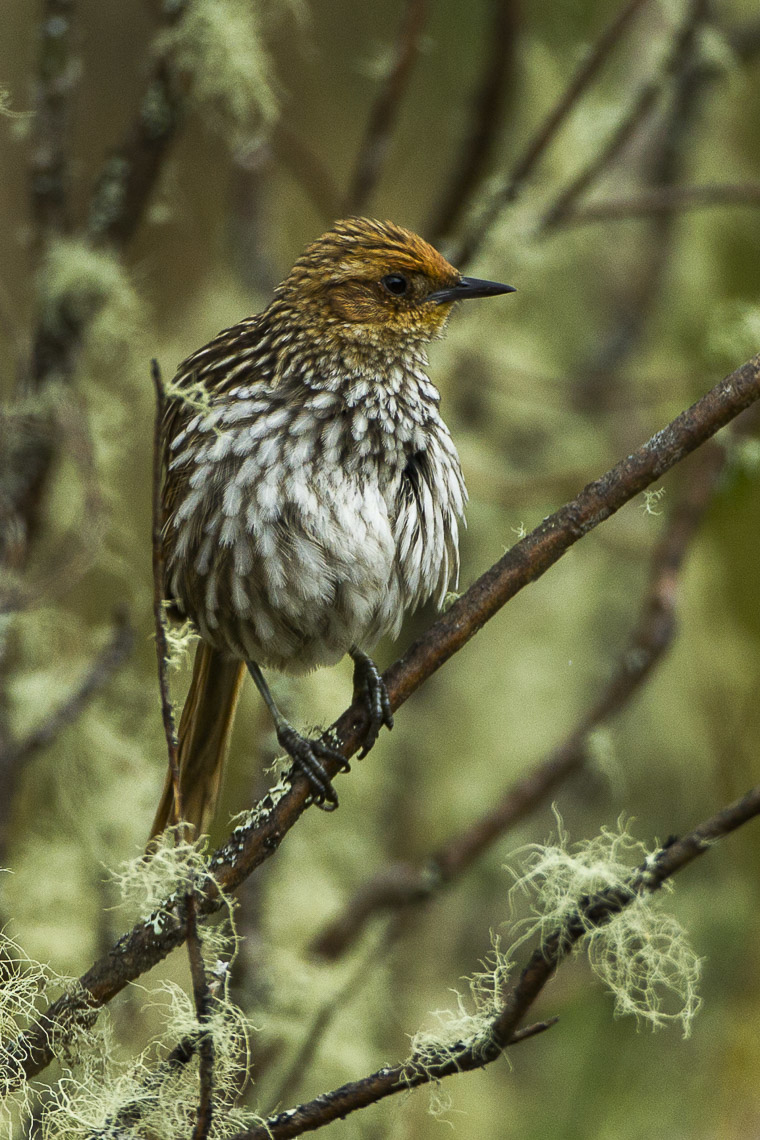 Many-striped CanasteroAsthenes flammulata
-
 Austral CanasteroAsthenes anthoides
-
 Streak-backed CanasteroAsthenes wyatti
Compare
Questions and answers
What is the scientific name of the Hudson's Canastero?
The scientific name of the Hudson's Canastero is Asthenes hudsoni. Written with its author, the full name is Asthenes hudsoni (P. L. Sclater, 1874).
Which family does the Hudson's Canastero belong to?
Asthenes hudsoni belongs to the family Furnariidae, in the order Passeriformes and the class Aves.
Where is the Hudson's Canastero found?
Checklists and occurrence records place Asthenes hudsoni in 2 countries: Argentina and Brazil.
What is the conservation status of the Hudson's Canastero?
The IUCN Red List category recorded for Asthenes hudsoni is Near Threatened (NT).
Where does Hudson's Canastero occur?
It occurs in southeastern Rio Grande do Sul in far southern Brazil. In Argentina, it occurs from Santa Fe and Entre Ríos south to Buenos Aires Province.[33][34]
Where are its breeding populations found?
Breeding populations are mostly restricted to the pampas of Buenos Aires, with an isolated population in Rio Grande do Sul.[35]
What is the conservation status of Hudson's Canastero?
It has been classified as Near Threatened since 2011. Its population size is unknown and believed to be decreasing.[27][28]
What threatens Hudson's Canastero?
Ongoing loss of suitable grassland through drainage and conversion to cultivation and urban areas is a primary threat. Its wetland-associated distribution also makes it potentially vulnerable to drainage and pollution.[29][30]
What does the name Hudson's Canastero mean?
The English name and specific epithet honor Argentine-British naturalist and author William Henry Hudson.[36]
Sources
Passages the profile rests on
- Adults have sandy brown faces with narrow pale buff supercilia. Source passage: “Adults have narrow pale buff supercilium on an otherwise sandy brownish face.” — English Wikipedia
- The crown and upperparts are sandy brown with prominent blackish and silvery streaks. Source passage: “Their crown and upperparts are sandy brown with conspicuous blackish and silvery streaks.” — English Wikipedia
- The greater wing coverts are dark brown with whitish tips. Source passage: “Their wing's greater coverts are dark brown with whitish tips” — English Wikipedia
- The median and lesser wing coverts are dark brown with broad rufous edges. Source passage: “their median and lesser coverts dark brown with wide rufous edges.” — English Wikipedia
- The tail is dusky, with conspicuous silvery buff feather edges. Source passage: “Their tail is dusky with conspicuous silvery buff edges to the feathers.” — English Wikipedia
- The chin is whitish and may have a yellow or orange-rufous tinge. Source passage: “Their chin is whitish, often with a yellow tinge and sometimes an orange-rufous one.” — English Wikipedia
- The throat, breast, and belly are buff, with richer coloration on the sides, flanks, and undertail coverts. Source passage: “Their throat, breast, and belly are buff that is richer on their sides, flanks, and undertail coverts.” — English Wikipedia
- The flanks have blackish streaks. Source passage: “Their flanks have blackish streaks.” — English Wikipedia
- Adults have light brown irises and light brownish legs and feet. Source passage: “Their iris is light brown, their maxilla fuscous black, their mandible pale horn to gray with a blackish tip, and their legs and feet light brownish.” — English Wikipedia
- Juveniles have blackish-brown streaks on their breast and sides. Source passage: “Juveniles have blackish-brown streaks on their breast and sides.” — English Wikipedia
- Both sexes have the same plumage. Source passage: “The sexes have the same plumage.” — English Wikipedia
- The species is approximately 18 cm long. Source passage: “Hudsons' canastero is about 18 cm (7.1 in) long.” — English Wikipedia
- The species inhabits temperate grasslands, usually near freshwater or brackish marshes. Source passage: “It inhabits temperate grasslands usually near marshes, both fresh and brackish.” — English Wikipedia
- It favors grasslands containing tall grasses such as Paspalum quadrifarium and sedges interspersed with short turf or bare ground. Source passage: “It favors areas with tall grasses such as Paspalum quadrifarium and sedges interspaced with short turf or bare ground.” — English Wikipedia
- Its recorded elevation range extends from sea level to 950 m. Source passage: “In elevation it ranges from sea level to 950 m (3,100 ft).” — English Wikipedia
- The species feeds on adult and larval arthropods. Source passage: “Hudson's canastero feeds on adult and larval arthropods.” — English Wikipedia
- It forages alone or in pairs, collecting prey from the ground and low vegetation. Source passage: “It forages singly or in pairs, gleaning its prey from the ground and low vegetation.” — English Wikipedia
- Its song is a short ascending trill. Source passage: “The song of Hudson's canastero is "a short ascending trill".” — English Wikipedia
- The species is migratory rather than exclusively resident throughout its range. Source passage: “Although traditionally considered a year-round resident throughout its range, a recent study revealed that Hudson's canastero is a migratory species” — English Wikipedia
- Records from northern Argentina and Uruguay correspond to wintering birds. Source passage: “Records further north in Argentina and all records in Uruguay correspond to wintering birds.” — English Wikipedia
- The species breeds during the austral spring and summer, at least from October through December. Source passage: “Hudson's canastero breeds during the austral spring and summer, between at least October and December.” — English Wikipedia
- The species is thought to be monogamous. Source passage: “It is thought to be monogamous.” — English Wikipedia
- Its nest is a well-concealed dome-shaped or spherical structure made from grasses and twigs. Source passage: “It builds a well-concealed dome or spherical nest of grasses and twigs” — English Wikipedia
- The nest is placed over a ground hollow or very close to the ground within a grass clump. Source passage: “over a hollow in the ground or very near it in a clump of grass.” — English Wikipedia
- The nest lining consists of feathers, hair, and small twigs. Source passage: “It lines the nest with feathers, hair, and small twigs.” — English Wikipedia
- Clutches contain two to five eggs, usually three or four. Source passage: “The clutch size is two to five eggs but usually three or four.” — English Wikipedia
- The species has been classified as Near Threatened since 2011. Source passage: “The IUCN originally in 2004 assessed Hudson's canastero as being of Least Concern but since 2011 has rated it as Near Threatened.” — English Wikipedia
- Its population size is unknown and believed to be decreasing. Source passage: “its population size is not known and is believed to be decreasing.” — English Wikipedia
- Ongoing loss of suitable grassland through drainage and conversion to cultivation and urban areas is a primary threat. Source passage: “is primarily threatened by the on-going and accelerating loss of suitable grassland through drainage and conversion to cultivation and urban areas.” — English Wikipedia
- Its wetland-associated distribution makes it potentially vulnerable to drainage and pollution. Source passage: “Potentially vulnerable to drainage, pollution and other problems that affect birds of wetlands.” — English Wikipedia
- The species is uncommon to locally fairly common. Source passage: “It is considered uncommon to locally fairly common.” — English Wikipedia
- The austral canastero (Asthenes anthoides) is a sister species of Hudson's canastero. Source passage: “It and the similar austral canastero (A. anthoides) are sister species” — English Wikipedia
- The species occurs in southeastern Rio Grande do Sul in far southern Brazil. Source passage: “Hudson's canastero is found in the southeastern part of far southern Brazil's Rio Grande do Sul state” — English Wikipedia
- In Argentina, it occurs from Santa Fe and Entre Ríos south to Buenos Aires Province. Source passage: “in eastern Argentina from Santa Fe and Entre Ríos provinces south to Buenos Aires Province.” — English Wikipedia
- Breeding populations are mostly restricted to the pampas of Buenos Aires, with an isolated population in Rio Grande do Sul. Source passage: “breeding populations mostly restricted to the pampas of Buenos Aires and an isolated population in Rio Grande do Sul.” — English Wikipedia
- The English name and specific epithet honor Argentine-British naturalist and author William Henry Hudson. Source passage: “The English name and specific epithet of Hudson's canastero honor the Argentine-British naturalist and author William Henry Hudson.” — English Wikipedia
Data
- Catalogue of Life, 2026-10-16 XR cc by
- Global Biodiversity Information Facility CC BY 4.0
- Wikidata CC0
- GeoNames CC BY 4.0
- Wikimedia Commons per image; credit shown with each image
- Within the Catalogue of Life, this name comes from The Integrated Taxonomic Information System cc0
References
- Gill, Frank, & and Minturn Wright. (2006). Birds of the World: Recommended English Names.
This species in other databases
Page built on 29 November 2026. See how the catalog is made and all sources and licences.
Cite this page
ScientificNames.org. (2026). Asthenes hudsoni (Hudson's Canastero). Retrieved November 29, 2026, from https://scientificnames.org/species/asthenes-hudsoni
“Asthenes hudsoni (Hudson's Canastero).” ScientificNames.org, 2026, scientificnames.org/species/asthenes-hudsoni. Accessed 29 Nov. 2026.
ScientificNames.org. “Asthenes hudsoni (Hudson's Canastero).” Accessed November 29, 2026. https://scientificnames.org/species/asthenes-hudsoni.
@misc{scientificnames_asthenes_hudsoni_hudsons_canastero,
  author = {{ScientificNames.org}},
  title = {Asthenes hudsoni (Hudson's Canastero)},
  year = {2026},
  url = {https://scientificnames.org/species/asthenes-hudsoni},
  note = {Accessed 2026-11-29}
}