Species · Insects
Arogos Skipper Atrytone arogos
The scientific name of the Arogos Skipper is Atrytone arogos. It is a species of insect in the family Hesperiidae (skipper), order Lepidoptera. The name dates from 1833.
- Scientific name
- Atrytone arogos (Boisduval & Le Conte, 1833)
- Common name
- Arogos Skipper
- Genus
- Atrytone
- Family
- Hesperiidae (Skipper)
- Order
- Lepidoptera
- Class
- Insecta
- Red List category
- EN Endangered
- Recorded in
- 2 countries
- Name status
- accepted in the Catalogue of Life

Overview
The species occurs in the eastern and midwestern United States, with isolated populations in several areas. Adult Arogos Skippers have yellow wings with dark blackish-brown borders, white hindwing veins, and grey or white wing fringes.
Written 27 November 2026 from the sources listed below. Each statement was checked against the passage it cites; statements that could not be supported were removed.
Conservation
The Arogos Skipper is classified as an endangered butterfly species. Habitat loss caused by expanding agriculture and urban development has reduced its available habitat.[1][2]
The Bull Creek population in central Florida is one of the remaining populations in the state. Prescribed burns are conducted there on a three-year cycle using smaller burn units to provide refuges for the butterfly.[3][4]
The North American tallgrass prairie has lost approximately 86% of its original continental extent.[5]
Similar species
The Delaware Skipper resembles the Arogos Skipper in appearance and is closely related to it.[6]
Appearance
Adult Arogos Skippers have yellow wings with dark blackish-brown borders. The undersides of the wings are paler yellow than their upper surfaces.[7][8]
Male Arogos Skippers have narrower black wing borders than females. Adult eastern Arogos Skippers have triangular-shaped, golden-orange wings.[9][10]
Adult Arogos Skippers have white veins along the outer portions of their hindwings. The outer rims of both pairs of wings have grey or white fringes.[11][12]
The reported wingspan of the adult butterfly ranges from 2.9 to 3.7 cm.[13]
Habitat
The species inhabits grasslands, prairies, flatwoods, and pine savannas. Eastern Arogos Skippers occupy open, grassy landscapes.[14][15][16]
In central Florida, the species uses lopsided Indiangrass (Sorghastrum secundum) as a larval host plant. In Oklahoma, big bluestem is its principal larval host plant, and larvae occasionally use little bluestem.[17][18][19]
Diet
Arogos Skipper caterpillars feed on leaves. Larvae feed on big bluestem, Panicum, and Calamovilfa brevipilis, among other grasses.[20][21]
Adult Arogos Skippers obtain nectar from purple vetch, Canada thistle, dogbane, stiff coreopsis, purple coneflower, green milkweed, and ox-eye daisy.[22]
Behaviour
Male eastern Arogos Skippers perch on low vegetation near host plants while seeking females.[23]
Reproduction and life cycle
The species undergoes five larval instar stages during development. Arogos Skippers overwinter as caterpillars and remain dormant until spring.[24][25]
After overwintering, the caterpillars complete pupation inside cocoons constructed with leaves. The cocoons occur in vegetation approximately three feet above the ground.[26][27]
Two generations occur during the growing season in the southern half of the North American Great Plains.[28]
Classification of the Arogos Skipper
| Kingdom | Animalia |
|---|---|
| Phylum | Arthropoda |
| Subphylum | Hexapoda |
| Class | Insecta (Insect) |
| Order | Lepidoptera |
| Superfamily | Papilionoidea |
| Family | Hesperiidae (Skipper) |
| Subfamily | Hesperiinae |
| Genus | Atrytone |
| Species | Atrytone arogos (Boisduval & Le Conte, 1833) |
Where the Arogos Skipper is found
Checklists and occurrence records place Atrytone arogos in 2 countries across North America. GBIF holds 1,602 georeferenced records of it.
Countries
Regions and cities with the most records
- Florida, United States 596
- Oklahoma, United States 239
- Colorado, United States 161
- Boulder, United States 89
- West Melbourne, United States 88
- Louisville, United States 74
- Lafayette, United States 64
- Broomfield, United States 59
- Iowa, United States 50
- Kansas, United States 50
- Golden, United States 49
- Nebraska, United States 44
- Longmont, United States 43
- Minnesota, United States 42
- Arvada, United States 40
- Wheat Ridge, United States 34
- Sapulpa, United States 32
- Council Bluffs, United States 29
- Dakota Ridge, United States 29
- La Vista, United States 29
- Omaha, United States 29
- Papillion, United States 29
- Lakewood, United States 28
- Sand Springs, United States 28
- Bellevue, United States 27
- Saint Cloud, United States 23
- New Jersey, United States 22
- Carrollwood, United States 21
- Carrollwood Village, United States 21
- East Lake-Orient Park, United States 21
- Egypt Lake-Leto, United States 21
- Greater Northdale, United States 21
- Lake Magdalene, United States 21
- Land O' Lakes, United States 21
- Lutz, United States 21
- Northdale, United States 21
Range as the checklists state it
North America
A number beside a place is its count of GBIF occurrence records. A place without a number comes from a checklist alone. Records show where a species has been observed or collected, which can include escapes and vagrants.
Common names
English
- Arogos Skipper
- Brown-Rim Skipper
- Iowa Skipper
- Prairie Arogos Skipper
- Beard-grass Skipper
Synonyms
4 other scientific names have been used for this species and are now treated as synonyms of Atrytone arogos.
- Atrytone arogos iowa (Scudder, 1868)
- Hesperia arogos Boisduval & Le Conte, 1833
- Hesperia iowa Scudder, 1869
- Hesperia mutius Plötz, 1883
Subspecies and varieties
- Atrytone arogos arogos (Eastern Arogos Skipper) subspecies
Related species
-
 Long-tailed SkipperUrbanus proteus
-
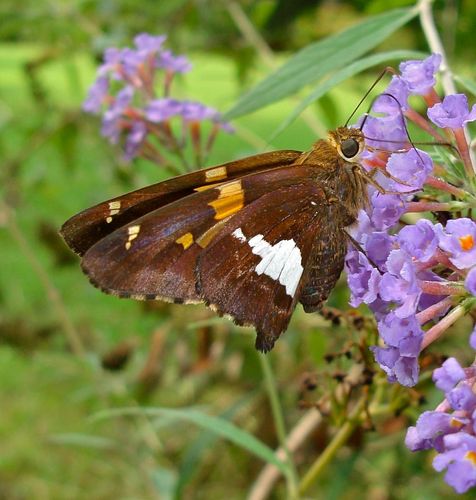 Silver-spotted SkipperEpargyreus clarus
-
 Field SkipperAtalopedes campestris
-
 Common Checkered SkipperBurnsius communis
-
 Common Branded SkipperHesperia comma
-
 Arctic SkipperCarterocephalus palaemon
-
 Small Branded SwiftPelopidas mathias
-
 Grizzled SkipperPyrgus malvae
Compare
Questions and answers
What is the scientific name of the Arogos Skipper?
The scientific name of the Arogos Skipper is Atrytone arogos. Written with its author, the full name is Atrytone arogos (Boisduval & Le Conte, 1833).
Which family does the Arogos Skipper belong to?
Atrytone arogos belongs to the family Hesperiidae, in the order Lepidoptera and the class Insecta.
Where is the Arogos Skipper found?
Checklists and occurrence records place Atrytone arogos in 2 countries: United States and Mexico.
What is the conservation status of the Arogos Skipper?
The IUCN Red List category recorded for Atrytone arogos is Endangered (EN).
What other names does the Arogos Skipper have?
Atrytone arogos is also known in English as Brown-Rim Skipper, Iowa Skipper, Prairie Arogos Skipper and Beard-grass Skipper.
Sources
Passages the profile rests on
- The Arogos Skipper is classified as an endangered butterfly species in document 1. Source passage: “Atrytone arogos, the arogos skipper or beard-grass skipper, is an endangered species of butterfly within the family Hesperiidae.” — English Wikipedia
- Habitat loss caused by expanding agriculture and urban development has reduced the species' available habitat. Source passage: “Many of these habitats have been lost to expanding agriculture and urban development or degraded due to fire suppression.” — floridamuseum.ufl.edu
- The Bull Creek population in central Florida is one of the remaining populations in the state. Source passage: “Central Florida remains a stronghold, with the population at Bull Creek just one of a handful known to exist in the state.” — floridamuseum.ufl.edu
- At Bull Creek, prescribed burns are conducted on a three-year cycle using smaller burn units to provide refuges for the butterfly. Source passage: “At Bull Creek, the land managers burn on a three-year cycle and divide the large landscape into smaller burn units, allowing the butterfly to move to safe spaces when a fire moves through an area.” — floridamuseum.ufl.edu
- The North American tallgrass prairie has lost approximately 86% of its original continental extent. Source passage: “the North American tall grass prairies as a whole have been reduced by roughly 86% from its original range across the continent” — ou.edu
- The Delaware Skipper resembles the Arogos Skipper in appearance and is closely related to it. Source passage: “The Delaware Skipper is closely related, similar in appearance, and common in Oklahoma.” — ou.edu
- Adult Arogos Skippers have yellow wings with dark blackish-brown borders. Source passage: “The adult Atrytone argos has vibrant yellow wings with a dark blackish-brown boarder.” — English Wikipedia
- The undersides of the wings are paler yellow than their upper surfaces. Source passage: “The underside of the Atrytone argos' wings is a paler yellow color than the top of the wings.” — English Wikipedia
- Male Arogos Skippers have narrower black wing borders than females. Source passage: “Male Atrytone argos butterflies have thinner black borders than the female Atrytone argos butterflies.” — English Wikipedia
- Adult eastern Arogos Skippers have triangular-shaped, golden-orange wings. Source passage: “With their triangular shape and golden-orange wings, the eastern arogos skipper (Atrytone arogos arogos) butterflies seemed to wave down the passing crew” — floridamuseum.ufl.edu
- Adult Arogos Skippers have white veins along the outer portions of their hindwings. Source passage: “Adult Arogos are orange-gold skippers with white veins along the outside of the hindwings” — ou.edu
- The outer rims of both pairs of wings have grey or white fringes. Source passage: “and grey or white fringe on the outer rim of both the fore and hindwing.” — ou.edu
- The reported wingspan of the adult butterfly ranges from 2.9 to 3.7 cm. Source passage: “Its wingspan has been measured at 2.9-3.7 cm.” — English Wikipedia
- The species inhabits grasslands and prairies. Source passage: “The Atrytone arogos thrives in grasslands and prairies, as well as flat woods and pine savannas.” — English Wikipedia
- The species also occurs in flatwoods and pine savannas. Source passage: “The Atrytone arogos thrives in grasslands and prairies, as well as flat woods and pine savannas.” — English Wikipedia
- Eastern Arogos Skippers occupy open, grassy landscapes. Source passage: “Today it has been reduced to a small number of primarily isolated populations living in a variety of open, grassy landscapes.” — floridamuseum.ufl.edu
- The species uses lopsided Indiangrass (Sorghastrum secundum) as a larval host plant in central Florida. Source passage: “A dirt road cuts through the park and crosses fields of lopsided Indiangrass (Sorghastrum secundum), a known host plant for this species and several other skippers.” — floridamuseum.ufl.edu
- In Oklahoma, big bluestem is the principal larval host plant of the species. Source passage: “In Oklahoma, the caterpillar, or larval stages, of the Arogos Skipper rely primarily on big bluestem (Andropogon gerardii) as their host plant” — ou.edu
- Oklahoma Arogos Skipper larvae occasionally use little bluestem as a host plant. Source passage: “but is also known to occasionally eat little bluestem (Schizachyrium scoparium).” — ou.edu
- Arogos Skipper caterpillars feed on leaves. Source passage: “The caterpillar consumes a diet of leaves.” — English Wikipedia
- Larvae feed on big bluestem, Panicum, and Calamovilfa brevipilis, among other grasses. Source passage: “The larvae feed on Andropogon gerardi, Panicum, Calamovilfa brevipilis and other grasses.” — English Wikipedia
- Adult Arogos Skippers obtain nectar from purple vetch, Canada thistle, dogbane, stiff coreopsis, purple coneflower, green milkweed, and ox-eye daisy. Source passage: “Adults feed on the nectar from flowers of purple vetch, Canada thistle, dogbane, stiff coreopsis, purple coneflower, green milkweed and ox-eye daisy.” — English Wikipedia
- Male eastern Arogos Skippers perch on low vegetation near host plants while seeking females. Source passage: “Male Atrytone arogos arogos will perch on low vegetation near their host plants.” — English Wikipedia
- The species undergoes five larval instar stages during development. Source passage: “Throughout metamorphosis, the Atrytone argos undergoes five instar stages” — English Wikipedia
- Arogos Skippers overwinter as caterpillars and remain dormant until spring. Source passage: “The Arogos Skipper overwinters as caterpillars. They remain in diapause until spring” — ou.edu
- After overwintering, the caterpillars complete pupation inside cocoons constructed with leaves. Source passage: “They remain in diapause until spring, when they complete pupation within a cocoon constructed with leaves.” — ou.edu
- The species' cocoons occur in vegetation approximately three feet above the ground. Source passage: “These cocoons are found in vegetation about 3 feet (1 meter) above the ground” — ou.edu
- Two generations occur during the growing season in the southern half of the North American Great Plains. Source passage: “Two generations occur during the growing season in the southern half of the North American Great Plains” — ou.edu
Data
- Catalogue of Life, 2026-10-16 XR cc by
- Global Biodiversity Information Facility CC BY 4.0
- Wikidata CC0
- GeoNames CC BY 4.0
- Wikimedia Commons per image; credit shown with each image
- Within the Catalogue of Life, this name comes from Global Lepidoptera Index cc by
This species in other databases
Page built on 28 November 2026. See how the catalog is made and all sources and licences.
Cite this page
ScientificNames.org. (2026). Atrytone arogos (Arogos Skipper). Retrieved November 28, 2026, from https://scientificnames.org/species/atrytone-arogos
“Atrytone arogos (Arogos Skipper).” ScientificNames.org, 2026, scientificnames.org/species/atrytone-arogos. Accessed 28 Nov. 2026.
ScientificNames.org. “Atrytone arogos (Arogos Skipper).” Accessed November 28, 2026. https://scientificnames.org/species/atrytone-arogos.
@misc{scientificnames_atrytone_arogos_arogos_skipper,
  author = {{ScientificNames.org}},
  title = {Atrytone arogos (Arogos Skipper)},
  year = {2026},
  url = {https://scientificnames.org/species/atrytone-arogos},
  note = {Accessed 2026-11-28}
}