Species · Flowering plants
Five-leaf Bosistoa Bosistoa floydii
The scientific name of the Five-leaf Bosistoa is Bosistoa floydii. It is a species of flowering plant in the family Rutaceae (rue family), order Sapindales.
- Scientific name
- Bosistoa floydii T.G.Hartley
- Common name
- Five-leaf Bosistoa
- Genus
- Bosistoa
- Family
- Rutaceae (Rue Family)
- Order
- Sapindales
- Class
- Magnoliopsida
- Recorded in
- 1 country
- Name status
- accepted in the Catalogue of Life

Overview
The five-leaf bosistoa is a flowering plant in the family Rutaceae, order Sapindales and class Magnoliopsida. It is endemic to rainforest in the Bellinger and Orara River areas of north-eastern New South Wales, Australia.
Written 27 November 2026 from the sources listed below. Each statement was checked against the passage it cites; statements that could not be supported were removed.
Appearance
The five-leaf bosistoa is a small tree with a spreading crown. It can reach 15–20 m in height, and its trunk can reach 75 cm in diameter.[1][2][3]
The leaves are arranged in opposite pairs on thick green or fawn branches. They are pinnate and measure 110–280 mm long, or 11–28 cm.[4][5][6]
Each leaf usually has five glossy elliptical leaflets, although the number ranges from three to seven. The leaflets measure 65–160 mm long and 15–35 mm wide, and range from narrow-elliptic to oblong-elliptic in shape.[7][8][9]
The leaflets have prominent oil glands, pointed acuminate tips, attenuate and often asymmetric bases, and entire margins. They have no hairs.[10][11]
The lateral petiolules measure 5–10 mm long, while the terminal petiolule measures 10–25 mm.[12]
Each flower has five hairy sepals approximately 1 mm long, with ciliate margins. It also has five oval white or creamy white petals measuring 4–5 mm long.[13][14][15][16][17]
The ovary is sparsely hairy. The fruits are small, warty, woody and yellow-brown, with fruiting cocci that are obliquely obovoid to approximately globose and transversely ribbed.[18][19][20]
Habitat
The five-leaf bosistoa is restricted to subtropical rainforest in the Bellinger and Orara River areas of north-eastern New South Wales, Australia.[21][22][23][24]
It grows on basalt or rich alluvial soils.[25]
Reproduction and life cycle
Flowering occurs in October and November. Flowering is followed by the development of one fruit, or rarely two.[26][27]
The fruits ripen in February.[28]
Classification of the Five-leaf Bosistoa
| Kingdom | Plantae |
|---|---|
| Subkingdom | Pteridobiotina |
| Phylum | Tracheophyta |
| Class | Magnoliopsida |
| Order | Sapindales |
| Family | Rutaceae (Rue Family) |
| Subfamily | Zanthoxyloideae |
| Tribe | Zanthoxyleae |
| Subtribe | Pitaviinae |
| Genus | Bosistoa |
| Species | Bosistoa floydii T.G.Hartley |
Where the Five-leaf Bosistoa is found
Checklists and occurrence records place Bosistoa floydii in 1 country across Oceania. GBIF holds 95 georeferenced records of it.
Countries
Regions and cities with the most records
Range as the checklists state it
Australia (NE-New South Wales)
A number beside a place is its count of GBIF occurrence records. A place without a number comes from a checklist alone. Records show where a species has been observed or collected, which can include escapes and vagrants.
Common names
English
- Five-leaf Bosistoa
- Five-leaved Bonewood
Related species
-
 Bosistoa transversa
-
 Ferny Leaf BosistoaBosistoa pentacocca
-
 Northern TowraBosistoa medicinalis
-
 PomeloCitrus maxima
-
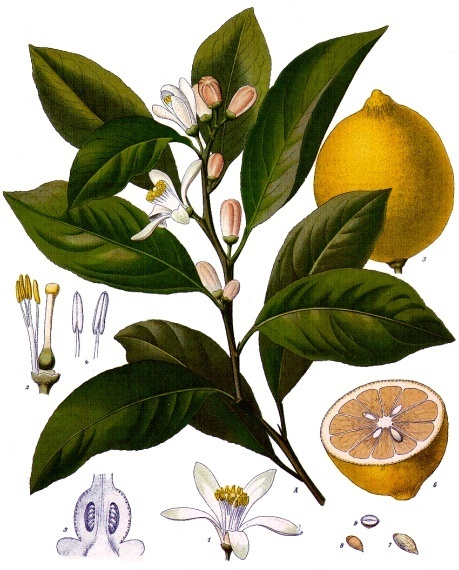 LemonCitrus × limon
-
 YuzuCitrus × junos
-
 Swatow OrangeCitrus × reticulata
-
 CitronCitrus medica
Compare
Questions and answers
What is the scientific name of the Five-leaf Bosistoa?
The scientific name of the Five-leaf Bosistoa is Bosistoa floydii. Written with its author, the full name is Bosistoa floydii T.G.Hartley.
Which family does the Five-leaf Bosistoa belong to?
Bosistoa floydii belongs to the family Rutaceae, in the order Sapindales and the class Magnoliopsida.
Where is the Five-leaf Bosistoa found?
Checklists and occurrence records place Bosistoa floydii in 1 country: Australia.
What other names does the Five-leaf Bosistoa have?
Bosistoa floydii is also known in English as Five-leaved Bonewood.
How tall does the five-leaf bosistoa grow?
The tree can reach a height of 15–20 m. Its trunk can reach 75 cm in diameter.[2][3]
How many leaflets does each leaf have?
Each leaf usually has five glossy elliptical leaflets, although the number ranges from three to seven.[7]
When does the five-leaf bosistoa flower and fruit?
Flowering occurs in October and November. The fruits ripen in February.[26][28]
Sources
Passages the profile rests on
- Bosistoa floydii is a small tree with a spreading crown. Source passage: “Bosistoa floydii grows as a small tree that may reach 15–20 m (49–66 ft) high and has a spreading crown.” — English Wikipedia
- The tree can reach a height of 15–20 m. Source passage: “may reach 15–20 m (49–66 ft) high” — English Wikipedia
- The trunk can reach 75 cm in diameter. Source passage: “The trunk is buttressed and can reach a diameter of 75 cm (30 in)” — English Wikipedia
- The leaves are arranged in opposite pairs on thick green or fawn branches. Source passage: “The leaves are arranged in opposite pairs on thick green or fawn branches” — English Wikipedia
- The leaves are pinnate and measure 110–280 mm long. Source passage: “are pinnate, 110–280 mm (4.3–11.0 in) long” — English Wikipedia
- The species has leaves 11–28 cm long. Source passage: “Leaves 11–28 cm long;” — plantnet.rbgsyd.nsw.gov.au
- Each leaf usually has five glossy elliptical leaflets, although the number ranges from three to seven. Source passage: “There are three to seven, usually five glossy elliptical leaflets” — English Wikipedia
- The leaflets measure 65–160 mm long and 15–35 mm wide. Source passage: “each 65–160 mm (2.6–6.3 in) long and 15–35 mm (0.6–1 in) wide” — English Wikipedia
- The leaflets range from narrow-elliptic to oblong-elliptic in shape. Source passage: “narrow-elliptic to oblong-elliptic” — plantnet.rbgsyd.nsw.gov.au
- The leaflets have prominent oil glands and pointed tips. Source passage: “The leaflets have prominent oli glands and a pointed tip.” — English Wikipedia
- The leaflets have acuminate tips, attenuate and often asymmetric bases, entire margins and no hairs. Source passage: “apex acuminate, base attenuate and often asymmetric, margins entire, glabrous” — plantnet.rbgsyd.nsw.gov.au
- The lateral petiolules measure 5–10 mm long, while the terminal petiolule measures 10–25 mm. Source passage: “lateral petiolules 5–10 mm long, terminal petiolule 10–25 mm long.” — plantnet.rbgsyd.nsw.gov.au
- Each flower has five hairy sepals approximately 1 mm long. Source passage: “Each flower has five hairy sepals about 1 mm (0.04 in) long” — English Wikipedia
- Each flower has five oval white or creamy white petals. Source passage: “five oval, white or creamy white petals” — English Wikipedia
- The petals measure 4–5 mm long. Source passage: “petals 4–5 mm (0.16–0.20 in) long.” — English Wikipedia
- The sepals are approximately 1 mm long and have ciliate margins. Source passage: “Sepals c. 1 mm long, ciliate.” — plantnet.rbgsyd.nsw.gov.au
- The petals are white. Source passage: “Petals 4–5 mm long, white.” — plantnet.rbgsyd.nsw.gov.au
- The fruits are small, warty, woody and yellow-brown. Source passage: “small, warty, woody, yellow-brown fruit” — English Wikipedia
- The ovary is sparsely hairy. Source passage: “Ovary sparsely hairy.” — plantnet.rbgsyd.nsw.gov.au
- The fruiting cocci are obliquely obovoid to approximately globose and transversely ribbed. Source passage: “Cocci oblique-obovoid to ± globose, c. 10 mm wide, transversely ribbed.” — plantnet.rbgsyd.nsw.gov.au
- The species is endemic to north-eastern New South Wales, Australia. Source passage: “is endemic to north-eastern New South Wales.” — English Wikipedia
- The species is restricted to subtropical rainforest. Source passage: “restricted to subtropical rainforest” — English Wikipedia
- The species occurs in the Bellinger and Orara River areas of north-eastern New South Wales. Source passage: “in the Bellinger and Orara River areas in north-eastern New South Wales” — English Wikipedia
- The species is confined to rainforest in the Bellinger and Orara River areas. Source passage: “Confined to rainforest in the Bellinger and Orara R. areas.” — plantnet.rbgsyd.nsw.gov.au
- The species grows on basalt or rich alluvial soils. Source passage: “where it grows on basalt or rich alluvial soils.” — English Wikipedia
- Flowering occurs in October and November. Source passage: “Appearing in October and November” — English Wikipedia
- Flowering is followed by the development of one fruit, or rarely two. Source passage: “Flowering is followed by one, or rarely two small” — English Wikipedia
- The fruits ripen in February. Source passage: “fruit that ripen in February.” — English Wikipedia
- Thomas Gordon Hartley first described the species in 1977. Source passage: “Bosistoa floydii was first described in 1977 by Thomas Gordon Hartley” — English Wikipedia
- The original species description was published in the Journal of the Arnold Arboretum. Source passage: “who published the description in the Journal of the Arnold Arboretum.” — English Wikipedia
Data
- Catalogue of Life, 2026-10-16 XR cc by
- Global Biodiversity Information Facility CC BY 4.0
- Wikidata CC0
- GeoNames CC BY 4.0
- Wikimedia Commons per image; credit shown with each image
- Within the Catalogue of Life, this name comes from Synonymic Checklists of the Vascular Plants of the World cc by
References
- Hartley, T. G. (1977). J. Arnold Arbor. 58(4): 428 (1977). where the name was published
This species in other databases
Page built on 29 November 2026. See how the catalog is made and all sources and licences.
Cite this page
ScientificNames.org. (2026). Bosistoa floydii (Five-leaf Bosistoa). Retrieved November 29, 2026, from https://scientificnames.org/species/bosistoa-floydii
“Bosistoa floydii (Five-leaf Bosistoa).” ScientificNames.org, 2026, scientificnames.org/species/bosistoa-floydii. Accessed 29 Nov. 2026.
ScientificNames.org. “Bosistoa floydii (Five-leaf Bosistoa).” Accessed November 29, 2026. https://scientificnames.org/species/bosistoa-floydii.
@misc{scientificnames_bosistoa_floydii_five_leaf_bosistoa,
  author = {{ScientificNames.org}},
  title = {Bosistoa floydii (Five-leaf Bosistoa)},
  year = {2026},
  url = {https://scientificnames.org/species/bosistoa-floydii},
  note = {Accessed 2026-11-29}
}