Species · Flowering plants
Bowdichia virgilioides
Bowdichia virgilioides has no English name on record in the checklists used here. It is a species of flowering plant in the family Fabaceae (bean), order Fabales.
- Scientific name
- Bowdichia virgilioides Kunth
- Genus
- Bowdichia
- Family
- Fabaceae (Bean)
- Order
- Fabales
- Class
- Magnoliopsida
- Red List category
- LC Least Concern
- Recorded in
- 9 countries
- Name status
- accepted in the Catalogue of Life

Overview
The species occurs notably in the Cerrado savannah of South America and has a broad geographic distribution in the Cerrado. The species produces dense, resistant wood used in construction and furniture manufacturing.
Written 28 November 2026 from the sources listed below. Each statement was checked against the passage it cites; statements that could not be supported were removed.
Habitat
The species occurs notably in the Cerrado savannah of South America. It is adapted to dry, nutrient-poor soils and intense sunlight.[1][2]
It occurs in open areas of the Cerrado, where it facilitates colonization by new individuals. Its geographic distribution in the Cerrado is broad.[3][4]
The species occurs in different regions of Brazil, including urban parks in Recife, Pernambuco. It is included in Brazilian reforestation programs in the Cerrado and along the Atlantic coast.[5][6]
Reproduction and life cycle
The species has seeds characterized by low density and dormancy.[7]
Conservation
Bowdichia virgilioides has been identified as a high-priority plant for conservation in a study of northeastern Brazilian flora. It has been considered endangered in some regions of Brazil.[8][9]
Deforestation and excessive harvesting for construction and furniture contribute to the species' endangered status. Overextraction and the low density and dormancy of its seeds also contribute to its conservation vulnerability.[10][11][7]
The species is highly sensitive to glyphosate and paraquat herbicides, including at low doses.[12]
Uses
The species' durable, dense wood is used in house construction, flooring, naval construction, and furniture manufacturing.[13][14]
The leaves and roots are used medicinally for several human conditions. Traditional medicinal applications include treatments for pharyngitis, bronchitis, wounds, diabetes, and arthritis.[15][16]
Aqueous and organic extracts of the species have been used against inflammatory conditions and infectious diseases caused by microorganisms and parasites.[17]
Similar species
The fruits of Bowdichia virgilioides should not be confused with those of sucupira-branca (Pterodon pubescens), a similarly named species.[18]
Behaviour
The species can disperse its seeds over long distances.[19]
The species is considered important to hummingbirds, butterflies, and wasps.[20]
Classification of Bowdichia virgilioides
| Kingdom | Plantae |
|---|---|
| Subkingdom | Pteridobiotina |
| Phylum | Tracheophyta |
| Class | Magnoliopsida |
| Order | Fabales |
| Family | Fabaceae (Bean) |
| Genus | Bowdichia |
| Species | Bowdichia virgilioides Kunth |
Where Bowdichia virgilioides is found
Checklists and occurrence records place Bowdichia virgilioides in 9 countries across North America and South America. GBIF holds 6,266 georeferenced records of it.
Countries
- Bolivia 124
- Brazil 5,221
- Colombia 701
- Costa Rica 1
- Guyana 36
- Paraguay 11
- Peru 4
- Suriname 2
- Venezuela 166
Regions and cities with the most records
- Bahia, Brazil 729
- Minas Gerais, Brazil 351
- Casanare Department, Colombia 295
- Meta Department, Colombia 272
- Goiás, Brazil 240
- Pernambuco, Brazil 152
- Sergipe, Brazil 141
- Lago Norte, Brazil 132
- Plano Piloto, Brazil 130
- Paranoá, Brazil 127
- Itapoã, Brazil 126
- Mato Grosso, Brazil 121
- Brasília, Brazil 118
- São Paulo, Brazil 115
- Jardim Botânico, Brazil 114
- Cruzeiro, Brazil 113
- Sobradinho II, Brazil 112
- Lago Sul, Brazil 110
- Guará, Brazil 108
- Setor Complementar de Indústria e Abastecimento, Brazil 97
- Núcleo Bandeirante, Brazil 93
- Piauí, Brazil 89
- Park Way, Brazil 88
- Tocantins, Brazil 81
- Águas Claras, Brazil 80
- Mato Grosso do Sul, Brazil 79
- Riacho Fundo, Brazil 77
- Sobradinho, Brazil 75
- Alagoas, Brazil 74
- Maranhão, Brazil 70
- Paraíba, Brazil 68
- São Sebastião, Brazil 68
- Rio Grande do Norte, Brazil 65
- Yopal, Colombia 61
- Santa Cruz Department, Bolivia 59
- Riacho Fundo II, Brazil 55
A number beside a place is its count of GBIF occurrence records. A place without a number comes from a checklist alone. Records show where a species has been observed or collected, which can include escapes and vagrants.
Common names
Names in 3 other languages
- Portuguese
- Acari-açu, Cutiubeira, Cutiúba, Macanaíba-pele-de-sapo, Sebepira, Sepifirme, Sucupira-amarela, Sucupira-branca
- Slovak
- sukupira kvetnatá
- Spanish
- alcornoque, alcornoque sabanero, cornoco, omonoes, sucupira
Synonyms
22 other scientific names have been used for this species and are now treated as synonyms of Bowdichia virgilioides.
- Bowdichia brevipes Benth.
- Bowdichia densiflora Benth.
- Bowdichia ferruginea (Vogel) Walp.
- Bowdichia floribunda Benth.
- Bowdichia kuhlmannii Ducke
- Bowdichia major (Mart.) Benth.
- Bowdichia major var. fruticosa Benth.
- Bowdichia parvifolia Gleason
- Bowdichia pubescens Benth.
- Bowdichia sebipira Steud.
- Bowdichia virgilioides f. ferruginea (Vogel) Yakovlev
- Bowdichia virgilioides f. major (Mart.) Yakovlev
- Bowdichia virgilioides f. villosa Yakovlev
- Bowdichia virgilioides f. virgilioides
- Bowdichia virgilioides var. ferruginea (Vogel) Benth.
- Bowdichia virgilioides var. glabrata Benth.
- Bowdichia virgilioides var. pubescens (Benth.) Benth.
- Bowdichia virgilioides var. tomentosa Pilg.
- Cebipira virgiliodes Kuntze
- Sebipira ferruginea Vogel
- Sebipira major Mart.
- Sebipira virgilioides (Kunth) A.Lyons
Related species
- Bowdichia nitida
-
 PeanutArachis hypogaea
-
 LiquoriceGlycyrrhiza glabra
-
 TamarindTamarindus indica
-
 ChickpeaCicer arietinum
-
 SoybeanGlycine max
-
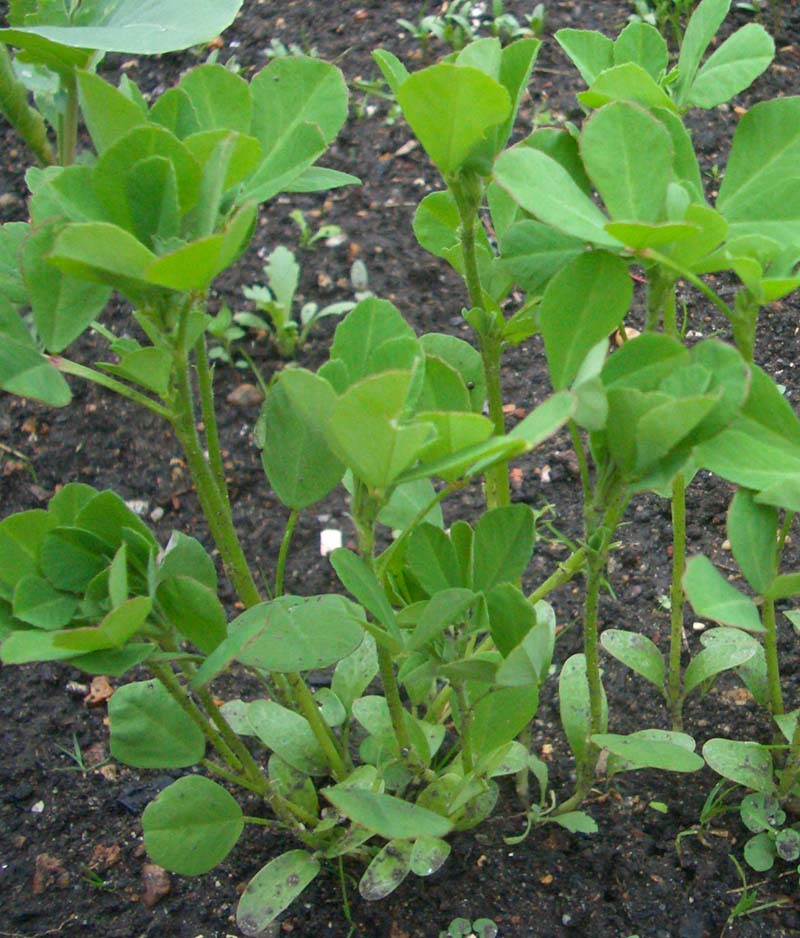 FenugreekTrigonella foenum-graecum
-
 RooibosAspalathus linearis
Compare
Sources
Passages the profile rests on
- The species occurs notably in the Cerrado savannah of South America. Source passage: “Bowdichia virgilioides Kunth is a tree largely present in South America, notably in the Cerrado savannah.” — pmc.ncbi.nlm.nih.gov
- The species is adapted to dry, nutrient-poor soils and intense sunlight. Source passage: “B. virgilioides is adapted to dry and poor soils (xerophytic), and to an intense sun exposure (heliophytic).” — pmc.ncbi.nlm.nih.gov
- The species occurs in open areas of the Cerrado, where it facilitates colonization by new individuals. Source passage: “commonly known as sucupira-preta or black sucupira (or Paricarana tree), is considered as a nucleator and a facilitator in the colonization of open areas by new individuals in Cerrado” — pmc.ncbi.nlm.nih.gov
- The species has a broad geographic distribution in the Cerrado. Source passage: “The woody species is abundant (but overused) and presents a large geographic distribution in the Cerrado” — pmc.ncbi.nlm.nih.gov
- The species occurs in different regions of Brazil, including urban parks in Recife, Pernambuco. Source passage: “B. virgilioides can be found in different areas of Brazil and occasionally in urban parks (e.g., the urban park of Recife, Pernambuco state)” — pmc.ncbi.nlm.nih.gov
- The species is included in Brazilian reforestation programs in the Cerrado and along the Atlantic coast. Source passage: “Bowdichia virgilioides Kunth is one of the species selected for reforestation programs in Brazil, notably in the Cerrado and Atlantic coast” — pmc.ncbi.nlm.nih.gov
- The species has seeds characterized by low density and dormancy. Source passage: “biological characteristics such as low density and dormancy of its seeds” — pmc.ncbi.nlm.nih.gov
- The species has been identified as a high-priority plant for conservation in a study of northeastern Brazilian flora. Source passage: “A recent CPI analysis of plants species from Northeastern Brazil identified 16 species with a high CPI score (high priority for conservation) and B. virgilioides was one of them” — pmc.ncbi.nlm.nih.gov
- The species has been considered endangered in some regions of Brazil. Source passage: “The plant has been considered in danger of extinction in some parts of Brazil” — pmc.ncbi.nlm.nih.gov
- Deforestation and excessive harvesting for construction and furniture contribute to the species' endangered status. Source passage: “mainly because of the deforestation and its excessive use in civil construction and furnishing” — pmc.ncbi.nlm.nih.gov
- Overextraction and the low density and dormancy of its seeds contribute to its conservation vulnerability. Source passage: “the overextraction of the plant, associated with biological characteristics such as low density and dormancy of its seeds, contribute to its endangered status” — pmc.ncbi.nlm.nih.gov
- The species is highly sensitive to glyphosate and paraquat herbicides, including at low doses. Source passage: “B. virgilioides is highly sensitive to herbicides like glyphosate and paraquat, even at low doses” — pmc.ncbi.nlm.nih.gov
- The species produces dense, resistant wood. Source passage: “The species is known for the quality of its dense and resistant wood” — pmc.ncbi.nlm.nih.gov
- The species' durable, dense wood is used in house construction, flooring, naval construction, and furniture manufacturing. Source passage: “The trees produce a high-density wood with a long natural durability which is particularly appreciated in home construction and flooring, naval construction and furniture manufacturing” — pmc.ncbi.nlm.nih.gov
- The leaves and roots of the species are used medicinally for several human conditions. Source passage: “B. virgilioides is also a medicinal plant used, from leaves to roots, for the treatment of various human pathologies” — pmc.ncbi.nlm.nih.gov
- Traditional medicinal applications include treatments for pharyngitis, bronchitis, wounds, diabetes, and arthritis. Source passage: “for the treatment of various human pathologies (pharyngitis, bronchitis, healing wounds, diabetes, and arthritis).” — pmc.ncbi.nlm.nih.gov
- Aqueous and organic extracts of the species have been used against inflammatory conditions and infectious diseases caused by microorganisms and parasites. Source passage: “Aqueous and organic extracts have been used to treat inflammatory pathologies and to combat infectious diseases caused by microorganisms and parasites.” — pmc.ncbi.nlm.nih.gov
- The species' fruits should not be confused with those of Bowdichia virgilioides' similarly named species, sucupira-branca (Pterodon pubescens). Source passage: “The fruits of this species sucupira-preta (B. virgilioides) shall not be confused with those of sucupira-branca (Pterodon pubescens)” — pmc.ncbi.nlm.nih.gov
- The species can disperse its seeds over long distances. Source passage: “It shows a great ability to disperse seeds over long distances.” — pmc.ncbi.nlm.nih.gov
- The species is considered important to hummingbirds, butterflies, and wasps. Source passage: “This tree, considered important for many birds (notably hummingbirds) and insects (butterfly and wasp species), should be further protected” — pmc.ncbi.nlm.nih.gov
Data
- Catalogue of Life, 2026-10-16 XR cc by
- Global Biodiversity Information Facility CC BY 4.0
- Wikidata CC0
- GeoNames CC BY 4.0
- Wikimedia Commons per image; credit shown with each image
- Within the Catalogue of Life, this name comes from The World Checklist of Vascular Plants (WCVP): Fabaceae cc by
References
- F.W.H.von Humboldt, A.J.A.Bonpland & C.S.Kunth, Nov. Gen. Sp. 6: 376 (1824) where the name was published
This species in other databases
- Catalogue of Life 5WQBQ
- Wikidata Q10374652
- iNaturalist 552662
- World Flora Online wfo-0000164496
- GRIN 7538
Page built on 29 November 2026. See how the catalog is made and all sources and licences.
Cite this page
ScientificNames.org. (2026). Bowdichia virgilioides. Retrieved November 29, 2026, from https://scientificnames.org/species/bowdichia-virgilioides
“Bowdichia virgilioides.” ScientificNames.org, 2026, scientificnames.org/species/bowdichia-virgilioides. Accessed 29 Nov. 2026.
ScientificNames.org. “Bowdichia virgilioides.” Accessed November 29, 2026. https://scientificnames.org/species/bowdichia-virgilioides.
@misc{scientificnames_bowdichia_virgilioides,
  author = {{ScientificNames.org}},
  title = {Bowdichia virgilioides},
  year = {2026},
  url = {https://scientificnames.org/species/bowdichia-virgilioides},
  note = {Accessed 2026-11-29}
}