Species · Crustaceans
Midvalley Fairy Shrimp Branchinecta mesovallensis
The scientific name of the Midvalley Fairy Shrimp is Branchinecta mesovallensis. It is a species of crustacean in the family Branchinectidae, order Anostraca. The name dates from 2000.
- Scientific name
- Branchinecta mesovallensis Belk & Fugate, 2000
- Common name
- Midvalley Fairy Shrimp
- Genus
- Branchinecta
- Family
- Branchinectidae
- Order
- Anostraca
- Class
- Branchiopoda
- Environment
- freshwater
- Recorded in
- 1 country
- Name status
- accepted in the Catalogue of Life
Overview
Branchinecta mesovallensis inhabits shallow ephemeral pools near the middle of California's Central Valley. Adults measure approximately 7–20 millimeters in length and lack a carapace covering the head and back.
Written 27 November 2026 from the sources listed below. Each statement was checked against the passage it cites; statements that could not be supported were removed.
Appearance
Adults measure approximately 7–20 millimeters in length. The species lacks a carapace covering its head and back and has two stalked compound eyes.[1][2][3]
Its legs bear leaflike or paddlelike structures called phyllopods. Adult males have relatively smooth antennae consisting of two jointed segments of approximately equal length, with the second segment bending inward approximately 90 degrees at its tip.[4][5][6]
The larger of the two humps at the male antennal tip is positioned toward the front of the animal. Females possess pear-shaped brood pouches that do not extend far down the body.[7][8]
Habitat
The species inhabits shallow ephemeral pools near the middle of California's Central Valley. It occurs in shallow vernal pools, vernal swales and artificial ephemeral wetlands.[9][10]
It has also been recorded in roadside puddles, scrapes, ditches and railroad toe-drain pools. Occupied pools averaged 10.1 centimetres in depth in a comparative study.[11][12]
The species appears to prefer shallow pools containing cool water and low to moderate dissolved salt concentrations. It can tolerate warm water, with live adults recorded in water measuring 32 °C, and has been recorded in some relatively alkaline pools.[13][14][15]
Diet
The species filters phytoplankton, detrital bacterial colonies, rotifers, protozoa and small larvae from the water.[16]
Behaviour
The species swims on its back through the water, propelling itself by beating its phyllopods. These structures also function as gills, extracting oxygen from the water stream generated by their movement.[17][18][19]
The phyllopods contain cells involved in salt exchange.[20]
Reproduction and life cycle
Males use their antennae to clasp females during mating. Females thrash about when clasped by males.[21][22]
Populations survive seasonal pond drying by laying eggs enclosed in nearly impervious shells. Embryos inside the eggs enter a dormant developmental state called diapause.[23][24]
The dormant eggs, known as cysts, can remain in the soil and produce new adult populations when pools refill. Multiple hatching events have been observed during a single rainy season.[25][26]
The species can mature approximately eight days after hatching, although 26 days is the reported average.[27]
Conservation
A petition to list the species as endangered and designate critical habitat was submitted to the U.S. Fish and Wildlife Service on August 31, 2001. The U.S. Fish and Wildlife Service determined that listing the species was not warranted at the time of its review.[28][29]
As of 2024, the species was considered eligible for listing as rare, threatened or endangered under the California Environmental Quality Act. Habitat fragmentation and loss are identified as significant threats.[30][31]
Urban development, agricultural conversion and associated hydrological changes have placed California's remaining vernal pools under severe pressure.[32]
Similar species
Adult males most closely resemble male Conservancy fairy shrimp. Females resemble female vernal pool fairy shrimp, particularly in their pear-shaped brood pouches.[33][34]
Classification of the Midvalley Fairy Shrimp
| Kingdom | Animalia |
|---|---|
| Phylum | Arthropoda |
| Subphylum | Crustacea |
| Class | Branchiopoda |
| Order | Anostraca (Brine Shrimp) |
| Suborder | Anostracina |
| Family | Branchinectidae |
| Genus | Branchinecta |
| Species | Branchinecta mesovallensis Belk & Fugate, 2000 |
Where the Midvalley Fairy Shrimp is found
Checklists and occurrence records place Branchinecta mesovallensis in 1 country across North America. GBIF holds 161 georeferenced records of it.
Countries
Regions and cities with the most records
- California, United States 11
- Vacaville, United States 4
- Fairfield, United States 3
- Merced, United States 3
- Suisun, United States 3
Range as the checklists state it
North America
A number beside a place is its count of GBIF occurrence records. A place without a number comes from a checklist alone. Records show where a species has been observed or collected, which can include escapes and vagrants.
Common names
English
- Midvalley Fairy Shrimp
- Mid-valley Fairy Shrimp
Related species
- Giant Fairy ShrimpBranchinecta gigas
-
 Vernal Pool Fairy ShrimpBranchinecta lynchi
-
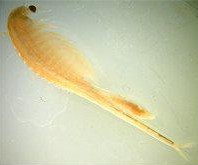 Conservancy Fairy ShrimpBranchinecta conservatio
-
 San Diego Fairy ShrimpBranchinecta sandiegonensis
-
 Circumpolar Fairy ShrimpBranchinecta paludosa
- Longhorn Fairy ShrimpBranchinecta longiantenna
- Antarctic Fairy ShrimpBranchinecta gaini
- Branchinecta lutulenta
Compare
Questions and answers
What is the scientific name of the Midvalley Fairy Shrimp?
The scientific name of the Midvalley Fairy Shrimp is Branchinecta mesovallensis. Written with its author, the full name is Branchinecta mesovallensis Belk & Fugate, 2000.
Which family does the Midvalley Fairy Shrimp belong to?
Branchinecta mesovallensis belongs to the family Branchinectidae, in the order Anostraca and the class Branchiopoda.
Where is the Midvalley Fairy Shrimp found?
Checklists and occurrence records place Branchinecta mesovallensis in 1 country: United States.
What other names does the Midvalley Fairy Shrimp have?
Branchinecta mesovallensis is also known in English as Mid-valley Fairy Shrimp.
Sources
Passages the profile rests on
- Adults measure approximately 7–20 millimeters in length. Source passage: “The midvalley fairy shrimp, Branchinecta mesovallensis, is a small (7–20 millimeters or 0.28–0.79 inches) freshwater crustacean” — English Wikipedia
- The species lacks a carapace covering its head and back. Source passage: “They do not have a carapace, a hard shell covering their heads and backs.” — English Wikipedia
- The shrimp has two stalked compound eyes. Source passage: “The species swims through the water on its back, using two stalked compound eyes to see where it is going.” — English Wikipedia
- Its phyllopods are leaflike or paddlelike structures on its legs. Source passage: “These are legs with leaflike or paddlelike structures.” — English Wikipedia
- Adult males have relatively smooth antennae consisting of two jointed segments of approximately equal length. Source passage: “their antennae are relatively smooth and consist of two jointed segments of approximately equal length” — English Wikipedia
- The second antennal segment of adult males bends inward approximately 90 degrees at its tip. Source passage: “the second of which bends inward about 90° at the tip.” — English Wikipedia
- The larger of the two humps at the male antennal tip is positioned toward the front of the animal. Source passage: “the larger of which is towards the front of the animal in the midvalley fairy shrimp” — English Wikipedia
- Females possess pear-shaped brood pouches that do not extend far down the body. Source passage: “their pear-shaped rather than spindle-shaped brood pouches, which do not extend as far down the body.” — English Wikipedia
- The species inhabits shallow ephemeral pools near the middle of California's Central Valley. Source passage: “Midvalley fairy shrimp are endemic to shallow ephemeral pools (pools that seasonally fill and dry up) near the middle of California's Central Valley.” — English Wikipedia
- The species occurs in shallow vernal pools, vernal swales and artificial ephemeral wetlands. Source passage: “The species has been found in shallow vernal pools, vernal swales and various artificial ephemeral wetland habitats” — English Wikipedia
- The species has also been recorded in roadside puddles, scrapes, ditches and railroad toe-drain pools. Source passage: “Midvalley fairy shrimp have also been found in various roadside puddles, scrapes, and ditches, and in several railroad toe-drain pools.” — English Wikipedia
- Pools occupied by the species averaged 10.1 centimetres in depth in a comparative study. Source passage: “The midvalley shrimp were found in pools averaging 10.1 centimetres (4.0 in) deep.” — English Wikipedia
- The species appears to prefer shallow pools containing cool water and low to moderate dissolved salt concentrations. Source passage: “The species appears to do best in shallow, cool water pools that are low to moderate in dissolved salts.” — English Wikipedia
- The species can tolerate warm water, with live adults recorded in water measuring 32 °C. Source passage: “In one instance live adults were found swimming in 32 °C (90 °F) water.” — English Wikipedia
- The species has been recorded in some relatively alkaline pools. Source passage: “Members of the species have also been found in some relatively alkaline pools.” — English Wikipedia
- The species filters phytoplankton, detrital bacterial colonies, rotifers, protozoa and small larvae from the water. Source passage: “including phytoplankton, detrital bacterial colonies, rotifers, protozoa and small larvae of various species” — English Wikipedia
- The species swims on its back through the water. Source passage: “The species swims through the water on its back” — English Wikipedia
- The shrimp propels itself through the water by beating its phyllopods. Source passage: “It propels itself along by beating its phyllopods.” — English Wikipedia
- The phyllopods function as gills by extracting oxygen from the water stream generated by their movement. Source passage: “The moving phyllopods also serve as gills, extracting oxygen from the water stream they create.” — English Wikipedia
- The phyllopods contain cells involved in salt exchange. Source passage: “the phyllopods also contain cells responsible for salt exchange.” — English Wikipedia
- Males use their antennae to clasp females during mating. Source passage: “Males use these appendages to clasp females during mating.” — English Wikipedia
- Females thrash about when clasped by males during mating. Source passage: “The females thrash about when clasped” — English Wikipedia
- Populations survive seasonal pond drying by laying eggs enclosed in nearly impervious shells. Source passage: “Midvalley fairy shrimp populations survive the seasonal drying of their ponds by laying eggs encased in nearly impervious shells.” — English Wikipedia
- Embryos inside the eggs enter a dormant developmental state called diapause. Source passage: “Embryos within these eggs enter a dormant state called diapause.” — English Wikipedia
- The dormant eggs, known as cysts, can remain in the soil and produce new adult populations when pools refill. Source passage: “Because not all cysts hatch with each refilling of a pool they can form a sort of "seed bank" in the soil that produces new populations of adult shrimp where none had been seen in years.” — English Wikipedia
- Multiple hatching events have been observed during a single rainy season. Source passage: “Multiple hatchings have been observed in a single rainy season.” — English Wikipedia
- The species can mature approximately eight days after hatching, although 26 days is the reported average. Source passage: “They can mature within about 8 days of hatching, although 26 seems to be the average.” — English Wikipedia
- A petition to list the species as endangered and designate critical habitat was submitted to the U.S. Fish and Wildlife Service on August 31, 2001. Source passage: “On August 31, 2001, the U.S. Fish and Wildlife Service was petitioned by the Center for Biological Diversity and VernalPools.Org to list the midvalley fairy shrimp as an endangered species” — English Wikipedia
- The U.S. Fish and Wildlife Service determined that listing the species was not warranted at the time of its review. Source passage: “the U.S. Fish and Wildlife Service have found that listing is not warranted at this time.” — English Wikipedia
- As of 2024, the species was considered eligible for listing as rare, threatened or endangered under the California Environmental Quality Act. Source passage: “As of 2024, the midvalley fairy shrimp is considered eligible for listing as a rare, threatened or endangered species under the California Environmental Quality Act.” — English Wikipedia
- Habitat fragmentation and loss are identified as significant threats to the species. Source passage: “This is attributed to ongoing habitat fragmentation and loss, which poses a significant threat to the survival of the midvalley fairy shrimp.” — English Wikipedia
- Urban development, agricultural conversion and associated hydrological changes have placed California's remaining vernal pools under severe pressure. Source passage: “California's remaining vernal pools have been under severe pressure from urban development, agricultural conversion and associated hydrological changes.” — English Wikipedia
- Adult males most closely resemble male Conservancy fairy shrimp. Source passage: “Adult males of the species most closely resemble male Conservancy fairy shrimp” — English Wikipedia
- Females resemble female vernal pool fairy shrimp, particularly in their pear-shaped brood pouches. Source passage: “Female midvalley fairy shrimp more closely resemble female vernal pool fairy shrimp, which also have pear-shaped brood pouches.” — English Wikipedia
Data
- Catalogue of Life, 2026-10-16 XR cc by
- Global Biodiversity Information Facility CC BY 4.0
- Wikidata CC0
- GeoNames CC BY 4.0
- Within the Catalogue of Life, this name comes from The Integrated Taxonomic Information System cc0
References
- Belk, Denton, & and Michael Fugate. (2000). Two new Branchinecta (Crustacea: Anostraca) from the southwestern United States. Southwestern Naturalist, Vol 45, No. 2. Link where the name was published
- Rogers, & Christopher, D. (2013). Anostraca Catalogus (Crustacea: Branchiopoda). The Raffles Bulletin of Zoology, Vol. 61, No. 2.
This species in other databases
- Catalogue of Life 68RB7
- Wikidata Q4020337
- iNaturalist 147461
- WoRMS urn:lsid:marinespecies.org:taxname:1214296
Page built on 27 November 2026. See how the catalog is made and all sources and licences.
Cite this page
ScientificNames.org. (2026). Branchinecta mesovallensis (Midvalley Fairy Shrimp). Retrieved November 27, 2026, from https://scientificnames.org/species/branchinecta-mesovallensis
“Branchinecta mesovallensis (Midvalley Fairy Shrimp).” ScientificNames.org, 2026, scientificnames.org/species/branchinecta-mesovallensis. Accessed 27 Nov. 2026.
ScientificNames.org. “Branchinecta mesovallensis (Midvalley Fairy Shrimp).” Accessed November 27, 2026. https://scientificnames.org/species/branchinecta-mesovallensis.
@misc{scientificnames_branchinecta_mesovallensis_midvalley_fairy_shrimp,
  author = {{ScientificNames.org}},
  title = {Branchinecta mesovallensis (Midvalley Fairy Shrimp)},
  year = {2026},
  url = {https://scientificnames.org/species/branchinecta-mesovallensis},
  note = {Accessed 2026-11-27}
}