Species · Flowering plants
Milkmaids Burchardia umbellata
The scientific name of the Milkmaids is Burchardia umbellata. It is a species of flowering plant in the family Colchicaceae (meadow saffron family), order Liliales.
- Scientific name
- Burchardia umbellata R.Br.
- Common name
- Milkmaids
- Genus
- Burchardia
- Family
- Colchicaceae (Meadow Saffron Family)
- Order
- Liliales
- Class
- Liliopsida
- Recorded in
- 1 country
- Name status
- accepted in the Catalogue of Life

Overview
Milkmaids (Burchardia umbellata R.Br.) is a perennial herbaceous plant in the family Colchicaceae, order Liliales and class Liliopsida. The species occurs in woodlands, heath and dry sclerophyll forests and is native to eastern and southern Australia. Milkmaids has narrow leaves, clusters of white or pale pink flowers with reddish centers, and carrot-shaped tubers.
Written 26 November 2026 from the sources listed below. Each statement was checked against the passage it cites; statements that could not be supported were removed.
Appearance
Milkmaids has narrow leaves that can reach 60 cm in length and measure 1.5 to 4 mm in width. Its flower-bearing stalks are 50 to 60 cm tall.[1][2][3]
The flowers grow in clusters and are white or pale pink with reddish centers. Individual flowers measure approximately 2.5 cm across.[4][5]
The plant produces a basal cluster of up to ten carrot-shaped tubers. Each tuber is approximately 5 mm thick and is white, fleshy, crisp and starchy.[6][7][8]
Habitat
Milkmaids occurs in woodlands, heath and dry sclerophyll forests. It is native to eastern and southern Australia and is recorded in all Australian states.[9][10][11][12]
When cultivated, the species requires moist, well-drained soil and can grow in either full sun or light shade. It can be propagated from seed and is rarely available in nurseries.[13][14][15][16]
Reproduction and life cycle
Milkmaids typically flowers between September and November.[17]
Diet
The tubers are eaten by Aboriginal Australians. They are used as food and can be consumed either raw or cooked.[18][19]
Uses
The tubers are white, fleshy, crisp and starchy, with an undistinguished flavour. They can be eaten raw or cooked.[19][8][20]
Classification of the Milkmaids
| Kingdom | Plantae |
|---|---|
| Subkingdom | Pteridobiotina |
| Phylum | Tracheophyta |
| Class | Liliopsida |
| Order | Liliales |
| Family | Colchicaceae (Meadow Saffron Family) |
| Genus | Burchardia |
| Species | Burchardia umbellata R.Br. |
Where the Milkmaids is found
Checklists and occurrence records place Burchardia umbellata in 1 country across Oceania. GBIF holds 26,477 georeferenced records of it.
Countries
Regions and cities with the most records
- Victoria, Australia 16,646
- South Australia, Australia 4,109
- New South Wales, Australia 3,808
- Burwood, Australia 1,535
- Balwyn North, Australia 1,444
- Adelaide Hills, Australia 1,408
- Adelaide, Australia 1,295
- Torquay, Australia 1,052
- Mount Barker, Australia 1,050
- Frankston East, Australia 906
- Ballarat, Australia 620
- Melbourne, Australia 543
- Tasmania, Australia 461
- Queensland, Australia 434
- Hornsby, Australia 407
- Wollongong, Australia 379
- Western Australia, Australia 317
- Parramatta, Australia 262
- Sydney, Australia 250
- St Albans, Australia 198
- Bendigo, Australia 188
- Wodonga, Australia 182
- Gawler, Australia 170
- Traralgon, Australia 165
- Wallan, Australia 157
- Wangaratta, Australia 133
- Geelong, Australia 132
- Sunshine Coast, Australia 127
- Central Coast, Australia 124
- Liverpool, Australia 115
- Australian Capital Territory, Australia 113
- Canberra, Australia 102
- Caloundra, Australia 85
- Launceston, Australia 74
- Bairnsdale, Australia 66
- Tuggeranong, Australia 58
A number beside a place is its count of GBIF occurrence records. A place without a number comes from a checklist alone. Records show where a species has been observed or collected, which can include escapes and vagrants.
Common names
English
- Milkmaids
Names in 4 other languages
- Chinese
- 蔥水仙
- Finnish
- sarjasilmätähti
- Russian
- Бурхардия зонтичная
- Slovak
- burchardia okolíkatá
Synonyms
5 other scientific names have been used for this species and are now treated as synonyms of Burchardia umbellata.
- Burchardia rigida Gand.
- Burchardia umbellata f. minor Domin
- Burchardia umbellata var. parviflora Hook.
- Burchardia umbellata var. typica Domin
- Reya umbellata (R.Br.) Kuntze
Related species
-
 MilkmaidsBurchardia congesta
-
 Dwarf BurchardiaBurchardia multiflora
- Burchardia bairdiae
- Burchardia monantha
- Burchardia rosea
-
 Autumn CrocusColchicum autumnale
-
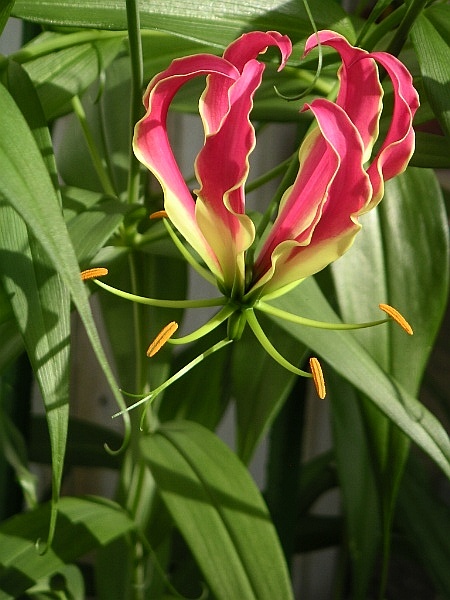 Flame LilyGloriosa superba
-
 ChristmasbellsSandersonia aurantiaca
Compare
Questions and answers
What is the scientific name of the Milkmaids?
The scientific name of the Milkmaids is Burchardia umbellata. Written with its author, the full name is Burchardia umbellata R.Br..
Which family does the Milkmaids belong to?
Burchardia umbellata belongs to the family Colchicaceae, in the order Liliales and the class Liliopsida.
Where is the Milkmaids found?
Checklists and occurrence records place Burchardia umbellata in 1 country: Australia.
What are milkmaid flowers?
Milkmaids flowers grow in clusters and are white or pale pink with reddish centers. Individual flowers measure approximately 2.5 cm across.[4][5]
Sources
Passages the profile rests on
- The plant has narrow leaves. Source passage: “The narrow leaves of Burchardia umbellata are up to 60 cm long by 1.5 to 4 mm wide.” — English Wikipedia
- The leaves can reach 60 cm in length and measure 1.5 to 4 mm in width. Source passage: “The narrow leaves of Burchardia umbellata are up to 60 cm long by 1.5 to 4 mm wide.” — English Wikipedia
- The flower-bearing stalks are 50 to 60 cm tall. Source passage: “Clusters of white or pale pink flowers with reddish centers sit atop a thin stalk that is 50 to 60 cm high.” — English Wikipedia
- The flowers grow in clusters and are white or pale pink with reddish centers. Source passage: “Clusters of white or pale pink flowers with reddish centers sit atop a thin stalk that is 50 to 60 cm high.” — English Wikipedia
- Individual flowers measure approximately 2.5 cm across. Source passage: “Each flower measures about 2.5 cm wide.” — English Wikipedia
- The plant produces a basal cluster of up to ten carrot-shaped tubers. Source passage: “There is a cluster of up to ten carrot-shaped tubers at the base, each about 5 mm thick.” — English Wikipedia
- Each tuber is approximately 5 mm thick. Source passage: “There is a cluster of up to ten carrot-shaped tubers at the base, each about 5 mm thick.” — English Wikipedia
- The tubers are white, fleshy, crisp and starchy. Source passage: “They are white, fleshy, crisp, and starchy, with an undistinguished flavor.” — English Wikipedia
- The species occurs in woodlands and heath. Source passage: “Burchardia umbellata, known as milkmaids, is a perennial herbaceous plant native to woodlands and heath of eastern and southern Australia.” — English Wikipedia
- The species occurs in dry sclerophyll forests. Source passage: “It typically flowers from September until November, in dry sclerophyll forests.” — English Wikipedia
- The species is native to eastern and southern Australia. Source passage: “Burchardia umbellata, known as milkmaids, is a perennial herbaceous plant native to woodlands and heath of eastern and southern Australia.” — English Wikipedia
- The species is recorded in all Australian states. Source passage: “It is known in all states.” — English Wikipedia
- The species can be propagated from seed. Source passage: “Burchardia umbellata is rarely available in nurseries, but it can be propagated by seed and kept in containers.” — English Wikipedia
- The species requires moist, well-drained soil when cultivated. Source passage: “It requires moist, well-drained soils and sun or light shade.” — English Wikipedia
- The species can be cultivated in either full sun or light shade. Source passage: “It requires moist, well-drained soils and sun or light shade.” — English Wikipedia
- The species is rarely available in nurseries. Source passage: “Burchardia umbellata is rarely available in nurseries, but it can be propagated by seed and kept in containers.” — English Wikipedia
- The species typically flowers between September and November. Source passage: “It typically flowers from September until November, in dry sclerophyll forests.” — English Wikipedia
- The tubers are eaten by Aboriginal Australians. Source passage: “Aboriginal Australians eat the potato-like tubers.” — English Wikipedia
- The tubers are used as food and can be consumed either raw or cooked. Source passage: “The tubers can be eaten raw or cooked.” — English Wikipedia
- The tubers have an undistinguished flavour. Source passage: “They are white, fleshy, crisp, and starchy, with an undistinguished flavor.” — English Wikipedia
Data
- Catalogue of Life, 2026-10-16 XR cc by
- Global Biodiversity Information Facility CC BY 4.0
- Wikidata CC0
- GeoNames CC BY 4.0
- Wikimedia Commons per image; credit shown with each image
- Within the Catalogue of Life, this name comes from The World Checklist of Vascular Plants (WCVP) cc by
References
- Prodr. Fl. Nov. Holland.: 273 (1810) where the name was published
This species in other databases
Page built on 29 November 2026. See how the catalog is made and all sources and licences.
Cite this page
ScientificNames.org. (2026). Burchardia umbellata (Milkmaids). Retrieved November 29, 2026, from https://scientificnames.org/species/burchardia-umbellata
“Burchardia umbellata (Milkmaids).” ScientificNames.org, 2026, scientificnames.org/species/burchardia-umbellata. Accessed 29 Nov. 2026.
ScientificNames.org. “Burchardia umbellata (Milkmaids).” Accessed November 29, 2026. https://scientificnames.org/species/burchardia-umbellata.
@misc{scientificnames_burchardia_umbellata_milkmaids,
  author = {{ScientificNames.org}},
  title = {Burchardia umbellata (Milkmaids)},
  year = {2026},
  url = {https://scientificnames.org/species/burchardia-umbellata},
  note = {Accessed 2026-11-29}
}