Species · Flowering plants
Woolly Senecio Caputia tomentosa
The scientific name of the Woolly Senecio is Caputia tomentosa. It is a species of flowering plant in the family Asteraceae (composite), order Asterales.
- Scientific name
- Caputia tomentosa (Haw.) B.Nord. & Pelser
- Common name
- Woolly Senecio
- Genus
- Caputia
- Family
- Asteraceae (Composite)
- Order
- Asterales
- Class
- Magnoliopsida
- Recorded in
- 2 countries
- Name status
- accepted in the Catalogue of Life

Overview
The woolly senecio is a succulent dwarf shrub. It grows in the Cape Provinces of South Africa, usually at elevations between 900 and 1200 meters. Its leaves are densely covered with felt-like hairs.
Written 27 November 2026 from the sources listed below. Each statement was checked against the passage it cites; statements that could not be supported were removed.
Appearance
The woolly senecio is a succulent dwarf shrub that grows to a height of 10–25 cm. Its leaves are densely covered with felt-like hairs.[1][2][3]
Habitat
The species grows in the Cape Provinces of South Africa, usually at elevations between 900 and 1200 meters. It has been introduced to Myanmar.[4][5][6]
The species does not grow well in wet soil. In cultivation, it requires well-drained sandy loam, infrequent watering, and full sunlight.[7][8]
Uses
The felt covering its leaves can be dried and used as tinder. The species is cultivated as an ornamental plant.[9][10]
Reproduction and life cycle
A detached stem or leaf can develop roots when inserted into warm, moderately moist soil.[11]
Classification of the Woolly Senecio
| Kingdom | Plantae |
|---|---|
| Subkingdom | Pteridobiotina |
| Phylum | Tracheophyta |
| Class | Magnoliopsida |
| Order | Asterales |
| Family | Asteraceae (Composite) |
| Subfamily | Asteroideae |
| Tribe | Senecioneae |
| Subtribe | Tussilagininae |
| Genus | Caputia |
| Species | Caputia tomentosa (Haw.) B.Nord. & Pelser |
Where the Woolly Senecio is found
Checklists and occurrence records place Caputia tomentosa in 2 countries across Africa and Asia. GBIF holds 46 georeferenced records of it.
Countries where it is native or its origin is not stated
Countries where it has been introduced
Regions and cities with the most records
Range as the checklists state it
South Africa (N-Cape Prov., W-Cape Prov., E-Cape Prov.); Myanmar [I]
A number beside a place is its count of GBIF occurrence records. A place without a number comes from a checklist alone. Records show where a species has been observed or collected, which can include escapes and vagrants.
Common names
English
- Woolly Senecio
- Cocoon-plant
Names in 4 other languages
- Afrikaans
- tontelbos, tontelbossie
- Finnish
- karvavillakko
- Japanese
- ギンゲツ
- Slovak
- starček plstnatý
Synonyms
10 other scientific names have been used for this species and are now treated as synonyms of Caputia tomentosa.
- Cacalia haworthii Sweet
- Kleinia cana DC.
- Kleinia haworthii (Sw.) DC.
- Kleinia tomentosa Haw.
- Notonia vestita (Sw. ex Steud.) Collett & Hemsl.
- Senecio haworthii (Sw.) Sch.Bip.
- Senecio haworthii (Sw.) Steud.
- Senecio quinquangulatus Sch.Bip.
- Cacalia tomentosa Haw. ambiguous synonym
- Senecio vestitus Sweet ex Steud. ambiguous synonym
Related species
- Caputia pyramidata
- Caputia scaposa
- Caputia medley-woodii
- Caputia oribiensis
-
 Jerusalem ArtichokeHelianthus tuberosus
-
 ChicoryCichorium intybus
-
 Absinthe WormwoodArtemisia absinthium
-
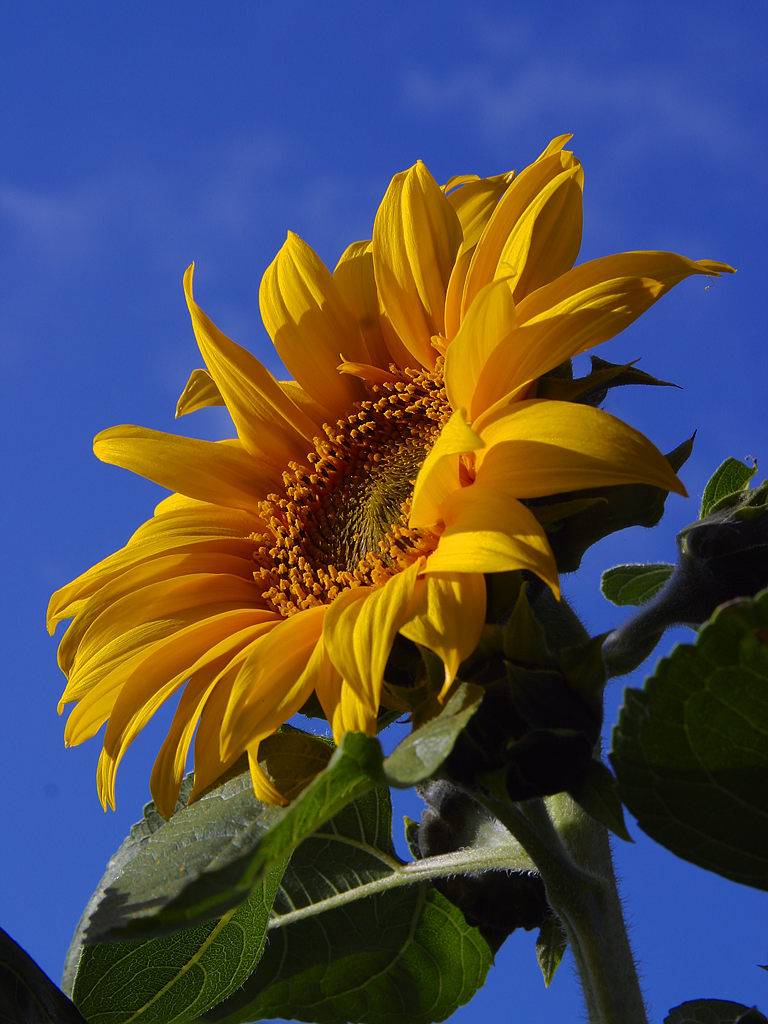 Common SunflowerHelianthus annuus
Compare
Questions and answers
What is the scientific name of the Woolly Senecio?
The scientific name of the Woolly Senecio is Caputia tomentosa. Written with its author, the full name is Caputia tomentosa (Haw.) B.Nord. & Pelser.
Which family does the Woolly Senecio belong to?
Caputia tomentosa belongs to the family Asteraceae, in the order Asterales and the class Magnoliopsida.
Where is the Woolly Senecio found?
Checklists and occurrence records place Caputia tomentosa in 2 countries, including South Africa.
What other names does the Woolly Senecio have?
Caputia tomentosa is also known in English as Cocoon-plant.
What are cocoon Plants?
The woolly senecio is a succulent dwarf shrub also recorded under the common name cocoon plant.[1][12]
Can you grow Senecio from cuttings?
A detached stem or leaf of the woolly senecio can develop roots when inserted into warm, moderately moist soil.[11]
Sources
Passages the profile rests on
- Caputia tomentosa is a succulent dwarf shrub. Source passage: “is a perennial, succulent dwarf shrub” — English Wikipedia
- Its leaves are densely covered with felt-like hairs. Source passage: “its leaves are densely felted” — English Wikipedia
- The plant grows to a height of 10–25 cm. Source passage: “Growing up to 10–25 cm high” — English Wikipedia
- The species grows in the Cape Provinces of South Africa. Source passage: “grows in the Cape Provinces of South Africa” — English Wikipedia
- The species usually occurs at elevations between 900 and 1200 meters. Source passage: “usually between the 900 and 1200 meters elevation” — English Wikipedia
- Caputia tomentosa has been introduced to Myanmar. Source passage: “It has been introduced to Myanmar.” — English Wikipedia
- The species does not grow well in wet soil. Source passage: “Like most Richtersveld plants it does not do well in wet soil.” — English Wikipedia
- The species requires well-drained sandy loam, infrequent watering, and full sunlight in cultivation. Source passage: “Caputia tomentosa needs well-drained sandy loams, rare water and full sun.” — English Wikipedia
- The felt covering its leaves can be dried and used as tinder. Source passage: “the felt can be stripped off, dried, and used as tinder.” — English Wikipedia
- Caputia tomentosa is cultivated as an ornamental plant. Source passage: “It has gained the Royal Horticultural Society's Award of Garden Merit as an ornamental.” — English Wikipedia
- A detached stem or leaf can develop roots when inserted into warm, moderately moist soil. Source passage: “A plucked stem or leaf can be stuck into warm, not-too-dry earth, where it will root without special attention.” — English Wikipedia
- The species is also recorded under the common name cocoon plant. Source passage: “Senecio haworthii Sch.Bip. Common Name: cocoon plant Species Caputia tomentosa (Haw.)” — powo.science.kew.org
Data
- Catalogue of Life, 2026-10-16 XR cc by
- Global Biodiversity Information Facility CC BY 4.0
- Wikidata CC0
- GeoNames CC BY 4.0
- Wikimedia Commons per image; credit shown with each image
- Within the Catalogue of Life, this name comes from Synonymic Checklists of the Vascular Plants of the World cc by
References
- B.Nord. & Pelser. (2012). Compositae Newslett. 50: 65 (2012). where the name was published
This species in other databases
Page built on 28 November 2026. See how the catalog is made and all sources and licences.
Cite this page
ScientificNames.org. (2026). Caputia tomentosa (Woolly Senecio). Retrieved November 28, 2026, from https://scientificnames.org/species/caputia-tomentosa
“Caputia tomentosa (Woolly Senecio).” ScientificNames.org, 2026, scientificnames.org/species/caputia-tomentosa. Accessed 28 Nov. 2026.
ScientificNames.org. “Caputia tomentosa (Woolly Senecio).” Accessed November 28, 2026. https://scientificnames.org/species/caputia-tomentosa.
@misc{scientificnames_caputia_tomentosa_woolly_senecio,
  author = {{ScientificNames.org}},
  title = {Caputia tomentosa (Woolly Senecio)},
  year = {2026},
  url = {https://scientificnames.org/species/caputia-tomentosa},
  note = {Accessed 2026-11-28}
}