Species · Birds
Crested Caracara Caracara plancus
The scientific name of the Crested Caracara is Caracara plancus. It is a species of bird in the family Falconidae (falcons), order Falconiformes. The name dates from 1777.
- Scientific name
- Caracara plancus (J. F. Miller, 1777)
- Common name
- Crested Caracara
- Genus
- Caracara
- Family
- Falconidae (Falcons)
- Order
- Falconiformes
- Class
- Aves
- Red List category
- LC Least Concern
- Environment
- terrestrial
- Recorded in
- 29 countries
- Name status
- accepted in the Catalogue of Life

Overview
Caracara plancus occurs from Tierra del Fuego in southern South America to the southern United States, including Mexico, Central America, Cuba, Aruba, Trinidad, several other Caribbean islands, and the Falkland Islands. It has a prominent crest, bare face, thick bill, long neck, and long legs.
Written 26 November 2026 from the sources listed below. Each statement was checked against the passage it cites; statements that could not be supported were removed.
Appearance
Adults have dark brownish plumage on the cap, belly, thighs, most of the wings, and tail tip, with whitish-buff plumage on the throat, nape, and ear-covering feathers. Adult males and females have similar plumage, including dark brownish-black feathers on the crest, wings, back, and lower abdomen.[1][2]
Adults have yellow legs and bare facial skin and a cere ranging from deep yellow to reddish-orange. Juveniles have paler plumage than adults, with streaking on the chest, neck, and back, grey legs, and whitish or pinkish-purple facial skin and cere.[3][4]
Adults measure 50–65 cm in total length, with a wingspan of 120 to 132 cm and a body mass of 0.9 to 1.6 kg. Individuals from colder southern parts of the range are larger on average than those from tropical regions, and the species is the second-largest falcon species by mean body mass.[5][6][7][8][9]
Habitat
The Crested Caracara occupies open and semi-open habitats and is frequently found near human settlements. Its habitats include semi-arid and desert environments, coastal areas, subtropical and tropical forests, temperate regions, plains, swamps, and urban areas.[10][11]
The species avoids Andean highlands and dense humid forests, including the Amazon rainforest.[12]
In Florida, the species inhabits improved pastures, dry prairies, freshwater marshes, shrub swamps, grasslands, pinelands, scrub, and urban areas. Florida birds prefer cattle ranches with open short grasslands and scattered cabbage palms, live oak, and cypress.[13][14]
Diet
The Crested Caracara primarily feeds on animal carcasses. Its diet includes insects, small mammals, small birds, amphibians, reptiles, fish, crabs, shellfish, maggots, and worms, and it may also consume fruit.[15][16][17]
Documented food items include rabbits, skunks, prairie dogs, opossums, rats, mice, squirrels, frogs, lizards, and young alligators.[18]
Behaviour
The species frequently walks on the ground while searching for food. It steals food from other raptors and raids bird and reptile nests.[19][20]
The species is generally solitary but may gather in groups around large food sources. It may follow trains or cars to obtain discarded food.[21][22]
Caracaras may dominate vultures at carcasses and chase them away. Juveniles gather in communal roosts with adults that are not breeding.[23][24]
Reproduction and life cycle
The species typically lays two eggs per clutch. Nests are large, open structures usually located in trees or palms, although some are built on the ground.[25][26]
In Florida, adults breed from September through June, with most eggs laid between late December and early February. The incubation period lasts approximately 33 days, and fledging occurs at approximately eight weeks of age.[27][28][29]
Adults typically begin breeding at approximately three years of age. Pairs maintain strong bonds until one partner dies.[30][31]
After fledging, young birds remain near their nesting site with their parents for approximately two months.[32]
Conservation
The species is classified as being of least concern by BirdLife International. The Florida population was listed as threatened under the Endangered Species Act on July 6, 1987.[33][34]
Classification of the Crested Caracara
| Kingdom | Animalia |
|---|---|
| Phylum | Chordata |
| Subphylum | Vertebrata |
| Infraphylum | Gnathostomata |
| Parvphylum | Osteichthyes |
| Megaclass | Tetrapoda |
| Class | Aves (Bird) |
| Order | Falconiformes (Falcons) |
| Family | Falconidae (Falcons) |
| Subfamily | Polyborinae |
| Genus | Caracara (Caracaras) |
| Species | Caracara plancus (J. F. Miller, 1777) |
Where the Crested Caracara is found
Checklists and occurrence records place Caracara plancus in 29 countries across North America and South America. GBIF holds 1,193,640 georeferenced records of it.
Countries
- Argentina 206,096
- Aruba 2,943
- Belize 2,277
- Bolivia 8,653
- Bonaire, Saint Eustatius and Saba 4,187
- Brazil 187,831
- Canada 383
- Chile 35,542
- Colombia 55,000
- Costa Rica 85,506
- Cuba 6,946
- Curacao 7,555
- Ecuador 2,716
- El Salvador 2,173
- Falkland Islands 1,363
- French Guiana 608
- Guatemala 3,471
- Guyana 2,405
- Honduras 8,437
- Mexico 72,415
- Nicaragua 4,913
- Panama 15,010
- Paraguay 10,118
- Peru 4,934
- Suriname 357
- Trinidad and Tobago 815
- United States 423,573
- Uruguay 19,416
- Venezuela 17,997
Regions and cities with the most records
- Texas, United States 353,308
- São Paulo, Brazil 63,105
- Florida, United States 44,484
- Buenos Aires, Argentina 41,908
- Puntarenas Province, Costa Rica 31,661
- Santos Lugares, Argentina 31,355
- Buenos Aires, Argentina 31,049
- Valentín Alsina, Argentina 29,648
- Avellaneda, Argentina 28,566
- Lanús, Argentina 28,375
- Cordoba, Argentina 28,046
- Sarandí, Argentina 27,921
- Remedios de Escalada de San Martín, Argentina 24,784
- Banfield, Argentina 22,666
- Monte Chingolo, Argentina 22,385
- Lomas de Zamora, Argentina 21,450
- Villa Sarmiento, Argentina 19,666
- Minas Gerais, Brazil 18,913
- Quilmes, Argentina 18,364
- Alajuela Province, Costa Rica 18,168
- El Palomar, Argentina 17,434
- Mato Grosso, Brazil 17,004
- Hurlingham, Argentina 16,827
- San Isidro, Argentina 16,547
- Haedo, Argentina 16,508
- San Justo, Argentina 15,920
- Don Torcuato, Argentina 15,384
- Guanacaste Province, Costa Rica 15,232
- Austin, United States 14,379
- McAllen, United States 13,514
- San Antonio, United States 13,440
- Reynosa, Mexico 12,902
- Entre Rios, Argentina 12,844
- Tigre, Argentina 12,429
- Galveston, United States 12,173
- Santa Fe, Argentina 11,739
6 more countries have a few records outside this range
These countries hold a few records of Caracara plancus but lie outside the range the checklists give for it. Such records are often zoo or garden specimens, museum material or vagrants, so the species is not counted as occurring there.
Range as the checklists state it
Middle America
North America
South America
Caribbean
A number beside a place is its count of GBIF occurrence records. A place without a number comes from a checklist alone. Records show where a species has been observed or collected, which can include escapes and vagrants.
Common names
English
- Crested Caracara
- Mexican Eagle
- Southern Caracara
- Southern Crested Caracara
Names in 32 other languages
- Arabic
- أشبور متوج جنوبي, أشبور متوج شمالي, كاراكارا متوج, كاراكارا متوج جنوبي
- Azerbaijani
- Adi qarqar
- Breton
- Karakara-kuch ar c'hreisteiz
- Catalan
- Caracarà crestat, caracarà crestat meridional
- Chinese
- 凤头巨隼, 南美鳳頭卡拉鷹, 鳳頭卡拉鷹
- Croatian
- krunata karakara
- Czech
- karančo chocholatý, karančo jižní
- Danish
- Caracara, Stribet gribbefalk, stor caracara
- Dutch
- Kuifcaracara, Zuidelijke Kuifcaracara
- Esperanto
- Suda karakaro, kresta karakaro
- Estonian
- tuttkarakaara
- Finnish
- eteläntöyhtökarakara, pohjantöyhtökarakara
- French
- Caracara du Nord, Caracara huppé
- German
- Schopfkarakara
- Hungarian
- bóbitás karakara
- Italian
- Caracara meridionale, caracara crestato
- Japanese
- カンムリカラカラ, ミナミカラカラ
- Latvian
- cekulainā karakara, dienvidu karakara
- Lithuanian
- Paprastoji karakara, kuoduotoji karakara
- Norwegian
- gribbkarakara
- Papiamento
- Warawara
- Polish
- karakara czarnobrzucha, karakara czubata
- Portuguese
- Caracará, Carcará-do-norte, caracara-de-crista, carcará, carcará-de-poupa
- Russian
- Каранчо, Обыкновенная каракара, Равнинная каракара, Северная каракара, Хохлатая каракара
- Serbian
- Ćubasta karakara
- Slovak
- karakara pásikavá
- Spanish
- Caracara Cargahuesos, Caracara moñudo, Caracara quebrantahuesos, Carancho, Carancho meridional, Caricare, Cuije, Traro
- Swedish
- nordlig tofskarakara, sydlig tofskarakara, tofskarakara
- Turkish
- Tepeli Karakara
- Ukrainian
- Звичайна каракара, каракара аргентинська
- grn
- Karakara
- que
- Qaranchu
Synonyms
4 other scientific names have been used for this species and are now treated as synonyms of Caracara plancus.
- Falco brasiliensis Gmelin, 1788
- Polyborus planchus Miller, JF, 1777
- Polyborus plancus (J. F. Miller, 1777)
- Polyborus plancus plancus (J. F. Miller, 1777)
Subspecies and varieties
- Caracara plancus cheriway (Northern Crested Caracara) subspecies
- Caracara plancus plancus (Southern Caracara) subspecies
Related species
-
 Guadalupe CaracaraCaracara lutosa
- Bahaman CaracaraCaracara creightoni
-
 Peregrine FalconFalco peregrinus
-
 Common KestrelFalco tinnunculus
-
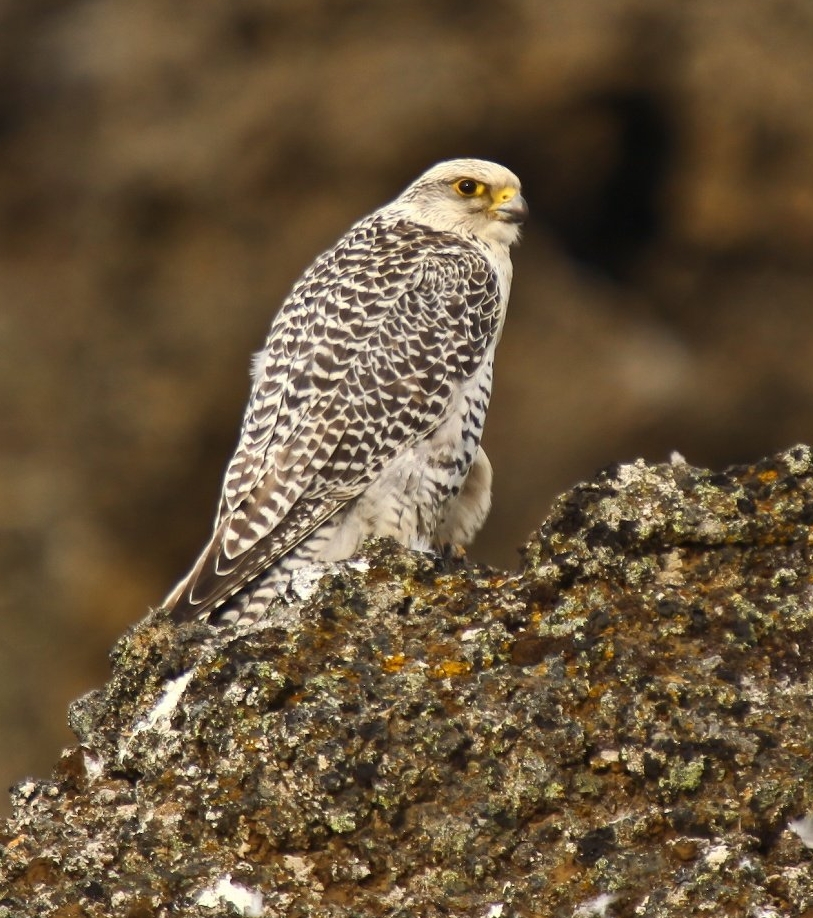 GyrfalconFalco rusticolus
-
 MerlinFalco columbarius
-
 American KestrelFalco sparverius
-
 Saker FalconFalco cherrug
Compare
Questions and answers
What is the scientific name of the Crested Caracara?
The scientific name of the Crested Caracara is Caracara plancus. Written with its author, the full name is Caracara plancus (J. F. Miller, 1777).
Which family does the Crested Caracara belong to?
Caracara plancus belongs to the family Falconidae, in the order Falconiformes and the class Aves.
Where is the Crested Caracara found?
Checklists and occurrence records place Caracara plancus in 29 countries, including United States, Argentina, Brazil, Costa Rica, Mexico and Colombia.
What is the conservation status of the Crested Caracara?
The IUCN Red List category recorded for Caracara plancus is Least Concern (LC).
What other names does the Crested Caracara have?
Caracara plancus is also known in English as Mexican Eagle, Southern Caracara and Southern Crested Caracara.
Is it rare to see a Crested Caracara?
The species occupies open and semi-open habitats and is frequently found near human settlements.[10]
What are some interesting facts about the Crested Caracara?
The Crested Caracara frequently walks on the ground while searching for food and may follow trains or cars to obtain discarded food. It may dominate vultures at carcasses and chase them away.[19][22][23]
What do Crested Caracaras eat?
They primarily feed on animal carcasses. Their diet includes insects, small mammals, small birds, amphibians, reptiles, fish, crabs, shellfish, maggots, worms, and sometimes fruit.[15][16][17]
Where do Crested Caracara birds live?
They occur from Tierra del Fuego in southern South America to the southern United States. Their distribution includes Mexico, Central America, the Falkland Islands, Cuba, Aruba, Trinidad, and several other Caribbean islands.[35][36][37][38]
Is the Crested Caracara rare?
The species is classified as being of least concern by BirdLife International.[33]
Sources
Passages the profile rests on
- Adults have dark brownish plumage on the cap, belly, thighs, most of the wings, and tail tip, with whitish-buff plumage on the throat, nape, and ear-covering feathers. Source passage: “The cap, belly, thighs, most of the wings, and tail tip are dark brownish, the auriculars (feathers surrounding the ear), throat, and nape are whitish-buff” — English Wikipedia
- Adult males and females have similar plumage, with dark brownish-black feathers on the crest, wings, back, and lower abdomen. Source passage: “Adult males and females look alike, with dark brownish-black feathers on their crest, wings, back, and lower abdomen.” — fws.gov
- The species has yellow legs and bare facial skin and a cere that range from deep yellow to reddish-orange. Source passage: “The legs are yellow and the bare facial skin and cere are deep yellow to reddish-orange.” — English Wikipedia
- Juveniles have paler plumage than adults, with streaking on the chest, neck, and back, grey legs, and whitish or pinkish-purple facial skin and cere. Source passage: “Juveniles resemble adults, but are paler, with streaking on the chest, neck, and back, grey legs, and whitish, later pinkish-purple, facial skin and cere.” — English Wikipedia
- Adults measure 50–65 cm in total length. Source passage: “The crested caracara has a total length of 50–65 cm (20–26 in)” — English Wikipedia
- The wingspan ranges from 120 to 132 cm. Source passage: “a wingspan of 120–132 cm (47–52 in).” — English Wikipedia
- Adult body mass ranges from 0.9 to 1.6 kg. Source passage: “Its weight is 0.9–1.6 kg (2.0–3.5 lb)” — English Wikipedia
- Individuals from colder southern parts of the range are larger on average than those from tropical regions. Source passage: “Individuals from the colder southern part of its range average larger than those from tropical regions” — English Wikipedia
- The species is the second-largest falcon species by mean body mass. Source passage: “they are the second-largest species of falcon in the world by mean body mass” — English Wikipedia
- The species occupies open and semi-open habitats and is frequently found near human settlements. Source passage: “Otherwise, it occurs in virtually any open or semi-open habitat and is often found near humans.” — English Wikipedia
- Its habitats include semi-arid and desert environments, coastal areas, subtropical and tropical forests, temperate regions, plains, swamps, and urban areas. Source passage: “including semi-arid and desert climates, maritime or coastal areas, subtropical and tropical forests, temperate regions, plains, swamps, and even in urban areas.” — English Wikipedia
- The species avoids Andean highlands and dense humid forests, including the Amazon rainforest. Source passage: “It avoids the Andean highlands and dense humid forests, such as the Amazon rainforest” — English Wikipedia
- In Florida, the species inhabits improved pastures, dry prairies, freshwater marshes, shrub swamps, grasslands, pinelands, scrub, and urban areas. Source passage: “Currently, they can be found in various habitats, including improved pastures, dry prairies, freshwater marshes, mixed upland hardwoods, shrub swamps, shrub and brushland, grassland, pinelands, scrub, and urban areas.” — fws.gov
- Florida birds prefer cattle ranches with open short grasslands and scattered cabbage palms, live oak, and cypress. Source passage: “They prefer cattle ranches with open short grasslands and scattered cabbage palms, live oak, and cypress.” — fws.gov
- The species primarily feeds on animal carcasses. Source passage: “It mainly feeds on carcasses of dead animals” — English Wikipedia
- Its diet includes insects, small mammals, small birds, amphibians, reptiles, fish, crabs, shellfish, maggots, and worms. Source passage: “mostly this is insects or other small prey, such as small mammals, small birds, amphibians, reptiles, fish, crabs, other shellfish, maggots, and worms” — English Wikipedia
- The species may also consume fruit. Source passage: “It may also eat fruit.” — English Wikipedia
- Documented food items include rabbits, skunks, prairie dogs, opossums, rats, mice, squirrels, frogs, lizards, and young alligators. Source passage: “rabbits, skunks, prairie dogs, opossums, rats, mice, squirrels, frogs, lizards, young alligators” — fws.gov
- The species frequently walks on the ground while searching for food. Source passage: “the crested caracara is often seen walking around on the ground looking for food.” — English Wikipedia
- The species steals food from other raptors and raids bird and reptile nests. Source passage: “it also steals food from other raptors, raids bird and reptile nests” — English Wikipedia
- The species is generally solitary but may gather in groups around large food sources. Source passage: “It is typically solitary, but several individuals may gather at a large food source (e.g. dumps).” — English Wikipedia
- The species may follow trains or cars to obtain discarded food. Source passage: “Locally, it has even learnt to follow trains or cars for food thrown out.” — English Wikipedia
- Caracaras may dominate vultures at carcasses and chase them away. Source passage: “although they are dominant and may chase vultures away from carcasses.” — fws.gov
- Juveniles gather in communal roosts with adults that are not breeding. Source passage: “Juveniles congregate in communal roosts with non-breeding adults.” — fws.gov
- The species typically lays two eggs per clutch. Source passage: “The typical clutch size is two eggs.” — English Wikipedia
- Nests are large, open structures usually located in trees or palms, although some are built on the ground. Source passage: “The nest is a large, open structure, typically placed on the top of a tree or palm, but sometimes on the ground.” — English Wikipedia
- In Florida, adults breed from September through June, with most eggs laid between late December and early February. Source passage: “Adult caracaras breed from September to June, with most eggs laid between late December and early February.” — fws.gov
- The incubation period lasts approximately 33 days. Source passage: “The incubation period lasts about 33 days” — fws.gov
- Fledging occurs at approximately eight weeks of age. Source passage: “with fledging occurring around eight weeks.” — fws.gov
- Adults typically begin breeding at approximately three years of age. Source passage: “Adults typically start breeding at about three years old.” — fws.gov
- Pairs maintain strong bonds until one partner dies. Source passage: “Caracaras form strong pair bonds that last until one partner dies.” — fws.gov
- After fledging, young birds remain near their nesting site with their parents for approximately two months. Source passage: “After fledging, young caracaras follow their parents and beg for food, staying near the nesting site for about two months.” — fws.gov
- The species is classified as being of least concern by BirdLife International. Source passage: “so is considered to be of least concern by BirdLife International.” — English Wikipedia
- The Florida population was listed as threatened under the Endangered Species Act on July 6, 1987. Source passage: “The Endangered Species Act listed the Florida population as threatened on July 6, 1987 (52 FR 25229).” — fws.gov
- The species occurs from Tierra del Fuego in southern South America to the southern United States. Source passage: “The crested caracara occurs from Tierra del Fuego in southernmost South America to the southern United States” — English Wikipedia
- Its distribution includes Mexico and Central America. Source passage: “Mexico, and Central America.” — English Wikipedia
- An isolated population occurs in the Falkland Islands. Source passage: “An isolated population occurs on the Falkland Islands.” — English Wikipedia
- The species occurs in Cuba, Aruba, Trinidad, and several other Caribbean islands. Source passage: “Caribbean islands of Cuba, Aruba, Guanaja and Roatán (Honduras), and Trinidad” — English Wikipedia
Data
- Catalogue of Life, 2026-10-16 XR cc by
- Global Biodiversity Information Facility CC BY 4.0
- Wikidata CC0
- GeoNames CC BY 4.0
- Wikimedia Commons per image; credit shown with each image
- iNaturalist per image; credit shown with each image
- Within the Catalogue of Life, this name comes from The Integrated Taxonomic Information System cc0
References
- Banks, Richard C., and Carla J. Dove. (1992). The generic name for Caracaras (Aves: Falconidae). Proceedings of the Biological Society of Washington, Vol. 105, No. 3.
- Dove, Carla J., and Richard C. Banks. (1999). A taxonomic study of crested caracaras (Falconidae). The Wilson Bulletin, Vol. 111, No. 3.
- Dickinson, Edward C., ed. (2003). The Howard and Moore Complete Checklist of the Birds of the World, 3rd Edition.
- Gill, Frank, & and Minturn Wright. (2006). Birds of the World: Recommended English Names.
- Dickinson, E. C., and J. V. Remsen Jr., eds. (2013). The Howard and Moore Complete Checklist of the Birds of the World, 4th Edition, Vol. 1 Non-Passerines.
This species in other databases
- Catalogue of Life QZS5
- Wikidata Q755119
- iNaturalist 4715
- WoRMS urn:lsid:marinespecies.org:taxname:1485175
- Avibase y00678
Page built on 27 November 2026. See how the catalog is made and all sources and licences.
Cite this page
ScientificNames.org. (2026). Caracara plancus (Crested Caracara). Retrieved November 27, 2026, from https://scientificnames.org/species/caracara-plancus
“Caracara plancus (Crested Caracara).” ScientificNames.org, 2026, scientificnames.org/species/caracara-plancus. Accessed 27 Nov. 2026.
ScientificNames.org. “Caracara plancus (Crested Caracara).” Accessed November 27, 2026. https://scientificnames.org/species/caracara-plancus.
@misc{scientificnames_caracara_plancus_crested_caracara,
  author = {{ScientificNames.org}},
  title = {Caracara plancus (Crested Caracara)},
  year = {2026},
  url = {https://scientificnames.org/species/caracara-plancus},
  note = {Accessed 2026-11-27}
}