Species · Fishes
Great White Shark Carcharodon carcharias
The scientific name of the Great White Shark is Carcharodon carcharias. It is a species of fish in the family Lamnidae (porbeagles), order Lamniformes. The name dates from 1758.
- Scientific name
- Carcharodon carcharias (Linnaeus, 1758)
- Common name
- Great White Shark
- Genus
- Carcharodon
- Family
- Lamnidae (Porbeagles)
- Order
- Lamniformes
- Class
- Elasmobranchii
- Red List category
- VU Vulnerable
- Environment
- brackish, marine
- Recorded in
- 11 countries
- Name status
- accepted in the Catalogue of Life

Overview
Carcharodon carcharias inhabits tropical and temperate ocean waters worldwide, in both coastal waters and the open ocean. It has approximately 300 triangular, serrated teeth that are continuously replaced and can reach 7.5 centimetres in length.
Written 24 November 2026 from the sources listed below. Each statement was checked against the passage it cites; statements that could not be supported were removed.
Appearance
It has a large triangular first dorsal fin and a much smaller second dorsal fin. Its tail fin has two similarly sized lobes and a single keel.[1][2]
The shark has approximately 300 triangular, serrated teeth that are continuously replaced. Its teeth can reach 7.5 centimetres in length, and its pectoral fins have black tips on their undersides.[3][4][5]
Habitat
Great White Sharks inhabit tropical and temperate ocean waters worldwide. They occur in both coastal waters and the open ocean and can dive to depths of approximately 1,300 metres.[6][7][8]
Their coastal habitats include offshore reefs, banks, shoals and headlands.[9]
Diet
Great White Sharks prey on marine mammals, including seals and dolphins. Their diet also includes squid and fish, including other sharks, and they scavenge whale carcasses.[10][11][12]
Juveniles generally feed on bottom-dwelling fish, smaller sharks, rays, schooling fish and squid. Adults commonly feed around seal and sea lion colonies, and their diet can include tuna, rays, dolphins and turtles.[13][14][15]
Behaviour
Great White Sharks are highly migratory and travel between coastal and open-ocean habitats, sometimes crossing continents. They are generally solitary but may aggregate at feeding sites.[16][17]
They can use body language to communicate and establish dominance hierarchies. They can reach speeds of 40 kilometres per hour in short bursts.[18][19]
Great White Sharks can ram prey before biting and shaking their heads from side to side to tear away flesh.[20]
Reproduction and life cycle
Great White Shark pups hatch from eggs inside the female before being born live. Newborn sharks are approximately 4 feet long.[21][22]
Conservation
The IUCN classifies the Great White Shark globally as vulnerable. The species is classified as critically endangered regionally in European and Mediterranean waters.[23][24]
Accidental capture by commercial fisheries, recreational fishing and entanglement in beach-protection nets have been major threats to the species.[25]
Great White Sharks are protected internationally under CITES Appendix II and CMS Appendix II. They are prohibited from being retained in most United States waters and fisheries.[26][27]
Research indicates that the northeastern Pacific Great White Shark population appears to be increasing.[28]
Classification of the Great White Shark
| Kingdom | Animalia |
|---|---|
| Phylum | Chordata |
| Subphylum | Vertebrata |
| Infraphylum | Gnathostomata |
| Parvphylum | Chondrichthyes |
| Class | Elasmobranchii |
| Subclass | Neoselachii |
| Infraclass | Selachii |
| Superorder | Galeomorphi |
| Order | Lamniformes |
| Family | Lamnidae (Porbeagles) |
| Genus | Carcharodon (Great White Shark) |
| Species | Carcharodon carcharias (Linnaeus, 1758) |
Where the Great White Shark is found
Checklists and occurrence records place Carcharodon carcharias in 11 countries. GBIF holds 16,942 georeferenced records of it.
Countries
- Australia 11,493
- Canada 73
- Mexico 88
- New Caledonia 154
- New Zealand 1,756
- Norfolk Island 129
- Saint Pierre and Miquelon 3
- South Africa 365
- Tonga 21
- United States 2,817
- Vanuatu 43
Regions and cities with the most records
- Coffs Harbour, Australia 2,544
- Sydney, Australia 2,202
- Southland, New Zealand 537
- New South Wales, Australia 258
- Port Macquarie, Australia 170
- Watsonville, United States 130
- Santa Cruz, United States 122
- California, United States 118
- Mossel Bay, South Africa 101
- Newcastle, Australia 85
- Queensland, Australia 72
- Invercargill, New Zealand 66
- Western Cape, South Africa 61
- South Australia, Australia 50
- Otago, New Zealand 44
- Encinitas, United States 31
- San Luis Obispo, United States 24
- Chatham Islands, New Zealand 23
- Santa Monica, United States 22
- Gold Coast, Australia 18
- Hermanus, South Africa 18
- Baja California, Mexico 16
- Central Coast, Australia 14
- Inglewood, United States 14
- Adelaide, Australia 13
- Huntington Beach, United States 13
- KwaZulu-Natal, South Africa 12
- Fountain Valley, United States 11
- Massachusetts, United States 10
- Costa Mesa, United States 9
- Irvine, United States 9
- Newport Beach, United States 9
- Santa Barbara, United States 9
- Ventura, United States 9
- Westminster, United States 9
- Florida, United States 8
18 more countries have a few records outside this range
These countries hold a few records of Carcharodon carcharias but lie outside the range the checklists give for it. Such records are often zoo or garden specimens, museum material or vagrants, so the species is not counted as occurring there.
A number beside a place is its count of GBIF occurrence records. A place without a number comes from a checklist alone. Records show where a species has been observed or collected, which can include escapes and vagrants.
Common names
English
- Great White Shark
- Great White
- Grey Death
- Grey Pointer
- Man-eater
- Maneater
- Mango-taniwha
- Mango-ururoa
- Tommy
- Anchovy-eater
- Blue Pointer
- Cowshark
- Death Shark
- Demon Shark
- Great White Death
- Jumping Shark
- Man-eater Shark
- Mudshark
- Tuna Shark
- Uptail
- White Death
- White Death Shark
- White Pointer
- White Shark
Names in 86 other languages
- Afrikaans
- Blouhaai, Witdoodhaai, sarda, springhaai, witdoodshaai, withaai
- Albanian
- Peshkagen njeringrenes, Peshkaqen njeringrenes, peshkaqen njeringrënës
- Arabic
- Kalb, Kalb bahr, Wahsh, قرش أبيض كبير
- Armenian
- Սպիտակ շնաձուկ
- Asturian
- tiburón blancu
- Azerbaijani
- Böyük ağ köpəkbalığı, İri ağ köpək balığı
- Basque
- Marrazo zuri
- Bengali
- সাদা হাঙ্গর
- Breton
- Rinkin gwenn
- Bulgarian
- Голяма бяла акула
- Chinese
- 大白鲨, 食人鯊
- Croatian
- Pas ljudožder
- Czech
- Žralok bílý, Žralok bílý veliký, žralok lidožravý
- Danish
- Blå haj, Hvid Haj, Stor hvid haj
- Dutch
- Mensenhaai, witte haai
- Esperanto
- Blanka ŝarko
- Estonian
- Mõrtsukhai, Valgehai
- Finnish
- Valkohai
- French
- Mangeur d'hommes, grand requin blanc, requin blanc
- Galician
- Quenlla branca, Tiburón branco
- Georgian
- თეთრი ზვიგენი
- German
- Menschenhai, Merviel Fras, Weisshai, weißer Hai
- Greek
- Sbrillias, Skylopsaro sbrillios, Skylópsaro sbríllios, Smprilios, karcharias, Λάμια, Λευκός καρχαρίας, Μεγάλος λευκός καρχαρίας
- Hawaiian
- niuhi
- Hebrew
- עמלץ לבן, עמלציים, קרחה לבנה
- Hungarian
- Fehér cápa
- Icelandic
- Hvíthákarl
- Indonesian
- Hiu putih, Hiu putih.
- Irish
- Siorc bán mór
- Italian
- Canesca, Canusu, Grande squalo bianco, Mangia alici, Manzo de mar, Pesse can, Pisci bistinu, cagnesca grande
- Japanese
- hitokiuzame, hohojirozame, oshirozame, ホホジロザメ
- Kazakh
- Үлкен ақ акула
- Korean
- 백상아리
- Latvian
- Lielā baltā haizivs
- Lithuanian
- Didysis baltasis ryklys, baltasis ryklys
- Macedonian
- Голема бела ајкула
- Malagasy
- Akiofotsy, Antsantsa fotsy, Farao, Masiake
- Malayalam
- വെള്ളസ്രാവ്
- Maltese
- Kelb Abjad, Kelb il - Bahar Abjad, Silfjun, gab doll, huta tax-xmara, kelb il-bahar, kelb-il-bahar abjad
- Mandarin Chinese
- 噬人鯊, 食人鮫, 食人鲛
- Mongolian
- Аварга цагаан загас, Аврага цагаан загас
- Māori
- Mangō taniwha, Mangō ururoa, Ururoa, hare hongi, mango-tuatini, mangō-taniwha, taniwha
- Norwegian
- haa skieding, hvithai
- Norwegian Nynorsk
- kvithai
- Occitan
- Granda làmia blanca
- Papiamento
- Tribon blancu
- Pashto
- لوي سپين شارک
- Persian
- کوسه بزرگ سفید, کوسه سفید بزرگ
- Polish
- Zarlacz ludojad, żarłacz biały
- Portuguese
- Alequim, Anequim, Anequin, Cação-anequim, Cação-anequin, Grande-Tubarão-Branco, Iperu, Tubarao de Sao Tomé
- Punjabi
- ਮਹਾਨ ਚਿੱਟੀ ਸ਼ਾਰਕ
- Romanian
- Rechin alb, Rechin mancator de oameni
- Russian
- Geldevaja akula, Акула-людоед, Белая акула, Белые акулы, Большая белая акула, кархародон мегалодон, мегалодон
- Samoan
- tanifa
- Serbian
- Pas liudožder, Pas modrulj, bela ajkula, velika bela ajkula, Велика бела ајкула, Велика бијела ајкула
- Slovak
- Žralok modrý, Žralok modrý (Carcharodon carcharias)
- Slovenian
- Beli morski volk, veliki beli morski pes
- Spanish
- Africano, Devorador de hombres, Gran tiburón blanco, Jaqueton blanco, Jaquetón, Marrajo, Tiburón antropófago, ca mari
- Swedish
- Vithaj
- Tagalog
- Malaking puting pating, Pating
- Tamil
- வெள்ளைச் சுறா
- Thai
- ปลาฉลามขาว
- Turkish
- Büyük Beyaz Köpek, Büyük beyaz, Canavar baligi, Harharias baligi, Karkarias, Karkarias baligi, buyuk beyaz kopekbaligi, büyük beyaz köpekbalığı
- Ukrainian
- Акула біла, Акула велика біла, Біла акула, Велика біла акула
- Urdu
- عظیم سفید شارک
- Uzbek
- Yirik oq akula
- Vietnamese
- Cá Mập trắng, Cá mập trắng lớn
- Welsh
- Morgi mawr gwyn
- arz
- قرش ابيض كبير
- azb
- بؤیوک آغ کؤپک بالیغی
- bho
- बिसाल सफेद शार्क
- bos
- Velika bijela ajkula, Velika bijela psina
- ckb
- قڕشی سپی مەزن
- div
- ފެމުނު މިޔަރު
- frr
- Witj Hei
- fry
- Wite haai
- grn
- Piraroto morotĩ
- kir
- Кархародон
- min
- Hiu putiah
- nan
- Toā-pe̍h-soa
- nav
- Łóóʼ hashkéhétsoh
- pnb
- چٹی وڈی شارک
- sco
- Great white shairk
- tat
- Ак акула
- wol
- Ndiagadar
- yue
- 大白鯊
Synonyms
18 other scientific names have been used for this species and are now treated as synonyms of Carcharodon carcharias.
- Carcharias atwoodi Storer, 1848
- Carcharias lamia Rafinesque, 1810
- Carcharias maso Morris, 1898
- Carcharias rondeletti Bory de Saint-Vincent, 1829
- Carcharias verus Cloquet, 1817
- Carcharias vorax Owen, 1853
- Carcharias vulgaris (Richardson, 1836)
- Carcharodon albimors Whitley, 1939
- Carcharodon capensis Smith, 1839
- Carcharodon rondeletii Müller & Henle, 1839
- Carcharodon smithi Bonaparte, 1838
- Carcharodon smithii Agassiz, 1838
- Carharodon carcharias (Linnaeus, 1758)
- Squalus caninus Osbeck, 1765
- Squalus carcharias Linnaeus, 1758
- Squalus lamia Blainville, 1816
- Squalus lamia Blainville, 1825
- Squalus vulgaris Richardson, 1836
Related species
- Carcharodon hubbelli
-
 Shortfin Mako SharkIsurus oxyrinchus
-
 Salmon SharkLamna ditropis
-
 PorbeagleLamna nasus
-
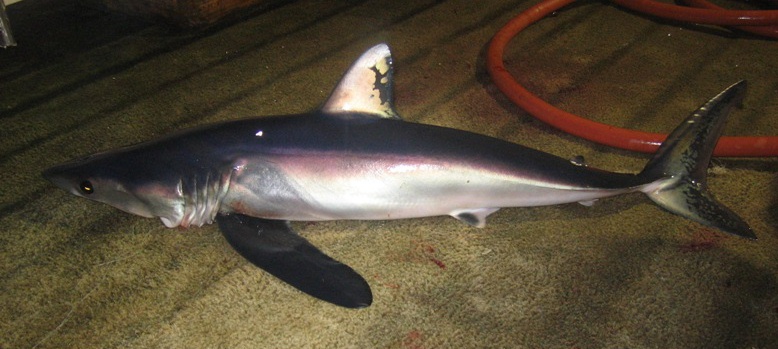 Longfin Mako SharkIsurus paucus
- Cosmopolitodus planus
Compare
Questions and answers
What is the scientific name of the Great White Shark?
The scientific name of the Great White Shark is Carcharodon carcharias. Written with its author, the full name is Carcharodon carcharias (Linnaeus, 1758).
Which family does the Great White Shark belong to?
Carcharodon carcharias belongs to the family Lamnidae, in the order Lamniformes and the class Elasmobranchii.
Where is the Great White Shark found?
Checklists and occurrence records place Carcharodon carcharias in 11 countries, including Australia, United States, New Zealand, South Africa, New Caledonia and Norfolk Island.
What is the conservation status of the Great White Shark?
The IUCN Red List category recorded for Carcharodon carcharias is Vulnerable (VU).
What other names does the Great White Shark have?
Carcharodon carcharias is also known in English as Great White, Grey Death, Grey Pointer, Man-eater, Maneater and Mango-taniwha.
What is the diet of a great white shark?
Great White Sharks eat marine mammals such as seals and dolphins, as well as squid and fish, including other sharks. Adults can also eat tuna, rays and turtles, and the species scavenges whale carcasses.[10][11][12][15]
What type of habitat do great white sharks live in?
Great White Sharks inhabit tropical and temperate ocean waters worldwide. They occur in coastal waters and the open ocean, including offshore reefs, banks, shoals and headlands.[6][7][9]
Sources
Passages the profile rests on
- The shark has a large triangular first dorsal fin and a much smaller second dorsal fin. Source passage: “It has a large triangular first dorsal fin, which partly lines up with the pectoral fins, and a tiny second dorsal fin.” — English Wikipedia
- Its tail fin has two similarly sized lobes and a single keel. Source passage: “The tail fin has two lobes of similar size and a single ridge or keel, and the anal fin is tiny.” — English Wikipedia
- The shark has approximately 300 triangular, serrated teeth that are continuously replaced. Source passage: “It has about three hundred triangular, serrated teeth that are continuously replaced.” — English Wikipedia
- Its triangular teeth can reach 7.5 centimetres in length. Source passage: “The triangular teeth can reach 7.5 cm (3.0 in).” — English Wikipedia
- The shark has black tips on the undersides of its pectoral fins. Source passage: “It also has black tips on the underside of the pectoral fins.” — English Wikipedia
- Great white sharks inhabit tropical and temperate ocean waters worldwide. Source passage: “White sharks inhabit tropical and temperate ocean waters around the world” — English Wikipedia
- The species occurs both in coastal waters and in the open ocean. Source passage: “White sharks can be found both along the coast and in the open ocean.” — English Wikipedia
- Great white sharks can dive to depths of approximately 1,300 metres. Source passage: “but may dive to depths of up to 1,300 m (4,300 ft).” — English Wikipedia
- Coastal habitats used by the species include offshore reefs, banks, shoals and headlands. Source passage: “Coastal habitats used include nearshore archipelagos, offshore reefs, banks and shoals, and headlands.” — English Wikipedia
- Great white sharks prey on marine mammals including seals and dolphins. Source passage: “The white shark preys on marine mammals such as seals and dolphins” — English Wikipedia
- Their diet also includes squid and fish, including other sharks. Source passage: “as well as squid and fish, including other sharks.” — English Wikipedia
- Great white sharks scavenge whale carcasses. Source passage: “It also scavenges whale carcasses.” — English Wikipedia
- Juvenile great white sharks generally feed on bottom-dwelling fish, smaller sharks, rays, schooling fish and squid. Source passage: “Juvenile white sharks mainly eat bottom fish, smaller sharks and rays, and schooling fish and squids.” — fisheries.noaa.gov
- Adult great white sharks commonly feed around seal and sea lion colonies. Source passage: “Larger white sharks often gather around seal and sea lion colonies to feed” — fisheries.noaa.gov
- The diet of adult great white sharks can include tuna, rays, dolphins and turtles. Source passage: “Rays, other sharks, tuna, dolphins and sometimes squid and turtles can also be on the menu.” — nhm.ac.uk
- Great white sharks are highly migratory and travel between coastal and open-ocean habitats, sometimes crossing continents. Source passage: “They are a highly migratory species, traveling between the coast and the open ocean and even between continents.” — English Wikipedia
- Great white sharks are generally solitary but may aggregate at feeding sites. Source passage: “White sharks are generally solitary, but may gather in aggregations, particularly at feeding sites.” — English Wikipedia
- Great white sharks can use body language to communicate and establish dominance hierarchies. Source passage: “They may communicate and establish dominance hierarchies with body language.” — English Wikipedia
- Great white sharks can reach speeds of 40 kilometres per hour in short bursts. Source passage: “This allows them to move as fast as 40 kilometres per hour (25 miles per hour) in short bursts as they accelerate towards their prey.” — nhm.ac.uk
- Great white sharks can ram prey before biting and shaking their heads from side to side to tear away flesh. Source passage: “White sharks have been observed delivering a sudden ram to their prey, followed by a bite and a side-to-side head shake to tear out a chunk of flesh.” — nhm.ac.uk
- Great white shark pups hatch from eggs inside the female before being born live. Source passage: “The species reproduces with pups hatching from eggs inside the female before being born live.” — English Wikipedia
- Newborn great white sharks are approximately 4 feet long. Source passage: “The white shark is born at approximately 4 feet long” — fisheries.noaa.gov
- The IUCN classifies the great white shark globally as vulnerable. Source passage: “The International Union for Conservation of Nature lists the white shark as a vulnerable species globally” — English Wikipedia
- The species is classified as critically endangered regionally in European and Mediterranean waters. Source passage: “and critically endangered regionally in European and Mediterranean waters.” — English Wikipedia
- Accidental capture by commercial fisheries, recreational fishing and entanglement in beach-protection nets have been major threats to great white sharks. Source passage: “Major threats have included accidental catching by commercial fisheries, recreational fishing, and entanglement in protective nets near beaches.” — English Wikipedia
- Great white sharks are protected internationally under CITES Appendix II and CMS Appendix II. Source passage: “The white shark is also protected internationally under CITES Appendix II, CMS Appendix II, UNCLOS, and other international regional fisheries management organizations.” — fisheries.noaa.gov
- Great white sharks are prohibited from being retained in most United States waters and fisheries. Source passage: “The white shark is a prohibited species (no retention allowed) in most U.S. waters and fisheries.” — fisheries.noaa.gov
- Research indicates that the northeastern Pacific great white shark population appears to be increasing. Source passage: “the northeastern Pacific white shark population appears to be increasing and is not at risk of becoming endangered in U.S. waters.” — fisheries.noaa.gov
Data
- Catalogue of Life, 2026-10-16 XR cc by
- Global Biodiversity Information Facility CC BY 4.0
- Wikidata CC0
- GeoNames CC BY 4.0
- Wikimedia Commons per image; credit shown with each image
- Within the Catalogue of Life, this name comes from World Register of Marine Species cc by
References
- Linnaeus, C. (1758) Systema Naturae, Ed. X. (Systema naturae per regna tria naturae, secundum classes, ordines, genera, species, cum characteribus, differentiis, synonymis, locis. Tomus I. Editio decima, reformata. Impensis Direct. Laurentii Salvii, Holmiae, 824 pp. https: // doi. org / 10.5962 / bhl. title. 542 where the name was published
This species in other databases
- Catalogue of Life 5WZLF
- Wikidata Q129026
- iNaturalist 50873
- WoRMS urn:lsid:marinespecies.org:taxname:105838
- ITIS 159903
Page built on 24 November 2026. See how the catalog is made and all sources and licences.
Cite this page
ScientificNames.org. (2026). Carcharodon carcharias (Great White Shark). Retrieved November 24, 2026, from https://scientificnames.org/species/carcharodon-carcharias
“Carcharodon carcharias (Great White Shark).” ScientificNames.org, 2026, scientificnames.org/species/carcharodon-carcharias. Accessed 24 Nov. 2026.
ScientificNames.org. “Carcharodon carcharias (Great White Shark).” Accessed November 24, 2026. https://scientificnames.org/species/carcharodon-carcharias.
@misc{scientificnames_carcharodon_carcharias_great_white_shark,
  author = {{ScientificNames.org}},
  title = {Carcharodon carcharias (Great White Shark)},
  year = {2026},
  url = {https://scientificnames.org/species/carcharodon-carcharias},
  note = {Accessed 2026-11-24}
}