Species · Birds
Great Rosefinch Carpodacus rubicilla
The scientific name of the Great Rosefinch is Carpodacus rubicilla. It is a species of bird in the family Fringillidae (finch), order Passeriformes. The name dates from 1775.
- Scientific name
- Carpodacus rubicilla (Güldenstädt, 1775)
- Common name
- Great Rosefinch
- Genus
- Carpodacus
- Family
- Fringillidae (Finch)
- Order
- Passeriformes
- Class
- Aves
- Red List category
- LC Least Concern
- Recorded in
- 15 countries
- Name status
- accepted in the Catalogue of Life

Overview
Carpodacus rubicilla inhabits alpine and subalpine areas with sparse vegetation and occurs across the Caucasus and Central Asian mountains. Males have red or bright pink plumage with pale spots or frosty speckles, while females have grey or brown streaked plumage.
Written 26 November 2026 from the sources listed below. Each statement was checked against the passage it cites; statements that could not be supported were removed.
Appearance
Male Great Rosefinches have red plumage with white or pinkish-white spots on the middle of their feathers. They have darker faces and brownish wings.[1][2]
Males also have bright pink plumage, dark faces and frosty speckles on their underparts. The bill is horn-coloured.[3][4]
Females have light grey plumage with brownish streaks, except on the rump and lower back. They are also described as having streaky brown plumage.[5][6]
The Great Rosefinch measures 19–20 cm in length.[7]
Habitat
Great Rosefinches inhabit alpine and subalpine areas with sparse, stunted vegetation. They occur on montane and submontane plateaux, generally above the rhododendron zone.[8][9]
Their habitats include exposed hillsides, rocky areas and valleys containing sparse dwarf birch, juniper and willow thickets. They also inhabit scree slopes, glacier and ice-field edges, alpine meadows and open-field margins.[10][11]
During winter, Great Rosefinches move into similar habitats at lower elevations.[12]
Diet
Great Rosefinches feed on seeds, buds, flowers and shoots of alpine plants. Their diet also includes berries and small insects.[13][14]
Reproduction and life cycle
Great Rosefinches breed from late May until the end of August. They construct nests from thin twigs, plant stalks, roots, frass, moss, hair and feathers.[15][16]
Nests are usually placed in rock-face crevices or low bushes on cliffs. They are occasionally built in ruined buildings.[17][18]
The clutch contains four to five eggs.[19]
Behaviour
Great Rosefinches include both resident and altitudinally migratory populations. They descend to lower elevations between October and March.[20][21]
Similar species
The spotted Great Rosefinch was formerly treated as a separate species in some taxonomic classifications.[22]
Classification of the Great Rosefinch
| Kingdom | Animalia |
|---|---|
| Phylum | Chordata |
| Subphylum | Vertebrata |
| Infraphylum | Gnathostomata |
| Parvphylum | Osteichthyes |
| Megaclass | Tetrapoda |
| Class | Aves (Bird) |
| Order | Passeriformes (Passerine) |
| Family | Fringillidae (Finch) |
| Genus | Carpodacus (Rosefinch) |
| Species | Carpodacus rubicilla (Güldenstädt, 1775) |
Where the Great Rosefinch is found
Checklists and occurrence records place Carpodacus rubicilla in 15 countries across Asia. GBIF holds 5,122 georeferenced records of it.
Countries
- Afghanistan 5
- Azerbaijan 47
- China 536
- Georgia 1,155
- India 2,516
- Kazakhstan 19
- Kyrgyzstan 45
- Mongolia 71
- Nepal 261
- Pakistan 10
- Russia 410
- Tajikistan 31
- Turkmenistan 3
- Ukraine 3
- Uzbekistan 10
Regions and cities with the most records
- Mtskheta-Mtianeti, Georgia 978
- Himachal Pradesh, India 496
- Qinghai, China 248
- Leh, India 237
- Tibet, China 146
- Sikkim, India 127
- Yushu, China 37
- Hovd, Mongolia 36
- Gansu, China 34
- Gorno-Badakhshan, Tajikistan 26
- Issyk-Kul, Kyrgyzstan 24
- Naryn Region, Kyrgyzstan 13
- Lhasa, China 12
- Buryatiya Republic, Russia 11
- Chéngguān Qū, China 11
- Doilungdêqên, China 11
- Ömnögovĭ, Mongolia 11
- Kargil, India 10
- Khovd, Mongolia 9
- Almaty Region, Kazakhstan 8
- Krasnodar Krai, Russia 8
- Adygeya Republic, Russia 4
- Dagestan, Russia 4
- Khyber Pakhtunkhwa, Pakistan 4
- Sichuan, China 4
- Sughd, Tajikistan 4
- Turar Ryskulov, Kazakhstan 4
- Uvs Province, Mongolia 4
- Ölgii, Mongolia 4
- Chuy Region, Kyrgyzstan 3
- Crimea, Ukraine 3
- Dagzê, China 3
- East Kazakhstan, Kazakhstan 3
- Guōlèmùdé, China 3
- Osh Region, Kyrgyzstan 3
- Tyrnyauz, Russia 3
Range as the checklists state it
Europe & Northern Asia (excluding China)
Southern Asia
A number beside a place is its count of GBIF occurrence records. A place without a number comes from a checklist alone. Records show where a species has been observed or collected, which can include escapes and vagrants.
Common names
English
- Great Rosefinch
- Spotted Great Rosefinch
Names in 37 other languages
- Arabic
- جزم كبير, عصفور وردي كبير
- Bulgarian
- Голяма червена чинка
- Catalan
- pinsà rosat del Caucas
- Chinese
- 大朱雀
- Croatian
- biserasta rujnica
- Czech
- hýl velký
- Danish
- Stor Rosenfinke
- Dutch
- Grote Roodmus
- Esperanto
- granda fringo
- Estonian
- suur-karmiinleevike
- Finnish
- rakkapunavarpunen
- French
- Roselin tacheté
- Georgian
- დიდი კოჭობა
- German
- Berggimpel
- Hebrew
- ורדית גדולה
- Hungarian
- kaukázusi pirók
- Icelandic
- Jarpfinka
- Irish
- Rósghlasán mór Cugasach
- Italian
- Carpodaco maggiore, Ciuffolotto scarlatto del Caucaso
- Japanese
- シロボシマシコ
- Kazakh
- Үлкен құралай
- Latvian
- dižais svilpis
- Lithuanian
- didžioji raudongalvė sniegena
- Northern Sami
- Duoddarruksesbeibboš
- Norwegian
- fjellrosenfink
- Polish
- dziwonia duża, dziwonia kaukaska
- Portuguese
- peito-carmim-grande, pintarroxo-grande
- Russian
- Большая чечевица
- Serbian
- Velika rumenka
- Slovak
- červenák veľký
- Slovenian
- kavkaški škrlatec
- Spanish
- Camachuelo grande
- Swedish
- större rosenfink
- Turkish
- Büyük Çütre
- Ukrainian
- чечевиця велика
- Welsh
- llinos goch gawraidd
- glv
- Rose-ghlassan mooar
Synonyms
3 other scientific names have been used for this species and are now treated as synonyms of Carpodacus rubicilla.
- Erythrina rubicilla altaicus Dementicy, 1934
- Loxia rubicilla Güldenstädt, JA, 1775
- Rubicilla rubicilla Güldenstädt, JA, 1775
Subspecies and varieties
- Carpodacus rubicilla diabolicus subspecies
- Carpodacus rubicilla kobdensis subspecies
- Carpodacus rubicilla rubicilla subspecies
- Carpodacus rubicilla severtzovi (Spotted Rosefinch) subspecies
Related species
-
 Common RosefinchCarpodacus erythrinus
-
 Sinai RosefinchCarpodacus synoicus
-
 Bonin GrosbeakCarpodacus ferreorostris
-
 Pallas's RosefinchCarpodacus roseus
-
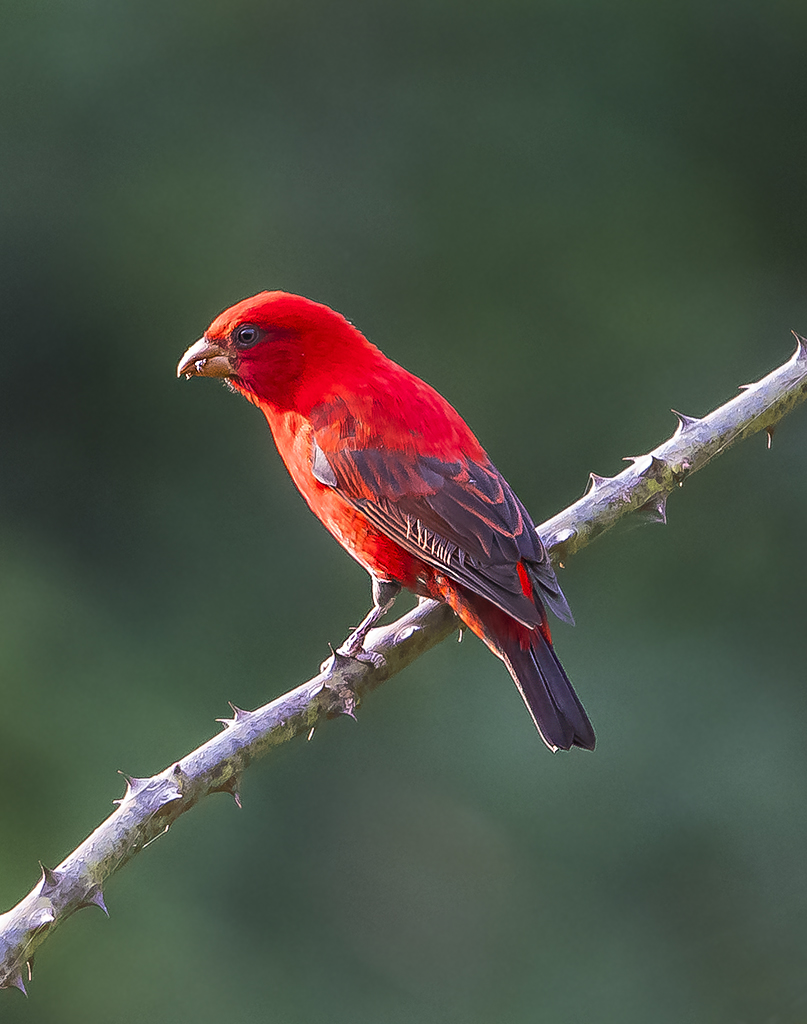 Scarlet FinchCarpodacus sipahi
-
 Siberian Long-tailed RosefinchCarpodacus sibiricus
-
 Pink-browed RosefinchCarpodacus rodochroa
-
 Taiwan RosefinchCarpodacus formosanus
Compare
Questions and answers
What is the scientific name of the Great Rosefinch?
The scientific name of the Great Rosefinch is Carpodacus rubicilla. Written with its author, the full name is Carpodacus rubicilla (Güldenstädt, 1775).
Which family does the Great Rosefinch belong to?
Carpodacus rubicilla belongs to the family Fringillidae, in the order Passeriformes and the class Aves.
Where is the Great Rosefinch found?
Checklists and occurrence records place Carpodacus rubicilla in 15 countries, including India, Georgia, China, Russia, Nepal and Mongolia.
What is the conservation status of the Great Rosefinch?
The IUCN Red List category recorded for Carpodacus rubicilla is Least Concern (LC).
What other names does the Great Rosefinch have?
Carpodacus rubicilla is also known in English as Spotted Great Rosefinch.
Sources
Passages the profile rests on
- Male Great Rosefinches have red plumage with white or pinkish-white spots on the middle of their feathers. Source passage: “The male is red with white or pinkish white spots on the middle of the feathers.” — English Wikipedia
- Male Great Rosefinches have a darker face and brownish wings. Source passage: “The face is a deeper colour than the rest of the body and the wings are brownish.” — English Wikipedia
- The bill of the Great Rosefinch is horn-coloured. Source passage: “The bill is horn coloured.” — English Wikipedia
- Male Great Rosefinches have bright pink plumage, dark faces and frosty speckles on their underparts. Source passage: “Male is bright pink with a dark face and frosty specks on the underparts.” — ebird.org
- Female Great Rosefinches are light grey with brownish streaks, except on the rump and lower back. Source passage: “The females are light grey in colour with brwonish streaks except the rump and lower back are not streaked.” — English Wikipedia
- Female Great Rosefinches have streaky brown plumage. Source passage: “Female is streaky brown all over.” — ebird.org
- The Great Rosefinch measures 19–20 cm in length. Source passage: “The great rosefinch is a large rosefinch with a length of 19–20 cm (7.5–7.9 in).” — English Wikipedia
- Great Rosefinches inhabit alpine and subalpine areas with sparse, stunted vegetation. Source passage: “This species is found in alpine and subalpine areas where there is stunted, sparse vegetation” — English Wikipedia
- The species occurs on montane and submontane plateaux, generally above the rhododendron zone. Source passage: “on montane and submontane plateaux, normally above the rhododendron zone” — English Wikipedia
- Great Rosefinches use exposed hillsides, rocky areas and valleys containing sparse dwarf birch, juniper and willow thickets. Source passage: “in exposed hillsides, near rock faces and in valleys with sparse dwarf birch, juniper and willow thickets” — English Wikipedia
- The species also inhabits scree slopes, glacier and ice-field edges, alpine meadows and open-field margins. Source passage: “as well as scree lopes. It can also be found at the edges of glaciers and ice-fields, alpine meadows, and the margins of open fields.” — English Wikipedia
- During winter, Great Rosefinches move into similar habitats at lower elevations. Source passage: “They move to similar habitats at lower altitudes with the onset of winter.” — English Wikipedia
- Great Rosefinches feed on seeds, buds, flowers and shoots of alpine plants. Source passage: “These finches feeed on seeds, buds and flowers and shoots of alpine plants” — English Wikipedia
- Berries and small insects are also part of the Great Rosefinch diet. Source passage: “with berries and small insects eaten too.” — English Wikipedia
- Great Rosefinches breed from late May until the end of August. Source passage: “The great rosefinch breeds from late May up to the end of August.” — English Wikipedia
- Great Rosefinches construct their nests from thin twigs, plant stalks, roots, frass, moss, hair and feathers. Source passage: “The nest is made using thin twigs, plant stalks and roots, frass, moss , hair and feathers” — English Wikipedia
- Great Rosefinches usually place their nests in rock-face crevices or low bushes on cliffs. Source passage: “is placed ina crevice on a rock face or in a low bushon a cliff” — English Wikipedia
- Great Rosefinches occasionally nest in ruined buildings. Source passage: “occasionally in a ruined buiding.” — English Wikipedia
- The clutch contains four to five eggs. Source passage: “The cluch is 4-5 eggs.” — English Wikipedia
- Great Rosefinches include both resident and altitudinally migratory populations. Source passage: “Great rosfinches are both residents and altitudinal migrants” — English Wikipedia
- Great Rosefinches descend to lower elevations between October and March. Source passage: “descending to lower altitudes from October until March.” — English Wikipedia
- The spotted Great Rosefinch was formerly treated as a separate species in some taxonomic classifications. Source passage: “While past taxonomies treated C. r. severtzovi and two other subspecies as a separate species, the spotted great rosefinch” — English Wikipedia
- The Great Rosefinch occurs in the Caucasus Mountains of Georgia, Azerbaijan and southern Russia. Source passage: “The great rosefinch is found in the Caucasus Mountains in Georgia, Azerbaijan and the far south of Russia” — English Wikipedia
- The species occurs across Central Asian mountains from Mongolia and Siberia south to Pakistan and India, including western China. Source passage: “it also occurs over a wide range in the mountains of Central Asia from Mongolia and Siberia south to Pakistan and India, including western China.” — English Wikipedia
Data
- Catalogue of Life, 2026-10-16 XR cc by
- Global Biodiversity Information Facility CC BY 4.0
- Wikidata CC0
- GeoNames CC BY 4.0
- Wikimedia Commons per image; credit shown with each image
- Within the Catalogue of Life, this name comes from The Integrated Taxonomic Information System cc0
References
- Gill, Frank, & and Minturn Wright. (2006). Birds of the World: Recommended English Names.
This species in other databases
Page built on 29 November 2026. See how the catalog is made and all sources and licences.
Cite this page
ScientificNames.org. (2026). Carpodacus rubicilla (Great Rosefinch). Retrieved November 29, 2026, from https://scientificnames.org/species/carpodacus-rubicilla
“Carpodacus rubicilla (Great Rosefinch).” ScientificNames.org, 2026, scientificnames.org/species/carpodacus-rubicilla. Accessed 29 Nov. 2026.
ScientificNames.org. “Carpodacus rubicilla (Great Rosefinch).” Accessed November 29, 2026. https://scientificnames.org/species/carpodacus-rubicilla.
@misc{scientificnames_carpodacus_rubicilla_great_rosefinch,
  author = {{ScientificNames.org}},
  title = {Carpodacus rubicilla (Great Rosefinch)},
  year = {2026},
  url = {https://scientificnames.org/species/carpodacus-rubicilla},
  note = {Accessed 2026-11-29}
}