Species · Reptiles
Northern Pale-hipped Skink Celatiscincus similis
The scientific name of the Northern Pale-hipped Skink is Celatiscincus similis. It is a species of reptile in the family Scincidae (skink), order Squamata. The name dates from 2006.
- Scientific name
- Celatiscincus similis Sadlier, Smith & Bauer, 2006
- Common name
- Northern Pale-hipped Skink
- Genus
- Celatiscincus
- Family
- Scincidae (Skink)
- Order
- Squamata
- Class
- Reptilia
- Red List category
- EN Endangered
- Recorded in
- 1 country
- Name status
- accepted in the Catalogue of Life
Overview
Celatiscincus similis, the northern pale-hipped skink, is a species of lizard in the family Scincidae. It is endemic to New Caledonia.
Classification of the Northern Pale-hipped Skink
| Kingdom | Animalia |
|---|---|
| Phylum | Chordata |
| Subphylum | Vertebrata |
| Infraphylum | Gnathostomata |
| Parvphylum | Osteichthyes |
| Megaclass | Tetrapoda |
| Class | Reptilia (Reptile) |
| Order | Squamata (Snakes) |
| Suborder | Autarchoglossa |
| Family | Scincidae (Skink) |
| Subfamily | Eugongylinae |
| Genus | Celatiscincus (Pale-hipped Skinks) |
| Species | Celatiscincus similis Sadlier, Smith & Bauer, 2006 |
Where the Northern Pale-hipped Skink is found
Checklists and occurrence records place Celatiscincus similis in 1 country across Oceania. GBIF holds 18 georeferenced records of it.
Countries
Range as the checklists state it
New Caledonia
A number beside a place is its count of GBIF occurrence records. A place without a number comes from a checklist alone. Records show where a species has been observed or collected, which can include escapes and vagrants.
Common names
English
- Northern Pale-hipped Skink
Names in 1 other language
- French
- Scinque aux Hanches Pâles du Nord
Related species
- Southern Pale-hipped SkinkCelatiscincus euryotis
-
 ShinglebackTiliqua rugosa
-
 Five-lined SkinkPlestiodon fasciatus
- Common Garden SkinkLampropholis guichenoti
-
 Blue-tailed SkinkCryptoblepharus egeriae
-
 Red-eyed Crocodile SkinkTribolonotus gracilis
-
 Common Blue-tongued SkinkTiliqua scincoides
-
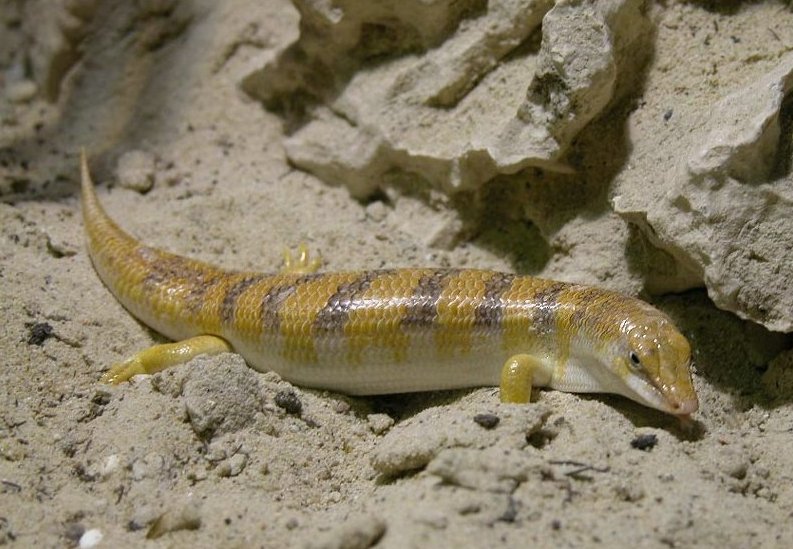 Sandfish SkinkScincus scincus
Compare
Questions and answers
What is the scientific name of the Northern Pale-hipped Skink?
The scientific name of the Northern Pale-hipped Skink is Celatiscincus similis. Written with its author, the full name is Celatiscincus similis Sadlier, Smith & Bauer, 2006.
Which family does the Northern Pale-hipped Skink belong to?
Celatiscincus similis belongs to the family Scincidae, in the order Squamata and the class Reptilia.
Where is the Northern Pale-hipped Skink found?
Checklists and occurrence records place Celatiscincus similis in 1 country: New Caledonia.
What is the conservation status of the Northern Pale-hipped Skink?
The IUCN Red List category recorded for Celatiscincus similis is Endangered (EN).
Sources
Data
- Catalogue of Life, 2026-10-16 XR cc by
- Global Biodiversity Information Facility CC BY 4.0
- Wikidata CC0
- English Wikipedia CC BY-SA 4.0
- GeoNames CC BY 4.0
- Within the Catalogue of Life, this name comes from The Reptile Database cc by
References
- A new genus for the New Caledonian scincid lizard Lygosoma euryotis Werner, 1909, and the description of a new species. (2006). Records of the Australian Museum, 58(1), 19–28. https://doi.org/10.3853/j.0067-1975.58.2006.1457 Link where the name was published
- Sadlier, R. A., Smith, S. A., & Bauer, A. M. (2006). A new genus for the New Caledonian scincid lizard Lygosoma euryotis Werner, 1909, and the description of a new species. Rec. Austral. Mus. 58 (1):19-28.
This species in other databases
Page built on 28 November 2026. See how the catalog is made and all sources and licences.
Cite this page
ScientificNames.org. (2026). Celatiscincus similis (Northern Pale-hipped Skink). Retrieved November 28, 2026, from https://scientificnames.org/species/celatiscincus-similis
“Celatiscincus similis (Northern Pale-hipped Skink).” ScientificNames.org, 2026, scientificnames.org/species/celatiscincus-similis. Accessed 28 Nov. 2026.
ScientificNames.org. “Celatiscincus similis (Northern Pale-hipped Skink).” Accessed November 28, 2026. https://scientificnames.org/species/celatiscincus-similis.
@misc{scientificnames_celatiscincus_similis_northern_pale_hipped_skink,
  author = {{ScientificNames.org}},
  title = {Celatiscincus similis (Northern Pale-hipped Skink)},
  year = {2026},
  url = {https://scientificnames.org/species/celatiscincus-similis},
  note = {Accessed 2026-11-28}
}