Species · Mammals
Little Desert Pocket Mouse Chaetodipus arenarius
The scientific name of the Little Desert Pocket Mouse is Chaetodipus arenarius. It is a species of mammal in the family Heteromyidae (pocket mice), order Rodentia. The name dates from 1894.
- Scientific name
- Chaetodipus arenarius (Merriam, 1894)
- Common name
- Little Desert Pocket Mouse
- Genus
- Chaetodipus
- Family
- Heteromyidae (Pocket Mice)
- Order
- Rodentia
- Class
- Mammalia
- Red List category
- LC Least Concern
- Recorded in
- 1 country
- Name status
- accepted in the Catalogue of Life

Overview
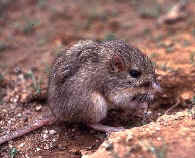
Chaetodipus arenarius is the Little Desert Pocket Mouse, a species endemic to Mexico. Its geographic range includes the Baja California peninsula, Jacques Cousteau Island, and Magdalena Island. It has soft, fairly silky fur without the spines present in some related species.
Written 26 November 2026 from the sources listed below. Each statement was checked against the passage it cites; statements that could not be supported were removed.
Appearance
The species reaches approximately 154 mm in total length, including its tail, which measures approximately 86 mm. Males are slightly larger than females.[1][2][3]
Its fur is soft and fairly silky, without the spines present in some related species. Some individuals have a few soft bristles on their rump.[4][5]
Its ears are dark, with a small patch of white hairs at their bases. Its dorsal coloration ranges from pale gray or pale buff to dark brown, and some individuals have dark-tipped guard hairs that produce a grizzled appearance.[6][7][8]
The upper surface of its tail matches the coloration of its back, while the underparts, feet, and underside of its tail are white or cream-colored. A faint or absent buff-colored line sometimes separates its upper body coloration from its underparts.[9][10][11]
Habitat
Its typical habitat includes arid flatlands with sparse vegetation and loose, dry, sandy soils. It also occurs on slopes and ridges and inhabits the floors of dried-up riverbeds.[12][13][14]
The species is endemic to Mexico. Its geographic range includes the Baja California peninsula, Jacques Cousteau Island, and Magdalena Island.[15][16][17][18]
Behaviour
The species lives in burrows and appears to favor sandy soils.[19][20]
Reproduction and life cycle
A female specimen containing two embryos was captured in March. The breeding habits of the species are not known.[21][22]
Conservation
The species is common in suitable habitat within its geographic range and does not appear to face any specific threat. Its population trend has not been evaluated.[23][24][25]
The International Union for Conservation of Nature assesses the species as Least Concern. Its total population is presumed to be large.[26][27]
Classification of the Little Desert Pocket Mouse
| Kingdom | Animalia |
|---|---|
| Phylum | Chordata |
| Subphylum | Vertebrata |
| Infraphylum | Gnathostomata |
| Parvphylum | Osteichthyes |
| Megaclass | Tetrapoda |
| Class | Mammalia (Mammal) |
| Subclass | Theria |
| Infraclass | Eutheria |
| Order | Rodentia (Rodent) |
| Suborder | Castorimorpha |
| Family | Heteromyidae (Pocket Mice) |
| Subfamily | Perognathinae (Silky Pocket Mice) |
| Genus | Chaetodipus (Hispid Pocket Mice) |
| Species | Chaetodipus arenarius (Merriam, 1894) |
Where the Little Desert Pocket Mouse is found
Checklists and occurrence records place Chaetodipus arenarius in 1 country across North America. GBIF holds 4,107 georeferenced records of it.
Countries
Regions and cities with the most records
- Baja California Sur, Mexico 1,572
- Baja California, Mexico 1,270
- San Felipe, Mexico 322
- Lázaro Cárdenas, Mexico 102
- La Paz, Mexico 55
- Ciudad Constitución, Mexico 19
- Zacatecas, Mexico 19
- Calexico, United States 13
- Santa Isabel, Mexico 13
- California, United States 10
- El Centro, United States 10
- La Joya, Mexico 7
- Las Delicias, Mexico 7
- Pórticos de San Antonio, Mexico 7
- Rosarito, Mexico 7
- Tijuana, Mexico 7
- Villa del Prado 2da Sección, Mexico 7
- Colonia del Sol, Mexico 6
- Mexicali, Mexico 3
Range as the checklists state it
Middle America
A number beside a place is its count of GBIF occurrence records. A place without a number comes from a checklist alone. Records show where a species has been observed or collected, which can include escapes and vagrants.
Common names
English
- Little Desert Pocket Mouse
- Sand Pocket Mouse
Names in 6 other languages
- Finnish
- bajantaskuhiiri
- German
- Kleine Wüstentaschenmaus
- Japanese
- ヒメスナポケットマウス
- Polish
- chomikomyszka mała
- Russian
- Песчаный щетинистый прыгун
- Spanish
- Ratón de abazones arenero
Synonyms
One other scientific name has been used for this species and is now treated as a synonym of Chaetodipus arenarius.
- Perognathus arenarius Merriam, 1894
Subspecies and varieties
- Chaetodipus arenarius albescens subspecies
- Chaetodipus arenarius albulus subspecies
- Chaetodipus arenarius ambiguus subspecies
- Chaetodipus arenarius arenarius subspecies
- Chaetodipus arenarius helleri subspecies
- Chaetodipus arenarius mexicalis subspecies
- Chaetodipus arenarius paralios subspecies
- Chaetodipus arenarius ramirezpulidoi subspecies
- Chaetodipus arenarius sabulosus subspecies
Related species
-
 Rock Pocket MouseChaetodipus intermedius
-
 Desert Pocket MouseChaetodipus penicillatus
-
 Spiny Pocket MouseChaetodipus spinatus
-
 Hispid Pocket MouseChaetodipus hispidus
-
 California Pocket MouseChaetodipus californicus
-
 Bailey's Pocket MouseChaetodipus baileyi
-
 Nelson's Pocket MouseChaetodipus nelsoni
-
 Long-tailed Pocket MouseChaetodipus formosus
Compare
Questions and answers
What is the scientific name of the Little Desert Pocket Mouse?
The scientific name of the Little Desert Pocket Mouse is Chaetodipus arenarius. Written with its author, the full name is Chaetodipus arenarius (Merriam, 1894).
Which family does the Little Desert Pocket Mouse belong to?
Chaetodipus arenarius belongs to the family Heteromyidae, in the order Rodentia and the class Mammalia.
Where is the Little Desert Pocket Mouse found?
Checklists and occurrence records place Chaetodipus arenarius in 1 country: Mexico.
What is the conservation status of the Little Desert Pocket Mouse?
The IUCN Red List category recorded for Chaetodipus arenarius is Least Concern (LC).
What other names does the Little Desert Pocket Mouse have?
Chaetodipus arenarius is also known in English as Sand Pocket Mouse.
What eats pocket mice?
The American barn owl (Tyto alba) is identified as the Little Desert Pocket Mouse's main predator.[28]
Sources
Passages the profile rests on
- The species reaches approximately 154 mm in total length, including its tail. Source passage: “The little desert pocket mouse reaches a length of about 154 mm (6.1 in) including a tail of 86 mm (3.4 in)” — English Wikipedia
- Its tail measures approximately 86 mm in length. Source passage: “including a tail of 86 mm (3.4 in)” — English Wikipedia
- Males are slightly larger than females. Source passage: “with males being slightly larger than females.” — English Wikipedia
- Its fur is soft and fairly silky, without the spines present in some related species. Source passage: “The fur is soft and fairly silky, with none of the spines found in some related species” — English Wikipedia
- Some individuals have a few soft bristles on their rump. Source passage: “although there may be a few soft bristles on the rump.” — English Wikipedia
- Its ears are dark and have a small patch of white hairs at their bases. Source passage: “The ears are dark, featuring a tiny patch of white hairs at their base.” — English Wikipedia
- Its dorsal coloration ranges from pale gray or pale buff to dark brown. Source passage: “The color of the dorsal surface ranges from pale gray or pale buff to dark brown” — English Wikipedia
- Some individuals have dark-tipped guard hairs that produce a grizzled appearance. Source passage: “some may have dark-tipped guard hairs that create a grizzled appearance.” — English Wikipedia
- The upper surface of its tail matches the coloration of its back. Source passage: “The upper half of the tail matches the dorsal color” — English Wikipedia
- Its underparts, feet, and the underside of its tail are white or cream-colored. Source passage: “the underparts of the body, the feet, and the lower side of the tail are white or cream-colored.” — English Wikipedia
- A faint or absent buff-colored line sometimes separates its upper body coloration from its underparts. Source passage: “There may be a buff-colored line separating the upper parts from the underparts, but this line is faint or absent in some populations.” — English Wikipedia
- Its typical habitat includes arid flatlands with sparse vegetation and loose, dry, sandy soils. Source passage: “Its typical habitat is arid flat areas with scant vegetation and loose, dry, sandy soils” — English Wikipedia
- The species also occurs on slopes and ridges. Source passage: “but it is also found on slopes and ridges” — English Wikipedia
- The species also inhabits the floors of dried-up riverbeds. Source passage: “and even the floors of dried-up riverbeds.” — English Wikipedia
- The species is endemic to Mexico. Source passage: “The little desert pocket mouse is endemic to Mexico.” — English Wikipedia
- Its geographic range includes the Baja California peninsula. Source passage: “Its range includes the Baja California peninsula” — English Wikipedia
- Its range includes Jacques Cousteau Island. Source passage: “Jacques Cousteau Island” — English Wikipedia
- Its range includes Magdalena Island. Source passage: “and Magdalena Island.” — English Wikipedia
- The species lives in burrows. Source passage: “It lives in a burrow” — English Wikipedia
- The species appears to favor sandy soils. Source passage: “seems to have an affinity for sandy soils.” — English Wikipedia
- A female specimen containing two embryos was captured in March. Source passage: “a female specimen containing two embryos was caught in March.” — English Wikipedia
- The breeding habits of the species are not known. Source passage: “Its breeding habits are not known” — English Wikipedia
- The population trend of the species has not been evaluated. Source passage: “Although the population trend of the little desert pocket mouse has not been evaluated” — English Wikipedia
- The species is common in suitable habitat within its geographic range. Source passage: “it is common in suitable habitat within its range” — English Wikipedia
- The species does not appear to face any specific threat. Source passage: “does not appear to face any specific threat.” — English Wikipedia
- The species is assessed as being of Least Concern by the International Union for Conservation of Nature. Source passage: “the International Union for Conservation of Nature has assessed its conservation status as being of "least concern".” — English Wikipedia
- The species is presumed to have a large total population. Source passage: “its presumed large total population” — English Wikipedia
- The American barn owl (Tyto alba) is identified as the species' main predator. Source passage: “Its main predator is the American barn owl (Tyto alba).” — English Wikipedia
Data
- Catalogue of Life, 2026-10-16 XR cc by
- Global Biodiversity Information Facility CC BY 4.0
- Wikidata CC0
- GeoNames CC BY 4.0
- Wikimedia Commons per image; credit shown with each image
- Within the Catalogue of Life, this name comes from The Integrated Taxonomic Information System cc0
References
- Proc. California Acad. Sci., ser. 2 vol.4 p.461 where the name was published
- Lackey, & James Alden. (1991). Chaetodipus arenarius. Mammalian Species, No. 384.
- Wilson, Don E., and DeeAnn M. Reeder, eds. (1993). Mammal Species of the World: A Taxonomic and Geographic Reference, 2nd Ed., 3rd Printing.
- Wilson, Don E., and F. Russell Cole. (2000). Common Names of Mammals of the World.
- Wilson, Don E., and DeeAnn M. Reeder, eds. (2005). Mammal Species of the World: A Taxonomic and Geographic Reference, 3rd Ed., Vols. 1 & 2.
- Álvarez-Castañeda, Sergio Ticul, & and Evelyn Rios. (2011). Revision of Chaetodipus arenarius (Rodentia: Heteromyidae). Zoological Journal of the Linnean Society, Vol. 161.
- Álvarez-Castañeda, Sergio Ticul, Consuelo Lorenzo, Evelyn Rios, Patricia Cortés-Calva, et al. (2012). DNA barcoding of mammals in Mexico: implications for biodiversity. The Open Zoology Journal, Vol. 5, Special Issue 1.
- Hafner, M. S. / Wilson, Don E., T. E. Lacher Jr., and R. A. Mittermeier, eds. (2016). Family Heteromyidae (Pocket Mice, Kangaroo Mice and Kangaroo Rats). Handbook of the Mammals of the World. Vol. 6: Lagomorphs and Rodents I.
- Burgin, Connor J., Don E. Wilson, Russell A. Mittermeier, Anthony B. Rylands, et al. (2020). Illustrated Checklist of the Mammals of the World. Vol. 1. Monotremata to Rodentia.
This species in other databases
Page built on 28 November 2026. See how the catalog is made and all sources and licences.
Cite this page
ScientificNames.org. (2026). Chaetodipus arenarius (Little Desert Pocket Mouse). Retrieved November 28, 2026, from https://scientificnames.org/species/chaetodipus-arenarius
“Chaetodipus arenarius (Little Desert Pocket Mouse).” ScientificNames.org, 2026, scientificnames.org/species/chaetodipus-arenarius. Accessed 28 Nov. 2026.
ScientificNames.org. “Chaetodipus arenarius (Little Desert Pocket Mouse).” Accessed November 28, 2026. https://scientificnames.org/species/chaetodipus-arenarius.
@misc{scientificnames_chaetodipus_arenarius_little_desert_pocket_mouse,
  author = {{ScientificNames.org}},
  title = {Chaetodipus arenarius (Little Desert Pocket Mouse)},
  year = {2026},
  url = {https://scientificnames.org/species/chaetodipus-arenarius},
  note = {Accessed 2026-11-28}
}