Species · Flowering plants
Citrus latipes
Citrus latipes has no English name on record in the checklists used here. It is a species of flowering plant in the family Rutaceae (rue family), order Sapindales.
- Scientific name
- Citrus latipes (Swingle) Yu.Tanaka
- Genus
- Citrus
- Family
- Rutaceae (Rue Family)
- Order
- Sapindales
- Class
- Magnoliopsida
- Red List category
- NT Near Threatened
- Recorded in
- 5 countries
- Name status
- accepted in the Catalogue of Life

Overview
Citrus latipes is a small, thorny tree in the family Rutaceae. It is native to Northeast India. It is known locally as Soh-Shyrkhoit in the Khasi language, meaning monkey's fruit.
Written 26 November 2026 from the sources listed below. Each statement was checked against the passage it cites; statements that could not be supported were removed.
Appearance
Citrus latipes is a small, thorny tree that closely resembles Kaffir lime and Ichang papeda.[1][2]
Habitat
Citrus latipes is native to Northeast India. It is known locally as Soh-Shyrkhoit in the Khasi language, a name meaning monkey's fruit.[3][4][5]
Similar species
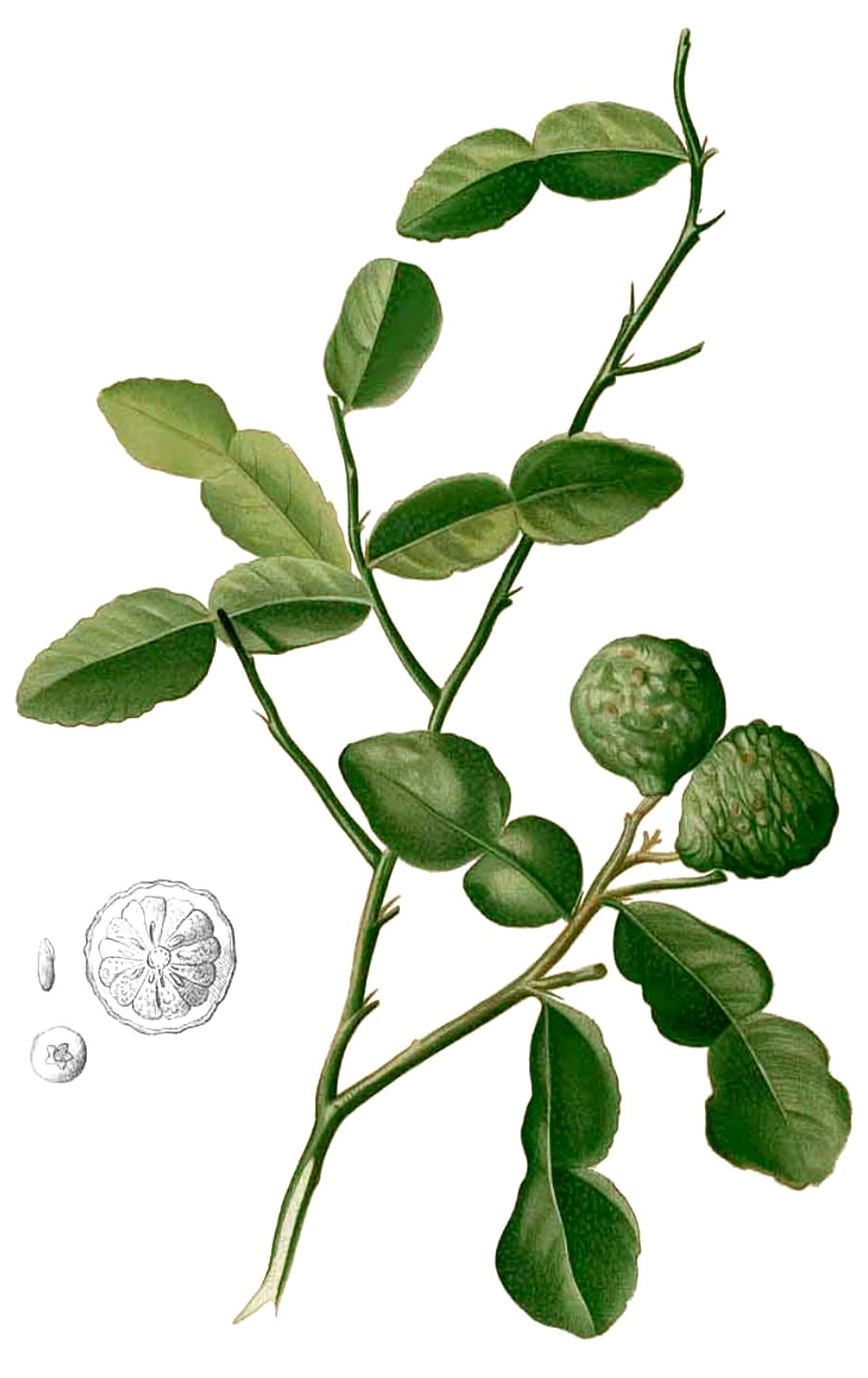
Citrus latipes is sometimes mistaken for Kaffir lime (Citrus hystrix). It closely resembles both Kaffir lime and Ichang papeda (Citrus cavaleriei).[6][2]
Uses
The fruits are used medicinally in Northeastern India to treat stone problems.[7]
Citrus latipes is identified as a potential resource for breeding and rootstocks for commercial citrus cultivars because of its reported immunity to Huanglongbing.[8]
Conservation
Citrus latipes is extremely rare in cultivation.[9]
Classification of Citrus latipes
| Kingdom | Plantae |
|---|---|
| Subkingdom | Pteridobiotina |
| Phylum | Tracheophyta |
| Class | Magnoliopsida |
| Order | Sapindales |
| Family | Rutaceae (Rue Family) |
| Subfamily | Aurantioideae |
| Genus | Citrus (Kumquat) |
| Species | Citrus latipes (Swingle) Yu.Tanaka |
Where Citrus latipes is found
Checklists and occurrence records place Citrus latipes in 5 countries across Asia. GBIF holds 14 georeferenced records of it.
Countries
Regions and cities with the most records
1 more country has a few records outside this range
These countries hold a few records of Citrus latipes but lie outside the range the checklists give for it. Such records are often zoo or garden specimens, museum material or vagrants, so the species is not counted as occurring there.
Range as the checklists state it
Bhutan; India (Meghalaya, Nagaland); Bangladesh; N-Myanmar
A number beside a place is its count of GBIF occurrence records. A place without a number comes from a checklist alone. Records show where a species has been observed or collected, which can include escapes and vagrants.
Common names
Names in 2 other languages
- Chinese
- 墨脱橙
- asm
- Khasi papeda
Synonyms
One other scientific name has been used for this species and is now treated as a synonym of Citrus latipes.
- Citrus ichangensis subsp. latipes Swingle
Related species
-
 PomeloCitrus maxima
-
 LemonCitrus × limon
-
 YuzuCitrus × junos
-
 Swatow OrangeCitrus × reticulata
-
 CitronCitrus medica
-
 Bitter OrangeCitrus × aurantium
-
 Kaffir LimeCitrus hystrix
-
 Key LimeCitrus × aurantiifolia
Compare
Sources
Passages the profile rests on
- Citrus latipes is a small, thorny tree. Source passage: “the khasi papeda is a small, thorny tree” — English Wikipedia
- Citrus latipes closely resembles Kaffir lime and Ichang papeda (Citrus cavaleriei). Source passage: “closely resembles both kaffir limes and ichang papedas (C. cavaleriei).” — English Wikipedia
- Citrus latipes is native to Northeast India. Source passage: “Native to Northeast India” — English Wikipedia
- Citrus latipes is known locally as Soh-Shyrkhoit in the Khasi language. Source passage: “Locally, it is known as "Soh-Shyrkhoit" in the Khasi language” — English Wikipedia
- The Khasi name Soh-Shyrkhoit means monkey's fruit. Source passage: “meaning the fruit of a monkey.” — English Wikipedia
- Citrus latipes is sometimes mistaken for Kaffir lime (Citrus hystrix). Source passage: “is sometimes mistakenly identified as Kaffir lime (C. hystrix).” — English Wikipedia
- Citrus latipes fruits are used medicinally in Northeastern India to treat stone problems. Source passage: “Fruits of C. latipes are used medicinally in Northeastern India "to treat stone problem".” — English Wikipedia
- Citrus latipes is identified as a potential resource for breeding and rootstocks for commercial citrus cultivars because of its reported immunity to Huanglongbing. Source passage: “C. latipes and C. trifoliata are immune to HLB and can be utilised in breeding and as rootstocks for commercial citrus cultivars.” — pmc.ncbi.nlm.nih.gov
- Citrus latipes is extremely rare in cultivation. Source passage: “extremely rare in cultivation” — English Wikipedia
Data
- Catalogue of Life, 2026-10-16 XR cc by
- Global Biodiversity Information Facility CC BY 4.0
- Wikidata CC0
- GeoNames CC BY 4.0
- Wikimedia Commons per image; credit shown with each image
- Within the Catalogue of Life, this name comes from Synonymic Checklists of the Vascular Plants of the World cc by
References
- Yu.Tanaka. (1928). Stud. Citrol. 2: 155 (1928). where the name was published
This species in other databases
Page built on 28 November 2026. See how the catalog is made and all sources and licences.
Cite this page
ScientificNames.org. (2026). Citrus latipes. Retrieved November 28, 2026, from https://scientificnames.org/species/citrus-latipes
“Citrus latipes.” ScientificNames.org, 2026, scientificnames.org/species/citrus-latipes. Accessed 28 Nov. 2026.
ScientificNames.org. “Citrus latipes.” Accessed November 28, 2026. https://scientificnames.org/species/citrus-latipes.
@misc{scientificnames_citrus_latipes,
  author = {{ScientificNames.org}},
  title = {Citrus latipes},
  year = {2026},
  url = {https://scientificnames.org/species/citrus-latipes},
  note = {Accessed 2026-11-28}
}