Species · Flowering plants
American Yellowwood Cladrastis kentukea
The scientific name of the American Yellowwood is Cladrastis kentukea. It is a species of flowering plant in the family Fabaceae (bean), order Fabales.
- Scientific name
- Cladrastis kentukea (Dum.Cours.) Rudd
- Common name
- American Yellowwood
- Genus
- Cladrastis
- Family
- Fabaceae (Bean)
- Order
- Fabales
- Class
- Magnoliopsida
- Red List category
- LC Least Concern
- Recorded in
- 9 countries
- Name status
- accepted in the Catalogue of Life

Overview
Cladrastis kentukea is native to the southeastern United States, with a restricted native range extending from western North Carolina west to eastern Oklahoma and from southern Missouri and Indiana south to central Alabama. It is distinguished by fragrant white flowers growing in racemes and compound pinnate leaves that can display yellow, gold and orange autumn colors.
Written 26 November 2026 from the sources listed below. Each statement was checked against the passage it cites; statements that could not be supported were removed.
Appearance
Its compound pinnate leaves measure 20–30 centimetres long and generally contain 5–11 alternately arranged leaflets, most commonly 7–9. The leaflets are broadly ovate, with acute tips and entire margins, and their undersides range from thinly to densely hairy.[1][2][3][4]
Its fruit is a pod measuring 5–8 centimetres long. Its wood is yellow to pale brown, heavy, hard, close-grained and strong.[5][6]
The tree can develop a trunk that divides close to ground level, producing a multi-trunked form.[7]
Reproduction and life cycle
American yellowwood flowers in early summer, generally during June in its native region. Flower production varies between years, with particularly abundant flowering every second or third year.[8][9]
Its flowers have ten free stamens. The ovary is superior, linear, bright red and hairy.[10][11]
Each fruit pod contains between two and six seeds.[12]
Habitat
American yellowwood occurs principally on limestone cliffs in Kentucky, Tennessee and North Carolina. It is hardy as far north as USDA hardiness zone 4.[13][14]
The tree grows successfully in full sunlight and thrives in well-drained soil. It tolerates both high-pH soils and acidic growing conditions.[15][16][17]
It can withstand urban growing environments.[18]
Uses
American yellowwood is widely cultivated as an ornamental tree because of its attractive flowers. It is recommended as an ornamental tree for gardens.[19][20]
The species received a Pennsylvania Horticultural Society Gold Award in 1994. The Society of Municipal Arborists selected it as its Urban Tree of the Year for 2015.[21][22]
Behaviour
American yellowwood attracts birds. It also supports and attracts bees and butterflies as a pollinator plant.[23][24]
Conservation
American yellowwood is described as one of the rarest trees in eastern North America. It has become locally naturalized in many areas of the eastern United States outside its restricted native range.[25][26]
Classification of the American Yellowwood
| Kingdom | Plantae |
|---|---|
| Subkingdom | Pteridobiotina |
| Phylum | Tracheophyta |
| Class | Magnoliopsida |
| Order | Fabales |
| Family | Fabaceae (Bean) |
| Genus | Cladrastis (Yellowwood) |
| Species | Cladrastis kentukea (Dum.Cours.) Rudd |
Where the American Yellowwood is found
Checklists and occurrence records place Cladrastis kentukea in 9 countries across Asia, Europe and North America. GBIF holds 2,958 georeferenced records of it.
Countries where it has been introduced
- Canada 62
- Germany 26
- Kyrgyzstan 3
- Romania
- Russia
- Tajikistan
- Ukraine 14
- United States 2,853
- Uzbekistan
Regions and cities with the most records
- New York, United States 654
- Manhattan, United States 423
- New York City, United States 423
- Queens, United States 422
- Brooklyn, United States 418
- Hoboken, United States 392
- Union City, United States 378
- West New York, United States 374
- The Bronx, United States 346
- North Bergen, United States 328
- Cliffside Park, United States 314
- Jersey City, United States 294
- Port Washington, United States 292
- Elmont, United States 284
- Secaucus, United States 283
- Fort Lee, United States 274
- Floral Park, United States 263
- Palisades Park, United States 260
- North Valley Stream, United States 239
- Mount Vernon, United States 236
- Valley Stream, United States 233
- Bayonne, United States 224
- New Rochelle, United States 224
- Tennessee, United States 212
- Englewood, United States 208
- Woodmere, United States 208
- Franklin Square, United States 197
- Lynbrook, United States 188
- Yonkers, United States 186
- Hackensack, United States 177
- Teaneck, United States 177
- Mineola, United States 173
- West Hempstead, United States 166
- Bergenfield, United States 161
- Rockville Centre, United States 157
- Garden City, United States 154
12 more countries have a few records outside this range
These countries hold a few records of Cladrastis kentukea but lie outside the range the checklists give for it. Such records are often zoo or garden specimens, museum material or vagrants, so the species is not counted as occurring there.
A number beside a place is its count of GBIF occurrence records. A place without a number comes from a checklist alone. Records show where a species has been observed or collected, which can include escapes and vagrants.
Common names
English
- American Yellowwood
- American Yellow-wood
- Kentucky Yellow-wood
- Kentucky Yellowwood
- Yellow-wood
- Yellowwood
Names in 11 other languages
- Chinese
- 美国香槐, 美國香槐, 肯德基香槐, 黄木香槐
- Czech
- křehovětvec žlutý
- Finnish
- Lakkipuu, amerikanlakkipuu
- French
- cladraste à bois jaune, virgilier jaune, virgilier à bois jaune
- German
- Amerikanisches Gelbholz, Kentucky-Gelbholz
- Hungarian
- Amerikai sárgafa
- Polish
- strączyn żółty
- Russian
- Кладрастис кентуккийский
- Slovak
- žltodrevec farbiarsky
- Swedish
- gulved
- Ukrainian
- Жовтодерев кентукійський
Synonyms
16 other scientific names have been used for this species and are now treated as synonyms of Cladrastis kentukea.
- Cladrastis albiflora Raf.
- Cladrastis fragrans Raf.
- Cladrastis kentuckensis (Dum.Cours.) Jacks.
- Cladrastis kentuckensis Raf.
- Cladrastis kentukea f. tomentosa (Steyerm.) Spongberg
- Cladrastis lutea Raf.
- Cladrastis lutea (F.Michx.) K.Koch
- Cladrastis lutea f. tomentosa Steyerm.
- Cladrastis tinctoria Raf.
- Sophora kentukea Dum.Cours.
- Virgilia alba Raf.
- Virgilia dumontii Raf.
- Virgilia fragilis Raf.
- Virgilia kentuckensis Raf.
- Virgilia kentukea (Dum.Cours.) Raf.
- Virgilia lutea F.Michx.
Related species
- Chinese YellowwoodCladrastis delavayi
- Cladrastis wilsonii
- Cladrastis shikokiana
-
 PeanutArachis hypogaea
-
 LiquoriceGlycyrrhiza glabra
-
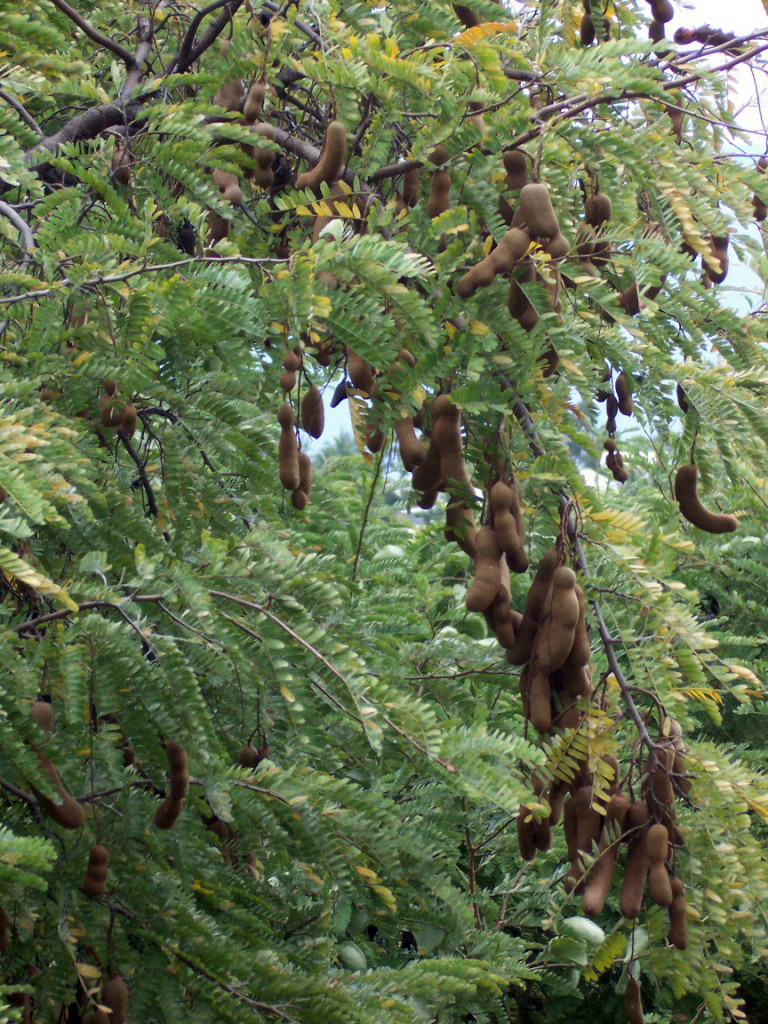 TamarindTamarindus indica
-
 ChickpeaCicer arietinum
-
 SoybeanGlycine max
Compare
Questions and answers
What is the scientific name of the American Yellowwood?
The scientific name of the American Yellowwood is Cladrastis kentukea. Written with its author, the full name is Cladrastis kentukea (Dum.Cours.) Rudd.
Which family does the American Yellowwood belong to?
Cladrastis kentukea belongs to the family Fabaceae, in the order Fabales and the class Magnoliopsida.
Where is the American Yellowwood found?
Checklists and occurrence records place Cladrastis kentukea in 9 countries.
What is the conservation status of the American Yellowwood?
The IUCN Red List category recorded for Cladrastis kentukea is Least Concern (LC).
What other names does the American Yellowwood have?
Cladrastis kentukea is also known in English as American Yellow-wood, Kentucky Yellow-wood, Kentucky Yellowwood, Yellow-wood and Yellowwood.
Where is yellowwood native to?
American yellowwood is native to the southeastern United States.[27]
What is the native range of Cladrastis kentukea?
Its restricted native range extends from western North Carolina west to eastern Oklahoma and from southern Missouri and Indiana south to central Alabama.[28][29]
Sources
Passages the profile rests on
- Its compound pinnate leaves measure 20–30 centimetres in length. Source passage: “The leaves are compound pinnate, 20–30 cm (7.9–11.8 in) long” — English Wikipedia
- Each leaf generally contains 5–11 alternately arranged leaflets, most commonly 7–9. Source passage: “with 5-11 (mostly 7-9) alternately arranged leaflets” — English Wikipedia
- Its leaflets are broadly ovate, with acute tips and entire margins. Source passage: “each leaflet broad ovate with an acute apex” — English Wikipedia
- The undersides of its leaflets range from thinly to densely hairy. Source passage: “with an entire margin and a thinly to densely hairy underside.” — English Wikipedia
- Its fruit is a pod measuring 5–8 centimetres in length. Source passage: “The fruit is a pod 5–8 cm (2.0–3.1 in) long” — English Wikipedia
- Its wood is yellow to pale brown, heavy, hard, close-grained, and strong. Source passage: “Yellow to pale brown; heavy, hard, close-grained and strong.” — English Wikipedia
- The species can develop a trunk that divides close to ground level, producing a multi-trunked form. Source passage: “a tendency of the trunk to divide very near the ground, as a multi-trunked tree.” — English Wikipedia
- The species flowers in early summer, generally during June in its native region. Source passage: “Flowering is in early summer (June in its native region)” — English Wikipedia
- Flower production varies between years, with particularly abundant flowering every second or third year. Source passage: “with heavy flowering every second or third year.” — English Wikipedia
- Its flowers have ten free stamens. Source passage: “Ten, free; filaments thread-like.” — English Wikipedia
- Its ovary is superior, linear, bright red, and hairy. Source passage: “Ovary superior, linear, bright red, hairy” — English Wikipedia
- Each fruit pod contains between two and six seeds. Source passage: “containing 2-6 seeds.” — English Wikipedia
- The species occurs principally on limestone cliffs in Kentucky, Tennessee, and North Carolina. Source passage: “found principally on the limestone cliffs of Kentucky, Tennessee, and North Carolina” — English Wikipedia
- The species is hardy as far north as USDA hardiness zone 4. Source passage: “but it is hardy as far north as zone 4.” — English Wikipedia
- The species grows successfully in full sunlight. Source passage: “It thrives in full sunlight” — English Wikipedia
- The species thrives in well-drained soil. Source passage: “and in well-drained soil” — English Wikipedia
- The species tolerates both high-pH soils and acidic growing conditions. Source passage: “tolerates high pH soils as well as acid situations.” — English Wikipedia
- The species can withstand urban growing environments. Source passage: “The Yellowwood can withstand urban settings” — English Wikipedia
- The species is widely cultivated as an ornamental tree because of its attractive flowers. Source passage: “widely grown as an ornamental tree for its attractive flowers” — English Wikipedia
- The species is recommended as an ornamental tree for gardens. Source passage: “Kentucky yellowwood is recommended as one of the best medium-sized trees for cultivation as an ornamental plant in gardens.” — English Wikipedia
- The species received a Pennsylvania Horticultural Society Gold Award in 1994. Source passage: “Yellowwood won a Pennsylvania Horticultural Society Gold Award in 1994.” — English Wikipedia
- The Society of Municipal Arborists selected the species as its Urban Tree of the Year for 2015. Source passage: “The Society of Municipal Arborists selected the yellowwood (Cladrastis kentukea or C. lutea) as its Urban Tree of the Year for 2015.” — English Wikipedia
- The species attracts birds. Source passage: “and is attractive to birds.” — English Wikipedia
- The species supports and attracts bees and butterflies as a pollinator plant. Source passage: “supporting and attracting bees and butterflies.” — English Wikipedia
- The species is described as one of the rarest trees in eastern North America. Source passage: “Cladrastis kentukea is one of the rarest trees of eastern North America.” — English Wikipedia
- The species has become locally naturalized in many areas of the eastern United States outside its restricted native range. Source passage: “is locally naturalized in many areas of the eastern United States outside of its restricted native range.” — English Wikipedia
- The species is native to the southeastern United States. Source passage: “native to the Southeastern United States” — English Wikipedia
- Its restricted native range extends from western North Carolina west to eastern Oklahoma. Source passage: “from western North Carolina west to eastern Oklahoma” — English Wikipedia
- Its restricted native range extends from southern Missouri and Indiana south to central Alabama. Source passage: “from southern Missouri and Indiana south to central Alabama.” — English Wikipedia
Data
- Catalogue of Life, 2026-10-16 XR cc by
- Global Biodiversity Information Facility CC BY 4.0
- Wikidata CC0
- GeoNames CC BY 4.0
- Wikimedia Commons per image; credit shown with each image
- iNaturalist per image; credit shown with each image
- Within the Catalogue of Life, this name comes from The World Checklist of Vascular Plants (WCVP): Fabaceae cc by
References
- Phytologia 21: 327 (1971) where the name was published
This species in other databases
Page built on 26 November 2026. See how the catalog is made and all sources and licences.
Cite this page
ScientificNames.org. (2026). Cladrastis kentukea (American Yellowwood). Retrieved November 26, 2026, from https://scientificnames.org/species/cladrastis-kentukea
“Cladrastis kentukea (American Yellowwood).” ScientificNames.org, 2026, scientificnames.org/species/cladrastis-kentukea. Accessed 26 Nov. 2026.
ScientificNames.org. “Cladrastis kentukea (American Yellowwood).” Accessed November 26, 2026. https://scientificnames.org/species/cladrastis-kentukea.
@misc{scientificnames_cladrastis_kentukea_american_yellowwood,
  author = {{ScientificNames.org}},
  title = {Cladrastis kentukea (American Yellowwood)},
  year = {2026},
  url = {https://scientificnames.org/species/cladrastis-kentukea},
  note = {Accessed 2026-11-26}
}