Species · Flowering plants
Mopane Colophospermum mopane
The scientific name of the Mopane is Colophospermum mopane. It is a species of flowering plant in the family Fabaceae (bean), order Fabales.
- Scientific name
- Colophospermum mopane (J.Kirk ex Benth.) J.Kirk ex J.Léonard
- Common name
- Mopane
- Genus
- Colophospermum
- Family
- Fabaceae (Bean)
- Order
- Fabales
- Class
- Magnoliopsida
- Red List category
- LC Least Concern
- Recorded in
- 8 countries
- Name status
- accepted in the Catalogue of Life

Overview
Mopane is native to Southern Africa and occurs across semi-arid regions of southern Africa. Mopane is distinguished by its butterfly-shaped leaves, which consist of two leaflets, and its thin, kidney-shaped or nearly semicircular seed pods.
Written 26 November 2026 from the sources listed below. Each statement was checked against the passage it cites; statements that could not be supported were removed.
Appearance
Mopane has distinctive butterfly-shaped leaves consisting of two leaflets. Its seed pods are thin, kidney-shaped or nearly semicircular.[1][2]
Habitat
Mopane grows in hot, dry, low-lying areas at elevations of approximately 200–1,200 metres. It does not grow well outside hot, mostly frost-free environments with low to moderate rainfall and can grow in areas receiving as little as 100 millimetres of annual rainfall.[3][4][5]
The species grows in slightly acidic, deep, friable and permeable clay soils. It can also grow in shallow, alkaline soils with high lime content and poor drainage, as well as in alluvial soils deposited by rivers.[6][7][8]
Deep alluvial soils with good water availability can support tall mopane woodlands. Shallow, heavy-textured soils can support mopane shrubland rather than tall woodland.[9][10]
Mopane is restricted to Africa and is native to Southern Africa. Its Angola-region distribution includes southern Angola and northwestern Namibia, while its Zambezian-region distribution includes Zambia, southern Malawi, Namibia, Botswana, Zimbabwe, Mozambique, Eswatini and northern South Africa.[11][12][13][14]
Diet
Goats browse on mopane leaves. Cattle and wild animals, including elephants, giraffes, water buffaloes and antelopes, also browse on mopane.[15][16]
Behaviour
Elephants feed on mopane by stripping leaves, breaking small branches, pollarding or toppling stems, uprooting plants and removing bark. Mopane can recover from substantial elephant browsing through vigorous coppicing.[17][18]
Reproduction and life cycle
Mopane produces thin, kidney-shaped or nearly semicircular seed pods.[19]
Conservation
Emergent mopane trees experienced an annual loss of 1.4% from debarking in the studied woodland. Canopy dieback increased noticeably when more than half of an emergent tree's stem had been debarked.[20][21]
Chronic elephant use over eight years did not reduce overall plant density or canopy volume in the studied transformed mopane woodland. The areas with the highest elephant densities had the lowest total canopy volume.[22][23]
Uses
Mopane wood is valued for construction because it is resistant to termites. It is used to manufacture railway sleepers, mining pit props and parquet flooring, the latter valued for its termite resistance and reddish colour.[24][25][26]
Mopane wood is used to produce charcoal and as firewood for braai. Its twigs have traditionally been used as chewing sticks for cleaning teeth.[27][28]
Mopane leaves have traditionally been used in folk remedies for wounds following ritual tooth extraction. Its bark is used to produce twine or rope and to tan leather.[29][30]
Classification of the Mopane
| Kingdom | Plantae |
|---|---|
| Subkingdom | Pteridobiotina |
| Phylum | Tracheophyta |
| Class | Magnoliopsida |
| Order | Fabales |
| Family | Fabaceae (Bean) |
| Genus | Colophospermum (Mopanes) |
| Species | Colophospermum mopane (J.Kirk ex Benth.) J.Kirk ex J.Léonard |
Where the Mopane is found
Checklists and occurrence records place Colophospermum mopane in 8 countries across Africa. GBIF holds 2,815 georeferenced records of it.
Countries
- Angola 145
- Botswana 587
- Malawi 76
- Mozambique 133
- Namibia 762
- South Africa 717
- Zambia 143
- Zimbabwe 252
Regions and cities with the most records
- Limpopo, South Africa 594
- North-West, Botswana 312
- Kunene Region, Namibia 261
- Oshikoto Region, Namibia 213
- Central, Botswana 193
- Zambezi Region, Namibia 116
- Matabeleland North, Zimbabwe 63
- Katima Mulilo, Namibia 58
- Sesheke, Zambia 58
- Southern Province, Zambia 56
- Oshana Region, Namibia 55
- Maun, Botswana 52
- Mpumalanga, South Africa 51
- Victoria Falls, Zimbabwe 46
- Livingstone, Zambia 45
- Chobe, Botswana 41
- Musina, South Africa 37
- Matabeleland South Province, Zimbabwe 36
- Phalaborwa, South Africa 36
- Gaza Province, Mozambique 35
- Masvingo Province, Zimbabwe 27
- Omusati Region, Namibia 22
- Sofala, Mozambique 21
- Tete, Mozambique 19
- Huíla, Angola 18
- Liwonde, Malawi 17
- Eastern Province, Zambia 16
- Muchinga, Zambia 16
- Namibe, Angola 15
- Serowe, Botswana 15
- Erongo Region, Namibia 14
- Cunene, Angola 13
- Lusaka Province, Zambia 13
- Manicaland, Zimbabwe 13
- Louis Trichardt, South Africa 10
- Mashonaland West, Zimbabwe 10
2 more countries have a few records outside this range
These countries hold a few records of Colophospermum mopane but lie outside the range the checklists give for it. Such records are often zoo or garden specimens, museum material or vagrants, so the species is not counted as occurring there.
A number beside a place is its count of GBIF occurrence records. A place without a number comes from a checklist alone. Records show where a species has been observed or collected, which can include escapes and vagrants.
Common names
English
- Mopane
- Balsem Tree
- Black-Ironwood
- Butterfly Tree
- Mapane
- Red Angola Copal
- Rhodesian Ironwood
- Rhodesian-Ironwood
- White Ironwood
- Balsamtree
- Butterfly-tree
- Turpentine-tree
Names in 17 other languages
- Afrikaans
- Mopanie, Terpentynboom, mapaane, mopaane, mopaniehout, witysterhout, ysterhout
- Chinese
- 可樂木樹
- Finnish
- mopanepuu
- Russian
- Мопане
- Slovak
- terpentínovec obyčajný
- Thai
- ถั่วโมพานี
- Tswana
- gumane, mophane
- her
- omupungu, omutati, omutatėi
- kck
- mpani
- loz
- mupane, mwane
- mhw
- mupanyi
- ndo
- omusati
- nso
- mohlanare
- sbs
- muhane
- tso
- chanate, chanatsi, chanatze, gungua, messanha, nxanatsi, xanato, xanatse
- tum
- Ntsono/Mopani
- ven
- mupani, mutanari, mutėanari, muṱanari
Synonyms
3 other scientific names have been used for this species and are now treated as synonyms of Colophospermum mopane.
- Copaiba mopane (J.Kirk ex Benth.) Kuntze
- Copaifera mopane J.Kirk ex Benth.
- Hardwickia mopane (J.Kirk ex Benth.) Breteler
Related species
-
 PeanutArachis hypogaea
-
 LiquoriceGlycyrrhiza glabra
-
 TamarindTamarindus indica
-
 ChickpeaCicer arietinum
-
 SoybeanGlycine max
-
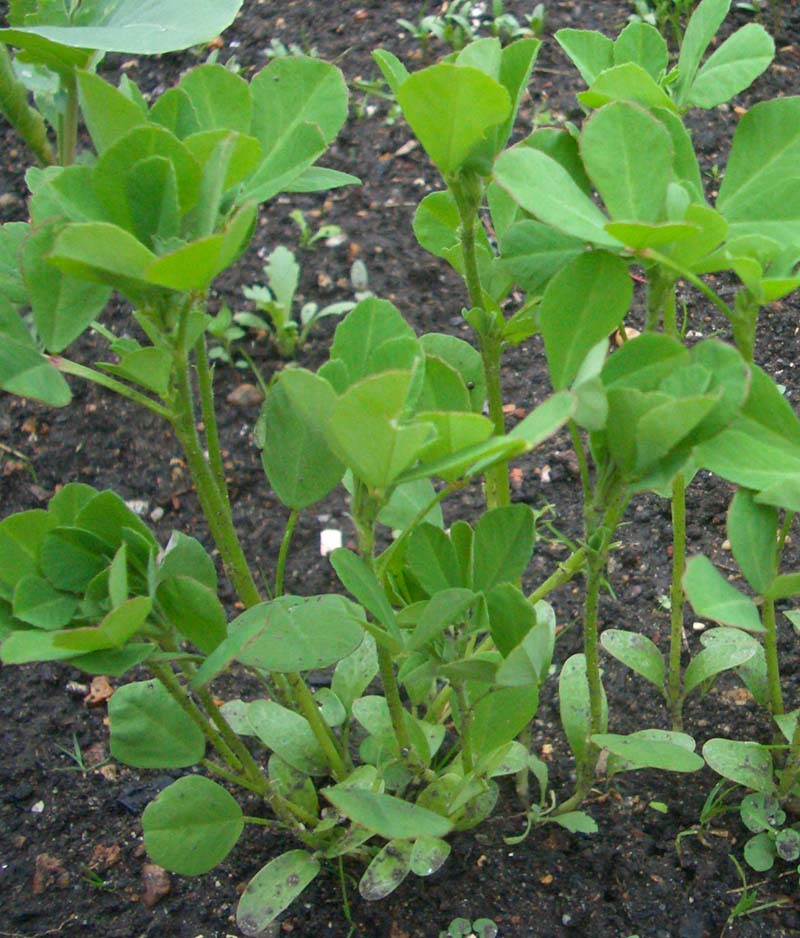 FenugreekTrigonella foenum-graecum
-
 RooibosAspalathus linearis
-
 Broad BeanVicia faba
Compare
Questions and answers
What is the scientific name of the Mopane?
The scientific name of the Mopane is Colophospermum mopane. Written with its author, the full name is Colophospermum mopane (J.Kirk ex Benth.) J.Kirk ex J.Léonard.
Which family does the Mopane belong to?
Colophospermum mopane belongs to the family Fabaceae, in the order Fabales and the class Magnoliopsida.
Where is the Mopane found?
Checklists and occurrence records place Colophospermum mopane in 8 countries, including Namibia, South Africa, Botswana, Zimbabwe, Angola and Zambia.
What is the conservation status of the Mopane?
The IUCN Red List category recorded for Colophospermum mopane is Least Concern (LC).
What other names does the Mopane have?
Colophospermum mopane is also known in English as Balsem Tree, Black-Ironwood, Butterfly Tree, Mapane, Red Angola Copal and Rhodesian Ironwood.
What do mopane worms eat?
Mopane worm caterpillars eat mopane leaves.[31]
Sources
Passages the profile rests on
- The species has distinctive butterfly-shaped leaves consisting of two leaflets. Source passage: “Its distinctive butterfly-shaped (bifoliate) leaf” — English Wikipedia
- Its seed pods are thin, kidney-shaped or nearly semicircular. Source passage: “thin kidney-shaped/nearly semi-circular seed pod” — English Wikipedia
- The species grows in hot, dry, low-lying areas at elevations of approximately 200–1,200 metres. Source passage: “grows in hot, dry, low-lying areas, 200 to 1,200 metres” — English Wikipedia
- The species does not grow well outside hot, mostly frost-free environments with low to moderate rainfall. Source passage: “This tree will not grow well outside hot, mostly frost-free areas with low to moderate rainfall” — English Wikipedia
- Mopane can grow in areas receiving as little as 100 millimetres of annual rainfall. Source passage: “as low as 100mm per year” — English Wikipedia
- The species grows in slightly acidic, deep, friable and permeable clay soils. Source passage: “slightly acidic deep clay soil that are friable and permeable” — English Wikipedia
- Mopane can also grow in shallow, alkaline soils with high lime content and poor drainage. Source passage: “alkaline (high lime content) soils which are shallow and not well drained” — English Wikipedia
- The species also occurs in alluvial soils deposited by rivers. Source passage: “It also grows in alluvial soils (soil deposited by rivers).” — English Wikipedia
- Deep alluvial soils with good water availability can support tall mopane woodlands. Source passage: “Tall mopane woodlands may develop on well-watered, deep alluvial soils” — pmc.ncbi.nlm.nih.gov
- Shallow, heavy-textured soils can support mopane shrubland rather than tall woodland. Source passage: “shallow, heavy-textured soils often support only a mopane shrubland” — pmc.ncbi.nlm.nih.gov
- The species is restricted to Africa. Source passage: “The tree only occurs in Africa” — English Wikipedia
- Mopane is native to Southern Africa. Source passage: “Native to Southern Africa” — English Wikipedia
- The Angola-region distribution includes southern Angola and northwestern Namibia. Source passage: “includes Southern Angola and northwestern Namibia” — English Wikipedia
- The Zambezian-region distribution includes Zambia, southern Malawi, Namibia, Botswana, Zimbabwe, Mozambique, Eswatini and northern South Africa. Source passage: “across the countries of Zambia, Southern Malawi, other parts of Namibia, Botswana, Zimbabwe, Mozambique, Eswatini/Swaziland and northern South Africa.” — English Wikipedia
- Goats browse on mopane leaves as a food source. Source passage: “goats can be allowed to browse on the tree's leaves” — English Wikipedia
- Cattle and wild animals including elephants, giraffes, water buffaloes and antelopes browse on mopane. Source passage: “They are also browsed by cattle and by game animals such as elephants, giraffes, water buffalos and antelopes” — English Wikipedia
- Elephants feed on mopane by stripping leaves, breaking small branches, pollarding or toppling stems, uprooting plants and removing bark. Source passage: “stripping of leaves, breaking of small branches, pollarding (snapping) or toppling main stems in order to access foliage, uprooting, and debarking” — pmc.ncbi.nlm.nih.gov
- Mopane can recover from substantial elephant browsing through vigorous coppicing. Source passage: “mopane is well adapted to heavy utilisation by elephants owing to its strength of coppicing” — pmc.ncbi.nlm.nih.gov
- The species produces thin, kidney-shaped or nearly semicircular seed pods. Source passage: “thin kidney-shaped/nearly semi-circular seed pod” — English Wikipedia
- Emergent mopane trees experienced an annual loss of 1.4% from debarking in the studied woodland. Source passage: “Emergent trees (>10 m in height) suffered a loss of 1.4% per annum as a result of debarking.” — pmc.ncbi.nlm.nih.gov
- In the studied woodland, canopy dieback increased noticeably when more than half of an emergent tree's stem had been debarked. Source passage: “Canopy dieback of emergent trees increased conspicuously when more than 50% of a stem was debarked” — pmc.ncbi.nlm.nih.gov
- Chronic elephant use over eight years did not reduce the overall plant density or canopy volume in the studied transformed mopane woodland. Source passage: “Under eight years of chronic utilisation by elephants, transformed mopane woodland maintained its plant density and canopy volume.” — pmc.ncbi.nlm.nih.gov
- The study found that the highest elephant-density areas had the lowest total canopy volume. Source passage: “Areas under the highest elephant density supported the lowest total canopy volume” — pmc.ncbi.nlm.nih.gov
- Mopane wood is valued for construction because it is resistant to termites. Source passage: “it has long been used for building houses and fences” — English Wikipedia
- Mopane wood is used to manufacture railway sleepers and mining pit props. Source passage: “as railway sleepers and as pit props” — English Wikipedia
- Mopane wood is used for parquet flooring because of its termite resistance and reddish colour. Source passage: “The termite-resistance and rich, reddish colouring also make it popular for parquet flooring.” — English Wikipedia
- Mopane twigs have traditionally been used as chewing sticks for cleaning teeth. Source passage: “Mopane twigs been traditionally used as a sort of tooth brush” — English Wikipedia
- Mopane wood is used to produce charcoal and as firewood for braai. Source passage: “The wood is also used to make charcoal and for braai wood.” — English Wikipedia
- The leaves have traditionally been used in folk remedies for wounds following ritual tooth extraction. Source passage: “the leaves for folk remedy in healing the wound after ritual extraction of teeth.” — English Wikipedia
- The bark is used to produce twine or rope and to tan leather. Source passage: “The bark to make twine or rope and for tanning leather” — English Wikipedia
- Mopane leaves provide food for mopane worm caterpillars. Source passage: “The tree is a major food source for the mopane worm, the caterpillar of the moth Gonimbrasia belina.” — English Wikipedia
- Mopane wood has an average density of 0.990–1.230 grams per cubic centimetre at 12% moisture content. Source passage: “average density range of 0.990 to 1.230 g/cm3 (61.8 to 76.8 lb/cu ft) at 12% moisture.” — English Wikipedia
- Mopane wood is used to manufacture woodwind musical instruments, including clarinets. Source passage: “It is also increasingly being used in the construction of musical instruments, particularly woodwind.” — English Wikipedia
- Mopane leaves and other plant material constitute a staple food source for elephants where the species co-occurs with them. Source passage: “Mopane forms a staple of the diet of elephants where they co-occur” — pmc.ncbi.nlm.nih.gov
Data
- Catalogue of Life, 2026-10-16 XR cc by
- Global Biodiversity Information Facility CC BY 4.0
- Wikidata CC0
- GeoNames CC BY 4.0
- Wikimedia Commons per image; credit shown with each image
- Within the Catalogue of Life, this name comes from The World Checklist of Vascular Plants (WCVP): Fabaceae cc by
References
- Bull. Jard. Bot. État Bruxelles 19: 390 (1949) where the name was published
This species in other databases
Page built on 26 November 2026. See how the catalog is made and all sources and licences.
Cite this page
ScientificNames.org. (2026). Colophospermum mopane (Mopane). Retrieved November 26, 2026, from https://scientificnames.org/species/colophospermum-mopane
“Colophospermum mopane (Mopane).” ScientificNames.org, 2026, scientificnames.org/species/colophospermum-mopane. Accessed 26 Nov. 2026.
ScientificNames.org. “Colophospermum mopane (Mopane).” Accessed November 26, 2026. https://scientificnames.org/species/colophospermum-mopane.
@misc{scientificnames_colophospermum_mopane_mopane,
  author = {{ScientificNames.org}},
  title = {Colophospermum mopane (Mopane)},
  year = {2026},
  url = {https://scientificnames.org/species/colophospermum-mopane},
  note = {Accessed 2026-11-26}
}