Species · Amphibians
Fleischmann's Robber Frog Craugastor fleischmanni
The scientific name of the Fleischmann's Robber Frog is Craugastor fleischmanni. It is a species of amphibian in the family Craugastoridae (robber frogs), order Anura. The name dates from 1892.
- Scientific name
- Craugastor fleischmanni (Boettger, 1892)
- Common name
- Fleischmann's Robber Frog
- Genus
- Craugastor
- Family
- Craugastoridae (Robber Frogs)
- Order
- Anura
- Class
- Amphibia
- Red List category
- CR Critically Endangered
- Recorded in
- 2 countries
- Name status
- accepted in the Catalogue of Life
Overview
The species is endemic to Costa Rica and has been recorded on several mountain ranges and volcanic slopes. It has direct development without a free-living tadpole stage, and adult males possess vocal slits.
Written 27 November 2026 from the sources listed below. Each statement was checked against the passage it cites; statements that could not be supported were removed.
Appearance
Adult males reach 45 mm in snout–vent length, while adult females reach 72 mm. Adult males possess vocal slits.[1][2][3]
Habitat
Fleischmann's Robber Frog inhabits premontane wet forests and lower montane wet forests. It has been recorded at elevations between 1,050 and 2,286 metres above sea level.[4][5][6]
The species has been found along streams in pristine and moderately disturbed locations.[7]
The species is endemic to Costa Rica. It has been recorded on the Meseta Central Oriental and Occidental, on the Pacific slopes of the Barva and Poás Volcanoes, on the Atlantic slopes of the Irazú and Turrialba Volcanoes, and on the Cordillera de Talamanca.[8][9][10][11][12]
The species historically occurred in Tapantí National Park and in protected areas.[13][14]
Reproduction and life cycle
Reproduction takes place along stream margins. The species has direct development without a free-living tadpole stage.[15][16]
Conservation
The species experienced a population decline during the late twentieth century. Extensive searches conducted between 1987 and 2009 failed to find any specimens.[17][18]
A single individual was recorded at the headwaters of Rio Ciruelas in 2010. No further confirmed records were available as of 2013.[19][20]
The causes of the species' decline remain unclear. Chytridiomycosis and climate change have been suggested as possible contributors.[21][22]
Uses
The specific name fleischmanni commemorates Carl Fleischmann, a collector active in Costa Rica during the 1890s.[23]
Classification of the Fleischmann's Robber Frog
| Kingdom | Animalia |
|---|---|
| Phylum | Chordata |
| Subphylum | Vertebrata |
| Infraphylum | Gnathostomata |
| Parvphylum | Osteichthyes |
| Megaclass | Tetrapoda |
| Class | Amphibia (Amphibians) |
| Order | Anura (Frogs) |
| Superfamily | Brachycephaloidea |
| Family | Craugastoridae (Robber Frogs) |
| Genus | Craugastor (Northern Rainfrogs) |
| Species | Craugastor fleischmanni (Boettger, 1892) |
Where the Fleischmann's Robber Frog is found
Checklists and occurrence records place Craugastor fleischmanni in 2 countries. GBIF holds 636 georeferenced records of it.
Countries
Regions and cities with the most records
- Cartago Province, Costa Rica 150
- Turrialba, Costa Rica 123
- Curridabat, Costa Rica 68
- Cartago, Costa Rica 67
- Purral, Costa Rica 66
- San Pedro, Costa Rica 66
- Guadalupe, Costa Rica 65
- San Vicente, Costa Rica 65
- San Vicente de Moravia, Costa Rica 65
- San Diego, Costa Rica 62
- San José, Costa Rica 55
- San José, Costa Rica 55
- San Juan, Costa Rica 54
- Paraíso, Costa Rica 51
- San Pablo, Costa Rica 43
- Heredia, Costa Rica 41
- Patarrá, Costa Rica 36
- San Juan de Dios, Costa Rica 36
- San Rafael Arriba, Costa Rica 35
- San Miguel, Costa Rica 34
- Aserrí, Costa Rica 33
- San Felipe, Costa Rica 28
- San Rafael, Costa Rica 26
- Alajuela, Costa Rica 23
- Alcalde Díaz, Panama 20
- Curundú, Panama 18
- Juan Díaz, Panama 18
- Panama City, Panama 18
- San Miguelito, Panama 18
- Panamá, Panama 17
- Tocumen, Panama 17
- Heredia Province, Costa Rica 14
- Ancón, Panama 12
- Panamá Oeste Province, Panama 9
- San Isidro, Costa Rica 8
- Chiriquí Province, Panama 7
A number beside a place is its count of GBIF occurrence records. A place without a number comes from a checklist alone. Records show where a species has been observed or collected, which can include escapes and vagrants.
Common names
English
- Fleischmann's Robber Frog
- Fleischmann's Streamside Frog
Names in 2 other languages
- Czech
- bezblanka Fleischmanova
- Russian
- Желтобрюхая листовая лягушка
Synonyms
12 other scientific names have been used for this species and are now treated as synonyms of Craugastor fleischmanni.
- Eleutherodactylus engytympanum (Günther, 1900)
- Eleutherodactylus euryglossus (Cope, 1894)
- Eleutherodactylus euryglossus (Cope, 1984)
- Eleutherodactylus fleischmanni (Boettger, 1892)
- Eleutherodactylus fleishmanni (Boettger, 1892)
- Eleutherodactylus punctariolus engytympanum (Günther, 1900)
- Eleutherodactylus punctariolus fleischmanni (Boettger, 1892)
- Hylodes euryglossus (Cope, 1894)
- Hylodes fleischmanni Boettger, 1892
- Liohyla engytympanum Günther, 1900
- Liohyla fleischmanni (Boettger, 1892)
- Lithodytes euryglossus Cope, 1894
Related species
-
 Barking FrogCraugastor augusti
- Craugastor myllomyllon
- Corquin Robber FrogCraugastor anciano
-
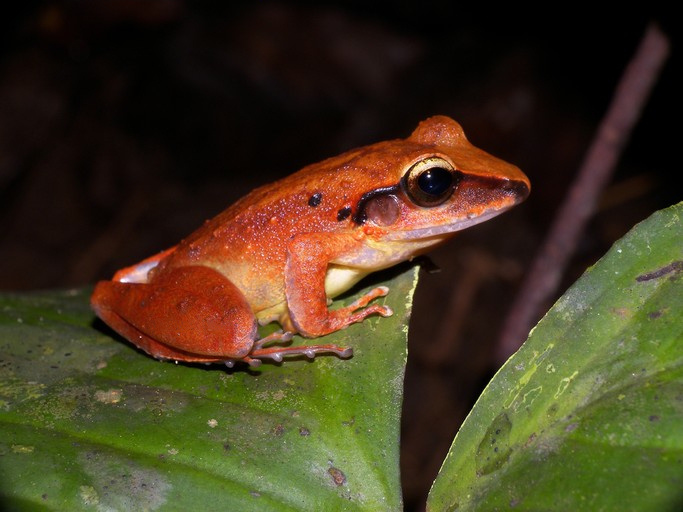 Fitzinger's Robber FrogCraugastor fitzingeri
- Sierra de Omoa Streamside FrogCraugastor omoaensis
-
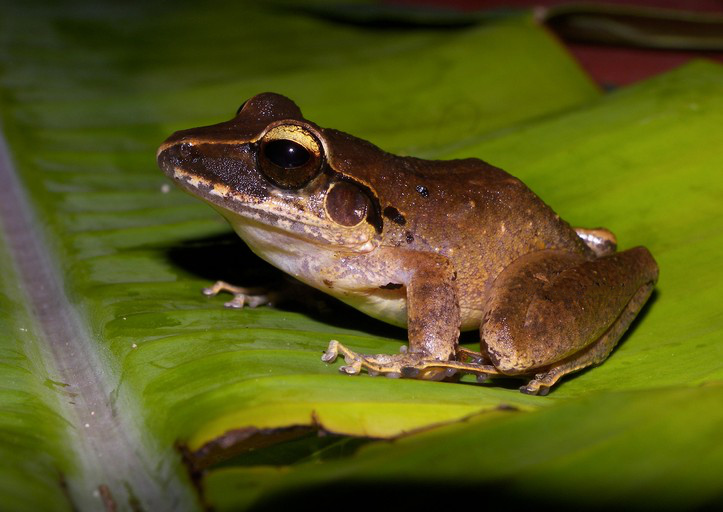 Robber FrogCraugastor raniformis
- McCranie's Robber FrogCraugastor chrysozetetes
- Yellow-legged Rain FrogCraugastor andi
Compare
Questions and answers
What is the scientific name of the Fleischmann's Robber Frog?
The scientific name of the Fleischmann's Robber Frog is Craugastor fleischmanni. Written with its author, the full name is Craugastor fleischmanni (Boettger, 1892).
Which family does the Fleischmann's Robber Frog belong to?
Craugastor fleischmanni belongs to the family Craugastoridae, in the order Anura and the class Amphibia.
Where is the Fleischmann's Robber Frog found?
Checklists and occurrence records place Craugastor fleischmanni in 2 countries: Costa Rica and Panama.
What is the conservation status of the Fleischmann's Robber Frog?
The IUCN Red List category recorded for Craugastor fleischmanni is Critically Endangered (CR).
What other names does the Fleischmann's Robber Frog have?
Craugastor fleischmanni is also known in English as Fleischmann's Streamside Frog.
Where is Fleischmann's Robber Frog found?
The species is endemic to Costa Rica. It has been recorded on the Meseta Central Oriental and Occidental, the slopes of the Barva, Poás, Irazú and Turrialba Volcanoes, and the Cordillera de Talamanca.[8][9][10][11][12]
How large does Fleischmann's Robber Frog grow?
Adult males reach 45 mm in snout–vent length, and adult females reach 72 mm.[1][2]
What habitats does Fleischmann's Robber Frog inhabit?
It inhabits premontane wet forests and lower montane wet forests, at elevations between 1,050 and 2,286 metres above sea level. It has been found along streams in pristine and moderately disturbed locations.[4][5][6][7]
How does Fleischmann's Robber Frog reproduce?
Reproduction takes place along stream margins. The species has direct development without a free-living tadpole stage.[15][16]
What is known about the decline of Fleischmann's Robber Frog?
The species experienced a population decline during the late twentieth century. A single individual was recorded at the headwaters of Rio Ciruelas in 2010, but no further confirmed records were available as of 2013. The causes remain unclear, although chytridiomycosis and climate change have been suggested as possible contributors.[17][19][20][21][22]
Who is commemorated by the name fleischmanni?
The specific name fleischmanni commemorates Carl Fleischmann, a collector active in Costa Rica during the 1890s.[23]
When was Fleischmann's Robber Frog described?
Boettger originally described the species as Hylodes fleischmanni in 1892.[24]
What is the type locality of Fleischmann's Robber Frog?
The type locality is San José, Costa Rica.[25]
When was Fleischmann's Robber Frog last assessed for the IUCN Red List?
The species was most recently assessed for the IUCN Red List in 2019.[26]
Sources
Passages the profile rests on
- Adult males reach 45 mm in snout–vent length. Source passage: “Males grow to 45 mm (1.8 in)” — English Wikipedia
- Adult females reach 72 mm in snout–vent length. Source passage: “females to 72 mm (2.8 in) in snout–vent length.” — English Wikipedia
- Adult males possess vocal slits. Source passage: “Adult males have vocal slits” — English Wikipedia
- The species inhabits premontane wet forests. Source passage: “Its natural habitats are premontane and lower montane wet forests” — English Wikipedia
- The species inhabits lower montane wet forests. Source passage: “premontane and lower montane wet forests” — English Wikipedia
- The species has been recorded at elevations between 1,050 and 2,286 metres above sea level. Source passage: “at elevations of 1,050–2,286 m (3,445–7,500 ft) above sea level.” — English Wikipedia
- The species has been found along streams in pristine and moderately disturbed locations. Source passage: “It has been found along streams at both pristine and moderately disturbed sites.” — English Wikipedia
- The species is endemic to Costa Rica. Source passage: “It is endemic to Costa Rica” — English Wikipedia
- The species has been recorded on the Meseta Central Oriental and Occidental. Source passage: “the Meseta Central Oriental and Occidental” — English Wikipedia
- The species occurs on the Pacific slopes of the Barva and Poás Volcanoes. Source passage: “the Pacific slopes of the Barva and Poás Volcanos” — English Wikipedia
- The species has been recorded on the Atlantic slopes of the Irazú and Turrialba Volcanoes. Source passage: “the Atlantic slopes of the Irazú and Turrialba Volcanos” — English Wikipedia
- The species has also been recorded on the Cordillera de Talamanca. Source passage: “and on the Cordillera de Talamanca.” — English Wikipedia
- The species historically occurred in Tapantí National Park. Source passage: “Historically it occurred in the Tapantí National Park” — English Wikipedia
- The species historically occurred in protected areas. Source passage: “and in other protected areas.” — English Wikipedia
- Reproduction takes place along stream margins. Source passage: “Reproduction takes place in stream margins;” — English Wikipedia
- The species has direct development without a free-living tadpole stage. Source passage: “the development is direct (i.e., without free-living tadpole stage).” — English Wikipedia
- The species experienced a population decline during the late twentieth century. Source passage: “The species has declined in the late 20th century.” — English Wikipedia
- Extensive searches conducted between 1987 and 2009 failed to find any specimens. Source passage: “After extensive searches in 1987–2009 when no specimen was found” — English Wikipedia
- A single individual was recorded at the headwaters of Rio Ciruelas in 2010. Source passage: “a single individual was recorded from the headwaters of Rio Ciruelas in 2010.” — English Wikipedia
- No further confirmed records were available as of 2013. Source passage: “As of 2013, there are no further confirmed records.” — English Wikipedia
- The causes of the species' decline remain unclear. Source passage: “The reasons for this decline are unclear” — English Wikipedia
- Chytridiomycosis and climate change have been suggested as possible contributors to the species' decline. Source passage: “both chytridiomycosis and climate change might have been at play.” — English Wikipedia
- The specific name fleischmanni commemorates Carl Fleischmann, a collector active in Costa Rica during the 1890s. Source passage: “The specific name fleischmanni honors Carl Fleischmann, a collector active in Costa Rica in the 1890s.” — English Wikipedia
- The species was originally described under the scientific name Hylodes fleischmanni by Boettger in 1892. Source passage: “Hylodes fleischmanni Boettger, 1892, Kat. Batr. Samml. Mus. Senckenb. Naturforsch. Ges.: 27.” — amphibiansoftheworld.amnh.org
- The type locality of the species is San José, Costa Rica. Source passage: “Type locality: "San José, [Canton de San José, Provincia San José,] Costa Rica".” — amphibiansoftheworld.amnh.org
- The species was most recently assessed for the IUCN Red List in 2019. Source passage: “has most recently been assessed for The IUCN Red List of Threatened Species in 2019.” — iucnredlist.org
Data
- Catalogue of Life, 2026-10-16 XR cc by
- Global Biodiversity Information Facility CC BY 4.0
- Wikidata CC0
- GeoNames CC BY 4.0
- Within the Catalogue of Life, this name comes from The Integrated Taxonomic Information System cc0
This species in other databases
Page built on 29 November 2026. See how the catalog is made and all sources and licences.
Cite this page
ScientificNames.org. (2026). Craugastor fleischmanni (Fleischmann's Robber Frog). Retrieved November 29, 2026, from https://scientificnames.org/species/craugastor-fleischmanni
“Craugastor fleischmanni (Fleischmann's Robber Frog).” ScientificNames.org, 2026, scientificnames.org/species/craugastor-fleischmanni. Accessed 29 Nov. 2026.
ScientificNames.org. “Craugastor fleischmanni (Fleischmann's Robber Frog).” Accessed November 29, 2026. https://scientificnames.org/species/craugastor-fleischmanni.
@misc{scientificnames_craugastor_fleischmanni_fleischmanns_robber_frog,
  author = {{ScientificNames.org}},
  title = {Craugastor fleischmanni (Fleischmann's Robber Frog)},
  year = {2026},
  url = {https://scientificnames.org/species/craugastor-fleischmanni},
  note = {Accessed 2026-11-29}
}