Species · Amphibians
Matuda's Robber Frog Craugastor matudai
The scientific name of the Matuda's Robber Frog is Craugastor matudai. It is a species of amphibian in the family Craugastoridae (robber frogs), order Anura. The name dates from 1941.
- Scientific name
- Craugastor matudai (Taylor, 1941)
- Common name
- Matuda's Robber Frog
- Genus
- Craugastor
- Family
- Craugastoridae (Robber Frogs)
- Order
- Anura
- Class
- Amphibia
- Red List category
- EN Endangered
- Recorded in
- 2 countries
- Name status
- accepted in the Catalogue of Life
Overview
Matuda's Robber Frog is an amphibian in the family Craugastoridae, order Anura, and class Amphibia. It inhabits montane forests on the Pacific-facing slopes of Mexico and Guatemala, at elevations between 1,500 and 2,000 metres above sea level. Its body has a heavily rugose surface covered with tiny tubercles that have pearly tops.
Written 27 November 2026 from the sources listed below. Each statement was checked against the passage it cites; statements that could not be supported were removed.
Appearance
Males measure 27–28 mm in snout–vent length, while females measure 37–40 mm. The tympanum is proportionally larger relative to the eye in males than in females.[1][2][3]
The body has a heavily rugose surface covered with tiny tubercles that have pearly tops. The canthus rostralis has a sharp profile and slightly raised edges.[4][5]
Males lack a vocal sac.[6]
Habitat
The species inhabits montane forests at elevations between 1,500 and 2,000 metres above sea level.[7]
It occurs on the Pacific-facing slopes of Mexico and Guatemala. In Mexico, it is recorded from El Triunfo, Cerro Ovando, and Cordon Pico el Loro-Paxtal in the Sierra Madre de Chiapas.[8][9]
In Guatemala, it is recorded from Aldea Fraternidad in the northern part of the country. It is known from only four geographically separated locations, which together cover an area of less than 926 square kilometres.[10][11][12]
Conservation
Habitat loss threatens the species. Chytridiomycosis is considered a possible additional threat.[13][14]
The species was classified as endangered in its 2019 IUCN Red List assessment. Mexican law protects it under the Special Protection category (Pr).[15][16]
Classification of the Matuda's Robber Frog
| Kingdom | Animalia |
|---|---|
| Phylum | Chordata |
| Subphylum | Vertebrata |
| Infraphylum | Gnathostomata |
| Parvphylum | Osteichthyes |
| Megaclass | Tetrapoda |
| Class | Amphibia (Amphibians) |
| Order | Anura (Frogs) |
| Superfamily | Brachycephaloidea |
| Family | Craugastoridae (Robber Frogs) |
| Genus | Craugastor (Northern Rainfrogs) |
| Species | Craugastor matudai (Taylor, 1941) |
Where the Matuda's Robber Frog is found
Checklists and occurrence records place Craugastor matudai in 2 countries. GBIF holds 224 georeferenced records of it.
Countries
Regions and cities with the most records
- Chiapas, Mexico 184
- Motozintla de Mendoza, Mexico 62
- Malacatán, Guatemala 14
- Tonalá, Mexico 14
- San Marcos, Guatemala 11
- San Marcos, Guatemala 11
- San Pedro Sacatepéquez, Guatemala 11
- Cacahoatán, Mexico 9
- Comitancillo, Guatemala 3
A number beside a place is its count of GBIF occurrence records. A place without a number comes from a checklist alone. Records show where a species has been observed or collected, which can include escapes and vagrants.
Common names
English
- Matuda's Robber Frog
Names in 2 other languages
- Russian
- Серебристобрюхая листовая лягушка
- Spanish
- Rana chirriadora, Rana-chirriadora de Matuda
Synonyms
One other scientific name has been used for this species and is now treated as a synonym of Craugastor matudai.
- Eleutherodactylus matudai Taylor, 1941
Related species
-
 Barking FrogCraugastor augusti
- Craugastor myllomyllon
- Corquin Robber FrogCraugastor anciano
-
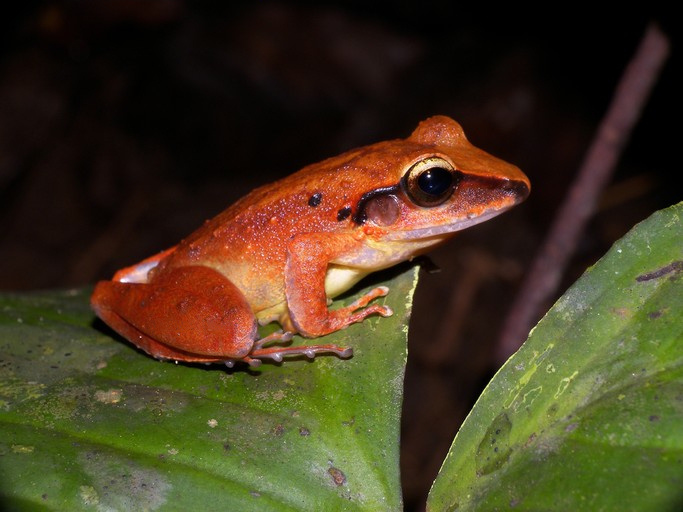 Fitzinger's Robber FrogCraugastor fitzingeri
- Sierra de Omoa Streamside FrogCraugastor omoaensis
-
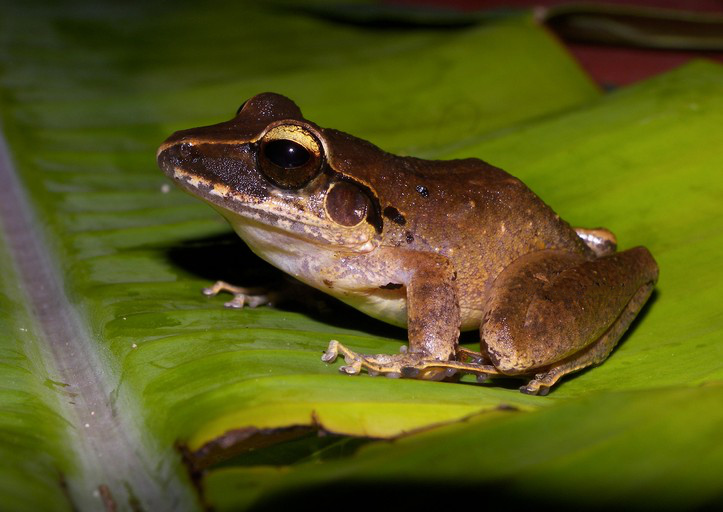 Robber FrogCraugastor raniformis
- McCranie's Robber FrogCraugastor chrysozetetes
- Yellow-legged Rain FrogCraugastor andi
Compare
Questions and answers
What is the scientific name of the Matuda's Robber Frog?
The scientific name of the Matuda's Robber Frog is Craugastor matudai. Written with its author, the full name is Craugastor matudai (Taylor, 1941).
Which family does the Matuda's Robber Frog belong to?
Craugastor matudai belongs to the family Craugastoridae, in the order Anura and the class Amphibia.
Where is the Matuda's Robber Frog found?
Checklists and occurrence records place Craugastor matudai in 2 countries: Mexico and Guatemala.
What is the conservation status of the Matuda's Robber Frog?
The IUCN Red List category recorded for Craugastor matudai is Endangered (EN).
What is the origin of the species' name?
The species is named after Japanese–Mexican botanist Eizi Matuda.[17]
Sources
Passages the profile rests on
- Males measure 27–28 mm in snout–vent length. Source passage: “Males measure 27–28 mm (1.1–1.1 in) and females 37–40 mm (1.5–1.6 in) in snout–vent length.” — English Wikipedia
- Females measure 37–40 mm in snout–vent length. Source passage: “Males measure 27–28 mm (1.1–1.1 in) and females 37–40 mm (1.5–1.6 in) in snout–vent length.” — English Wikipedia
- The tympanum is proportionally larger relative to the eye in males than in females. Source passage: “The diameter of the tympanum relative to the eye is much larger in males (>4/5) than in females (little more than 1/2).” — English Wikipedia
- Its body has a heavily rugose surface covered with tiny tubercles that have pearly tops. Source passage: “The body is heavily rugose with tiny pearly-topped tubercles.” — English Wikipedia
- Its canthus rostralis has a sharp profile and slightly raised edges. Source passage: “The canthus rostralis is sharp with slightly raised edges.” — English Wikipedia
- Males lack a vocal sac. Source passage: “Males lack vocal sac.” — English Wikipedia
- The species inhabits montane forests at elevations between 1,500 and 2,000 metres above sea level. Source passage: “C. matudai is found in montane forests at elevations of 1,500–2,000 m (4,900–6,600 ft) above sea level” — English Wikipedia
- The species occurs on the Pacific-facing slopes of Mexico and Guatemala. Source passage: “on the Pacific versant of Mexico and Guatemala.” — English Wikipedia
- In Mexico, the species is recorded from El Triunfo, Cerro Ovando, and Cordon Pico el Loro-Paxtal in the Sierra Madre de Chiapas. Source passage: “El Triunfo, Cerro Ovando and Cordon Pico el Loro-Paxtal, in the Sierra Madre de Chiapas of Mexico” — English Wikipedia
- In Guatemala, the species is recorded from Aldea Fraternidad in the northern part of the country. Source passage: “Aldea Fraternidad, in northern Guatemala.” — English Wikipedia
- The species is known from only four geographically separated locations. Source passage: “The species is rare, only known to inhabit four separated locations:” — English Wikipedia
- The four known locations together cover an area of less than 926 square kilometres. Source passage: “The locations have a combined area less than 926 km2 (358 sq mi).” — English Wikipedia
- Habitat loss threatens the species. Source passage: “It is threatened by habitat loss” — English Wikipedia
- Chytridiomycosis is considered a possible additional threat to the species. Source passage: “and possibly also by chytridiomycosis” — English Wikipedia
- The species was classified as endangered in its 2019 IUCN Red List assessment. Source passage: “was classed as an endangered species by its 2019 assessment for the IUCN Red List.” — English Wikipedia
- Mexican law protects the species under the Special Protection category (Pr). Source passage: “Mexican law protects it under the "Special Protection" category (Pr).” — English Wikipedia
- The species is named after Japanese–Mexican botanist Eizi Matuda. Source passage: “It is named after Japanese–Mexican botanist Eizi Matuda,” — English Wikipedia
- Edward H. Taylor published the first description of the species in 1941 under the genus Eleutherodactylus. Source passage: “The first description of the species was published in 1941 by Edward H. Taylor, who placed it in the genus Eleutherodactylus.” — English Wikipedia
- Andrew J. Crawford and Eric N. Smith implicitly transferred the species to the genus Craugastor in 2005. Source passage: “It was implicitly moved to Craugastor by Andrew J. Crawford and Eric N. Smith in 2005.” — English Wikipedia
Data
- Catalogue of Life, 2026-10-16 XR cc by
- Global Biodiversity Information Facility CC BY 4.0
- Wikidata CC0
- GeoNames CC BY 4.0
- Within the Catalogue of Life, this name comes from The Integrated Taxonomic Information System cc0
This species in other databases
Page built on 28 November 2026. See how the catalog is made and all sources and licences.
Cite this page
ScientificNames.org. (2026). Craugastor matudai (Matuda's Robber Frog). Retrieved November 28, 2026, from https://scientificnames.org/species/craugastor-matudai
“Craugastor matudai (Matuda's Robber Frog).” ScientificNames.org, 2026, scientificnames.org/species/craugastor-matudai. Accessed 28 Nov. 2026.
ScientificNames.org. “Craugastor matudai (Matuda's Robber Frog).” Accessed November 28, 2026. https://scientificnames.org/species/craugastor-matudai.
@misc{scientificnames_craugastor_matudai_matudas_robber_frog,
  author = {{ScientificNames.org}},
  title = {Craugastor matudai (Matuda's Robber Frog)},
  year = {2026},
  url = {https://scientificnames.org/species/craugastor-matudai},
  note = {Accessed 2026-11-28}
}