Species · Amphibians
North-Central Honduran Montane Streamside Frog Craugastor stadelmani
The scientific name of the North-Central Honduran Montane Streamside Frog is Craugastor stadelmani. It is a species of amphibian in the family Craugastoridae (robber frogs), order Anura. The name dates from 1936.
- Scientific name
- Craugastor stadelmani (Schmidt, 1936)
- Common name
- North-Central Honduran Montane Streamside Frog
- Genus
- Craugastor
- Family
- Craugastoridae (Robber Frogs)
- Order
- Anura
- Class
- Amphibia
- Red List category
- CR Critically Endangered
- Recorded in
- 1 country
- Name status
- accepted in the Catalogue of Life
Overview
Craugastor stadelmani inhabits premontane wet forests and lower montane wet forests in the mountains of northern Honduras, at elevations between 1,125 and 1,900 metres above sea level. It has a medium brown back with dark brown ridges and large tubercles, and reproduces through direct development without a free-living larval stage.
Written 27 November 2026 from the sources listed below. Each statement was checked against the passage it cites; statements that could not be supported were removed.
Appearance
The snout is nearly rounded to rounded when viewed from above and ranges from rounded to nearly vertical in side profile. The tympanum is barely visible at most in males and invisible in females.[1][2][3]
The fingers have discs and lateral keels but lack webbing. The toes have discs and moderate webbing.[4][5]
The dorsal surfaces of the head and body are medium brown, with dark brown ridges and large tubercles. The ventral surfaces are pale grey or brown with brown flecking.[6][7][8]
Males possess a single subgular vocal sac that is not externally evident.[9]
Adult males measure 27–33 mm in snout–vent length, while adult females measure 33–47 mm.[10][11]
Habitat
The species inhabits premontane wet forests and lower montane wet forests. It occurs at elevations between 1,125 and 1,900 metres above sea level.[12][13][14]
It is endemic to the mountains of northern Honduras.[15]
Reproduction and life cycle
The species reproduces through direct development without a free-living larval stage. Reproduction takes place on the ground along streams.[16][17]
Conservation
The species is described as rare, and its populations underwent dramatic declines during the 1990s. In 2004, it was considered critically endangered and possibly extinct.[18][19][20]
No recent observations were available from the surveyed sites in the 2004 assessment period. The species had also disappeared from some pristine sites.[21][22]
Habitat loss was considered a probable cause of its decline, while chytridiomycosis was considered a possible contributor. The only specimen tested for chytridiomycosis produced a negative result.[23][24][25]
Several populations occurred within protected areas. Two living specimens were discovered in 2010 at a site where the species had apparently disappeared.[26][27]
Habitat loss remains a serious concern for the species' survival. Its most recent assessment for the IUCN Red List was in 2004.[28][29]
Classification of the North-Central Honduran Montane Streamside Frog
| Kingdom | Animalia |
|---|---|
| Phylum | Chordata |
| Subphylum | Vertebrata |
| Infraphylum | Gnathostomata |
| Parvphylum | Osteichthyes |
| Megaclass | Tetrapoda |
| Class | Amphibia (Amphibians) |
| Order | Anura (Frogs) |
| Superfamily | Brachycephaloidea |
| Family | Craugastoridae (Robber Frogs) |
| Genus | Craugastor (Northern Rainfrogs) |
| Species | Craugastor stadelmani (Schmidt, 1936) |
Where the North-Central Honduran Montane Streamside Frog is found
Checklists and occurrence records place Craugastor stadelmani in 1 country. GBIF holds 79 georeferenced records of it.
Countries
Regions and cities with the most records
A number beside a place is its count of GBIF occurrence records. A place without a number comes from a checklist alone. Records show where a species has been observed or collected, which can include escapes and vagrants.
Common names
English
- North-Central Honduran Montane Streamside Frog
Synonyms
One other scientific name has been used for this species and is now treated as a synonym of Craugastor stadelmani.
- Eleutherodactylus stadelmani Schmidt, 1936
Related species
-
 Barking FrogCraugastor augusti
- Craugastor myllomyllon
- Corquin Robber FrogCraugastor anciano
-
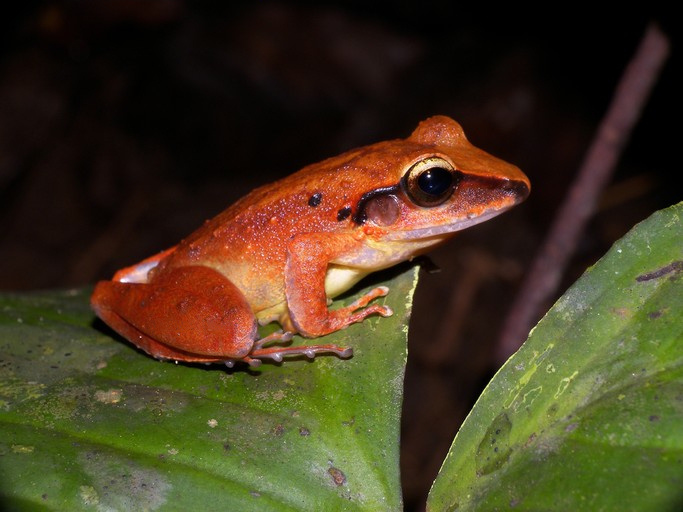 Fitzinger's Robber FrogCraugastor fitzingeri
- Sierra de Omoa Streamside FrogCraugastor omoaensis
-
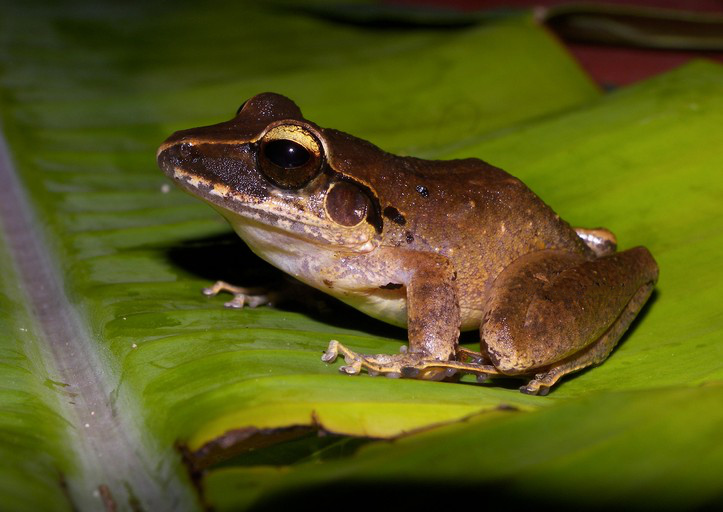 Robber FrogCraugastor raniformis
- McCranie's Robber FrogCraugastor chrysozetetes
- Yellow-legged Rain FrogCraugastor andi
Compare
- North-Central Honduran Montane Streamside Frog vs Barking Frog
- North-Central Honduran Montane Streamside Frog vs Corquin Robber Frog
- North-Central Honduran Montane Streamside Frog vs Fitzinger's Robber Frog
- North-Central Honduran Montane Streamside Frog vs Sierra de Omoa Streamside Frog
- North-Central Honduran Montane Streamside Frog vs Robber Frog
Questions and answers
What is the scientific name of the North-Central Honduran Montane Streamside Frog?
The scientific name of the North-Central Honduran Montane Streamside Frog is Craugastor stadelmani. Written with its author, the full name is Craugastor stadelmani (Schmidt, 1936).
Which family does the North-Central Honduran Montane Streamside Frog belong to?
Craugastor stadelmani belongs to the family Craugastoridae, in the order Anura and the class Amphibia.
Where is the North-Central Honduran Montane Streamside Frog found?
Checklists and occurrence records place Craugastor stadelmani in 1 country: Honduras.
What is the conservation status of the North-Central Honduran Montane Streamside Frog?
The IUCN Red List category recorded for Craugastor stadelmani is Critically Endangered (CR).
Where is the North-Central Honduran Montane Streamside Frog found?
It is endemic to the mountains of northern Honduras, where it inhabits premontane wet forests and lower montane wet forests.[12][13][15]
At what elevations does the species occur?
It occurs between 1,125 and 1,900 metres above sea level.[14]
How large is the North-Central Honduran Montane Streamside Frog?
Adult males measure 27–33 mm in snout–vent length, and adult females measure 33–47 mm.[10][11]
How does the species reproduce?
It reproduces through direct development without a free-living larval stage. Reproduction takes place on the ground along streams.[16][17]
Why did the species decline?
Habitat loss was considered a probable cause of its decline, and chytridiomycosis was considered a possible contributor.[23][24]
Was the species rediscovered?
Two living specimens were discovered in 2010 at a site where the species had apparently disappeared.[27][30]
When was the species last assessed for the IUCN Red List?
It was most recently assessed in 2004, when it was considered critically endangered and possibly extinct.[20][29]
What is the origin of the specific name stadelmani?
The specific name stadelmani honours Raymond Edward Stadelman, a curator at the Tela serpentarium and naturalist at the Museum of Comparative Zoology.[31]
Sources
Passages the profile rests on
- The species has a nearly rounded to rounded snout when viewed from above. Source passage: “The snout is nearly rounded to rounded in dorsal view” — English Wikipedia
- Its snout ranges from rounded to nearly vertical in side profile. Source passage: “and rounded to nearly vertical in lateral profile.” — English Wikipedia
- The tympanum is barely visible at most in males and invisible in females. Source passage: “The tympanum is at best barely visible in males and is not visible in females.” — English Wikipedia
- Its fingers have discs and lateral keels but lack webbing. Source passage: “The fingers have discs and lateral keels but no webbing.” — English Wikipedia
- Its toes have discs and moderate webbing. Source passage: “The toes have discs and moderate webbing.” — English Wikipedia
- The dorsal surfaces of its head and body are medium brown. Source passage: “The dorsal surfaces of the head and body are medium brown;” — English Wikipedia
- Its dorsal surfaces have dark brown ridges and large tubercles. Source passage: “there are some dark brown ridges and large tubercles.” — English Wikipedia
- Its ventral surfaces are pale grey or brown with brown flecking. Source passage: “The ventral surfaces are pale grey or brown with brown flecking.” — English Wikipedia
- Males possess a single subgular vocal sac that is not externally evident. Source passage: “Males have a single subgular vocal sac, although this is not evident externally.” — English Wikipedia
- Adult males measure 27–33 mm in snout–vent length. Source passage: “Adult males measure 27–33 mm (1.1–1.3 in) and adult females 33–47 mm (1.3–1.9 in) in snout–vent length.” — English Wikipedia
- Adult females measure 33–47 mm in snout–vent length. Source passage: “Adult males measure 27–33 mm (1.1–1.3 in) and adult females 33–47 mm (1.3–1.9 in) in snout–vent length.” — English Wikipedia
- The species inhabits premontane wet forests. Source passage: “Craugastor stadelmani occurs in premontane and lower montane wet forests” — English Wikipedia
- The species inhabits lower montane wet forests. Source passage: “Craugastor stadelmani occurs in premontane and lower montane wet forests” — English Wikipedia
- The species occurs at elevations between 1,125 and 1,900 metres above sea level. Source passage: “at elevations of 1,125–1,900 m (3,691–6,234 ft) above sea level.” — English Wikipedia
- The species is endemic to the mountains of northern Honduras. Source passage: “It is endemic to the mountains of northern Honduras.” — English Wikipedia
- The species reproduces through direct development without a free-living larval stage. Source passage: “Reproduction takes place through direct development (i.e., without free-living larval stage)” — English Wikipedia
- Reproduction takes place on the ground along streams. Source passage: “on the ground along streams.” — English Wikipedia
- The species is described as rare. Source passage: “Craugastor stadelmani is a rare species of frog in the family Craugastoridae.” — English Wikipedia
- Its populations underwent dramatic declines during the 1990s. Source passage: “populations underwent dramatic declines in the 1990s.” — English Wikipedia
- In 2004, the species was considered critically endangered and possibly extinct. Source passage: “In 2004, the species was considered critically endangered, even possibly extinct,” — English Wikipedia
- No recent observations were available from the surveyed sites in the 2004 assessment period. Source passage: “with no recent observations from the surveyed sites.” — English Wikipedia
- The species disappeared from some pristine sites. Source passage: “given that the species disappeared also from pristine sites;” — English Wikipedia
- Habitat loss was considered a probable cause of the species' decline. Source passage: “The decline was probably caused by habitat loss,” — English Wikipedia
- Chytridiomycosis was considered a possible contributor to the species' decline. Source passage: “although chytridiomycosis may also have played a role,” — English Wikipedia
- The only specimen tested for chytridiomycosis produced a negative result. Source passage: “The only specimen tested for chytridiomycosis gave a negative result.” — English Wikipedia
- Several populations of the species occurred within protected areas. Source passage: “several populations occurred within protected areas.” — English Wikipedia
- Two living specimens were discovered in 2010 at a site where the species had apparently disappeared. Source passage: “However, two living specimens were discovered in 2010 at one of sites where the species had apparently disappeared.” — English Wikipedia
- Habitat loss remains a serious concern for the species' survival. Source passage: “Nevertheless, habitat loss remains a grave concern for the survival of this species.” — English Wikipedia
- The species was most recently assessed for the IUCN Red List in 2004. Source passage: “Craugastor stadelmani has most recently been assessed for The IUCN Red List of Threatened Species in 2004.” — iucnredlist.org
- The species was reported in a 2010 publication describing the rediscovery of two endemic streamside frogs. Source passage: “Re- discovery of two endemic streamside frogs, Craugastor emleni (Dunn) and Craugastor stadelmani (Schmidt).” — academia.edu
- The specific name stadelmani honours Raymond Edward Stadelman, a curator at the Tela serpentarium and naturalist at the Museum of Comparative Zoology. Source passage: “The specific name stadelmani honors Raymond Edward Stadelman, curator at the Tela serpentarium and naturalist at the Museum of Comparative Zoology.” — English Wikipedia
- Stadelman's coqui is a common name coined for this species. Source passage: “Common names Stadelman's coqui, Stadelman's patterlove, and north-central Honduran montane streamside frog have been coined for it.” — English Wikipedia
- Stadelman's patterlove is another common name coined for this species. Source passage: “Common names Stadelman's coqui, Stadelman's patterlove, and north-central Honduran montane streamside frog have been coined for it.” — English Wikipedia
Data
- Catalogue of Life, 2026-10-16 XR cc by
- Global Biodiversity Information Facility CC BY 4.0
- Wikidata CC0
- GeoNames CC BY 4.0
- Within the Catalogue of Life, this name comes from The Integrated Taxonomic Information System cc0
This species in other databases
Page built on 29 November 2026. See how the catalog is made and all sources and licences.
Cite this page
ScientificNames.org. (2026). Craugastor stadelmani (North-Central Honduran Montane Streamside Frog). Retrieved November 29, 2026, from https://scientificnames.org/species/craugastor-stadelmani
“Craugastor stadelmani (North-Central Honduran Montane Streamside Frog).” ScientificNames.org, 2026, scientificnames.org/species/craugastor-stadelmani. Accessed 29 Nov. 2026.
ScientificNames.org. “Craugastor stadelmani (North-Central Honduran Montane Streamside Frog).” Accessed November 29, 2026. https://scientificnames.org/species/craugastor-stadelmani.
@misc{scientificnames_craugastor_stadelmani_north_central_honduran_montane_streamside_frog,
  author = {{ScientificNames.org}},
  title = {Craugastor stadelmani (North-Central Honduran Montane Streamside Frog)},
  year = {2026},
  url = {https://scientificnames.org/species/craugastor-stadelmani},
  note = {Accessed 2026-11-29}
}